

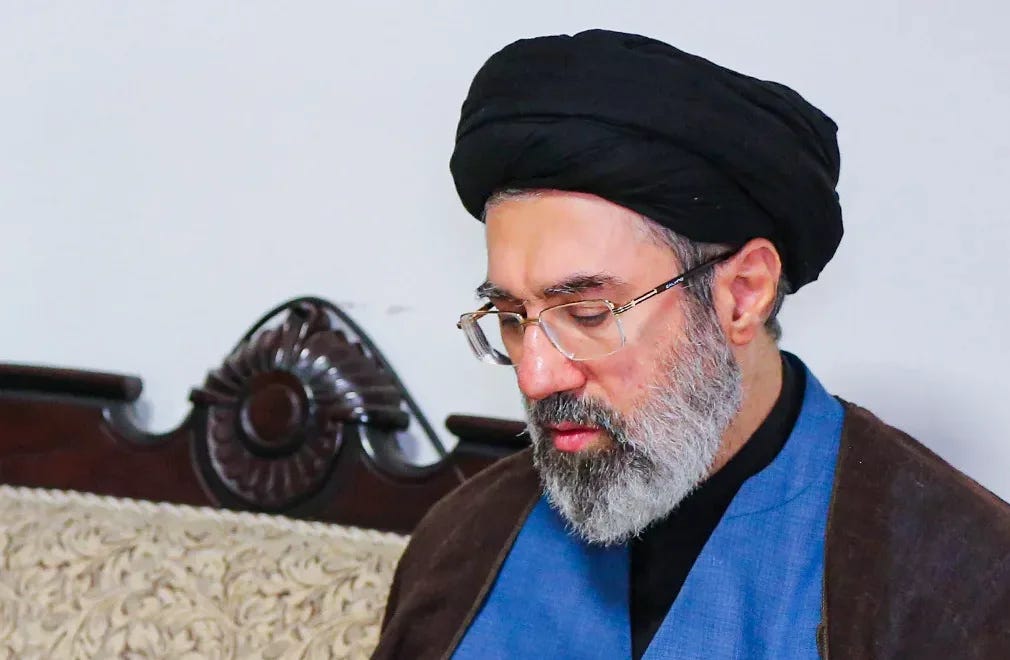
More than nine days have passed since the assassination of Iran’s Supreme Leader, Ali Khamenei days during which international observers, as well as the Iranian public, have been waiting to see the outcome of consultations within Iran’s Assembly of Experts, the body tasked with selecting the country’s next supreme leader.
International and regional intelligence services have not been detached from this atmosphere. Statements issued by the U.S. president and leaders of the Israeli occupation have reflected clear interest in the trajectory of the succession process in Tehran.
In one way or another, these actors have sought to transform the moment of selecting a new supreme leader into an opportunity to pressure Iran toward accepting some form of American “political engineering” of the existing system.
Against this backdrop, Ayatollah Mojtaba Ali Khamenei the second son of the late leader has moved to assume the position of supreme leader after surviving the opening strike of the war, which targeted the family residence and killed his father, his mother, and several members of the family, including his wife Zahra Haddad.
He now arrives at this position carrying a heavy legacy of blood and vengeance, at a critical moment for Iran and the system of the Islamic Revolution. The country faces what may be the most dangerous threat in its modern history one that has moved beyond striking the structure of the political system to threatening the very integrity of the Iranian state and its geography.
During the thirty-seven years in which Ali Khamenei led Iran, Mojtaba remained in close contact with the circles of power throughout a period in which the Islamic Republic experienced a long series of internal and external crises. The leader’s son was not distant from these transformations.
In recent years in particular, he was involved in a number of political and institutional arrangements, and his name surfaced as a potential contender for the position of supreme leader as his father aged and his health declined.
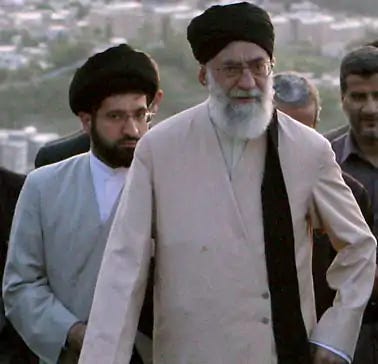
Despite this, his public profile remained extremely limited, largely confined to religious and social occasions. Compared with the elderly clerical establishment in Iran, he is relatively young and has never held an official position within the state structure. Yet numerous reports suggest he has been an influential actor behind the scenes. Opposition forces have previously invoked his name in accusations that he helped consolidate the power of conservative factions and suppress protests.
The question of dynastic succession has long surrounded his name with sensitivity, given the widespread recognition within the system of how controversial such a possibility would be. His father never openly favored such an outcome nor took direct steps to pave the way for it.
From the Revolutionary Guards to the Seminaries
Mojtaba Hosseini Khamenei was born on September 8, 1969, in the northeastern Iranian city of Mashhad. He is the second son of the Supreme Leader of the Islamic Republic, Ali Khamenei, and one of his six children.
The name “Mojtaba” in Arabic means “the chosen” or “the selected,” a title that carries particular significance in Shiite jurisprudence. Historically, it is associated with Imam Hasan ibn Ali, the second imam in the Shiite line of succession. The name thus bears a spiritual symbolism connected to the idea of divine selection and leadership.
Mojtaba grew up in a religious and political environment shaped by the establishment of the Islamic Republic in 1979 following the overthrow of the monarchy. He belongs to a well-known clerical family in Iran. His brother, Mostafa Khamenei, is a cleric, and among his relatives is the cleric Hadi Khamenei.
He completed his secondary education at Tehran’s Alavi religious school. In the late 1980s, he served in the “Habib Battalion” of the Islamic Revolutionary Guard Corps during the Iran-Iraq War (1980–1988). That experience proved a significant stage in building his relationships within the military and security institutions, allowing him to forge ties with individuals who would later rise to influential positions within Iran’s security and intelligence apparatus including senior commanders of the Revolutionary Guards. These connections later contributed to expanding his influence within the circles of the regime.
In 1999 he moved to the city of Qom, one of the world’s most important centers of Shiite scholarship, to continue his religious studies in the hawza seminary system. He adopted clerical attire only during this period. Entering the seminary at the age of thirty was relatively late compared with the usual path of religious students, who typically begin their studies at a much younger age.
There he studied jurisprudence alongside the traditional religious sciences. Although he did not emerge as a leading religious authority within the seminary establishment, he benefited from close contact with several of the Islamic Revolution’s most prominent theorists.
Hamid Rasai, a member of parliament representing Tehran, described him as “a prominent cleric and teacher at the advanced levels of the seminary,” noting that he studied under a number of major scholars, including Mahmoud Hashemi Shahroudi, Mohammad-Taqi Mesbah Yazdi, and Lotfollah Safi Golpayegani. He holds the clerical rank of Hojjat al-Islam.
He also formed family ties with influential figures in the conservative camp. He married Zahra Haddad, daughter of conservative politician Gholam Ali Haddad-Adel, the former speaker of Iran’s parliament. She was also killed in the strike that targeted the leader’s residence.
A Man of Influence Behind the Shadows
Although Mojtaba Khamenei does not hold a formal position within the Iranian state, many assessments suggest he was one of the most influential figures in the late supreme leader’s inner circle. He is believed to have played an advisory role in several sensitive areas related to the Revolutionary Guards, domestic politics, and security, as well as in guiding elections and supporting conservative factions within the system.
His influence grew alongside that of his father through his activities in the leader’s offices in central Tehran. Diplomatic cables published by WikiLeaks in the late 2000s began referring to him as “the hidden force behind the cloak,” reflecting his influential presence behind decision-making circles.
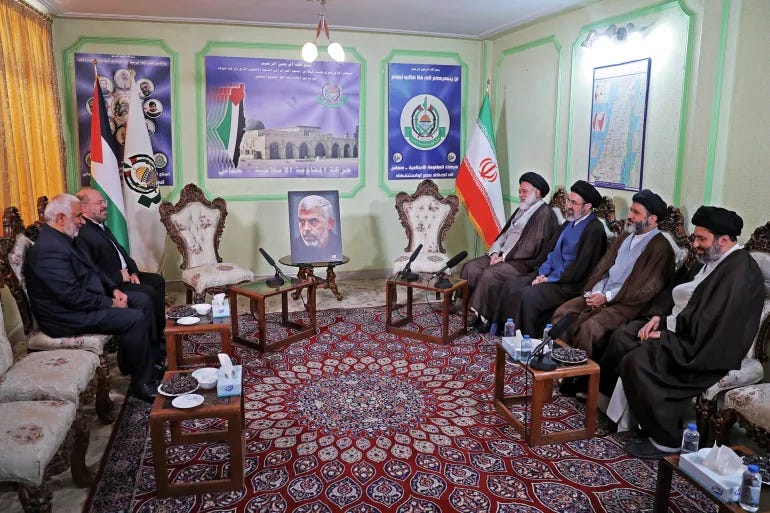
One of those cables noted that Mojtaba was among the figures closest to his father and served as one of the primary channels through which messages and directives were transmitted within the system. He was described as a “key gatekeeper” to the supreme leader while simultaneously building a personal network of influence inside the country.
A diplomatic cable issued in 2008 stated that “Khamenei is widely viewed within the system as a capable and decisive leader and manager who may one day inherit at least part of the national leadership and perhaps his father sees him that way as well.”
Mojtaba Khamenei first emerged in the public arena during the 2005 Iranian presidential election, which ended with the victory of conservative president Mahmoud Ahmadinejad. In an open letter to Ali Khamenei, reformist candidate Mehdi Karroubi accused Mojtaba of interfering in the election through members of the Revolutionary Guards and the Basij militia, alleging that these entities distributed funds to religious groups to support Ahmadinejad’s victory.
Four years later, the same accusations resurfaced following Ahmadinejad’s re-election in 2009, an election that sparked widespread protests across the country known as the “Green Movement.” During those demonstrations, some protesters chanted slogans rejecting the possibility that Mojtaba might succeed his father as supreme leader.
That same year, Britain’s Guardian newspaper described him as “an austere figure often seen as more hardline than his father.”
Amid international pressure targeting individuals close to Iran’s leadership, the U.S. Treasury Department in 2019 placed his name on a sanctions list against figures Washington said were linked to the Office of the Supreme Leader.
Numerous reports suggest Mojtaba maintains close relations with influential figures within the Revolutionary Guards as well as conservative political networks inside the system, and he is believed to have played a coordinating role among some political and security institutions.
Nevertheless, the precise nature of his real influence within the Iranian system remains officially undisclosed. Much of what is circulated about his role is based on indirect analysis and reports, reflecting the closed nature of decision-making circles in the Islamic Republic.
The Paradoxes of the Moment
It is difficult to determine with certainty the orientation of the new supreme leader regarding Iran’s domestic scene. Much of the prevailing narrative about his role and views relies heavily on leaks and reports from various sources, a significant portion of which originate from Iranian opposition figures whether reformists operating within the system or external opposition groups seeking to dismantle it.
While Mojtaba Khamenei’s outlook is often described as deeply conservative, some observers suggest that as a new leader at the age of 56 he may simultaneously adopt a relatively reformist approach in certain areas. This could include expanding some social freedoms and working to improve economic conditions. Some even regard him as one of the few figures within the system capable of pushing a reformist trajectory from within the structures of power itself.
Conversely, the intellectual background that shaped his religious and political consciousness suggests a more hardline path on several issues. Mojtaba studied in the seminary under the late Iranian cleric Mohammad-Taqi Mesbah Yazdi, one of the most prominent Shiite theorists of the doctrine of Velayat-e Faqih (Guardianship of the Jurist) and a figure intellectually close to the legacy of Ruhollah Khomeini, the founder of the Islamic Republic.
This intellectual school is also associated with the Haqqani religious school, which emphasized integrating the principle of the jurist’s guardianship into all aspects of Iran’s political and social life.
This background suggests that the new supreme leader may bring political and intellectual approaches that do not fully align with his father’s positions on certain issues, meaning the coming phase may not simply be a direct continuation of the second leader’s experience.
This assessment is reinforced by reports of past positions attributed to Mojtaba, including opposition to his father’s fatwa prohibiting nuclear weapons and reservations about some approaches described as moderate in managing regional and international files.
For many years, despite the controversy surrounding his name, Mojtaba Khamenei’s chances of reaching the position of supreme leader did not appear easy under normal circumstances. Ali Khamenei himself had been cautious about the idea of his son competing for leadership after him, wary of accusations of dynastic succession a path that lacks broad acceptance in Shiite political jurisprudence and provokes considerable sensitivity among religious scholars.
Yet the paradox is that the conditions of war and existential challenges reshaped the calculus of selection within the system. The moment of conflict and the direct targeting of Iranian leadership propelled the surviving son of the U.S.–Israeli attack to the forefront, particularly given his close relations with the Revolutionary Guards and his deep familiarity with the inner workings of power during his father’s long tenure.
Thus the man long described as a “shadow figure” within the system now carries the symbolism of confrontation and sacrifice, having lost members of his family in the assassination that targeted the leader’s residence. His ascent to leadership has therefore taken on a symbolic dimension tied to the war facing Iran and attempts to undermine the structure of both the regime and the state.
From the State of the Seminaries to the State of the Guards
Iran today faces a profound existential challenge that shapes the transformations shaking the structure of the regime. Amid the ongoing war and mounting pressure, the Iranian system seeks to preserve both the Islamic Republic and the national state simultaneously.
At the same time, the United States and Israel appear to be pushing beyond simply neutralizing or reshaping the regime toward threatening the fragmentation of Iran’s geography itself, including by encouraging separatist tendencies in sensitive regions.
These threats have directly influenced the process of reproducing leadership within the Iranian system at this critical moment. Instead of becoming an arena for internal competition among factions, the selection of the new supreme leader appeared closer to a moment of prioritizing confrontation and reinforcing unity around it.
The Iranian system is fundamentally built on a dual institutional structure that combines traditional state institutions the presidency, government, parliament, and army—with institutions of the Islamic Revolution, such as the Revolutionary Guards, leadership councils, and the Expediency Discernment Council.
In the current moment of threat, all of these components, along with political blocs ranging from conservatives to reformists, appear inclined to prioritize internal unity in confronting external danger.
This institutional and political overlap produced broad consensus around choosing a supreme leader supported by the most powerful institutions within the system chief among them the Islamic Revolutionary Guard Corps, which effectively leads the confrontation with the United States and Israel and holds significant influence over its strategic and operational dimensions.
This dynamic was reflected in recent tensions within the Iranian political scene, including controversy following remarks by the Iranian president apologizing to Gulf states over certain attacks, remarks that were quickly retracted under internal pressure.
Within this context, consensus grew across the system regarding the importance of solidifying the position of the supreme leader as the ultimate arbiter capable of ensuring cohesion among the institutions of the Islamic Republic and managing tensions among competing centers of decision-making particularly as Iran’s adversaries seek to exploit internal divisions to weaken the country’s position.
Iranian institutions carefully staged the announcement of the new leader in a mobilizing atmosphere designed to reflect public unity around the system. Thousands of Iranians participated in mass rallies in the streets of Tehran supporting resistance and rejecting external pressure, before the official declaration of the new supreme leader was made amid this atmosphere intended to send both domestic and international messages of cohesion.
This unity was also reflected in official statements from various institutions, beginning with the announcement by Ali Larijani, secretary-general of the Supreme National Security Council, followed by statements of support from the Revolutionary Guards and the Basij forces, as well as positions expressed by parliamentary speaker Mohammad Bagher Ghalibaf and Iranian president Masoud Pezeshkian, alongside the General Staff of the Armed Forces and the leadership of Khatam al-Anbiya Central Headquarters.
Together, these signals demonstrated broad consensus within the system’s central structures, effectively countering earlier leaks suggesting internal disagreements.
In light of these developments, the contours of what may be called the third era of the Islamic Republic are beginning to emerge provided Tehran manages to survive the war now confronting it.
The new equation suggests a gradual shift in the balance of influence within the system toward the Islamic Revolution’s military and security institutions, foremost among them the Revolutionary Guards. For many years, Ali Khamenei maintained a flexible balance between the religious seminary establishment and the revolutionary institutions of power.
The new leader, Mojtaba Khamenei, is unlikely at the outset to possess the same degree of authority that his father accumulated over decades of leadership, political experience, and mastery of internal balances within the system.
This makes it likely that the coming phase will witness a more collective decision-making formula based on interaction among three centers: the Office of the Supreme Leader, the Revolutionary Guards, and the Supreme National Security Council.
Naturally, this structure will shape Iran’s strategy in managing the war. While the current equation suggests the predominance of confrontation in the short term, it also grants the Iranian leadership sufficient legitimacy to pursue potential settlements that could end the conflict provided they preserve the structure of the existing system and do not cross the strategic red lines that guided the Islamic Republic’s policies during the tenure of the late Supreme Leader Ali Khamenei.
