

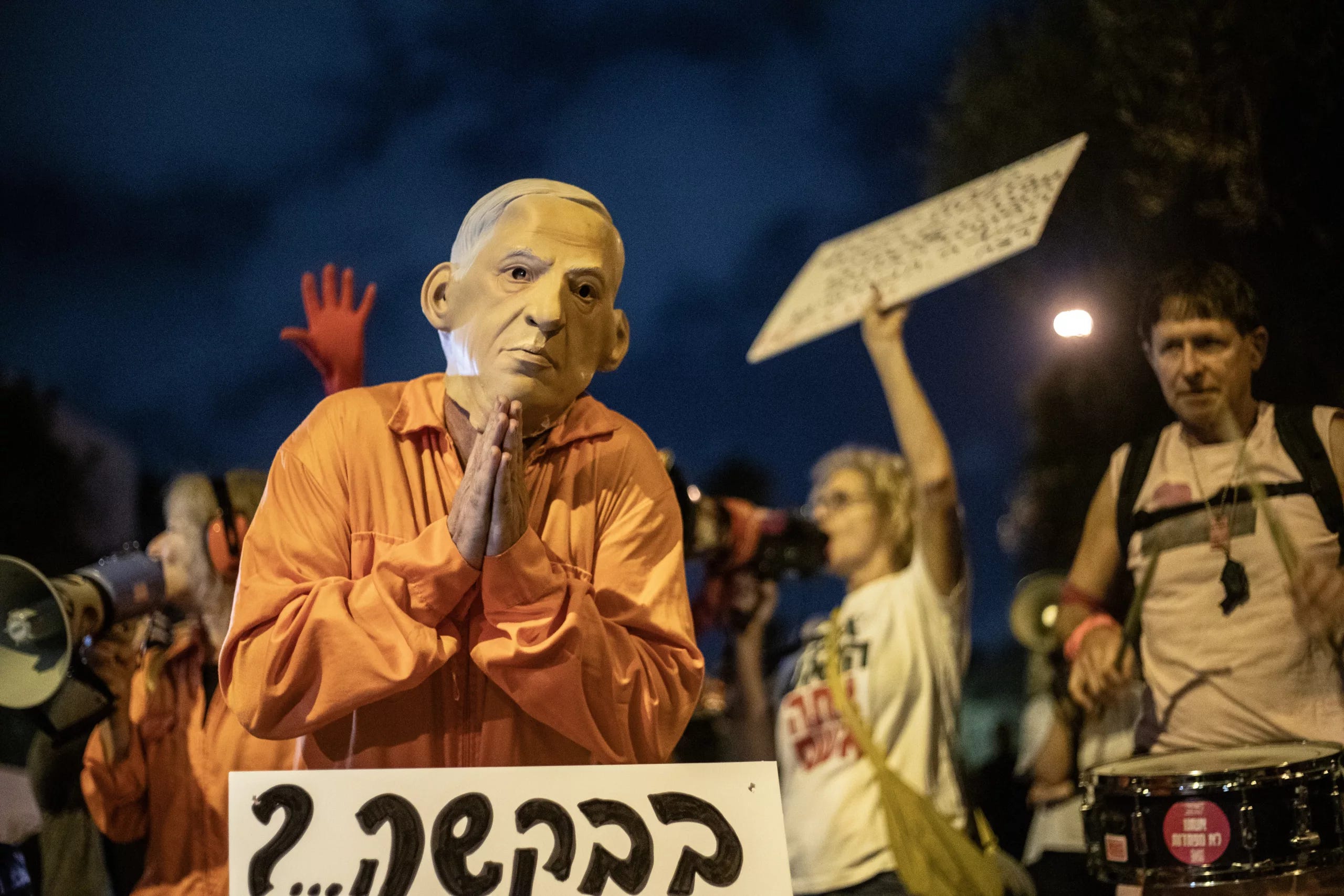
In a politically charged and unprecedented moment in Israel’s political history, Tel Aviv faces a highly sensitive test as Israeli Prime Minister Benjamin Netanyahu formally requests a presidential pardon from President Isaac Herzog for longstanding corruption charges.
The request follows a formal call that came after earlier verbal appeals, most notably from former U.S. President Donald Trump on November 12, who urged Herzog to pardon Netanyahu and bring an end to his trial on charges of corruption, bribery, and breach of trust.
The timing and political implications of the request give it added significance. It comes two years after the Al-Aqsa Flood operation and as Israel enters a crucial election year, with general elections scheduled for October 2026 unless an early vote is called.
Will Herzog grant Netanyahu a full pardon? Will he attach conditions such as Netanyahu’s withdrawal from political life? Or will he reject the request entirely despite mounting pressure from within Israel and from Washington?
The Charges Against Netanyahu
Netanyahu faces multiple charges of corruption, bribery, and breach of trust across three main cases each known by a numerical designation (which carries no legal or political significance):
Case 1000: Receiving lavish gifts for himself and his family from wealthy businessmen in exchange for favors and benefits.
Case 2000: Negotiating favorable media coverage with Yedioth Ahronoth publisher Arnon Mozes.
Case 4000: Providing regulatory benefits to Shaul Elovitch, former owner of the Walla news site and a senior figure at telecom giant Bezeq, in return for positive media coverage.
Three Possible Scenarios
1. Full Pardon
Should President Herzog grant Netanyahu a full pardon, the ongoing trial would end, and the prime minister would be cleared of criminal liability without an official acquittal.
Such a decision would likely satisfy Trump and Netanyahu’s right-wing base, but it would spark fierce opposition, with critics decrying it as a “fatal blow to the rule of law” if not tied to strict conditions.
According to Israel Hayom, an unconditional pardon could ignite massive protests possibly surpassing those sparked by the judicial overhaul plans in early 2023.
Trump’s letter, in particular, has fueled internal tensions, with opposition parties calling it blatant foreign interference in Israeli affairs and warning that it deepens an already volatile situation.
2. Pardon Rejected
If Herzog denies the request, the trial will proceed as normal a move the opposition would likely welcome, according to The Times of Israel.
However, such a decision could provoke anger among Netanyahu’s supporters and the broader right-wing camp, potentially triggering counter-protests demanding a reversal.
Netanyahu may spin a rejection into a form of political gain, framing himself as a victim of persecution and using the decision to rally his base ahead of the upcoming elections.
Legally, the continuation of the trial means Netanyahu faces years of hearings that could eventually end in conviction or acquittal. Either way, the case will remain politically charged until a final ruling is delivered.
3. Conditional Pardon
A middle-ground option would be a conditional pardon a possible way to ease political tensions and appease parts of the opposition without triggering large-scale unrest.
Under this scenario, Herzog could negotiate conditions with Netanyahu and his inner circle before signing off on a pardon. These may include a formal admission of guilt and a complete withdrawal from political life.
Herzog might also link the pardon to halting the judicial overhaul legislation and launching a formal inquiry into the events of October 2023.
Although some sources close to the presidency suggest Herzog is leaning toward this compromise, Netanyahu’s allies insist he will never agree to any admission of guilt even a partial one or consider retiring from political life. This casts serious doubt on the viability of a conditional deal.
The Legal Process for a Pardon Request
Submission: Netanyahu or his legal team submits the pardon request to the President’s Office, which refers it to the Justice Ministry’s Pardon Department for review.
Collection of Opinions: The department gathers relevant documents including court files, prosecution recommendations, and agency reports to prepare a preliminary legal opinion.
Formulating a Recommendation: The Justice Minister issues a final recommendation to the president, based on the department’s opinion and the legal advisor’s counsel.
Presidential Decision: The president reviews all inputs before making a final decision. If he grants the pardon, numerous appeals are expected to be filed with the Supreme Court to challenge its legitimacy.
Does the President Have the Authority to Pardon Netanyahu?
Israeli law does empower the president to issue pardons or reduce criminal sentences. However, this authority is typically exercised after a conviction and a formal admission of guilt, according to The Times of Israel.
Yet, a legal analysis from the Israel Democracy Institute argues that a confession is not a legal requirement for a pardon. Still, the Attorney General’s Office has long held that pre-conviction pardons should be granted only in exceptional cases.
There is precedent: the president issued pre-trial pardons for Shin Bet agents involved in the 1984 “Bus 300” affair. However, the Supreme Court ruled at the time that such interventions should be reserved for rare and extraordinary security-related circumstances.
A detailed legal review published by Israel Hayom, based on opinions from former Justice Minister Daniel Friedmann and former Pardon Department Director Amy Palmor, underscores this view stating that pardons should not be issued in the middle of a trial.