

The region appears to be bracing for yet another escalation, according to recent developments. The news site Axios has reported, citing three Israeli sources, that the Trump administration issued a warning over the past weekend about a possible Iranian attack on Israel.
The alert was reportedly based on a missile drill conducted by Iran’s Islamic Revolutionary Guard Corps (IRGC) just days earlier.
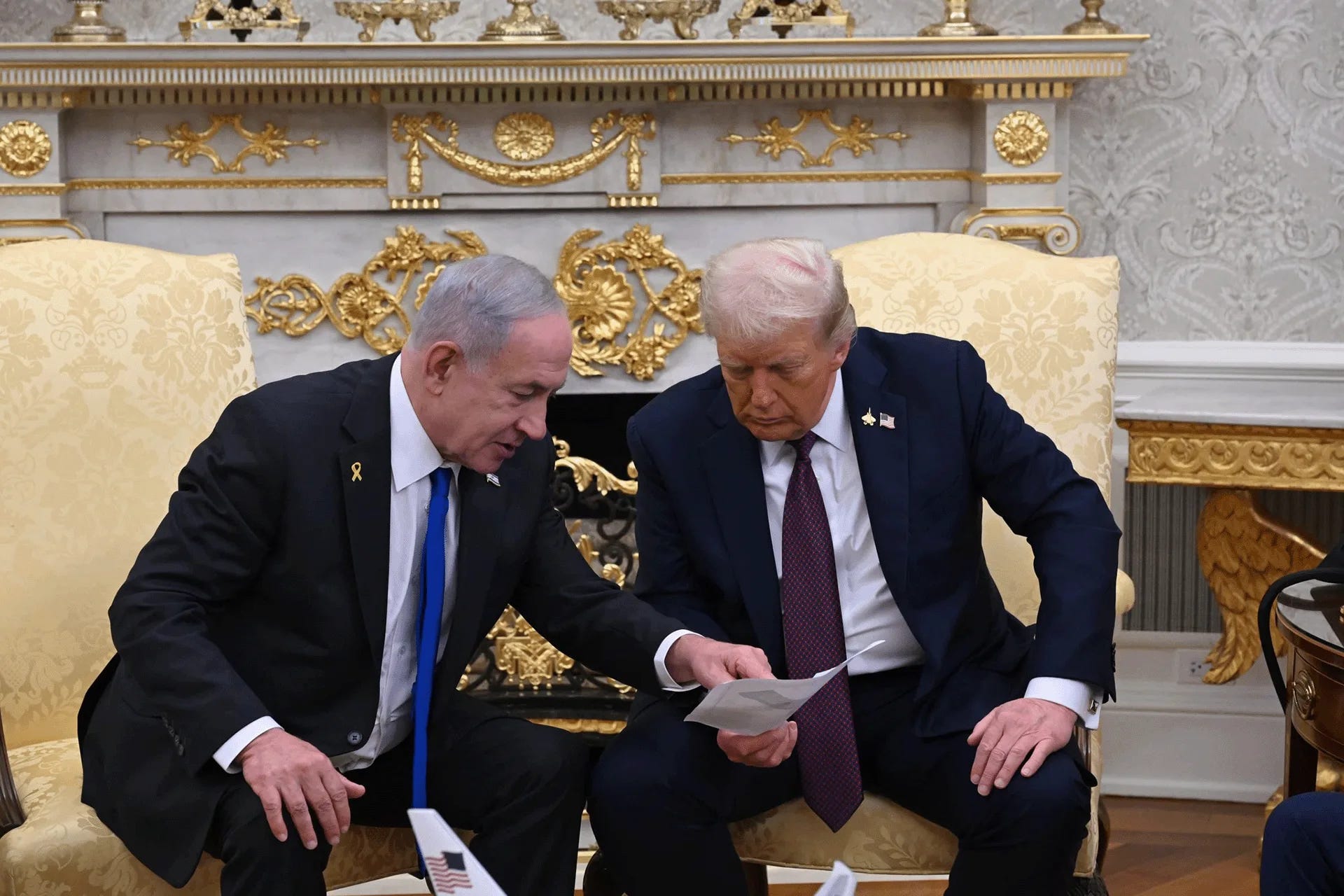
According to sources familiar with the matter, Israeli Prime Minister Benjamin Netanyahu is expected to raise the issue of Iran’s missile capabilities and the possibility of a strike on Tehran during his upcoming meeting with former U.S. President Donald Trump in Miami, Florida, on December 29.
As part of Israel’s military mobilization, Israeli Chief of Staff Lt. Gen. Herzi Halevi held a phone call on Saturday, December 20, with U.S. Central Command (CENTCOM) chief Admiral Brad Cooper.
During the conversation, Halevi conveyed Israel’s deep concern about the IRGC’s recent drill, warning that the missile movements, along with other operational activities, could be a cover for a surprise attack. He urged closer coordination between U.S. and Israeli forces on defensive preparations.
Amid these fast-moving developments and Israel’s increasingly conspicuous military posture, and given the two-year-long cycle of tension between Tehran and Tel Aviv, key questions emerge: Is the region on the verge of a direct military confrontation? And how will the United States respond to this latest escalation?
What’s Behind Israel’s Mobilization?
According to Israeli sources who spoke to Axios, current intelligence assessments point only to internal military maneuvers inside Iran and routine IRGC drills movements that, for now, fall short of justifying the level of alarm and military posturing underway.
One Israeli source noted that similar concerns had been raised six weeks earlier when Iranian missile movements were detected, but those warnings ultimately did not materialize into any concrete developments. Publicly, the source assessed the likelihood of an Iranian attack at “less than 50 percent.”
U.S. intelligence appears to share that assessment. According to an American official cited by Axios, Washington currently has no indicators pointing to an imminent Iranian attack on Israel.
Nonetheless, the Israeli position, amid what many see as exaggerated rhetoric and military buildup, is guided by a simple logic: “No one wants to take the risk of assuming it’s just a drill,” one Israeli source said. The Israeli military’s appetite for risk has notably declined—especially in the wake of the October 7, 2023, “Al-Aqsa Flood” operation launched by Hamas.
Israeli intelligence has reportedly detected early signs that Iran has resumed rebuilding its missile capabilities with greater urgency than after the 12-day war in June. According to the same sources, Iran exited that war with around 1,500 missiles down from 3,000 beforehand and retained only 200 launch platforms out of an original 400.
While Iran has begun the process of rebuilding, it has not yet regained its pre-war military capacity. Israeli military intelligence and the Mossad believe that the pace of reconstruction does not warrant an immediate military response within the next two to three months. However, they caution that the situation could evolve into a more urgent threat later in the year.
Both Israeli and American sources told Axios that the greatest risk lies in miscalculation. Each side might interpret the other’s actions as preparation for an attack, prompting a preemptive strike. Such a scenario could plunge the entire region into an uncontrollable conflict.
Netanyahu Seeks a Green Light from Trump
Netanyahu is attempting to leverage what he sees as Iran’s current vulnerability after a series of blows over the past two years and capitalize on the prevailing fluidity and disarray in the regional landscape to secure a green light from Trump for a strike on Tehran, even without direct American involvement.
According to Israel’s Yedioth Ahronoth, which cited unnamed official sources, Netanyahu plans to present Trump with updated intelligence on Iran, Hamas, and Hezbollah in an effort to convince him of the urgent need to counter what Tel Aviv sees as an accelerating Iranian ballistic missile program.
These sources suggest that simply securing Trump’s approval for a unilateral Israeli strike would be seen as a major political win for Netanyahu, especially given the understanding within Israeli circles that the U.S. is reluctant to get entangled in a new military conflict with potentially high costs.
According to informed sources and former U.S. officials, Israel believes that, if unchecked, Iran’s missile production could reach 3,000 per year. Meanwhile, Iranian Foreign Minister Abbas Araghchi publicly stated on Sunday, December 21, that Iran is “fully prepared” for another round of fighting if it comes to that, adding that strategic facilities damaged in the June war have already been restored.
A Broad Target List: What Does Tel Aviv Want?
Netanyahu’s push to gain U.S. approval for a strike on Iran serves a multi-tiered agenda:
Personal Objectives: Netanyahu aims to keep the region in a state of perpetual tension, stoking domestic fears about the growing Iranian threat. This could help shift public focus away from his legal troubles and boost his political survival, reinforcing the stability of his government.
Security Objectives: The threat posed by Iran serves as a constant pretext for Israeli military and intelligence operations in Syria, Lebanon, Iraq, and Yemen under the guise of countering Iran’s regional proxies. Chief of Staff Halevi has stated that the army is ready to strike “wherever necessary,” aligning security moves with Netanyahu’s political interests.
Political Objectives: The escalation sends a warning to regional powers and could pressure hesitant countries such as Saudi Arabia toward formal normalization with Israel. Greater Israeli assertiveness might nudge them toward the Abraham Accords out of fear or strategic calculation.
Economic Objectives: By amplifying the perceived Iranian threat and highlighting Tehran’s rearmament, Israel fuels anxiety among neighboring countries, encouraging them to bolster their own arsenals thereby benefiting U.S. and Israeli arms manufacturers and reinforcing their dominance over the regional defense market.
Deterrence and Opportunity: What Are the Scenarios?
Despite the Israeli government’s aggressive rhetoric, a direct and unilateral Israeli military strike on Iran ultimately hinges on a political decision in Washington. Israel’s capabilities alone are insufficient to carry out such a strike or absorb the consequences of retaliation from Iran’s substantial missile arsenal.
Many analysts view Tel Aviv’s verbal escalation and its transmission to American policymakers as more about deterrence than a genuine push toward war. The potential military, economic, and political costs of a direct confrontation with Iran make this a decision far beyond the scope of Israeli leadership it rests squarely with the U.S. and its broader strategic calculus in the region.
Trump’s posture on a possible Israeli strike is expected to be dictated by pure pragmatism. The conditions that led to Washington’s involvement in the June strikes no longer exist to the same extent whether in terms of intelligence or political cover.
Moreover, Trump faced significant backlash in the U.S. for what was widely seen as capitulating to Netanyahu’s pressure. This criticism may now constrain his willingness to authorize a new military venture that could be portrayed as serving Israeli interests over America’s.
As such, Washington’s current approach appears focused on risk management, not escalation seeking a balance between supporting its Israeli ally and preserving domestic political interests. This could take the form of a blend of deterrence, diplomacy, and economic pressure.
Two main scenarios are emerging:
A limited strike to destroy what remains of Iran’s missile capabilities before they are fully restored viewed by Tel Aviv as a rare opportunity amid Iran’s current vulnerability.
Heightened political pressure on the U.S. to impose tougher sanctions on Iran an option that is less risky and more palatable to Western capitals than plunging into a regional war that could trigger a sweeping Iranian response and a new cycle of violence.
