

Israel, backed by powerful Zionist lobbies worldwide, has long exploited every media, political, and economic tool at its disposal to promote and globalize the Zionist narrative. These efforts are often wrapped in appealing rhetoric such as “tolerance,” “acceptance of the other,” and “human values” attempts to divert attention from the grave violations Israel has committed against Palestinians and other Arab populations.
While Tel Aviv bolstered by its expansive influence and direct U.S. support has succeeded in dragging some Arab regimes into the realm of political normalization, its real battle remains with the Arab public. The Israeli state has failed to secure widespread grassroots acceptance, despite the considerable resources and initiatives invested in this goal.
In response, Israel has shifted toward a long-term strategy targeting new generations across the Arab world. This involves stripping educational curricula and cultural channels of concepts that foster resistance, or frame the Israeli occupation as an imminent threat and a strategic enemy to Arabs and Muslims.
Through these softer policies, Israel hopes to shape generations that accept its existence and view it as a normal reality something it has been unable to achieve through political or military means for decades.
At the heart of this strategy lies the Institute for Monitoring Peace and Cultural Tolerance in School Education (IMPACT-se), a key player in Israel’s soft power approach. While it presents itself as a proponent of “comprehensive peace” and educational reform, the pressing question is: What is this entity really, and what role does it play in the battle for Arab awareness?
Origins and Stated Objectives
Founded in 1998, IMPACT-se markets itself through its digital platforms as an international research and education policy institute. It claims to monitor and analyze curricula worldwide according to standards of “peace,” “tolerance,” and “non-violence,” supposedly inspired by UNESCO declarations and charters.
The organization says it aims to track global compliance with these standards and advocate for educational reforms when necessary.
The institute portrays itself as a leading global authority on textbook analysis across all subjects and education levels. It claims that its research teams conduct comprehensive reviews of national curricula to understand what societies are teaching their children about religion, culture, human rights, integration, and the concept of “the other.”
In this context, IMPACT-se assumes an almost utopian image a guardian of “civilized values” confronting what it sees as exclusionary, extremist rhetoric that fosters hostility and hatred.
According to its own narrative, published on its official website, the institute’s primary goal is to “prevent the radicalization of children and youth,” a group it deems especially vulnerable.
It emphasizes preparing these young individuals for a future grounded in “hope, success, and happiness,” and stresses the need to instill “mutual respect” and “acceptance of difference” among children from diverse cultural and religious backgrounds.
An Overtly Zionist Leadership
IMPACT-se’s Zionist ideological foundation is evident from its inception. Its founder, Yohanan Manor, a former political science lecturer at the Hebrew University (1970–1984), was far from a neutral academic. He played a key role in lobbying for the 1984 repeal of the UN resolution that equated Zionism with racism a revealing indicator of the ideological blueprint on which the institute was built.
Today, the organization is led by Marcus Sheff, who has served as CEO since February 2016. A British-Israeli former journalist and an IDF spokesperson reserve officer with the rank of major, Sheff brings extensive experience in media and strategic communications raising serious questions about the institute’s ties to Israeli propaganda machinery and its alignment with the official state narrative.
The institute’s board of directors includes high-profile figures deeply entrenched in the global Zionist network. Among them: Julian Reit, a former IBM executive and recipient of France’s Legion of Honor; Jay Ruderman, head of a family foundation known for supporting Israeli influence in the U.S. and a former deputy director of AIPAC in New England; Suzanne Wagner, a board member at the Washington Institute for Near East Policy; and Yuri Hazanov, YouTube’s head of partnerships for Eastern Europe and Israel.
This impressive lineup makes it clear that the institute is far from a neutral academic or peace-focused body. Rather, it is an instrument of global Zionist influence, operating under the guise of educational and cultural reform to shape consciousness and target future generations.
Monitoring Arab Curricula: A System of Intimidation
IMPACT-se deploys networks of researchers and field teams across several countries to scrutinize the minutiae of educational systems not only school textbooks but also related materials such as maps, educational tools, apps, and even teacher performance.
The ultimate aim is to remove any content that portrays Israel as a colonial power, supports the Palestinian narrative, or fosters sentiments of resistance and Arab-Islamic awareness regarding Israel’s role in the region.
The institute concentrates its efforts on conflict zones especially Palestine, the broader Middle East, and Central Asia where curricula are vital battlegrounds for identity and collective memory.
Its reports are not confined to academic circles; they have become political and financial pressure tools. For instance, IMPACT-se’s findings contributed to the freezing of European aid to the Palestinian Authority and have influenced the policies of countries like Switzerland, Germany, and the UK regarding Palestinian educational materials.
The institute has also actively targeted verses and hadiths on jihad in Islamic education textbooks, criticized the inclusion of Sheikh Izz al-Din al-Qassam’s revolution in Qatari history books, objected to the use of the term “Zionism” in Saudi curricula, and attacked references to Jordanian martyrs Mohammad al-Hunaiti and Ka’id al-Ubaydat in Arabic literature, as well as mentions of the al-Aqsa Mosque arson in history textbooks.
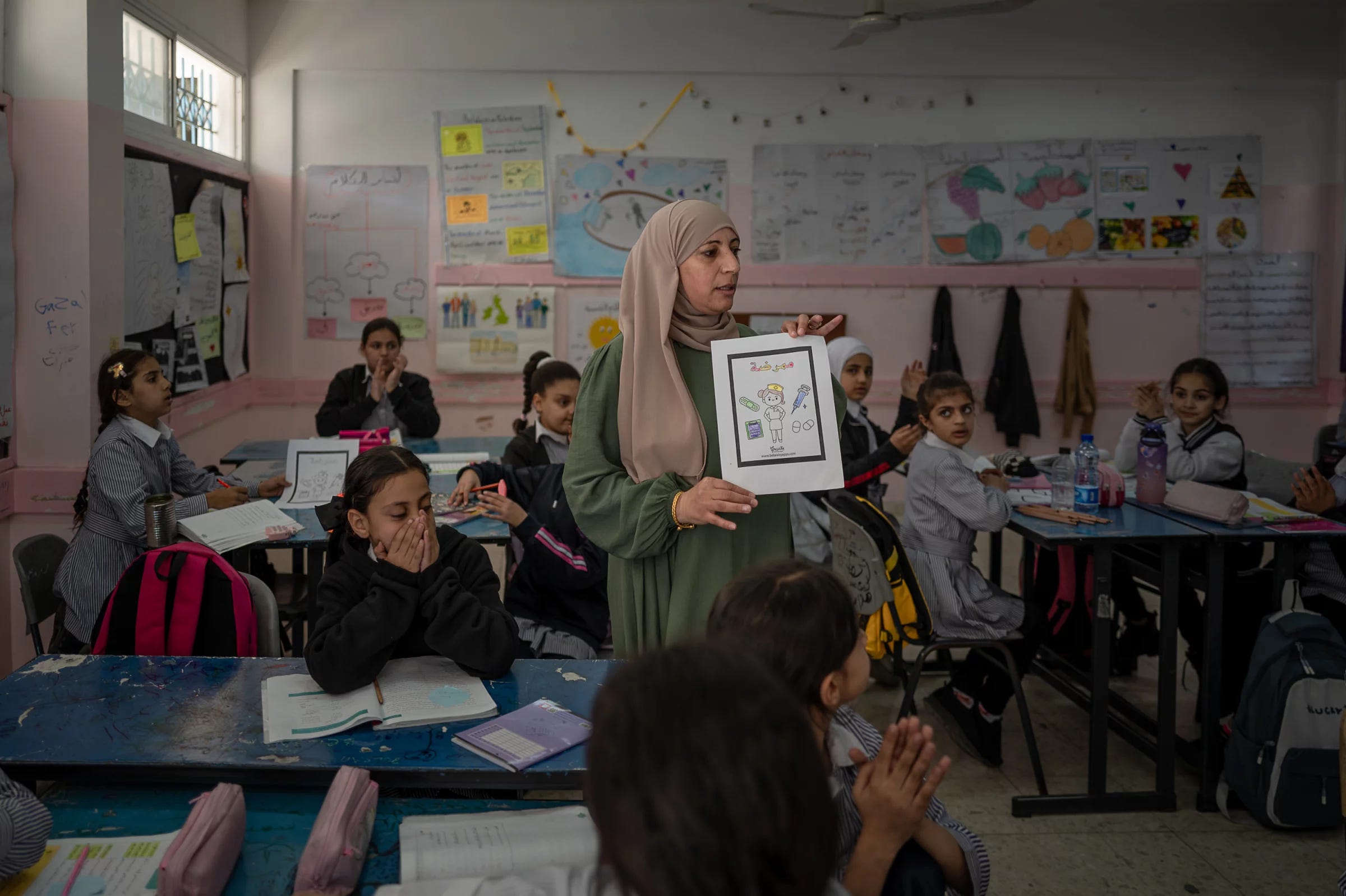
In its most recent 400-page report, the institute claimed that the 2025–2026 Palestinian school curriculum still includes what it calls “incitement and glorification of violence.” It accused the Palestinian Authority of failing to fulfill its commitments to the US, EU, and France to eliminate such content.
The report, which says it analyzed hundreds of textbooks and teacher guides from the West Bank, Gaza, and Jerusalem, insists that “hate speech” persists despite international pressure.
The report continues to offer a biased reading of the curricula, framing themes like resistance, jihad, and martyrdom as incitement, and celebrating Palestinian heroes as “glorifying terrorism.” It even alleges that science and Arabic lessons are used to disseminate what it brands “hostile messages.”
Funded by the United Arab Emirates, the report also attacks what it describes as a gap between the PA’s promises of curriculum reform and on-the-ground realities, attempting to link continued international funding to the alignment of Palestinian educational content with the Israeli narrative of what students should learn about their land, history, and identity.
But IMPACT-se’s role doesn’t stop at pressure and oversight. It extends to producing alternative curricula as it did for Syrian refugees in Greece and continues to publish regular reports on education in countries like Kazakhstan, Azerbaijan, and Uzbekistan. It has evolved into a tool of academic intimidation, tying international support and funding to the degree of compliance with its vision of “tolerance” and “peacebuilding.”
Its reports seek to criminalize core concepts in Arab collective memory such as resistance, martyrdom, the right of return, and the 1948 Nakba, reducing them to mere “incitement” or “extremism.” Meanwhile, the Israeli narrative is presented as factual, while Palestinian perspectives are dismissed as “hate speech” that must be excised from education.
Consequently, IMPACT-se’s reports have become geopolitical tools in Western parliaments, pressuring Arab states especially Palestine to “sanitize” their curricula, often in coordination with similar organizations like UN Watch.
This reframes the conflict as not only a struggle over land but also over memory and consciousness an attempt to raise a generation that views occupation as a controversial issue, not a liberation cause.
What About the UAE Connection?
Numerous reports and leaks suggest a growing partnership between IMPACT-se and official Emirati entities, including alleged direct funding that has enabled the institute to expand its regional footprint and bolster its research capabilities. While these claims remain unverified officially, the trajectory of the relationship points to increasing cooperation toward shared goals of reshaping educational discourse in the Middle East.
The institute has consistently portrayed Emirati curricula in a favorable light. A notable example is its 2021 report “When Peace Goes to School,” which praised the UAE’s focus on “values of peace, tolerance, and international cooperation” in line with UNESCO standards, awarding it high ratings compared to other Arab states.
This alignment culminated in a Memorandum of Understanding with the TRENDS Research and Advisory Center in Abu Dhabi to deepen research collaboration. It also involved direct consultations with the UAE Ministry of Education on topics such as including the Holocaust and coverage of the Abraham Accords in Emirati textbooks, positioning the UAE as a regional model.
However, despite the praise, IMPACT-se’s reports omit certain sensitive issues such as the absence of “Israel” from some Emirati school maps highlighting the selective nature of its assessments to suit its political agenda. With recurring reports of UAE funding, the full official picture remains murky, but available evidence points to a strategic alliance aimed at reshaping educational consciousness in alignment with the normalization era and a reframed understanding of regional conflict.
