

In moments of major escalation, the real question is not whether war will break out but rather, who has begun preparing for it at the level of the state, not just in terms of military hardware.
In this context, Iran appears to be treating the prospect of a coming confrontation as an existential test, not a fleeting round of deterrence. The signs accumulating in recent weeks suggest that Tehran has moved beyond “crisis management” to a phase of “pre-war management” not only by boosting military readiness, but by reorganizing its political and security infrastructure in anticipation of worst-case scenarios.
Preparation as a Reengineering of the State
What stands out about Iran’s current posture is not its military noise, but the structural calm that accompanies it. A state that raises its readiness level and restructures its chain of command is not bracing for a limited strike, but is operating under the assumption that if a blow comes, it may be designed to deliver a systemic shock: a shock to decision-making, public services, the economy, and the public’s confidence in the regime’s ability to survive.
Iran’s preparations, then, only make sense when viewed as part of a long-term battle of wills not a prelude to a brief battle on the ground. Tehran understands that any confrontation with the United States whether alone or in coordination with Israel will not follow the contours of a traditional frontline war.
No one expects a ground invasion or occupation. From Tehran’s perspective, the likeliest scenario is a strike designed to paralyze the state: precise, targeted blows against critical infrastructure, command centers, and perhaps key figures at the top of the leadership pyramid, with the aim of turning external pressure into an acute internal crisis.
In this light, war is no longer a matter of missiles versus missiles, but a test of whether a regime can endure when the power goes out, communications collapse, supply chains break down, and the economy becomes a daily burden for the population. This is precisely the scenario Tehran seems to have focused on in its recent preparations.
In addition to military mobilization and operational readiness, Iran appears to have worked on reinforcing what could be called “sovereign continuity” ensuring that the targeting of the regime’s leadership or key institutions does not result in a power vacuum or institutional breakdown.
This is not merely about having alternative names on standby, but about establishing a structure capable of immediately assuming command, issuing orders, managing the response, and preventing shock from cascading into chaos.
Such planning is rare in the region and reflects a clear understanding: the most dangerous outcome of an American strike may not be physical destruction, but the temporary suspension of central decision-making. In modern warfare, one hour without a decision can be more devastating than an entire day of bombardment.
How Tehran Views the Next War
Iran’s strategic reading suggests that any potential strike may not necessarily target its nuclear program as a first objective. Not because the program is unimportant, but because attacking it would open up a politically, legally, and internationally fraught path and could push Iran toward extreme escalatory options. Instead, striking at the “nerve center of the state” is seen, in some circles in Washington, as less politically costly and more effective in the medium term.
By this logic, war becomes a tool to weaken the state from within, not merely to destroy its military capabilities. Electricity, water, communications, transport, ports, airports, and command centers are not valued by how many missiles destroy them, but by how many days the state is unable to function afterward.
Yet despite the gravity of this scenario, it does not necessarily mean Iran’s response would be reckless. On the contrary, most assessments suggest that Tehran would respond—if at all—with calculated restraint, not with an explosive escalation. A regime that views its own survival as a core existential priority is unlikely to retaliate in a way that gives its adversary a pretext to broaden the conflict beyond containment.
This is where the meaning of the large-scale American military buildup in the region becomes clear. Troops, carriers, and aircraft are not deployed merely to carry out a strike, but to send an unmistakable message: any wide-ranging Iranian response will trigger a second, far more extensive phase. Washington does not only want to strike it wants to control the post-strike scenario and impose strict limits on any potential Iranian retaliation.
Between Deterrence and Avoiding Total War
This is what makes Tehran’s calculations so precise, even to the point of contradiction: how to respond in a way that preserves deterrence and national prestige without opening the door to a full-scale war that could endanger the regime’s survival? And how to absorb a blow without appearing powerless to its own domestic audience?
The one exception nearly all observers agree on is the targeting of the Supreme Leader or the top leadership. In such a scenario, the rules of the game would fundamentally change. The regime would view the strike not as a political or military maneuver, but as an existential assault, and any previous constraints on retaliation would likely be abandoned. Moreover, even if a replacement leadership exists, it would need a dramatic act to assert its legitimacy both at home and abroad.
Geographically, the U.S. decision to rely on distant bases like Diego Garcia in the Indian Ocean, along with the deployment of aircraft carriers in the Persian Gulf and the Mediterranean, signals a clear desire to avoid using Gulf state bases in any direct strike.
This is not merely a technical choice it is a political and strategic one: to shield regional allies from the fallout of any Iranian response and to limit the risk of the confrontation spilling across the region.
Still, Israel remains a special case in Iran’s calculus. Whether directly involved or not, it will remain part of the retaliation equation, by virtue of its location and its long-standing role in the conflict with Tehran. Amid all this, the most critical question resurfaces: is the ultimate goal regime change in Iran?
The Regime’s Future: The Strike or Its Aftermath?
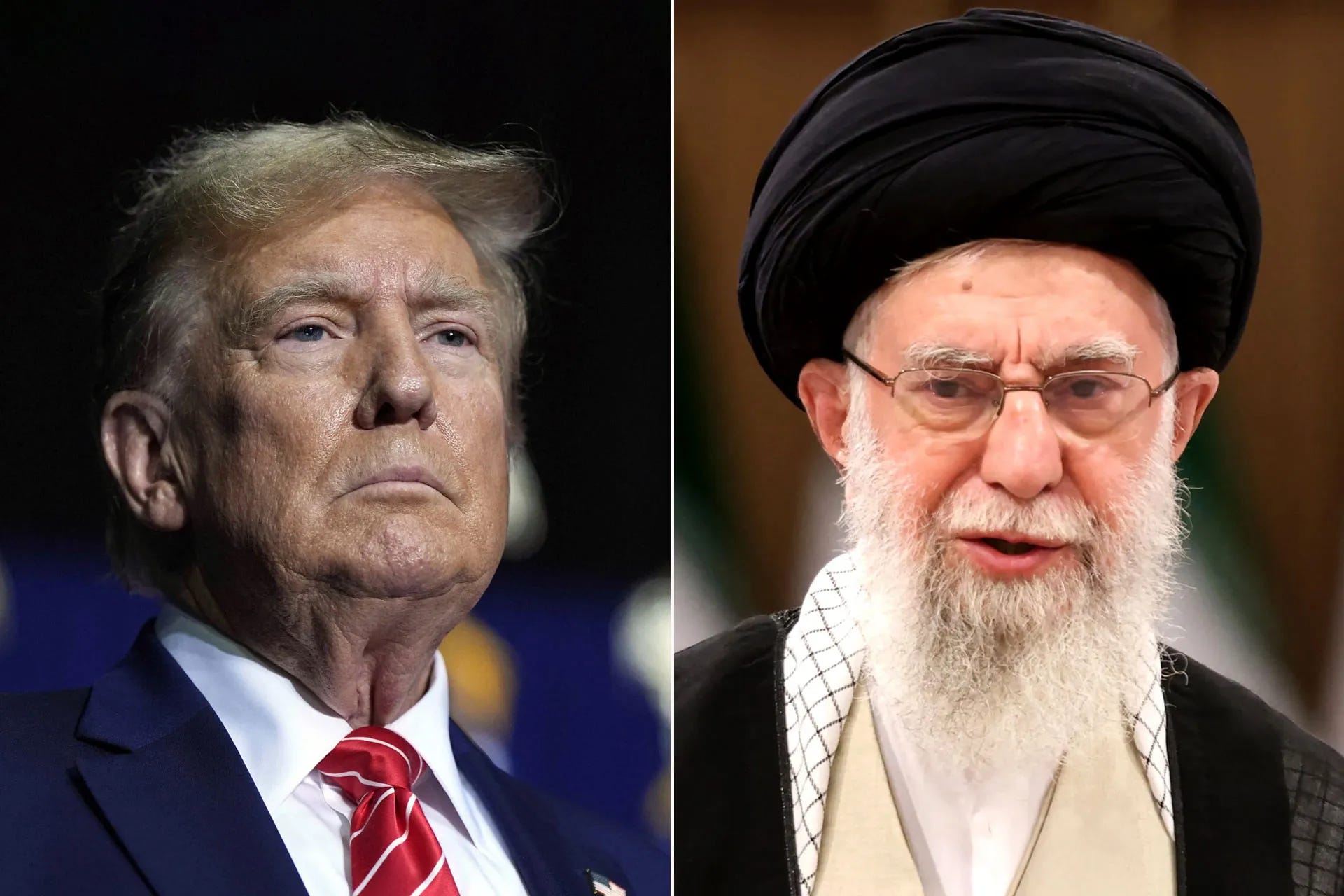
If we are speaking about a Donald Trump-led administration or a hardline faction within the U.S. establishment, the answer may not involve immediate regime change via military force. The more common scenario envisions undermining the conditions that allow the regime to survive crippling its ability to govern, weakening its economy, paralyzing its services, and leaving it to face a crisis-ridden public from a position of fragility rather than nationalist fervor.
This strategy hinges on the belief that once the regime loses its tools of economic and service-based control, it will decay from within and that social pressure could eventually morph into a political crisis. But this is far from guaranteed. History is replete with regimes that weathered severe blows and emerged more entrenched, especially when they were able to maintain internal security and redirect public anger outward.
Here lies the paradox: a war meant to weaken the regime could end up restoring its legitimacy—if it is perceived domestically as a foreign assault targeting the state, not just its leadership. Conversely, a regime that fails to manage the aftermath of a strike could collapse without its enemies needing to topple it through direct force.
In the end, any potential confrontation, if it occurs, is unlikely to resemble a traditional war. It will look more like a prolonged battle of nerves a contest of endurance and societal management under pressure. The United States is betting on a calibrated shock with long-term consequences, while Iran is betting on absorbing the blow and preventing it from snowballing into political collapse.
And between these two wagers, the region hangs on the edge of a war that may not be decided by missiles but by which side can survive the aftermath, and by whose people can still endure when the real question is no longer “Who struck first?” but “Who can live after the strike?”