

In a fiery speech delivered as his forces entered Hadhramaut in December, Aidarous al-Zubaidi, head of the Southern Transitional Council (STC), declared that the Sirfit area was southern land and that he would never relinquish it, vowing to defend it with all his might. This statement was widely seen as a clear red-line breach directed at the Sultanate of Oman by the UAE-backed STC, as described by Omani state media.
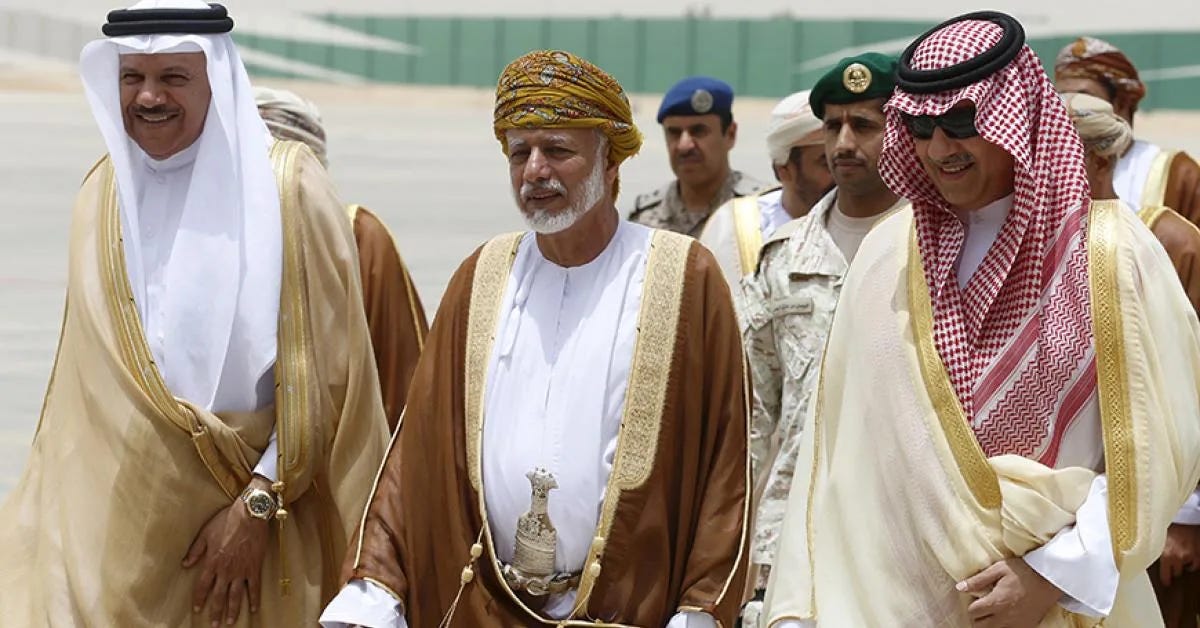
Following the STC’s announcement of its control over Hadhramaut and Al-Mahrah, Oman launched a series of notable diplomatic and military maneuvers. On December 22, Saudi Foreign Minister Faisal bin Farhan met with his Omani counterpart, Haitham bin Tariq, to discuss the unfolding crisis.
Within 48 hours of that meeting, another took place between Commander of the Royal Saudi Air Force Lt. Gen. Turki bin Bandar and the Commander of the Royal Omani Air Force, Maj. Gen. Khamis al-Ghafri.
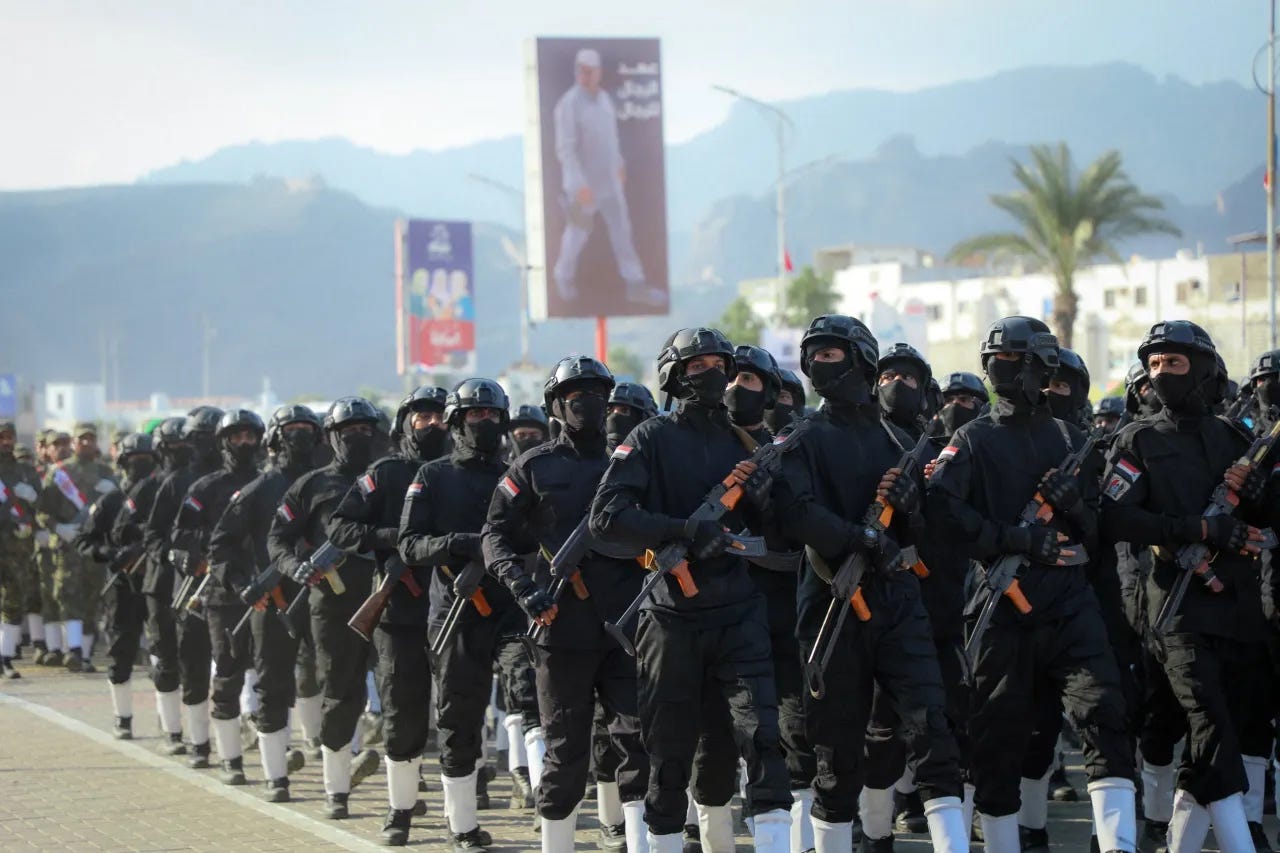
These meetings were quickly followed by armed clashes between STC forces and the Hadhramaut Tribal Alliance, as well as Saudi airstrikes targeting STC strongholds and weapons shipments from the UAE en route to STC fighters via the port of Mukalla. The conflict escalated further as UAE-backed STC forces suffered a string of defeats at the hands of Saudi-supported Nation Shield Forces.
Omani Interests at Stake
As the fighting intensified in Hadhramaut and STC forces seized control of Al-Mahrah, the group’s militants lowered the Yemeni national flag and raised the flag of the South at the Shahn border crossing with Oman. This move deeply alarmed Omani authorities, who viewed it as a direct threat to the sultanate’s national security.
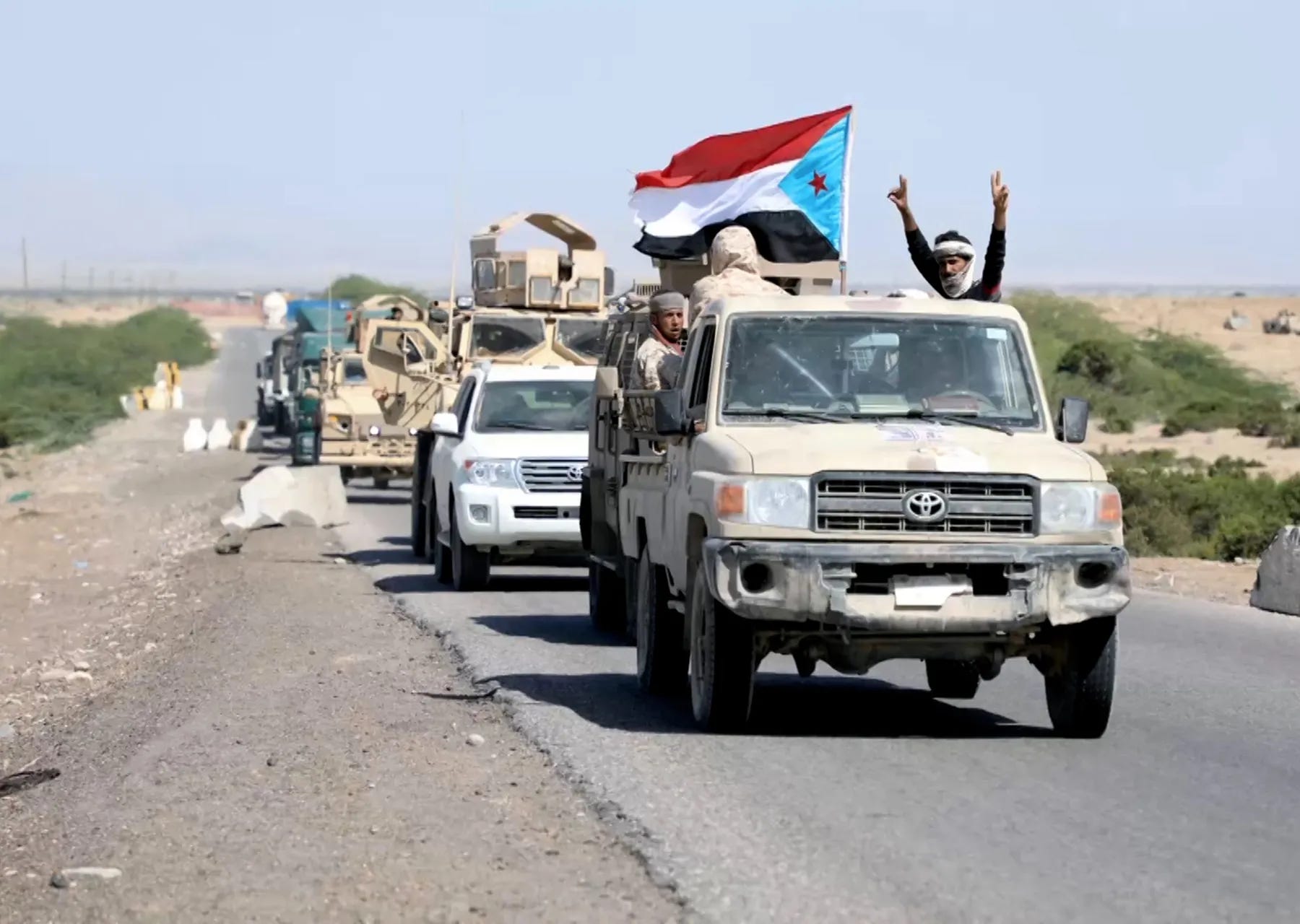
A tribal source in Al-Mahrah told Noon Post that Omani officials had previously warned they would close the border crossing if any flag other than the Yemeni national flag was raised. In response, STC forces were compelled to re-raise the Yemeni republican flag.
Omani activists and media outlets launched fierce attacks on the STC, denouncing it as a separatist entity that would never receive formal recognition. At the official level, the Omani Foreign Ministry called for dialogue, de-escalation, and political compromise in Yemen.
Meanwhile, UAE-aligned Yemeni activists criticized Oman’s stance, accusing Muscat of playing a “malicious” role in Hadhramaut and Al-Mahrah and subtly enabling the Houthis to launch attacks on the two provinces.
Speaking to Noon Post, former Yemeni minister Abdulsalam Razzaz described Oman’s recent moves in Hadhramaut and Al-Mahrah as coordinated with Saudi Arabia, aimed at expelling the UAE from Yemen in pursuit of Omani national interests.
Oman shares a 294-kilometer border with Yemen, and significant cultural and tribal ties link communities in Al-Mahrah with those in the sultanate. Muscat has also offered Omani citizenship to select Yemeni political figures and tribal leaders moves widely seen as advancing its strategic interests.
In recent years, Oman encouraged protests against the Saudi military presence in Al-Mahrah. Though Saudi-Omani relations have since evolved amid the current crisis, Oman continues to host Houthi leaders and faces accusations of facilitating arms and drug smuggling to the group.
Historically, during the 1960s, South Yemen under socialist rule from Aden was the primary supporter of the Popular Front for the Liberation of Dhofar, which opposed Oman’s ruling sultans. South Yemen provided direct military aid, training facilities, financial backing, and media support to the Dhofar insurgency. According to STC-aligned activists who spoke with Noon Post, Oman now fears a repeat of this historical scenario in a modern form.
Accusations and Counterpoints
Amid the ongoing conflict in eastern Yemen, Ahmed Balhaf, former advisor in Al-Mahrah, accused Oman’s Royal Office of fueling unrest in Hadhramaut by targeting UAE-backed Hadhrami Elite Forces and mobilizing public opinion both local and international against the STC and the UAE. He argued that this campaign played a central role in recent developments in eastern Yemen.
However, Yemeni political analyst Amer al-Dhamini rejected Balhaf’s accusations, insisting that Oman’s role has been balanced and consistent. He emphasized that since the STC’s offensive in Hadhramaut began, Oman has maintained a calm and diplomatic posture, favoring mediation and avoiding any belligerent rhetoric or escalation.
Al-Dhamini praised Muscat’s quiet diplomacy as it attempts to bridge divides amid the complex and overlapping interests of Yemen’s local and regional actors.
“Oman has consistently pursued a different path throughout the Yemen war over the past ten years,” al-Dhamini told Noon Post. “It avoided military involvement, rejected war, and prioritized dialogue and peaceful resolution.” Thanks to this policy, he noted, Oman has played a key role in numerous mediation efforts, from the Kuwait talks to more recent humanitarian negotiations, including the release of prisoners from various parties.
Even after the STC’s constitutional declaration and its incursions into Hadhramaut and Al-Mahrah, Oman continued to act according to its established approach engaging discreetly yet effectively. Al-Dhamini noted that Oman’s behind-the-scenes diplomacy has subtly shaped the trajectory of events without seeking the spotlight.
He further highlighted that Oman’s role in Hadhramaut has evolved into that of a mediator following the UAE’s exit from Yemen. This was exemplified by visits from Omani officials to the UAE and meetings between Omani and Emirati foreign ministers to discuss de-escalation and broader Gulf coordination.
Rising Tensions
In an interview with Noon Post, Afrah Al-Hariri, a member of the Women’s Technical Advisory Group to the UN Special Envoy for Yemen, said that Oman’s decision to intervene in the conflict between UAE-backed STC forces and Saudi-backed Nation Shield Forces was driven by a clear intent to defend its borders.
She suggested that had the fighting spilled into Omani territory, Muscat might have resorted to military action a legitimate act of self-defense, in her view. Oman’s alignment with Saudi Arabia in this context reinforced its concern, despite its broader policy of neutrality.
Hariri emphasized that the existence of armed groups operating outside the framework of the Yemeni state even one as weak as it may be naturally raises alarms for any neighboring country. She criticized the STC’s move into Yemen’s eastern provinces, calling it an unforgivable mistake that could further fracture the South ironically, the very region the STC claims to protect.
She argued that Hadhramaut and its people will not tolerate any forceful entry into their province, even from fellow southerners, and will resist any return to southern rule imposed by force. What happened in Aden, she said, should serve as a cautionary tale.
Hariri also pointed out that influential Hadhrami merchants residing in Saudi Arabia, along with powerful Mahri businessmen living in Oman, will not remain passive. This dynamic, she warned, could further inflame the situation and lead to greater fragmentation in Yemen—particularly in the South—driven by personal interests and under the pretext of safeguarding the Gulf states.
Following the Nation Shield Forces’ takeover under the leadership of Yemeni President Rashad al-Alimi, Oman’s Foreign Ministry welcomed the call for an inclusive dialogue among Yemen’s southern factions, to be hosted in Riyadh.
On the ground, local sources in Al-Mahrah told Noon Post that two days ago, the local authorities shut down the Shahn border crossing with Oman entirely, suspending all traffic until further notice. Neither Omani nor Yemeni authorities be it the internationally recognized government or the STC have offered any explanation for the move.