

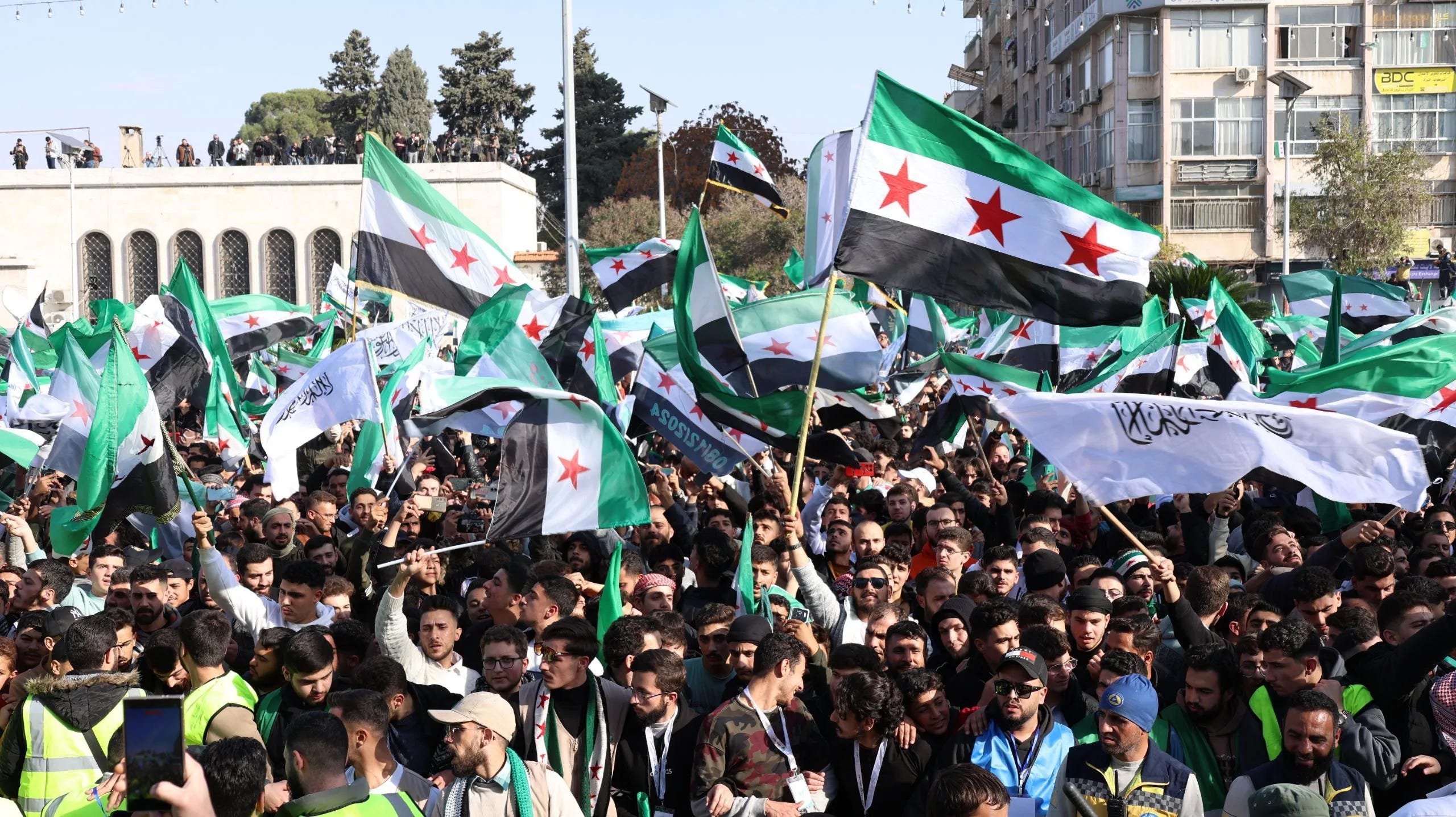
“The mindset of a revolutionary does not build a state; the mindset of revolution does not build a state. A revolution is defined by upheaval, eruption, and reaction it may succeed in dismantling a regime, but it cannot construct one. The revolution is over; it is part of our history, one we take pride in and commemorate. But we must not summon its mentality.”
With these words, Syrian President Ahmed al-Sharaa outlined the political framework for the post-Assad era following the collapse of Bashar al-Assad’s regime on December 8, 2024. He drew a clear line between the era of revolution and that of state-building, declaring that the priority has shifted toward establishing governance rooted in law and institutions.
Today, marking the fifteenth anniversary of the Syrian revolution and more than a year after Assad’s flight Noon Post examines the transition from a revolutionary mindset to one of statehood. It explores whether the revolution can evolve into institutions without losing its essence, the defining features of this transformation, and the obstacles that continue to hinder it.
The Logic of Revolution vs. the Logic of the State
The Syrian revolution, which began in March 2011, brought to an end a political era that had lasted more than half a century with the fall of the Assad regime. After years of sacrifice and struggle, that moment of collapse marked the beginning of a new phase one burdened by a legacy of violations and wounds yet to be healed.
In this phase, a clear divide has emerged regarding the relationship between revolution and statehood. Some argue that revolution, as an ongoing act, should not end with the fall of the regime. Others contend that it has concluded, and that a new phase guided by different rules and tools must begin.
Transitioning to a state-oriented mindset cannot be achieved through rhetoric alone. Public memory remains too heavy to ignore unless its demands are genuinely met. This shift requires a governance framework that reshapes relations between authority and society on the basis of trust and accountability, while entrenching justice, equality, and mechanisms to hold perpetrators of violations to account.
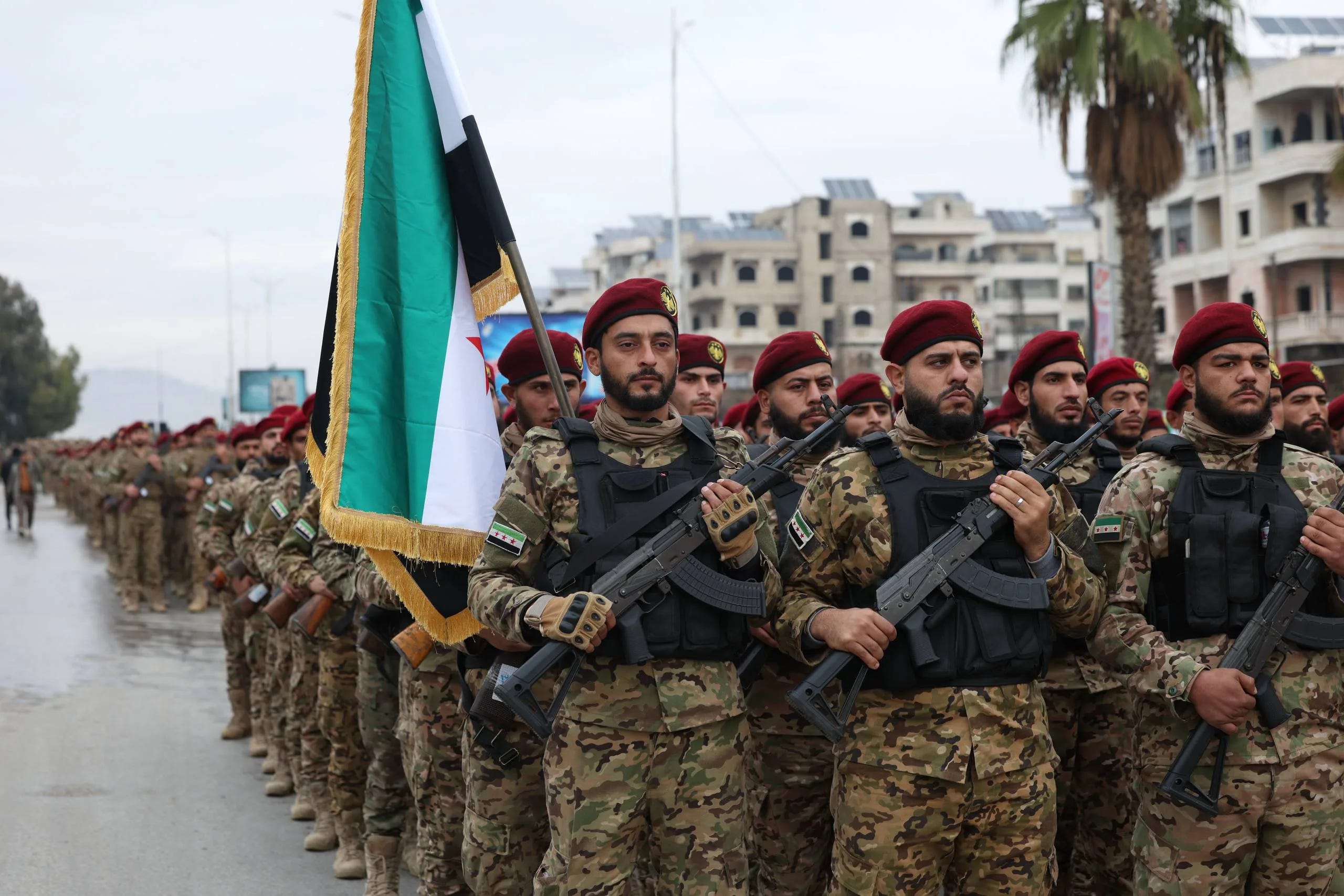
Yet moving from revolution to state functions does not mean abandoning or marginalizing the revolution’s ideals. Rather, the revolutionary spirit must be refined and institutionalized serving as a compass for governance while its mechanisms are translated into state structures capable of fulfilling public functions.
Legal researcher Nawras al-Abdullah, director of the Consensus and Identity Unit at the Syrian Dialogue Center, explains that the logic of revolution rests on moral and practical legitimacy, whereas the logic of the state is grounded in legal and political legitimacy. Emotional mobilization and grand slogans define the former; administration, metrics, and institutionalization define the latter.
Speaking to Noon Post, al-Abdullah notes that more than a year into the transition, Syria still relies heavily on the legitimacy of victory and the overthrow of authoritarianism, rather than on institutional foundations. This is evident, he argues, in the issuance of laws and decrees without clear institutional backing, despite repeated declarations since the January 29, 2025 “Victory Statement” that the revolutionary phase has ended.
He maintains that the relationship between revolution and state is not inherently contradictory. In Syria’s case, the revolution served as a foundational moment to redefine the state itself. Thus, while revolutionary action may have ended, state-building should still be rooted in the revolution’s principles.
However, he warns that the continued reliance on revolutionary methods and legitimacy in the state-building phase becomes increasingly problematic over time. Growing public discourse around rule of law, institutional performance, and living conditions suggests that invoking the revolutionary phase alone is no longer sufficient.
A Path Toward Statehood
Following the fall of Assad, Syria’s new administration initiated a series of measures some swift, others delayed most notably:
Establishing interim governing structures to ensure continuity, including a caretaker government led by Mohammad al-Bashir, followed by a transitional cabinet of 23 ministers.
Convening the “Victory Conference” on January 29, 2025, which authorized Ahmed al-Sharaa as president, dissolved the Baath Party and former security apparatus, and launched the rebuilding of state institutions.
Gradually reorganizing the military and rejecting partition, including efforts to integrate factions and restructure internal security bodies.
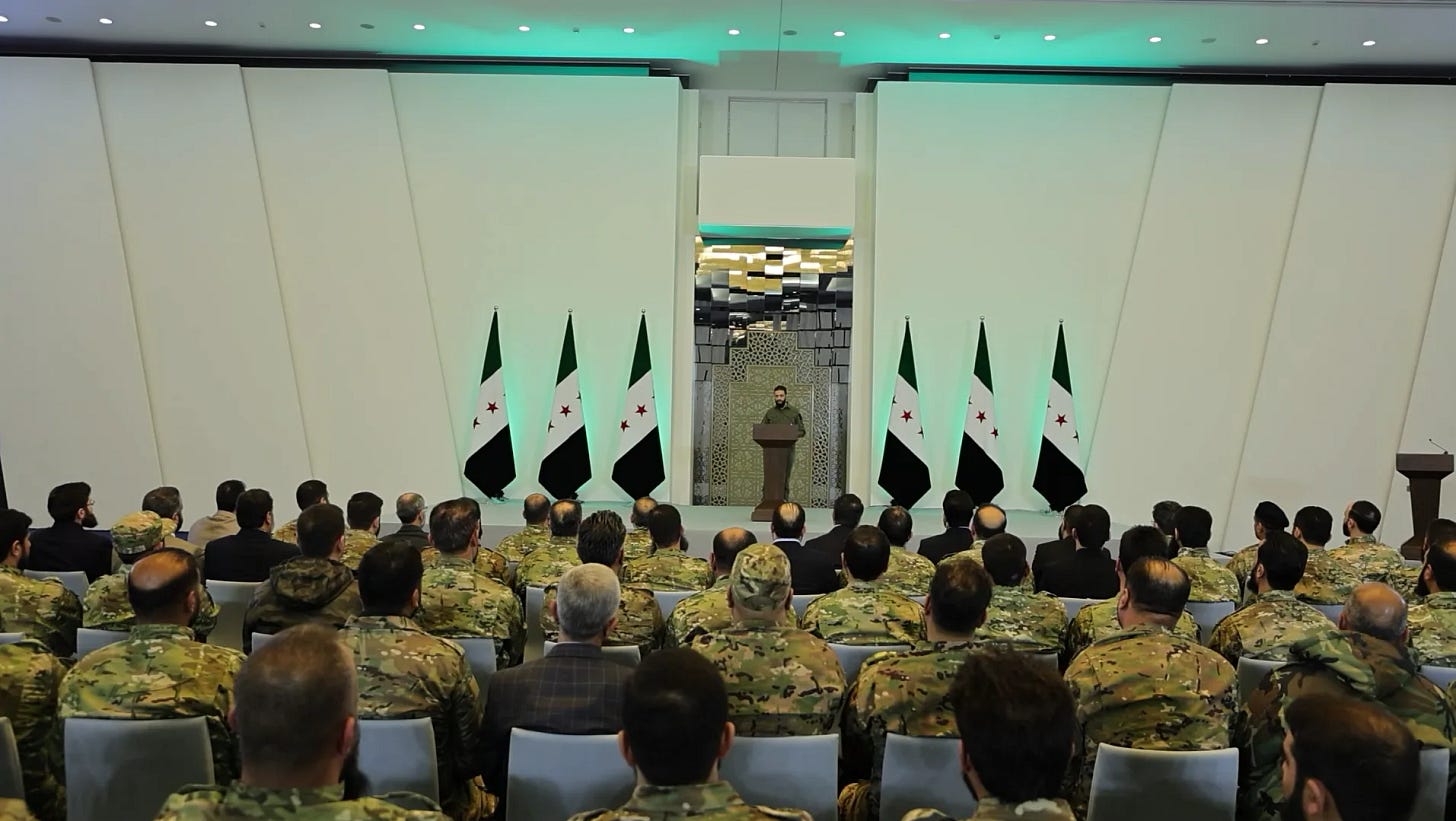
Syrian President Ahmed al-Sharaa delivers a speech during the Victory Conference, January 29, 2025 (Presidency of the Republic) Holding a national dialogue conference in February and issuing a temporary constitutional declaration in March 2025.
Forming national bodies such as the National Commission for the Missing and the National Transitional Justice Authority.
Organizing parliamentary elections, albeit with delays.
Pursuing diplomatic outreach to Arab and Western states to restore international legitimacy.
External Engagement and Internal Reordering
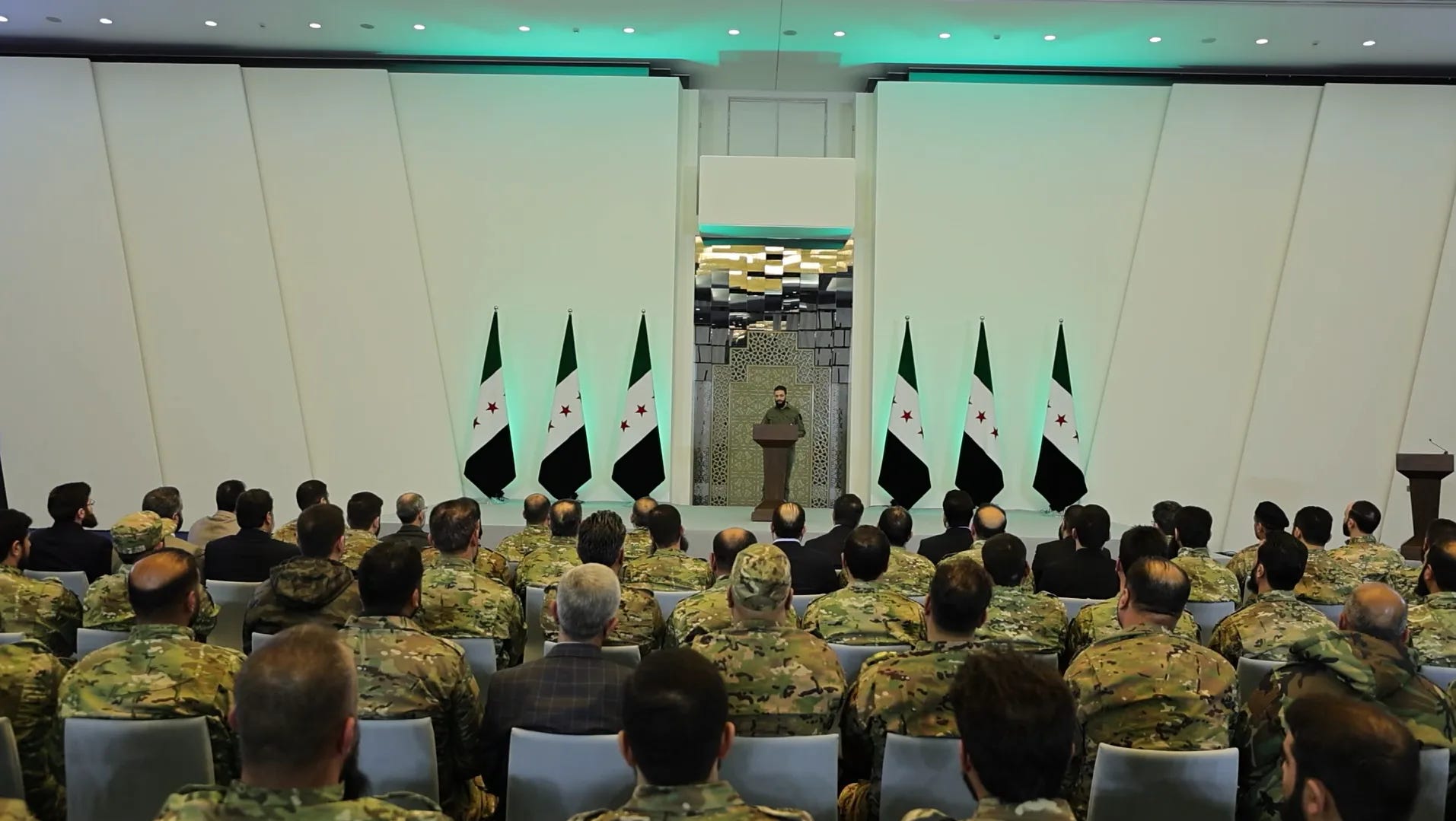
Silvia Carincci, associate researcher at the Italian Institute for International Political Studies (ISPI), considers diplomatic efforts among the most significant achievements of the post-revolution phase. Syria has actively re-engaged internationally, with President al-Sharaa addressing the UN General Assembly for the first time in decades.
She notes key developments in 2025, including meetings with U.S. President Donald Trump, the lifting of sanctions particularly those under the Caesar Act and the removal of Hay’at Tahrir al-Sham from terrorism lists.
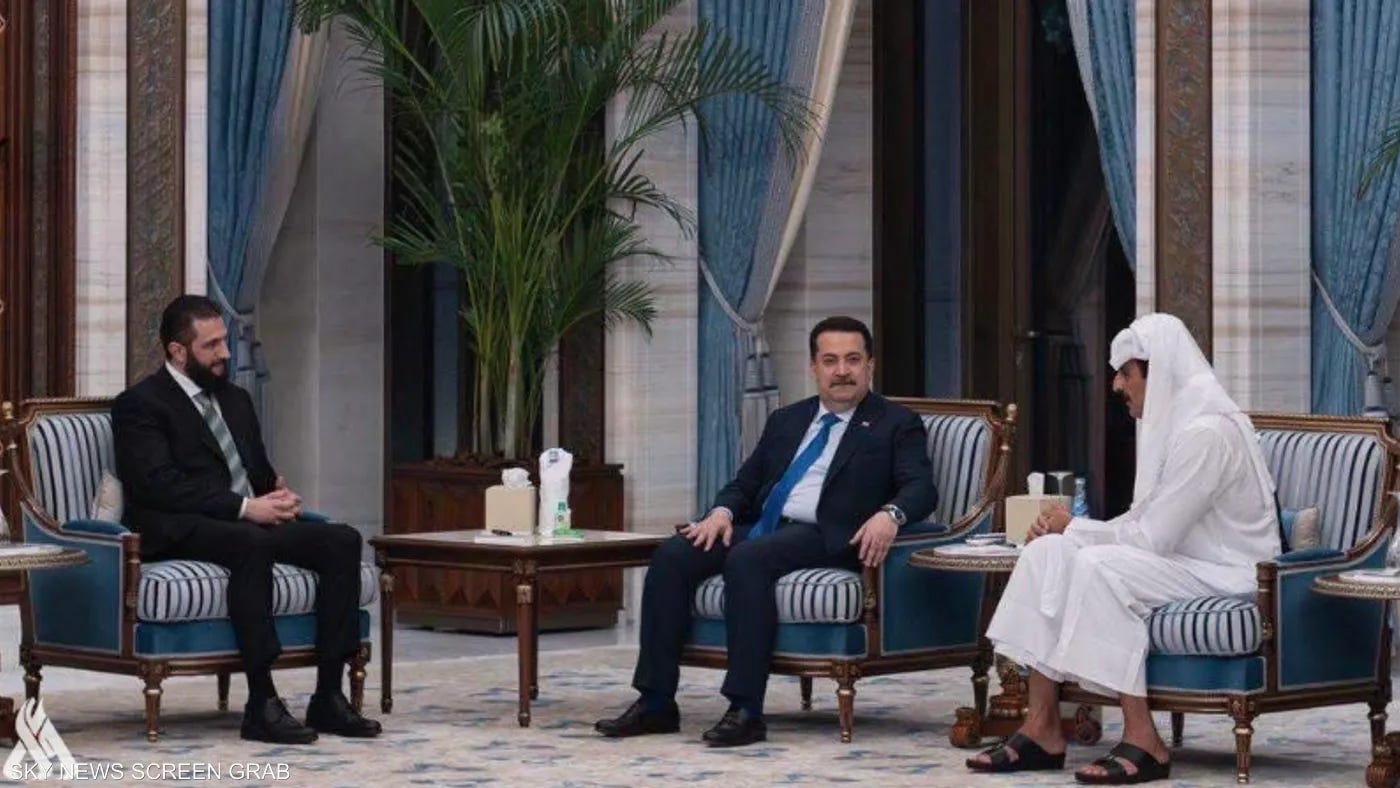
According to Carincci, Syria has adopted a “zero problems” foreign policy, maintaining balanced relations and avoiding alignment with geopolitical blocs a continuation of strategies previously employed in Idlib but now elevated to a national scale.
This approach has expanded ties not only with traditional allies like Qatar and Turkey but also with new partners such as Saudi Arabia, resulting in strategic economic agreements.
Domestically, Syria has seen partial improvements in security, reforms in the security sector, and a broader space for political expression. For the first time in decades, political issues are being openly discussed in public.
Obstacles on Three Levels
Despite these efforts, the transition has not been smooth. Violent clashes in coastal regions and Suwayda, delays in integrating the Syrian Democratic Forces, and ongoing Israeli incursions highlight persistent instability.
Criticism has also emerged over governance practices, including the issuance of decrees that contradict the constitutional declaration, nepotism in appointments, and delays in transitional justice and accountability.
Al-Abdullah identifies three categories of obstacles:
Contextual challenges: Rival forces, remnants of the old regime, and regional dynamics that destabilize the transition.
Internal challenges: Continued reliance on mobilization rhetoric, sensitivity to criticism, and prioritization of loyalty over merit.
Societal challenges: Public resistance to regulation, widespread weaponization, and deep mistrust of institutions after 14 years of conflict.
Core Files for State-Building
The transition to statehood remains a complex process shaped by decades of authoritarianism and years of war. Carincci notes that while the first year focused on international legitimacy, the second is likely to prioritize domestic challenges.
Key priorities include expanding political participation, restructuring institutions, and forging a new social contract. Balancing inclusivity with cautious governance will be critical, particularly given security risks and lessons from the Arab Spring.
Future steps may include cabinet reshuffles, activating parliament, drafting a permanent constitution, and passing a political parties law.
Equally critical is fostering social cohesion. Rebuilding trust among Syria’s diverse communities will be a long and difficult process, but local initiatives and inclusive dialogue may help bridge divides.
Progress in transitional justice remains essential, alongside economic recovery efforts to meet growing public expectations for improved living conditions.
