

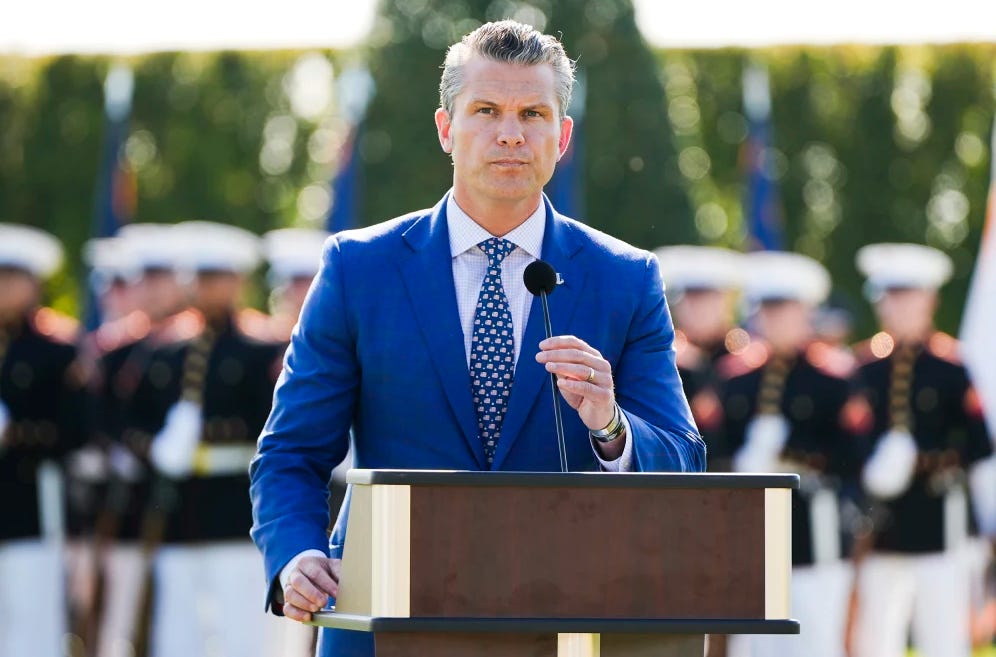
As American society enters a phase of unprecedented upheaval marked by shifting identities, clashing ideologies, and a reconfiguration of power the name Pete Hegseth has emerged as one of the most prominent voices seeking to redefine the United States’ global role.
Hegseth’s ideological project traces back to his military service, where he developed a nationalist-religious vision of America as a divinely ordained nation with its military as the protector of this sacred mission. As he transitioned from the military into media and later political circles, his ideas evolved into a comprehensive ideological framework.
With growing influence over the right-wing base and decision-making circles, Hegseth’s views are no longer abstract theories. They have translated into concrete strategies that shape current U.S. policy.
He has championed a focus on what he calls “great power competition,” a tougher deterrence posture against U.S. adversaries, and a mobilizing rhetoric that frames both domestic and foreign conflicts as existential battles between a righteous America and forces aiming to dismantle it.
This report explores the intellectual foundations of Hegseth’s worldview from his military experience to his views on war, religion, and America’s perceived enemies and how his ideology has increasingly shaped Washington’s strategic thinking.
From Soldier to Secretary of War
Born on June 6, 1980, in Minneapolis, Minnesota, Pete Hegseth grew up in a middle-class Protestant household in Forest Lake. Although little is known about his family’s political background, his upbringing in a conservative religious environment informed his early moral outlook. His alignment with the conservative movement solidified during and after his years at Princeton University.
The September 11 attacks proved pivotal, prompting Hegseth to join the Army National Guard, where he served in the infantry. A vocal supporter of the Iraq invasion, he fought in both Iraq and Afghanistan and spent a year at Guantanamo Bay during a time marked by widespread abuses.
Despite not rising to the military’s top ranks, his battlefield experience reinforced a conviction that American policy should be rooted in military strength and unwavering political will.
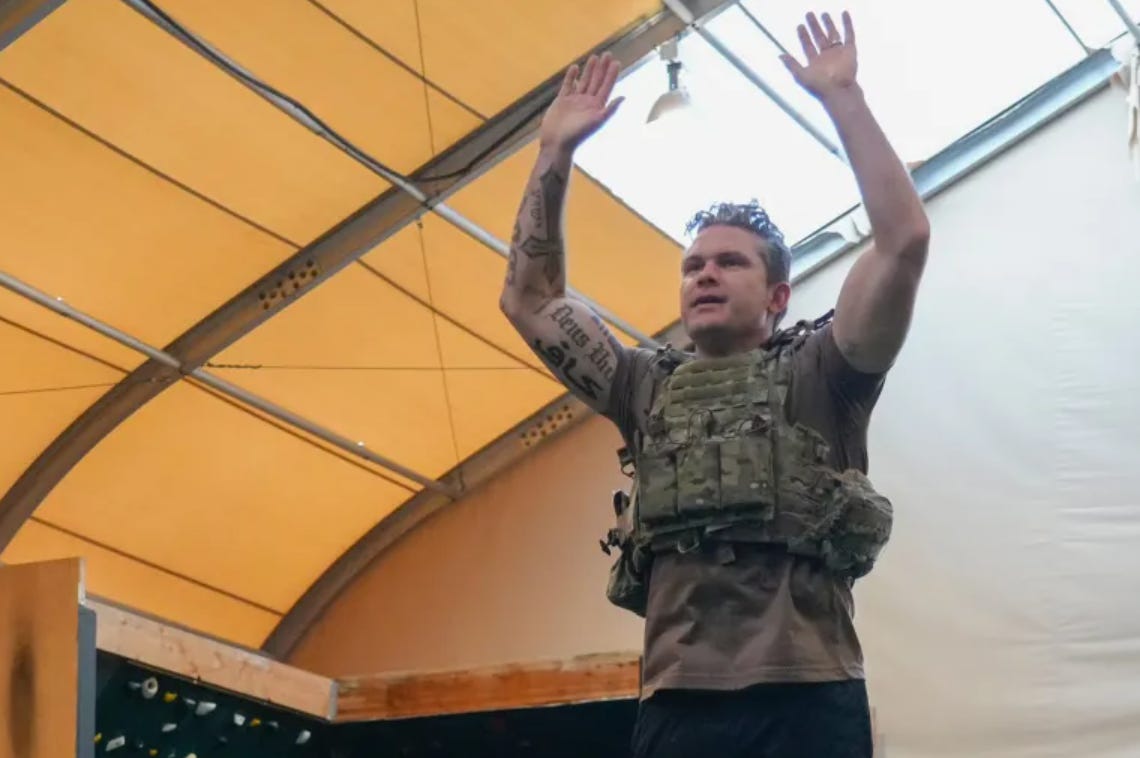
In his book The War on Warriors, Hegseth argues that the U.S. failures in Iraq and Afghanistan stemmed not from military shortcomings but from a lack of political resolve. This belief that decisive military power is essential to preserving America’s standing became the backbone of his media and political persona.
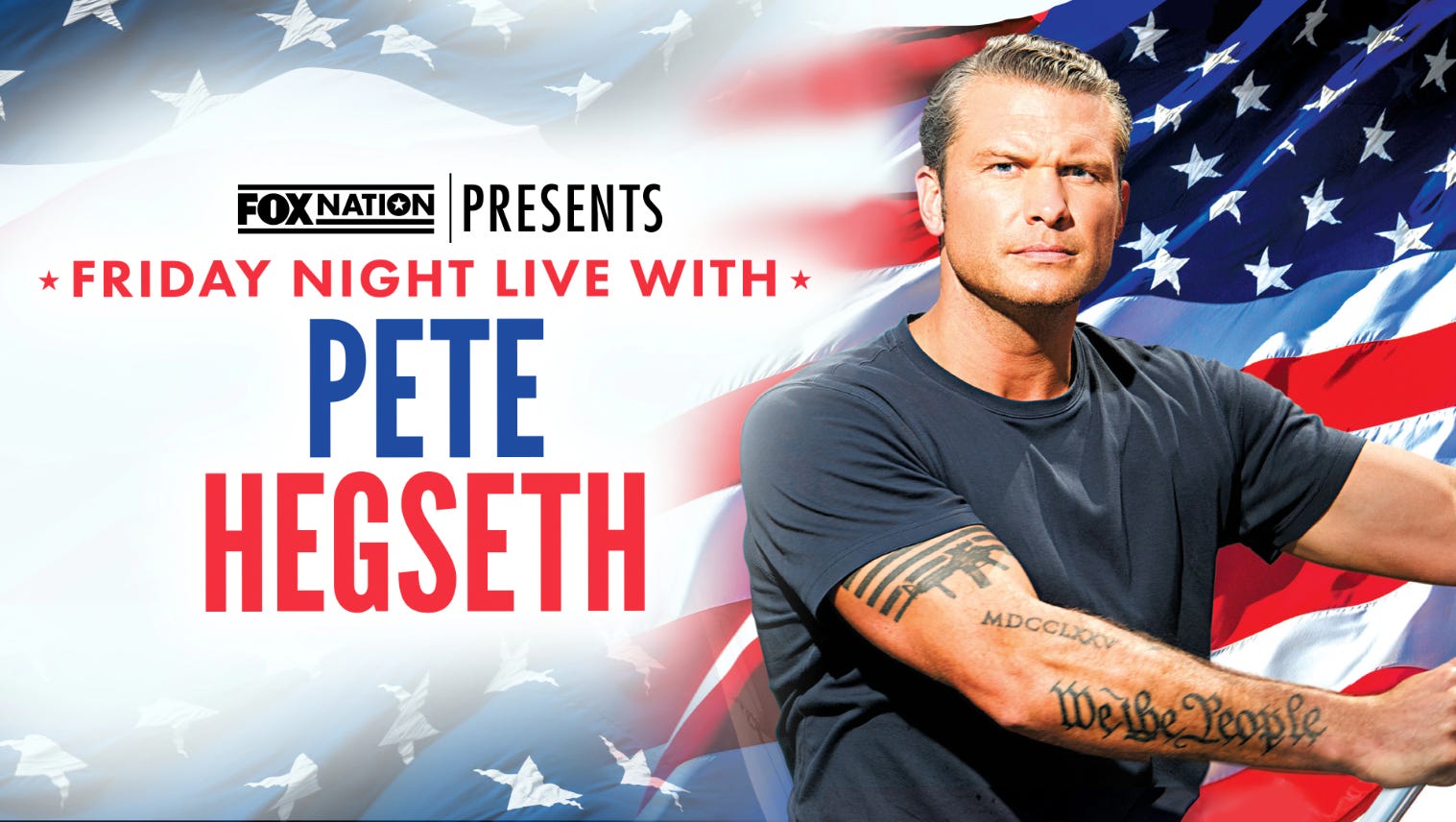
After leaving the military, Hegseth transitioned into political media in 2014. Fox News became a platform where he transformed his military experience into potent right-wing commentary. Through books and op-eds, he attacked leftist influence in American institutions and called for a return to traditional values through religious discipline and militarization.
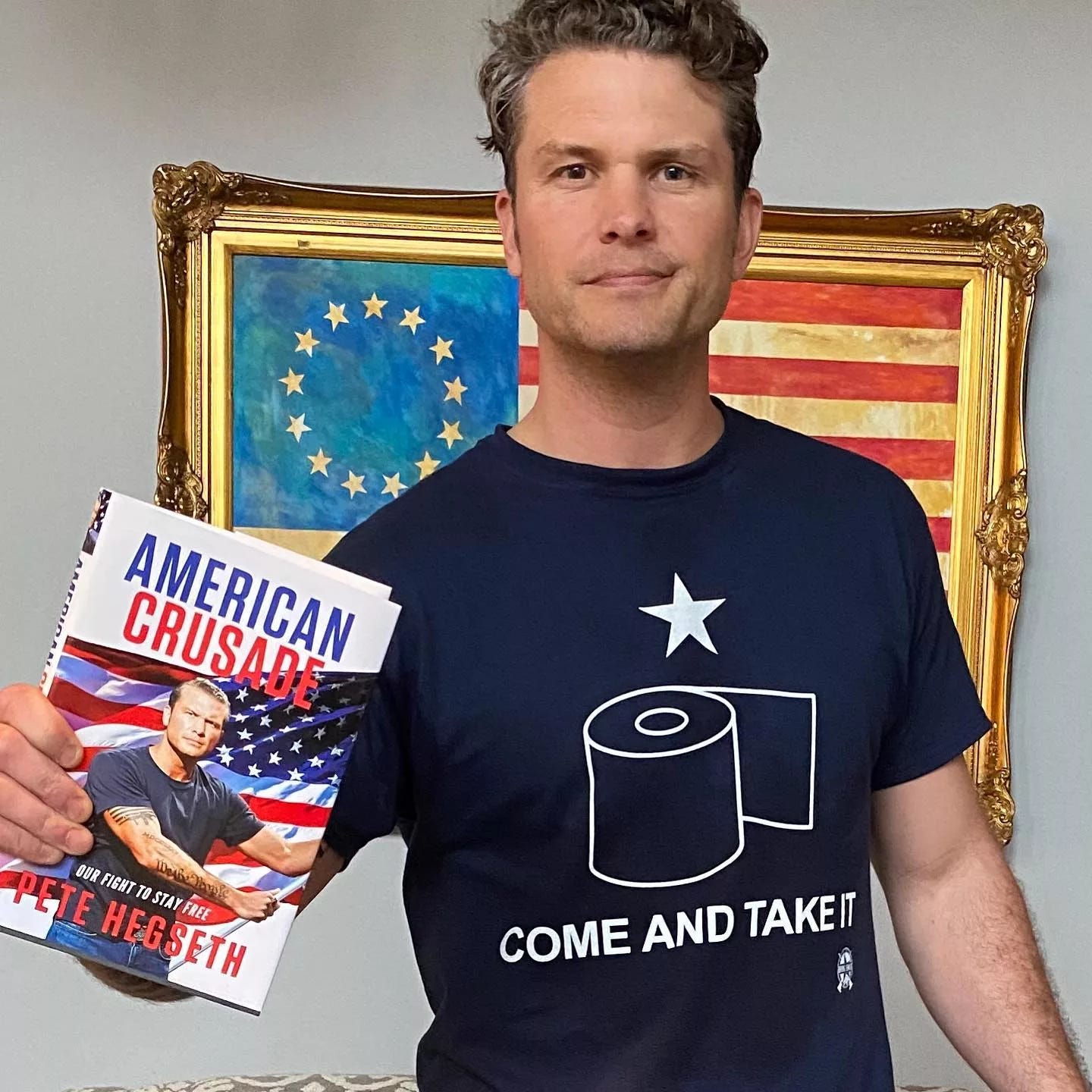
His key publications American Crusade, Battle for the American Mind, and The War on Warriors have helped reshape conservative discourse, making education, the military, and culture primary political battlegrounds. He defines “the internal enemy” as Islamism and the liberal elite, particularly those dominating universities and media.
Hegseth’s rising prominence in conservative media earned him a wide base of support veterans, religious conservatives, and rural Americans. Though he initially opposed Donald Trump, he became an ardent supporter once Trump aligned himself with anti-leftist politics.
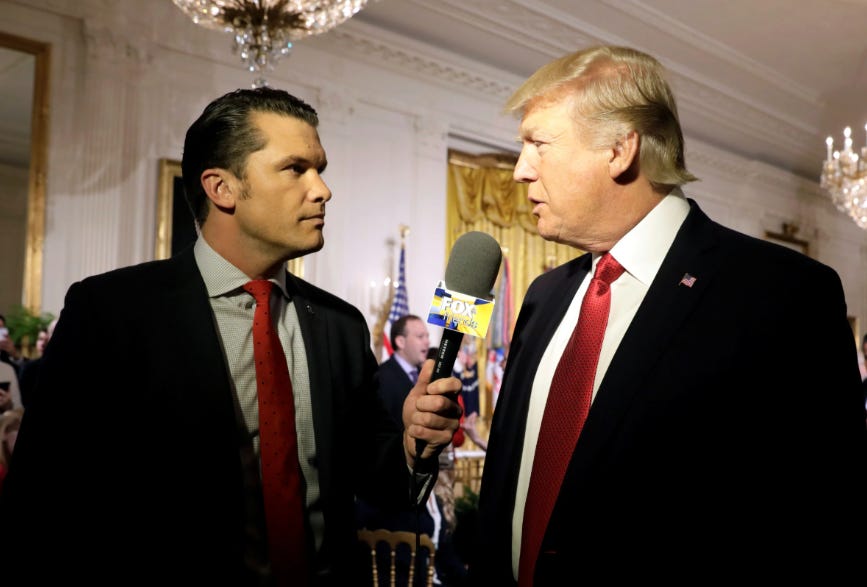
Since 2016, Hegseth has acted as an informal adviser to Trump and helped secure presidential pardons for U.S. soldiers accused of war crimes in Iraq and Afghanistan.
He viewed Trump’s presidency as a cultural revolt against a liberal elite that, in his view, had hijacked America. In American Crusade, he depicts the 2016 election as a civilizational inflection point not merely partisan but foundational to America’s identity and sovereignty.
By 2025, Hegseth was appointed Secretary of Defense renamed Secretary of War marking a culmination of his intertwined military, media, and political career. His ascent reflects a broader ideological realignment within U.S. security circles.
The Identity Battle: Clashing with the Left and Islamism
Hegseth’s intellectual framework is grounded in two interlocking pillars: a nationalist-religious identity rooted in Judeo-Christian values and a militarist ethos that elevates armed strength as the moral and spiritual backbone of the nation.
He posits that America faces a dual threat: external enemies like terrorism, China, and Iran, and internal enemies in the form of Islamism, liberal elites, academia, media, and left-wing cultural agendas. To Hegseth, these forces are not just political rivals but existential threats to the American spirit.
In his books, he lambasts liberal institutions as tools of societal deconstruction. Civil rights, multiculturalism, feminism, and gender theory are depicted as corrosive ideologies eroding America’s traditional values. Once a supporter of feminism, Hegseth now argues that gender politics have obliterated biological distinctions and undermined traditional manhood.
He believes that secular liberalism weakens America’s moral fabric. According to Hegseth, the secular elite aim to eliminate Christian faith from public life, replacing it with a new “atheist religion.” He opposes the separation of church and state, asserting that U.S. laws should be rooted in biblical teachings.
In this worldview, the ongoing political and cultural battles are not just policy disputes they are a “crusade” to save the American soul from internal collapse.
Education as a Battlefield
In Battle for the American Mind, Hegseth zeroes in on the education system as the frontline in America’s cultural war. He argues that since the early 20th century, progressive educators have transformed schools into engines of leftist ideology indoctrinating students with secularism, cultural relativism, gender fluidity, and anti-capitalist sentiment.
According to Hegseth, these changes have eroded religious belief, national loyalty, and traditional morality. He calls for a sweeping educational revolution centered on “Classical Christian Education,” which emphasizes Western philosophy, American history, and Christian theology. The goal: to produce a new generation of Americans grounded in conservative faith and civic virtue.
The Soldier’s Tale: War, Betrayal, and Redemption
Hegseth’s personal combat experience deeply informs his worldview. He has often lamented the disconnect between the sacrifices of soldiers and the political leadership that, in his view, failed to support them adequately. This sense of betrayal led him to compile Modern Warriors, a book of oral histories from veterans of the Iraq and Afghanistan wars.
These testimonies idealize soldiers as moral exemplars, downplaying the broader ethical and geopolitical complexities of America’s military campaigns. In The War on Warriors, he argues that liberal ideologies are weakening the military’s combat readiness and moral clarity.
He presents the military not merely as a tool of statecraft but as the last bastion of American virtue, embodying discipline, masculinity, and faith. This vision crystallizes in works like American Crusade, where the military becomes the spiritual guardian of the nation’s soul.
The Chosen Nation: Faith and Foreign Policy
Hegseth places his Christian identity at the center of his national and political philosophy. He sees the United States as a “chosen nation” with a divine mission, closely intertwined with Israel as a sacred partner.
In American Crusade, he dedicates significant attention to defending Israel as the West’s front line against civilizational threats. He regards support for Israel not merely as strategic but as part of a shared Judeo-Christian destiny. He accuses Islamism and the left of fomenting anti-Semitism and portrays Islam as inherently violent and expansionist.
He calls for uncompromising military responses to Islamist threats and has condemned Turkish President Recep Tayyip Erdoğan for dismantling Turkey’s secular military legacy even as he opposes secularism at home.
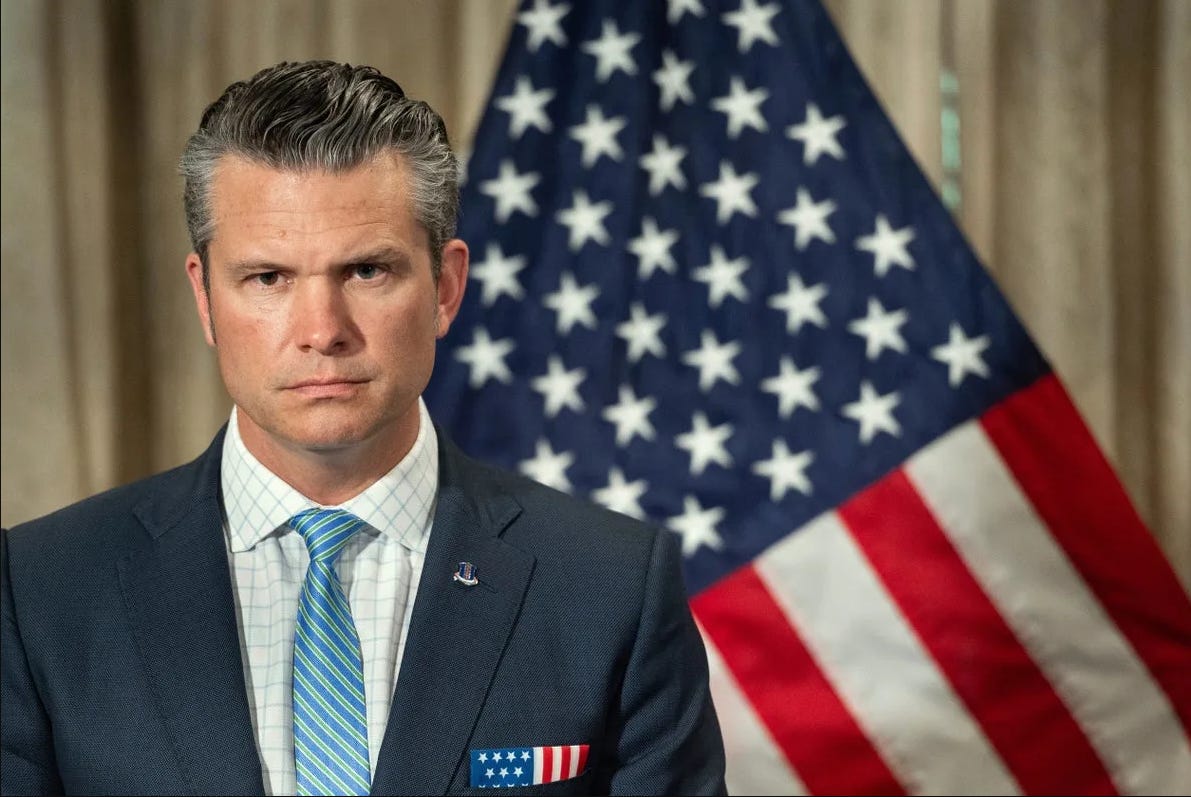
For Hegseth, Iran poses an ideological as well as nuclear threat, while China and Russia represent strategic and regional challenges, respectively.
He advocates shifting U.S. strategy toward large-scale deterrence and great power competition, emphasizing short, decisive wars over protracted diplomacy. His worldview integrates religious destiny, military strength, and a stark dichotomy between good and evil.
From Ideas to Policy: Hegseth’s Influence in Washington
Hegseth’s ideology is no longer confined to books or TV segments. From his influential role in the Trump orbit to his current leadership at the Pentagon, he has helped pivot U.S. strategic focus toward great power rivalry, religious nationalism, and militarized identity politics.
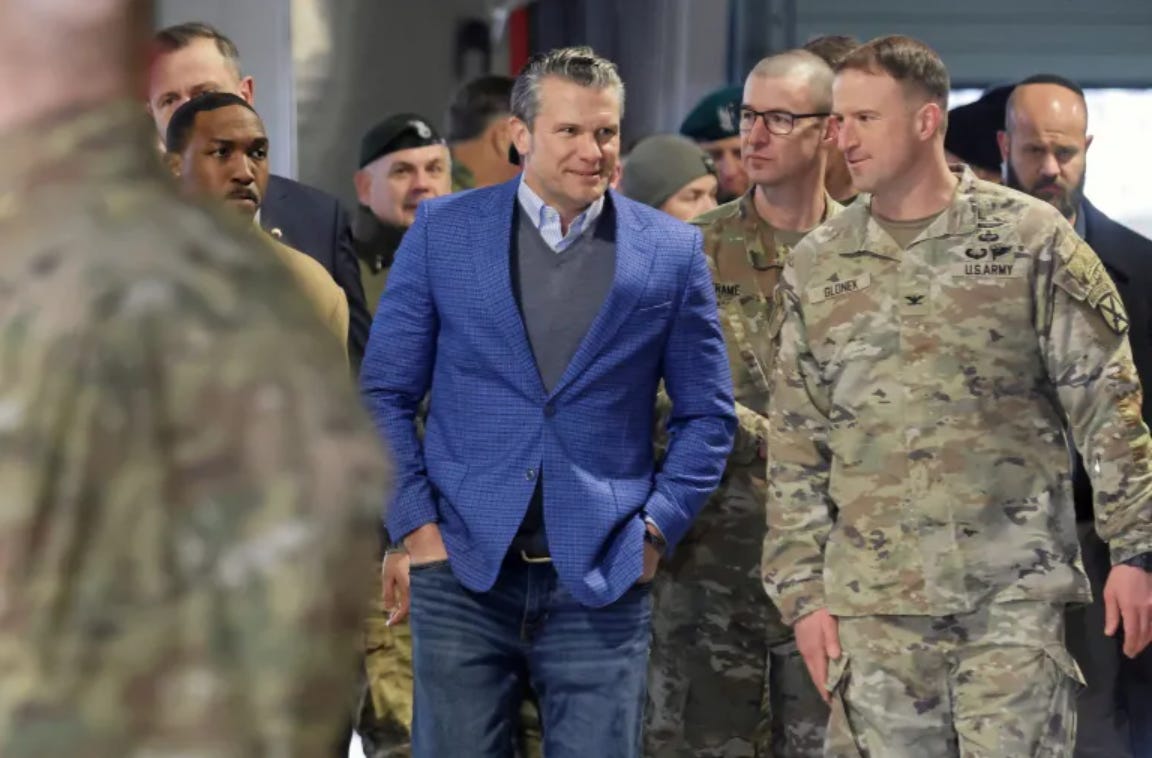
He has advocated for reducing U.S. military commitments in low-priority regions, reallocating resources to Asia and the Middle East, and reasserting American dominance through overwhelming force. His strategic outlook blends elements of traditional U.S. doctrine like deterrence and support for Israel with an overtly religious and nationalist narrative.
Ultimately, Hegseth’s project is an attempt to redefine American identity and global purpose through a nationalist-Christian lens. By fusing battlefield experience, media influence, and ideological clarity, he has crafted a potent vision of a “crusading America” locked in an existential battle at home and abroad to preserve its sacred values.
