

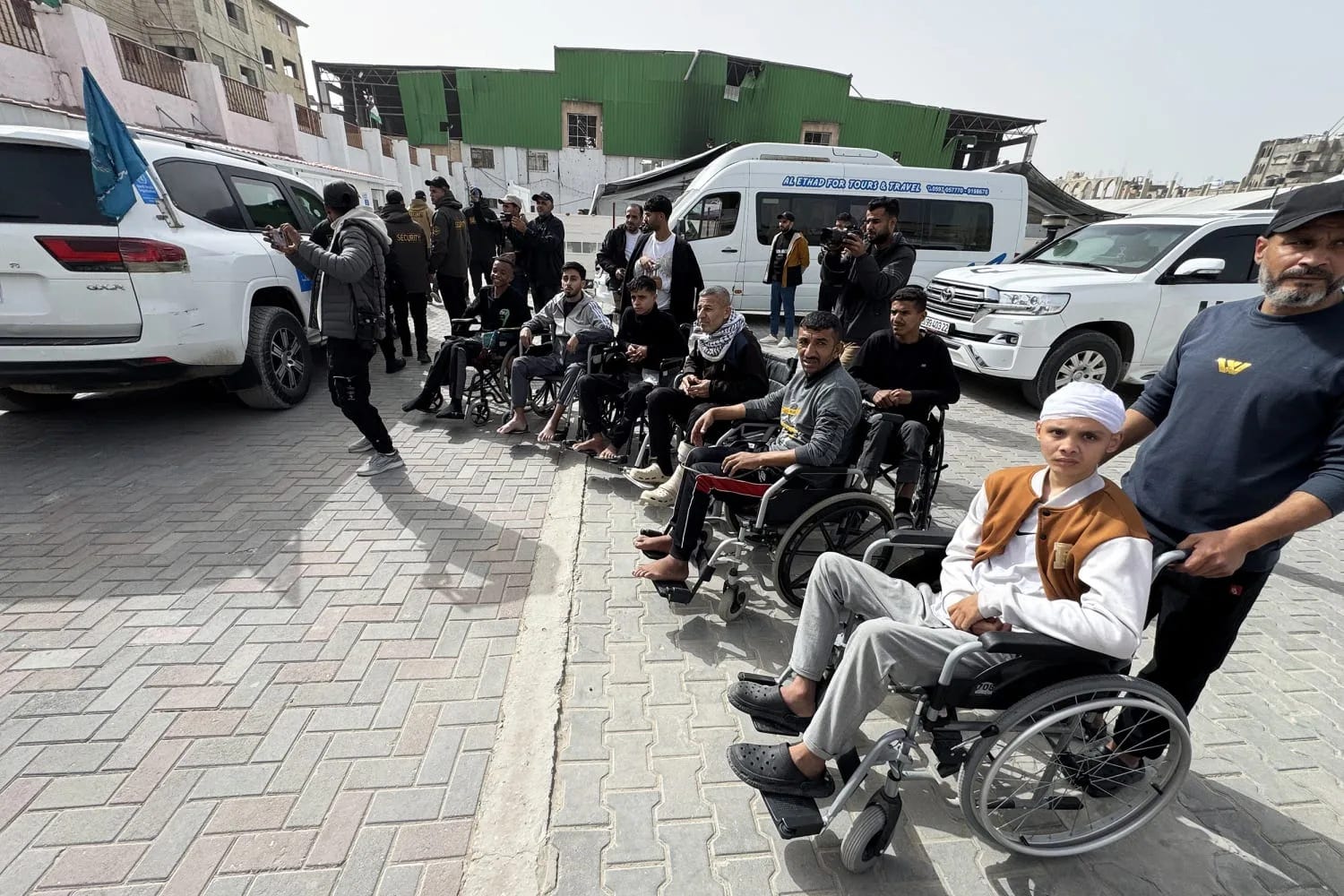
In the aftermath of Israel’s genocidal war on Gaza—launched on October 7, 2023—the bloodshed has not ceased, even after a ceasefire agreement came into effect on October 11, 2025. The war has left more than 73,000 dead and 184,000 wounded across the enclave.
Today, the injured face slim chances of traveling through the Rafah crossing the only land outlet connecting Gaza to the outside world.
For thousands of patients and war-wounded, travel is no longer a choice but a matter of life or death, amid the collapse of Gaza’s healthcare system, which Israeli forces systematically dismantled during the war. Restrictions on the flow of medical supplies, as well as on the movement of patients and medical delegations, remain firmly in place.
For 11 months, Israeli authorities barred any Palestinian patient or injured person from leaving Gaza for treatment. Crossings were sealed on March 2, 2025. The war resumed with greater ferocity on March 18, 2025, following Israel’s breach of a ceasefire that had begun on January 19, 2025.
Under a ceasefire agreement reached on October 11, 2025, Israel announced the reopening of the Rafah crossing on February 2, 2026, allowing patients and stranded individuals to travel under full Israeli security control, alongside a European mission overseeing civilian operations.
The crossing, however, remained open for little more than a month. In early March 2026, Israeli authorities shut it down again, citing security conditions shattering the hopes of thousands awaiting treatment.
United Nations data indicates that only 260 patients and wounded individuals managed to travel abroad for treatment between February 2 and February 19, 2026. Limited departures continued before Israel once again closed the crossing on March 1, 2026, citing security concerns and the U.S.-Israeli war on Iran.
A partial reopening was announced on March 6, 2026, under the same restrictions, but this has yet to materialize on the ground. Rafah crossing remains closed to this day.
For many in Gaza, the war with Iran has been used as a pretext to tighten the siege further restricting aid, goods, and medical evacuations. As a result, nearly 20,000 patients and wounded individuals are left facing an uncertain fate unless the crossing is urgently reopened.
A Painfully Slow Process
Noon Post spoke with several war-wounded individuals whose names are listed for travel. Each recounted a deeply personal ordeal shaped by prolonged waiting, deteriorating health, and unrelenting pain.
One of them is 17-year-old Mohammed Al-Rajoudi. On July 18, 2025, he was searching for food for his family, heading toward U.S. aid distribution centers in southern Gaza. He returned carried on shoulders paralyzed after a sniper’s bullet lodged in his back, turning his life upside down.
The injury did not merely rob him of mobility it confined him to a bed for over seven months, leaving him trapped in constant pain and fragile hope. That hope rises with every announcement of Rafah’s reopening, only to collapse with each renewed closure.
Since that day, Mohammed has clung to a single possibility what doctors told him: that he might regain mobility if he can travel abroad for treatment.
He watches as travelers endure grueling conditions long hours of waiting, degrading inspection procedures, and the harassment of militias aligned with Israeli forces alongside the recurring closures of Rafah.
What is even more devastating, he says, is the extremely slow pace at which patients are allowed to leave, under tight Israeli control and stringent security measures. For thousands, life hangs in limbo, tethered to the elusive chance of medical evacuation a dream eroding day by day.
Al-Rajoudi told Noon Post that no news mattered more to him than the reopening of the crossing and the departure of wounded patients. Yet he was shocked by what he saw: a painfully slow process and procedures too complex to endure.
“My life depends on this journey,” he said. “The hardest thing is being immobilized unable to move or care for yourself. I thought reopening the crossing would end this nightmare, but the road still seems long and exhausting.”
His family struggled immensely to secure a medical referral abroad. Doctors need to extract the bullet fragments lodged in his body responsible for his paralysis—before beginning an intensive rehabilitation program overseas, in the hope that he may walk again.
Pain in Waiting
Hassan Al-Alyan, 26, says his ordeal began when Israeli helicopters bombed his home in Nuseirat refugee camp, leaving his body riddled with shrapnel, deep wounds, and shattered bones.
Since then, his suffering has been unrelenting. He is still waiting his turn for treatment, urgently needing to travel to begin intensive care.
Speaking to Noon Post, Al-Alyan described the number of patients allowed to leave each day as “a drop in the ocean” compared to the overwhelming humanitarian need. He has undergone 38 surgeries under full anesthesia performed in field hospitals set up in tents aimed solely at keeping him alive until he can travel abroad. That moment has yet to come.
He added that the depletion of painkillers in Health Ministry stocks has forced him to endure nearly 90 days of continuous agony, with pain coursing through his entire body and worsening his condition. Despite repeated attempts to expedite his travel due to the severity of his case, he remains unable to leave Gaza.
“The crossing is closed more often than it is open,” he said. “And those allowed to leave are very few. My case hasn’t even been assigned a host country or a travel date on the medical platform, even though my application was submitted over nine months ago. My condition is extremely critical.”
He explained that only limited painkillers offer partial relief, but he is now unable to move due to damage to vital organs, including the pancreas, liver, and intestines. His condition requires urgent evacuation for treatment outside Gaza.
The Struggle of the Disabled
The war has left 6,528 people with permanent disabilities due to limb amputations. They now face a unique hardship, unable to move freely amid the absence of functioning prosthetics centers in Gaza.
Thousands are waiting for the chance to travel abroad to receive artificial limbs hoping to rebuild lives closer to normalcy and escape the torment of injury, far from wheelchairs that remain unavailable to many.
Among them is 28-year-old Mahdi Abu Nasser, who lost his family and more than 150 relatives and neighbors in an Israeli strike on his home in Al-Maghazi camp in December 2023. He sustained severe injuries that resulted in permanent disability and continues to wait for his turn to travel as his condition deteriorates.
“I was pulled from under the rubble, my body covered in blood, with my leg trapped beneath the debris,” he told Noon Post. “I don’t know how I survived that massive bombardment. The physical pain was not the worst the psychological trauma of losing my family, relatives, and neighbors was far more devastating.”
He added: “My life has been completely halted for over two years. I still haven’t received a prosthetic limb or even a wheelchair. I’ve lost my home and now live in a tent conditions that are completely incompatible with my health, yet I’ve been forced to adapt due to the lack of options.”
Abu Nasser says he is among those most in need of urgent travel not only for prosthetic fitting and wound treatment but also for psychological recovery from the deep scars left by the loss of his family and former life. Yet the path remains blocked by repeated closures of the crossing.
He appealed to anyone who can intervene to help facilitate medical evacuations and ease the suffering of the wounded, stressing that the physical and psychological pain endured by patients is beyond description.
Dying While Waiting
Thousands of patients on travel lists face a real risk of death. Many have already died while waiting their turn for treatment.
One such case is Mohammed Dabbaan, a young Palestinian man who died after an eight-month struggle with a skin disease that could have been treated abroad. His story reflects that of thousands who lost their lives due to the inability to access treatment during and after the war.
Dabbaan endured severe pain for months, compounded by the lack of medication and proper care. Despite repeated appeals from his family, he died on February 16, 2026 just two weeks after Rafah crossing reopened yet he never got the chance to travel.
His fate may await nearly 20,000 other patients and wounded individuals, underscoring the staggering number of lives the ongoing Israeli siege may claim each day among those still waiting for treatment.