

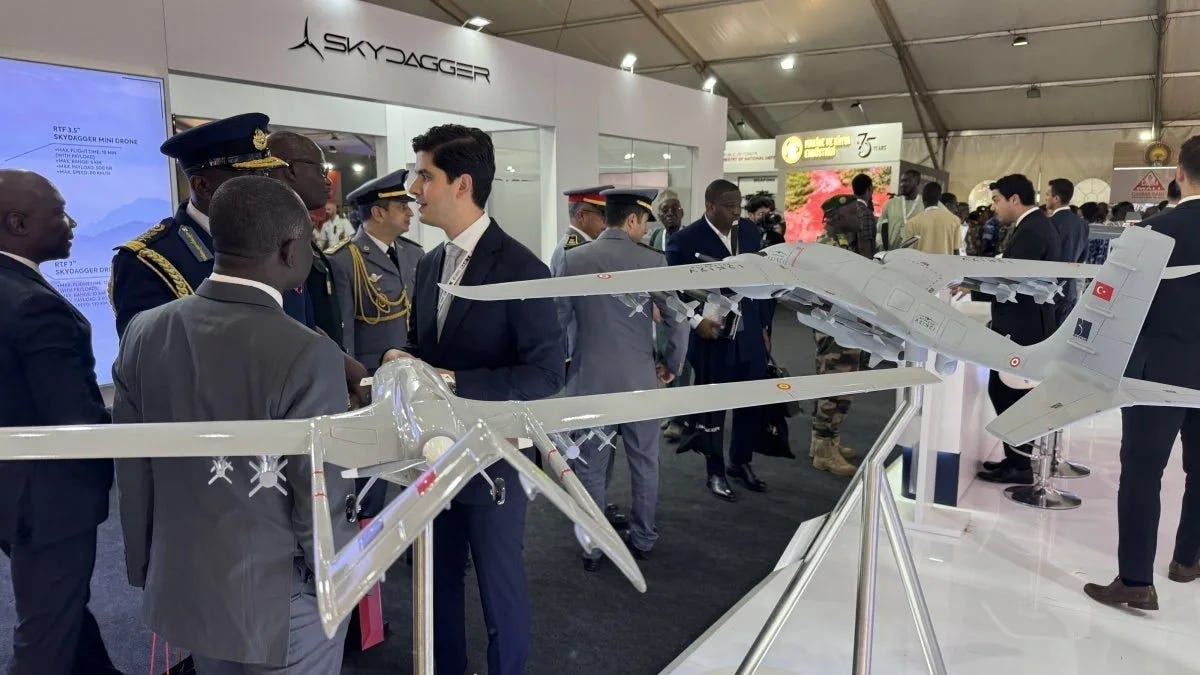
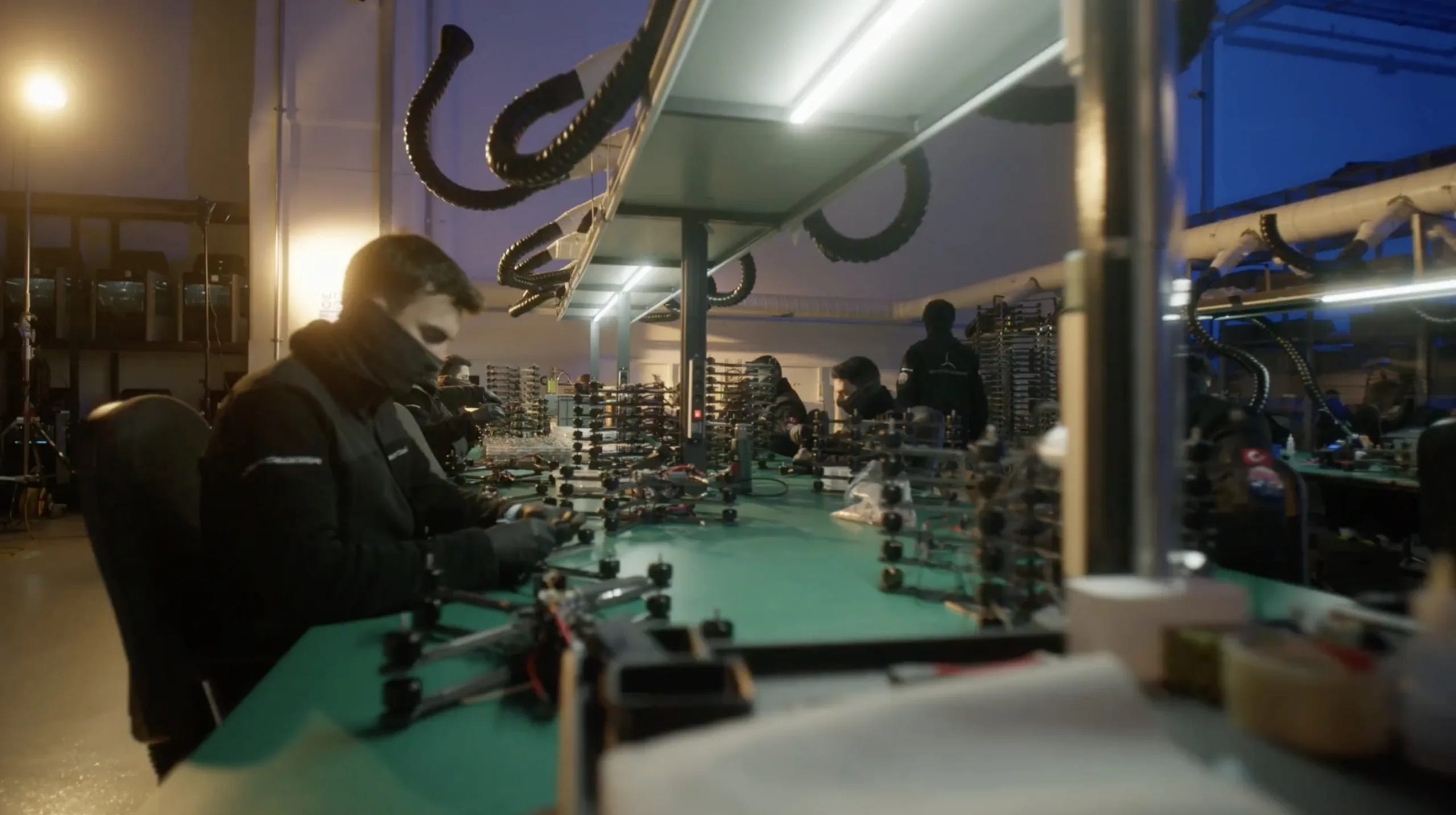
Haluk Bayraktar, CEO of Turkey’s Baykar company, announced that the production line for the Sky Dagger loitering munitions has reached an annual capacity of 120,000 drones a figure that signals a significant shift in Turkey’s drone industry, from limited-scale systems to mass production on an industrial scale.
In a post published on the Turkish platform InSocial, Bayraktar stated that the company had rapidly developed a family of drones in various sizes and with different operational capabilities. Backed by intensive investment, this leap has boosted production capacity to unprecedented levels.
He emphasized that the system is entirely composed of locally made, indigenous components from the electric motor and flight control computer to the warhead.
This development raises questions that go beyond the impressive number itself: What does it mean, militarily, to possess such a vast production capability?
How might this shape the Turkish military’s approach to combat particularly in terms of intensity, attrition, and risk management? And does localization alone guarantee genuine defense autonomy if it doesn’t translate into qualitative superiority? Lastly, where are these drones headed for export?
Sky Dagger and the Logic of Protracted Wars
Turkey’s ability to produce up to 120,000 drones annually isn’t just a noteworthy figure in defense manufacturing it represents a deeper transformation in how military power is conceived. Producing nearly 10,000 drones a month suggests that drones are no longer auxiliary tools used sporadically.

Instead, they have become readily available weapons, deployed continuously rather than sparingly, giving Ankara greater room for maneuver in any potential conflict.
In modern warfare, military superiority is no longer measured solely by the size of arsenals or the cost of combat platforms, but by a military’s ability to deliver maximum impact at minimum cost.
A small, relatively inexpensive drone capable of disabling or destroying a high-cost military asset explains why mass production has itself become a deterrent. With such industrial capacity, the Turkish military can deploy swarms of drones for surveillance, attacks, and electronic warfare, reducing human casualties and lowering the financial burden of operations.
Crucially, these numbers point to the sustainability of supply in the theater of war. Drones are no longer treated as exceptional assets but as expendable munitions rapidly replenishable and boldly deployable along the front lines.
Recent conflicts, especially since 2022, have shown how small drones can serve as effective tools of attrition, disorienting adversaries and steadily eroding their capabilities over the medium and long term.
From this perspective, producing 120,000 drones annually enhances Turkey’s ability to endure long-term conflicts. In many scenarios, quantity becomes a practical advantage able to offset qualitative gaps through saturation, diversion, and overwhelming enemy defenses.
Implications for Turkish Military Doctrine
This dramatic surge in drone production cannot be separated from its direct impact on Turkish military thinking. Over recent years, Ankara has gained extensive field experience in drone operations. Now, the role of drones has evolved from a supportive element for specific missions to a permanent fixture in daily military planning.
With large numbers of low-cost, highly effective loitering munitions at its disposal, the Turkish Armed Forces are recalibrating their tactics around the constant presence of this weapon across all operational levels.
This shift mirrors broader trends in contemporary battlefields, where drones now occupy a central position in military doctrines due to their ability to penetrate defenses, conduct precision strikes, and manage engagements from a safe distance.
Military experts agree that the widespread, synchronized deployment of unmanned systems has reshaped the rules of engagement shifting warfare away from direct confrontation and toward tactics of saturation, jamming, and disorientation, rather than costly reliance on manpower and heavy equipment.
Within this context, a clear trend has emerged in Turkey’s military establishment: growing reliance on drone power as a core tool for reconnaissance, attack, and defense in both conventional warfare and asymmetric conflicts.
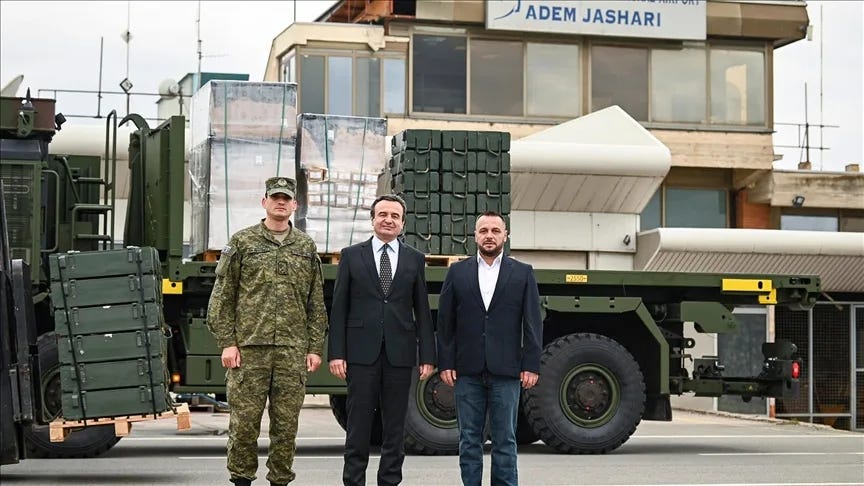
Ankara’s model has become a reference point for allied nations seeking to modernize their armed forces. The Prime Minister of Kosovo captured this sentiment after his country received a shipment of Sky Dagger drones, describing the effort as part of building an armed force equipped with modern technologies and contemporary combat tactics signaling a clear integration of drones into military doctrine.
Turkey’s experience is no longer just a national endeavor; it is evolving into an exportable model that places drones at the heart of new-era combat strategies both at home and abroad.
Localization and Military Autonomy
In developing the Sky Dagger, Turkey placed its strategic bet on full localization a move designed to insulate its defense capabilities from export restrictions, political pressures, and potential sanctions.
According to publicly available data, the company has succeeded in producing or sourcing more than 80% of the drone system’s components domestically from engines and batteries to communications systems and warheads. Plans are in place to reach full self-sufficiency by the end of the year.
This localization approach has become increasingly common among Turkish defense firms, reducing the risks of supply chain disruptions during crises and granting the military a wider margin of independence from foreign suppliers.
Baykar also notes that vertical integration in manufacturing has helped lower costs and increase efficiency. By moving the production of sensitive components in-house, localization has become not just a political slogan but a source of both military and economic strength.
Nevertheless, this progress invites a valid debate: Can quantity alone guarantee military superiority if it isn’t matched by quality? While localization offers strategic freedom of action, it doesn’t eliminate the technological race. High-volume production of small loitering drones—however impressive—cannot fully compensate for the absence of advanced platforms capable of penetrating heavily defended airspace or matching major powers in cutting-edge technology.
To address this, Ankara is pursuing a dual-track strategy. Alongside its focus on mass production, it is investing in high-end projects like the Kızılelma stealth drone fighter and the development of air-to-air missiles and advanced domestic radar systems.
Even within the tactical drone category, quality hasn’t been overlooked. Sky Dagger units are equipped with anti-jamming communication systems using frequency-hopping technology, along with multi-layered safety systems to reduce the risk of accidental detonation and enhance battlefield readiness.
This approach reflects a vision that combines quantity and quality where numbers are not seen as a substitute for excellence, but as a means to reinforce it.
The Expanding Market for Turkish Drones
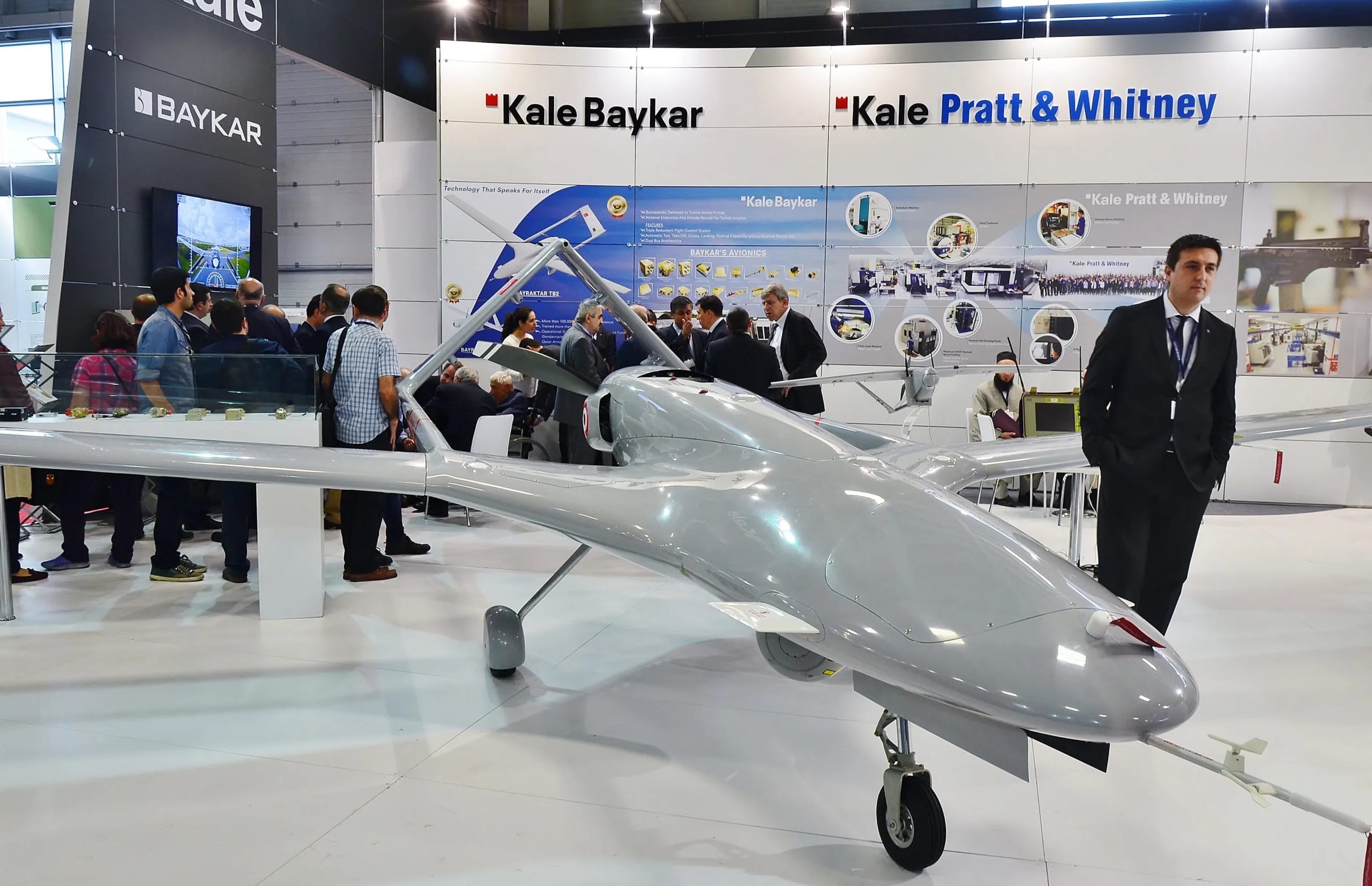
Within just one year, the Sky Dagger company alone exported nearly 30,000 loitering drones to 14 countries, while also integrating the system into Turkey’s own armed forces. This rapid spread reflects a growing international demand for Turkish drones fueled by their battlefield-proven record across numerous conflict zones, from Syria and Libya to Nagorno-Karabakh and Ukraine, where the Bayraktar TB2 became emblematic of the shift toward unmanned warfare.
The appeal of Turkish drones lies in their practical combination of battlefield effectiveness, affordability, and ease of use. This balance makes them a preferred choice for countries seeking to modernize their militaries without entering costly arms races or becoming dependent on complex and expensive Western systems.
As a result, the client base has expanded to include Eastern European and Balkan countries like Kosovo which received thousands of Sky Dagger drones in 2025 as well as Middle Eastern and Central Asian nations with security partnerships with Turkey or facing similar challenges.
The reach has also extended to African countries engaged in ongoing battles with armed groups and seeking rapid, cost-effective solutions.
Sky Dagger’s debut at the Bamax 2025 exhibition in Mali sent a clear signal about the next frontier for Turkish drone exports. Africa, where demand for low-cost, high-impact weaponry is steadily growing, has become a key arena of competition one in which Ankara is keen to establish an early foothold.
Sky Dagger: An Exception or Part of a Broader Trend?
The rise of Sky Dagger is not an isolated case it is emblematic of a larger trajectory within Turkey’s defense industry. The year 2025 closed with a series of notable achievements, both in system development and international market penetration. Defense and aerospace exports approached $7.5 billion in the first 11 months, with expectations of surpassing $8 billion by year’s end.
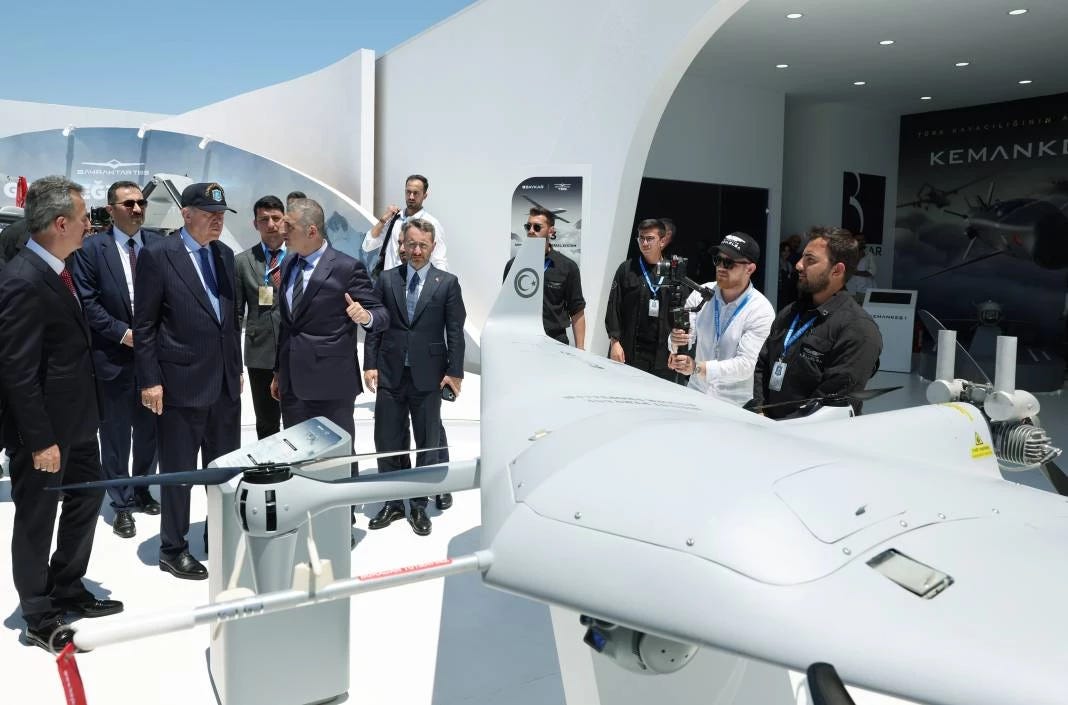
That same year, Turkey signed several major contracts, including a $3 billion deal to supply Spain with Hürjet advanced trainer jets, and another agreement to provide Poland with electronic warfare systems developed by ASELSAN.
Against this backdrop, the Sky Dagger model appears to be a natural extension of this trend. Founded in 2024 with direct support from Baykar, the company quickly assembled a complete range of drones in varying sizes and functions, raised local content to over 80%, and achieved unprecedented production capacity within the sector.
This rapid pace of development and manufacturing reflects broader dynamism within Turkey’s defense industry, where accelerated innovation cycles have become the norm. These developments also align with a long-standing national strategy of defense self-sufficiency, marked by increasing localization of critical technologies and reduced dependence on foreign sources.
What sets Sky Dagger apart is its sheer production capacity figures that are rare even by global drone industry standards. But this exceptionalism also fits neatly into Turkey’s broader strategy of mass production, aggressive exporting, and a determined push into the global military tech race.
In that light, Sky Dagger represents less an anomaly and more a symbol of a new era in Turkish defense manufacturing one in which Ankara is positioning itself not merely as self-sufficient, but as a competitive global player.
