

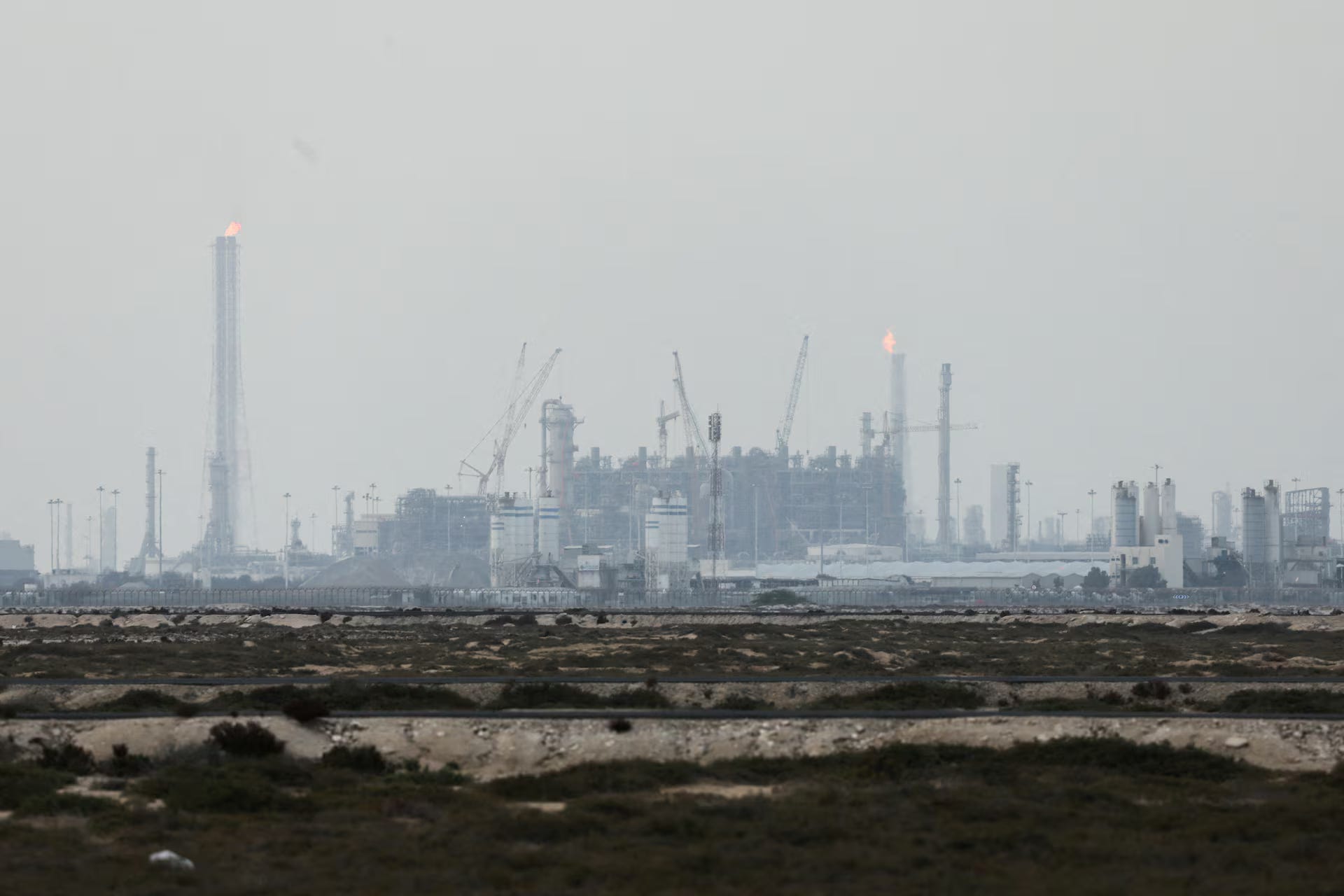
While oil and maritime chokepoints dominated headlines during the U.S.-Israeli war on Iran, another, less visible resource carried consequences no less severe for advanced industries: helium.
This gas, seemingly peripheral to non-specialists, is produced by Qatar at roughly one-third of global supply. It is indispensable to advanced semiconductor manufacturing, where it is used in highly specialized processes that are difficult to substitute.
When the war struck facilities in Ras Laffan and disrupted navigation through the Strait of Hormuz, the story ceased to be a minor disturbance in a niche gas market. Instead, it became a stress test for the fragility of supply chains underpinning sensitive technology industries. How, then, did a colorless, tasteless gas become a strategic choke point?
From Marginal Gas to Hidden Lifeline of Chips
The importance of helium for semiconductors and AI
Advanced chip manufacturing depends on stable, chemically inert environments, as well as precise cooling methods for tools and wafers during production stages.
Helium is used in core processes such as plasma etching, chemical vapor deposition, and wafer backside cooling, enabling precise thermal control and preventing damage to ultra-fine circuits. It is also employed in leak detection testing and in protecting certain optical components within high-precision photolithography systems.
There are no commercially viable alternatives that combine helium’s chemical inertness with its superior thermal conductivity. In 2023, the Semiconductor Industry Association warned that helium’s unique properties make it a critical element in chip production.
Its importance is further underscored by the artificial intelligence boom. Data centers rely on high-performance advanced chips, and any disruption in helium supply threatens their production placing pressure on global plans to expand computing capacity.
Why Qatar Sits at the Center of the Market
Helium is not extracted independently; it is recovered during the liquefaction of natural gas.
At Ras Laffan Industrial City, QatarEnergy operates three units: Helium 1 and Helium 2, launched between 2013 and 2017 with a combined capacity of 62 million cubic meters annually, and Helium 3, which began operations in 2024.
According to the U.S. Geological Survey (USGS), Qatar produced approximately 63 million cubic meters of helium in 2025 about one-third of global output of 190 million cubic meters.
The United States produces around 81 million cubic meters annually but consumes most of it domestically, making Qatar the world’s largest exporter. The concentration of production within a single complex means that any disruption in gas liquefaction halts all helium flows.
How War Turned Fragility into Crisis
Strikes on Ras Laffan and force majeure
On March 18, 2026, Iranian missiles struck the Ras Laffan complex, a key site for gas and helium production, damaging parts of its infrastructure.
QatarEnergy reported that roughly 14% of helium capacity at Ras Laffan was taken offline, with repairs potentially taking up to five years.
With the outbreak of war in late February, the company halted production at LNG facilities totaling 77 million tons annually and declared force majeure on shipments a legal clause allowing the suspension of contractual obligations due to extraordinary events.
Qatar’s Energy Minister, Saad al-Kaabi, stated that a return to normal production could take weeks to months even if the war were to end immediately.
Closure of the Strait of Hormuz and Vanishing Options
Beyond physical damage, the war led to a near-total closure of the Strait of Hormuz, through which roughly 20% of global oil trade and most LNG exports pass.
Helium is primarily exported alongside LNG shipments via Hormuz, making maritime logistics a critical part of its supply chain. With shipping halted, cargoes were stranded in ports or containers, leading to the evaporation of part of the stock due to shelf-life limits.
Most helium is sold in liquid form and transported in pressurized containers, but it has a shelf life of about 45 days before it evaporates, limiting long-term storage. The Ras Laffan disruption thus evolved into a dual shock: declining production and the loss of in-transit inventory.
Reuters reports that the market is losing 5.2 million cubic meters of helium per month due to the disruption, noting that supply shocks unfold gradually as prices do not immediately reflect changes in availability confusing buyers and complicating storage strategies.
Kornbluth Helium Consulting indicated that spot prices have doubled since the crisis began. Analysts suggest a 30-day disruption could push prices up by 10–20%, while a 60–90 day interruption may drive increases of 25–50%.
Who Feels the Shock First?
Asia: Limited stockpiles, massive demand
East Asia is the largest consumer of helium due to its concentration of advanced semiconductor manufacturing.
On March 5, a South Korean lawmaker warned that the war could disrupt supplies of critical materials such as helium. However, SK Hynix stated it maintains diversified supply chains and sufficient inventory, while TSMC said it does not expect immediate impact but is monitoring the situation.
By March 31, South Korean government sources indicated that Samsung and SK Hynix held enough stock to last until June, with companies paying premiums to secure supply from the United States. The real risk, they warned, would emerge in the second half of 2026 if the crisis persists.
In Taiwan, the Ministry of Economic Affairs said supplies remain stable thanks to U.S. imports and storage technologies. Air Liquide confirmed it would reallocate helium from other regions.
Malaysia, a hub for chip assembly and testing, noted that companies rely on stockpiles and diversified sourcing and that some processes can use nitrogen instead, reducing helium exposure.
Europe: Gas Firms Between Risk and Alternatives
Europe consumes helium across medical and industrial sectors, relying on companies such as Air Liquide and Linde.
An Air Liquide executive acknowledged short-term shortages but said the company is reallocating supply globally and coordinating with clients.
With more than 60 semiconductor-related sites in Taiwan and storage caverns in Europe, the firm has some resilience. However, rising prices and tightening supply will still affect Europe especially under force majeure conditions.
Suppliers are likely to prioritize critical uses such as MRI machines and aerospace, while chipmakers may receive most of their needs, with deeper cuts applied to lower-priority uses.
Washington and North America: Strain Despite Production
The United States produces over 81 million cubic meters of helium annually and stores it in underground caverns in Texas, giving it near self-sufficiency.
However, some companies depend on Qatari imports (28% of imports between 2021–2024), exposing them to price increases particularly industrial gas firms that stopped drawing from strategic reserves after the U.S. federal helium reserve was sold in 2024.
Air Products’ CEO said the company will rely on inventories and boost output at U.S. plants to mitigate the crisis.
While North America may benefit from higher prices allowing firms such as ExxonMobil and North American Helium to offset part of the shortfall export capacity remains constrained by strong domestic demand and limited infrastructure.