

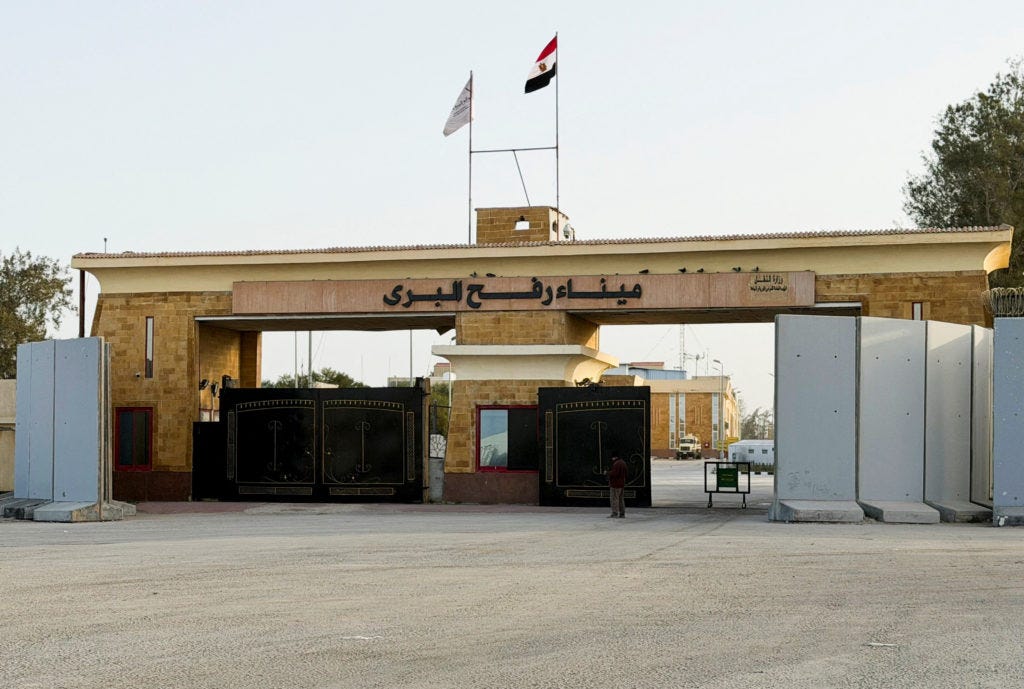
The Rafah border crossing between the Gaza Strip and Egypt saw a partial reopening on February 2, following a full closure that lasted two years enforced by Israel’s genocidal war on the enclave and the widespread destruction it inflicted on Gaza’s humanitarian and civilian infrastructure.
This development comes as part of the second phase of the ceasefire agreement signed in October 2025, which was supposed to come into effect more than a month ago. However, its implementation was delayed by the Israeli government under Benjamin Netanyahu, which employed stalling tactics and imposed additional, unjust, and near-impossible conditions effectively hollowing out the agreement’s practical value.
Initial expectations for the reopening ran high, with many viewing it as a hopeful step toward restoring Gaza’s only lifeline to the outside world, breaking its enforced isolation, and potentially thwarting forced displacement plans. But the reality on the ground quickly defied these hopes. The outcome proved underwhelming and disappointing, falling far short of its publicly stated goals.
While official regional and international mediators claimed that logistical and humanitarian arrangements would restore at least partial operations at the crossing as it was before October 7, 2023 the first day of reopening painted a darker picture.
According to accounts from returnees, the day’s proceedings fueled concerns that Netanyahu’s government is proceeding with displacement efforts through a quieter, more drawn-out method of attrition rather than direct shock.
Agreement Undermined
Under the officially announced operating plan for the Rafah crossing, 50 wounded Palestinians from Gaza were supposed to be allowed out, each accompanied by two people totaling 150 individuals. In return, 50 Palestinians stranded in Egypt were to be allowed back in. In practice, however, the events of the first day starkly contradicted the agreement both in form and substance, revealing a wide gap between promises and implementation.
According to Gaza’s Interior Ministry, only eight patients and their companions were permitted to leave, totaling just 21 people. Only 12 Palestinians were allowed to enter Gaza—nine women and three children late at night.
Most tellingly, 30 individuals approved to return to Gaza were forcibly turned away at the crossing when Israeli authorities denied them entry, despite their names being listed on Egypt’s official roster for the day. This sent a clear message: the crossing remains subject to Israel’s will, not the letter of any agreement.
Israel Holds the Reins
The procedural dynamics and enforcement routes of Rafah’s operations reveal that Israel remains the ultimate authority governing the crossing—if not unilaterally so—regardless of the presence of regional mediators or UN agencies. This is evident in the multilayered security structure imposed by the Israeli government, granting it absolute control over both entry and exit.
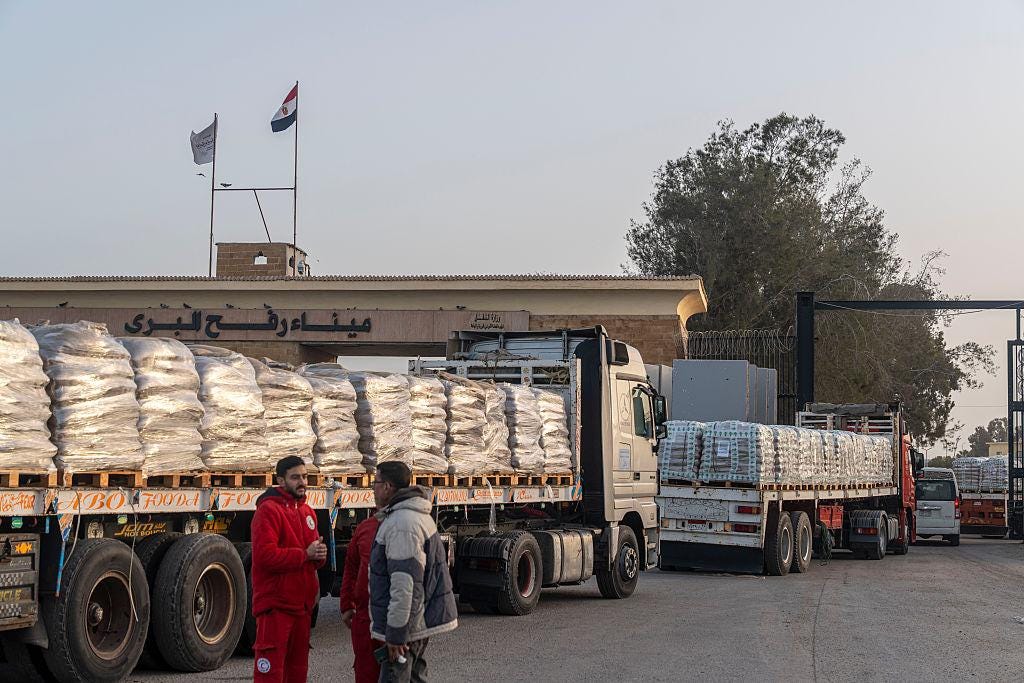
Each day, lists of travelers—whether departing Gaza or returning—are submitted to Israeli authorities for prior security vetting. No one is permitted to cross without explicit written approval from Israel, effectively turning Rafah into a checkpoint governed by an Israeli veto.
The European Union mission stationed at the crossing plays a strictly administrative and procedural role—monitoring operations and verifying identities without any authority to determine who may cross. It functions more as a nominal oversight body devoid of political influence or executive power.
At Israel’s direct request, current operations are limited to individual movement only; the passage of goods and commercial shipments remains prohibited, perpetuating Gaza’s economic strangulation. Entry is further limited to select individuals who left during the war, excluding many Palestinians abroad reflecting a selective, politically and security-driven approach.
Returnees are subjected to intense security interrogations after identity verification and complex inspection procedures around the Philadelphi Corridor. Ultimately, Israel holds the final say on whether individuals are allowed back into Gaza or forced to return to Egyptian territory.
“Regavim” Passage: Rafah as a Mini-Prison
Perhaps the most symbolic indication of Israel’s repressive intentions is the construction of the “Regavim” security corridor near Rafah, turning what should be a humanitarian facility into a heavily controlled security checkpoint.
According to the Israeli army, this corridor enables security forces to verify travelers’ identities against pre-approved Israeli security databases an effort framed as enhancing surveillance and control over border movement.
The corridor is located within an Israeli-controlled area adjacent to the Rafah crossing. It subjects travelers to stringent security scrutiny, including facial recognition and biometric checks prioritizing security logic over the crossing’s humanitarian purpose.
Images released by the Israeli army show a narrow corridor bordered by iron gates, barbed wire, surveillance cameras, and high-tech scanning systems. The visual echoed strongly in Gaza, with many likening it to a “prison gate” a sentiment that reflects how the new system turns Rafah from a passage of freedom into a tool of deepened siege.
Returnees Speak Out
Testimonies from several women who managed to enter Gaza through Rafah highlight the severe violations they endured, transforming their long-awaited return into a harrowing ordeal.
According to their accounts, they were forcibly removed from a checkpoint 500 meters from the crossing and held there for hours—even with children in tow—under inhumane conditions.
They reported verbal abuse and humiliation by Israeli soldiers. Intelligence officers from the Shin Bet reportedly screamed interrogations at them, questioning their motives for returning to Gaza “under such conditions.”
One woman said she was crudely approached with offers to collaborate against fellow Palestinians—an overt ethical violation. Others reported being screened by agents linked to the slain collaborator Abu Shabab before being allowed to enter. Another woman warned that the treatment they endured suggested a veiled continuation of the displacement plan.
One testimony captured the cruelty in chilling detail: a woman recounted having all her belongings confiscated, including her children’s toys, leaving her with only a scarf on her shoulders to shield them during the exhausting journey.
What Was Israel’s Intent?
Based on the outcomes of the first day, it is evident that Israel leveraged the reopening to serve its political narrative and declared agenda, achieving a mix of propaganda, security, and political gains.
The first objective was to publicly signal commitment to the ceasefire and its terms especially the reopening of Rafah to shape a counter-narrative to those promoted by Palestinians and mediators.
The second objective had a clearer security-political dimension: Israel solidified its control over the crossing and demonstrated that it alone decides who may enter or exit. This aligns with a far-right agenda seeking permanent control over Rafah and the Philadelphi Corridor under evolving security pretexts.
Israel also sought to project deterrence to dissuade would-be returnees from coming back to Gaza. This intention was evident in the accounts of mistreatment and humiliation reported by returnees.
These practices go beyond routine security measures and serve a strategic purpose: to discourage Palestinian return, subtly advancing a policy of displacement by less overt means.
Lastly, the day’s arrangements impeded the work of the National Committee meant to manage Gaza’s civil affairs. Israel asserted itself as the de facto authority while relegating the committee to a marginal, coordinating role undermining prospects for genuine Palestinian self-governance.
A Step That Can Be Built Upon
Despite the disheartening results of Rafah’s reopening, some analysts view it as a breakthrough against Israeli intransigence a politically meaningful step toward easing Gaza’s siege and forced isolation.
From the start, it was clear Israel viewed Rafah as a political bargaining chip, leveraging it for maximum gain. This was evident in the array of obstacles it placed on reopening and in the security pretexts it cited to restrict its functionality.
Some observers argue that forcing the reopening—even partially—despite prior Israeli refusal marks a relative diplomatic success that can be developed further.
Yes, the first day’s events painted a grim picture and fueled legitimate fears, but others contend the outcome was expected given intense pressure from Israel’s far right on Netanyahu’s coalition, which must navigate a complex domestic landscape.
Ultimately, progress will depend on how well mediators and regional/international actors can exert political and diplomatic pressure to gradually restore Rafah’s operations to its pre-October 2023 status. Achieving this would represent a decisive blow to displacement strategies and close the chapter on forced population transfer for good.
