

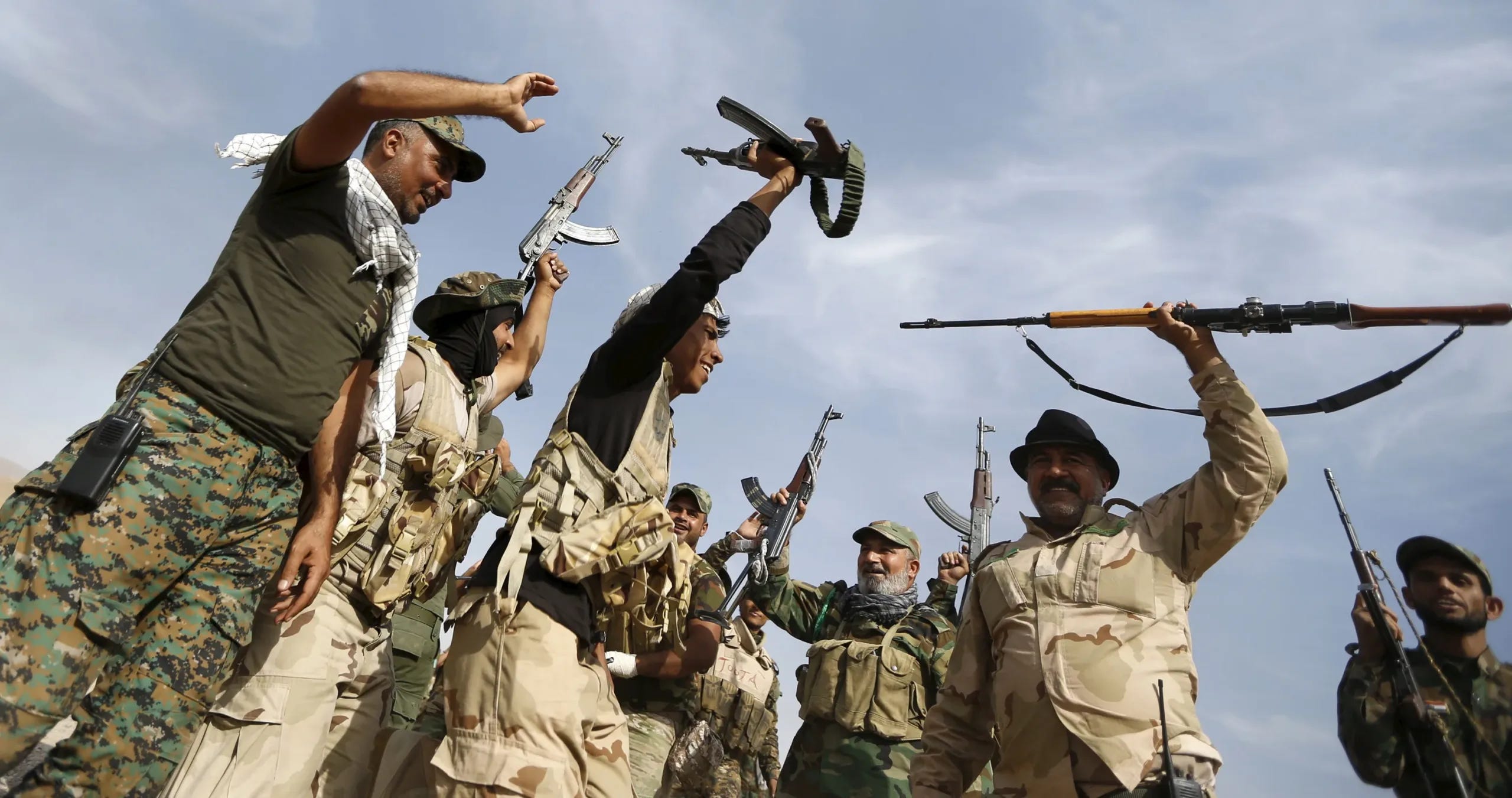
Day after day, Iraq is increasingly emerging as one of the regional arenas most affected by the repercussions of the U.S.-Israeli war with Iran. This reality has begun to manifest clearly whether in the escalating armed attacks between Iran-aligned Iraqi factions and U.S. forces, in the nature of the strikes carried out by these factions against Iranian Kurdish opposition groups in the Kurdistan Region of Iraq, or even through cross-border attacks, as occurred with Kuwait since the outbreak of the war.
Within this context, Iraq’s economic situation has fared no better than its deteriorating security environment. The Iraqi arena has witnessed visible instability in economic conditions, particularly after Iran closed the Strait of Hormuz, halting Iraqi oil exports abroad. Border trade has also faltered due to the atmosphere of war, in addition to other ripple effects that have reached sectors such as electricity, education, and the environment across the country.
Undoubtedly, Iraq’s exposure to the climate of war surrounding Iran is not primarily the result of the external spillover of this conflict especially when compared with the level of security escalation in Iraq and in the Gulf states. Rather, the main drivers lie in internal political and security dynamics that seek to tether Iraq to the wheel of regional conflict.
Chief among these is the organic relationship linking Iraqi armed factions with Iran, as well as the United States’ desire to eliminate the direct threat these factions pose to its regional allies, particularly Israel.
Between Security Escalation and Political Threat
Over the past few days, Iraq has witnessed a notable escalation in security tensions between armed factions and U.S. forces. The arenas of confrontation have overlapped simultaneously. Although much of the escalation has centered primarily around the Harir base and the U.S. Consulate in Erbil, these attacks have so far not inflicted significant damage on American sites.
In response, U.S. forces have broadened their targeting within Iraq, striking locations belonging to armed factions in Mosul, Anbar, Salah al-Din, Jurf al-Sakhar, southern Baghdad, and the Samawah desert. These operations have caused both material damage and casualties among the factions.
Although this escalation remains internal for now, it clearly represents a reverberation of the war currently unfolding in Iran. Iran-aligned armed factions understand that, following the assassination of Iran’s Supreme Leader Ali Khamenei, they now face an existential threat regarding their future presence in Iraq whether in terms of continuing as armed entities or facing disintegration.
With Iraqi political forces and even the caretaker government led by Mohammed Shia al-Sudani unable to halt the American attacks, these factions have chosen to engage in the broader context of the war, driven by the organic solidarity linking Iran and its regional allies.
The indicators that pushed these factions toward involvement in the current conflict are rooted largely in previous experiences dealing with the United States. Even days before the latest war erupted, Washington exerted significant pressure to exclude armed factions from participating in Iraq’s new government.
The United States also opposed the appointment of a prime minister perceived as close to these factions and to Iran. Earlier still, Washington obstructed the passage of a new law regulating the Popular Mobilization Forces.
Taken together, these developments have convinced the factions that they now face an existential threat within Iraq especially if the current war in Iran results in the fall of the Iranian regime. In such a scenario, the central question in Iraq would become: what future awaits these armed factions, and would the United States allow them to remain?
The survival challenge confronting these factions has pushed them to adopt independent choices of confrontation even assuming, hypothetically, that Iran did not directly request their participation in the war, as Iranian Foreign Minister Abbas Araghchi stated in the early days of the conflict. Ultimately, they chose confrontation.
Moreover, the lack of centralized decision-making among Iraqi factions highlights the absence of consensus regarding involvement in the current war. While groups such as Kataib Hezbollah in Iraq, Harakat al-Nujaba, Kataib Sayyid al-Shuhada, and Kataib al-Imam Ali have engaged directly in confronting U.S. forces, other factions have opted for silence. Some of these groups are currently involved in negotiations surrounding the formation of Iraq’s next government, underscoring the fragmentation within Iraq’s factional landscape.
There is little doubt that Iraq’s security scene will witness further escalation in the coming period. The trajectory of escalation may not remain confined to reciprocal attacks. U.S. forces may move toward targeting prominent faction leaders or even large training camps belonging to these groups. In response, the factions may launch attacks targeting American assets and personnel, potentially pushing the situation in Iraq beyond control.
Whether this threshold of escalation is crossed will depend largely on the trajectory the war in Iran takes in the future.
Constitutional Vacuum and Political Confusion
Amid this security escalation and economic complexity, Iraq’s political arena is displaying clear confusion in responding to the ongoing war in Iran. The Iraqi government’s failure to distance the country from the regional conflict reflects, in one way or another, the absence of a clear political will to shield Iraq from the war’s repercussions.
This is largely because most Iraqi political forces particularly the Coordination Framework possess little room for political maneuver. Their silence is interpreted by Washington as support for the attacks carried out by Iran-aligned armed factions, while backing government measures aimed at halting these attacks could be interpreted by Tehran as siding with the American position.
This delicate balancing act has even affected the process of selecting a new prime minister amid the country’s current political situation.
Although the government of al-Sudani has repeatedly declared during the war that the Iraqi state alone holds the authority to decide matters of war and peace, it has so far failed to translate this slogan into reality. On one hand, it has not prevented armed factions from launching their attacks; on the other, it has not prevented the United States from responding.
Such hesitant behavior could place the Iraqi government in an extremely difficult position if the current escalation expands to include neighboring states, potentially amplifying the war’s repercussions for Iraq in the coming period.
The absence of genuine political will to curb the security escalation in Iraq will make the central question in the post-war phase revolve around the future of these factions’ weapons, the nature of their relationship with the Iraqi state, and most importantly their regional role within Iran’s broader strategic vision.
Regardless of whether the outcome of this war is the fall of the Iranian regime or a weakened Iran emerging from the conflict, what ultimately matters is the need to reconsider the structure of Iraq’s security system one that effectively collapsed under the first real regional test triggered by U.S.–Iran tensions in the Middle East.
Iraq is likely to be among the countries most severely affected by the current war. While many states may succeed in navigating its repercussions, Iraq will face a profound challenge particularly regarding the future balance of political power within the country, the extent to which it remains tied to any vacuum Iran might leave behind, and Washington’s vision for Iraq in the post-war order.
Will the United States leave space for Iran to maneuver within Iraq, or will it dominate the Iraqi arena entirely? The answers to these questions will ultimately determine Iraq’s place within the emerging regional equation in the aftermath of the war with Iran.