

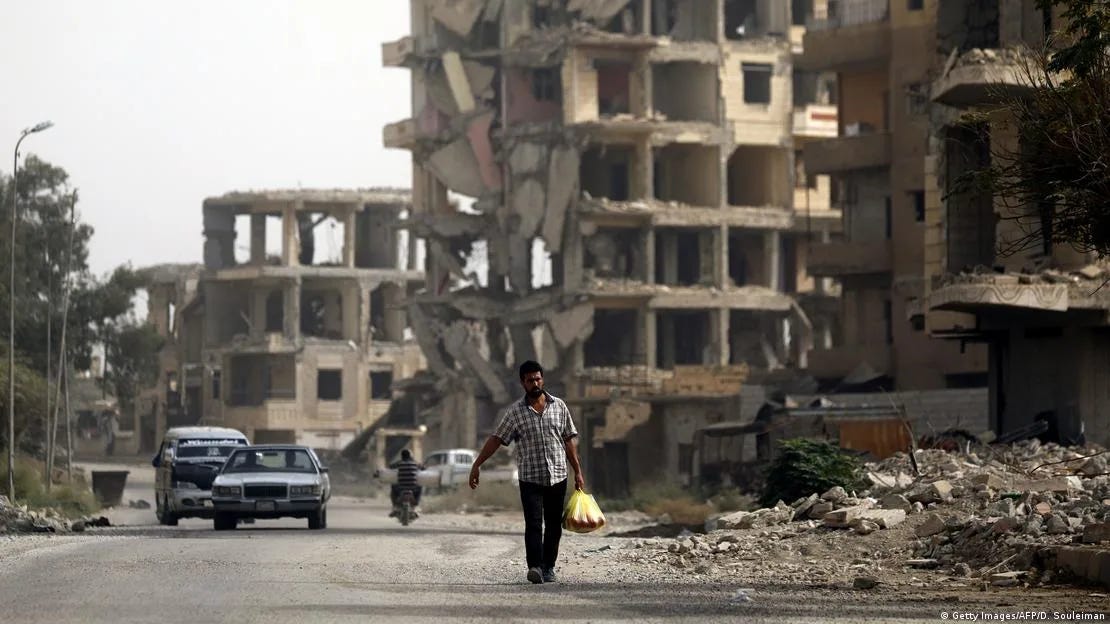
Since 2013, the northern Syrian province of Raqqa has undergone one of the most complex experiences in the country in terms of shifting control and changing systems of governance. A succession of different powers has ruled the city, each leaving deep marks on the social and psychological fabric of its population.
This constant transformation was not merely a political or military transition. Rather, it represented a prolonged process of reshaping the relationship between society and authority, raising serious questions about the ability of Raqqa’s community to preserve its cohesion after years of instability and uncertainty.
Unlike other Syrian cities that experienced relatively stable patterns of control, Raqqa faced a series of rapid and contradictory shifts. Residents were forced to continually adapt to different governing authorities, each with its own security apparatus, administrative mechanisms, and political rhetoric. The speed of these transitions weakened any sense of institutional continuity and deepened a general feeling of fragility.
The Beginning of the Transformations
Raqqa’s transformation began in March 2013, when Syrian government forces were expelled from the city. It was briefly ruled by Islamic opposition factions before control passed to the Islamic State group, which remained in power until it was expelled in October 2017. The province then came under the control of the Syrian Democratic Forces (SDF), backed by the international coalition.
That period lasted until early 2026, when the new Syrian army entered Raqqa, ending more than a decade during which the province experienced multiple competing authorities.
March 2013 marked the first radical shift as Raqqa slipped from the grip of central authority and entered a phase of local administration led by opposition and Islamist factions. Although that moment carried broad hopes for a new civilian administration reflecting the aspirations of the population, realities on the ground soon revealed deep structural challenges.
Emerging local councils lacked institutional experience and sufficient resources. At the same time, the multiplicity of military authorities created overlapping powers and conflicting decisions. In the absence of organized international support, the city fell into administrative and security confusion, reflected in declining basic services and growing disorder.
This vacuum not only weakened the city’s ability to build a stable governing model but also created an intensely competitive environment among armed factions. Gradually, it paved the way for the rise of more organized forces capable of imposing control—chief among them the Islamic State.
Civil activist Mohammed al-Zaher says the period preceding the Islamic State’s entry into Raqqa was filled with contradictions. Feelings of hope mixed with fear. After the city was freed from the control of President Bashar al-Assad’s government in 2013, Raqqa witnessed an unprecedented surge of civic and grassroots activity.
Local volunteer initiatives flourished, relief and education offices opened, and the first nucleus of civilian councils began to form in an attempt to manage the city’s affairs.
Al-Zaher adds that residents aspired to an independent civilian administration. Yet the lack of institutional experience among local actors, coupled with competition between armed factions, created security confusion. Signs of disorder gradually appeared through the proliferation of armed checkpoints and conflicting authorities, fueling early anxiety among residents.
According to his account, civil society attempted to play a balancing role through local dialogue initiatives and the organization of relief work. However, limited resources and military fragmentation restricted the effectiveness of these efforts. Society lacked the capacity to govern itself without a stabilizing authority a role that the factions at the time were unable to assume.
The Rule of the Islamic State
By late 2013, the Islamic State (ISIS) exploited divisions among the factions and gradually established full control over the province. This period marked the harshest turning point in Raqqa’s modern history. The group imposed a system of governance based on strict security control, public punishments, and intense surveillance over everyday life.
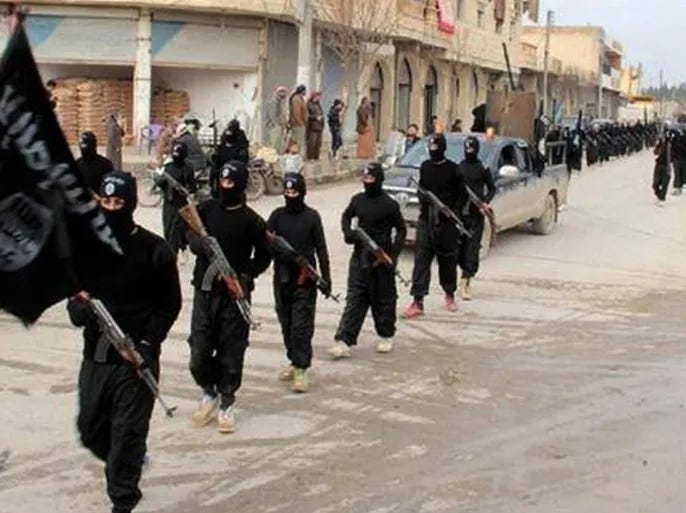
During those years, Raqqa became socially closed off. Public spaces shrank, civic life faded, school curricula were restructured, and civil activity almost disappeared. Residents lived under a multi-layered surveillance system that created a psychological environment saturated with fear and mistrust.
Fear of denunciation and accusation eroded horizontal trust among residents themselves—an effect that rarely disappears quickly even after direct security control ends. The group’s harsh policies also forced large numbers of residents to flee internally and abroad, creating temporary demographic imbalances in some areas.
Journalist Hamad al-Mustafa recounts that ISIS rule represented one of the most difficult periods in Raqqa’s history, not only in terms of security but also in the paralysis of institutional and educational life.
He says that in the early days of the group’s rule, most government offices were swiftly shut down. Official services gradually ceased, while public buildings were converted into security or administrative headquarters for the organization.
Al-Mustafa adds that the education sector was among the hardest hit. Schools and universities were closed for varying periods before the group reopened some schools under newly imposed curricula and limited them to male students. Many educators refused to work under such conditions, leaving a major gap in the education system and increasing dropout rates.
According to the journalist, the city entered a state of near-complete institutional paralysis. Traditional civilian authorities disappeared, basic services declined, and the group imposed strict restrictions on movement within the city. The closure of universities and the suspension of academic activity deprived thousands of students of continuing their education, leaving long-term consequences the city still struggles with today.
Regarding the group’s judicial practices, al-Mustafa says the Islamic State imposed a rigid system of rulings that radically reshaped daily life in Raqqa.
The group enforced strict discipline through harsh punitive regulations affecting nearly every aspect of public life from clothing and social behavior to commercial and educational activities. This created a pervasive climate of fear and social withdrawal.
These measures were not merely security policies but part of an effort to reshape society according to a closed ideological vision, leaving deep psychological and social scars that the city continues to grapple with.
“SDF and the Illusion of Democracy”
ISIS rule in Raqqa ended in October 2017 after a major military campaign carried out by the Syrian Democratic Forces with the support of the international coalition. The city then entered a new phase under slogans of reconstruction and building a more stable local administration.
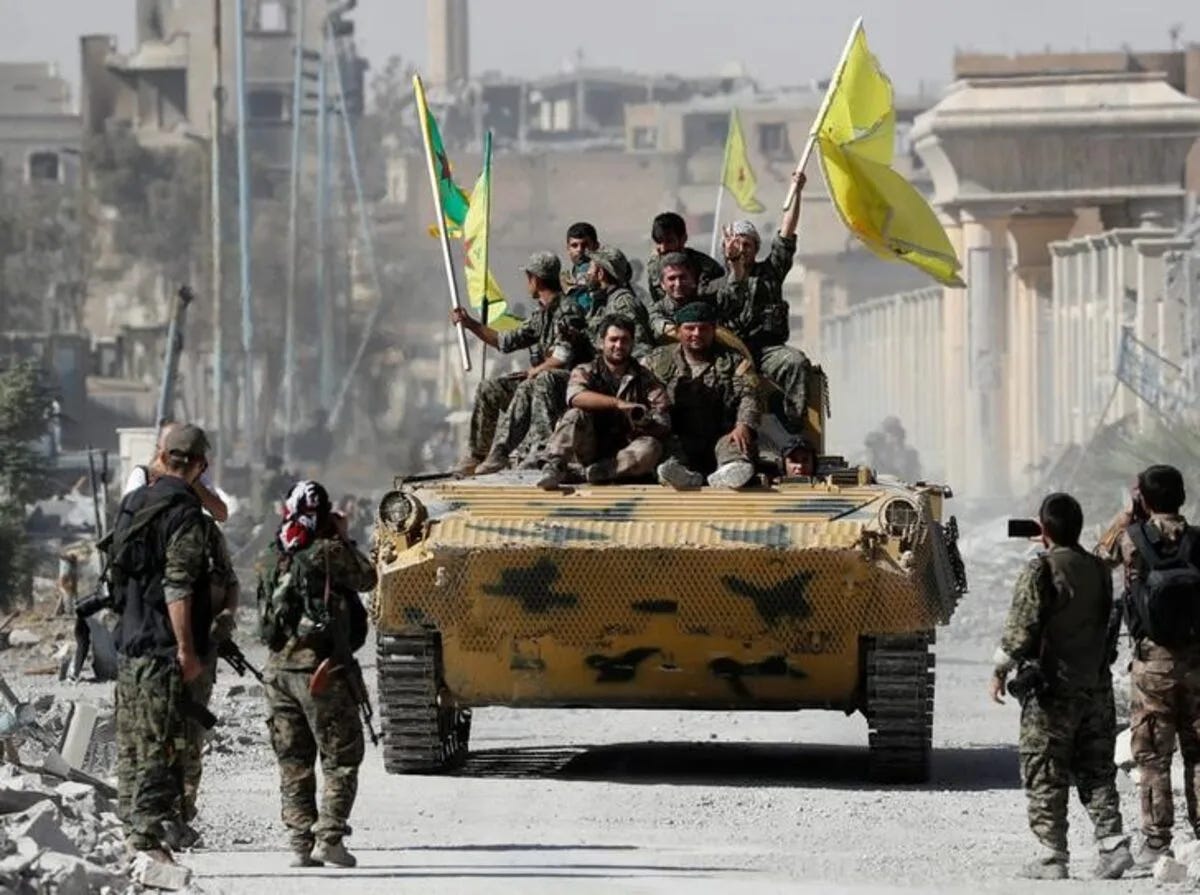
However, the massive destruction caused by the battles posed a central obstacle to rapid recovery. Entire neighborhoods were destroyed, and water, electricity, and sewage networks were heavily damaged. Educational and health institutions remained disrupted for long periods, making the restoration of normal life slow and complex.
Alongside service-related challenges, issues emerged regarding the heavily securitized nature of governance and the continuation of arrest campaigns. Slow reconstruction and limited job opportunities further contributed to a lingering sense among some residents that the promised stability had not fully materialized.
Lawyer and human rights advocate Ghada al-Akkawi says that during the period when the Syrian Democratic Forces administered Raqqa, broad slogans of decentralization and local democracy were raised. In practice, however, there was a clear gap between official rhetoric and actual governance mechanisms. Many key decisions, she says, remained confined to narrow circles, limiting the ability of local civilian structures to operate independently.
Al-Akkawi notes that the administrative model applied in Raqqa displayed a high degree of security centralization. Sensitive files particularly security matters and major service sectors—remained largely outside meaningful public oversight. This reality weakened the confidence of segments of the population in local institutions and reduced civic participation to a largely symbolic role.
She adds that the rhetorical adoption of a “democratic administration” project during the SDF period was not matched by sufficient institutional development to ensure transparency, accountability, and local decision-making. Limited representation of some social groups in decision-making positions, combined with slow progress in addressing economic and service issues, deepened a perception among parts of society that the model did not fully reflect its declared promises.
Al-Akkawi concludes that any local governance experience in a fragile environment like Raqqa must move beyond slogans and toward measurable institutional practices based on expanded social participation, stronger independence for civilian councils, and clear legal frameworks. Bridging the gap between rhetoric and implementation, she argues, remains essential for rebuilding public trust in the long term.
The period of rule by the Syrian Democratic Forces lasted more than eight years. In early 2026, the province entered a new phase following shifts in control and the beginning of different administrative arrangements, eventually returning to the authority of the emerging new Syrian state following the fall of the Assad regime in December 2024.
Social Consequences
Social indicators suggest that Raqqa continues to experience profound repercussions from years of instability. Repeated transformations have affected the mental health of residents, particularly children and young people, with signs of chronic anxiety, hypervigilance, and mood instability becoming more visible.
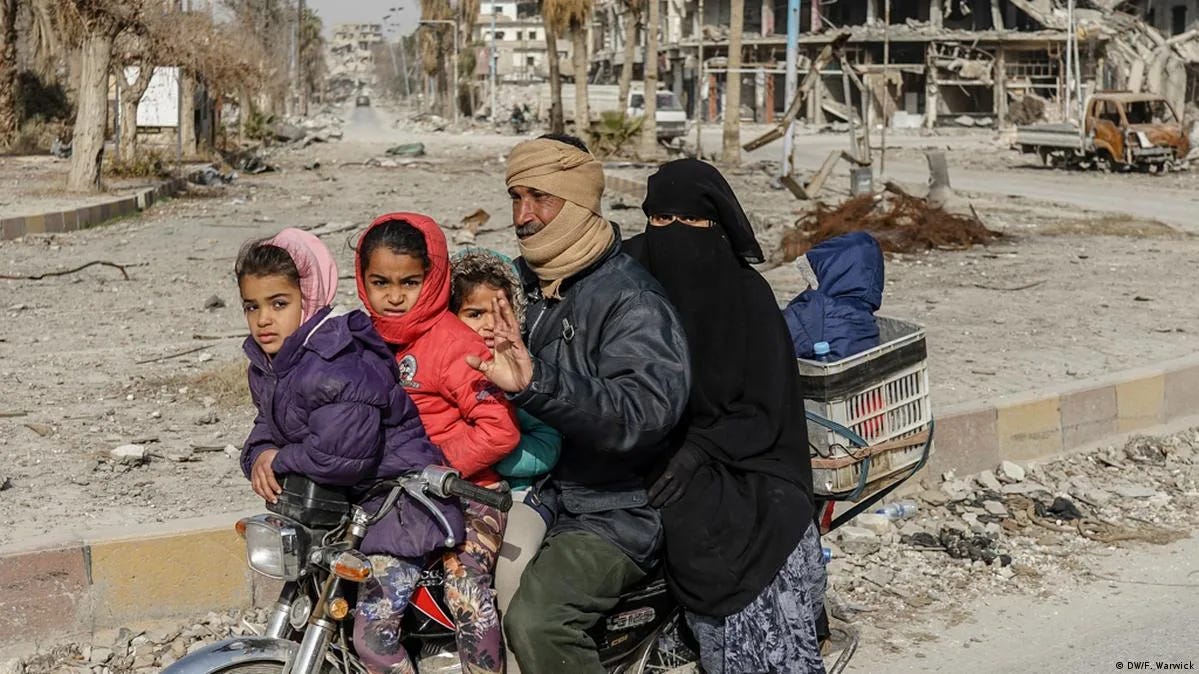
Children who grew up amid conflict experienced repeated interruptions to their education, while many lived for extended periods under fear and uncertainty. This reality threatens to create long-term educational and knowledge gaps that may later affect the labor market and productivity levels.
Psychologist Dr. Shawakh al-Aboud says that the rapid succession of authorities governing Raqqa produced what can be described as “accumulated trauma” among residents. People had little time to adapt to one governing system before another replaced it. Such rapid shifts in authority create chronic uncertainty one of the main factors undermining psychological security at both individual and collective levels.
Al-Aboud notes that the deeper psychological effect appears in the erosion of a sense of temporal stability. Individuals lose the ability to predict the near future, prompting them to adopt cautious and constantly alert behaviors. If prolonged, this condition can evolve into a lasting adaptive pattern reflected in elevated levels of anxiety and hypervigilance within society.
Children and adolescents were the most vulnerable to these transformations, as they grew up in an environment where rules and norms constantly changed. Exposure to multiple authorities with conflicting narratives may disrupt the development of values and identity among younger generations, potentially leading later to difficulties in social adaptation and diminished trust in institutions.
Al-Aboud also points out that the multiplicity of ruling authorities weakened horizontal trust among residents themselves. In such environments, fears of denunciation, misunderstanding, and conflicting loyalties often spread. Societies emerging from these experiences typically require long periods to rebuild social capital and restore mutual trust.
Addressing these effects, he argues, requires more than security stability. It demands long-term community mental health programs, the revitalization of civic and educational life, and the construction of stable institutions capable of restoring a sense of security and belonging. Psychological recovery in Raqqa is possible, he says, but it requires systematic interventions and sufficient time.
Tribes and Multiple Authorities
Although Raqqa has witnessed increasing urbanization since the 1950s and the emergence of civil society institutions, tribal structures remain an influential social framework, particularly in rural and peripheral areas.
During the years of conflict, different controlling powers sought to win the support of Arab tribes that constitute the majority of the province’s population. This dynamic re-politicized the tribal role in certain periods. Some tribes acted as mediators in resolving disputes or easing tensions, while some tribal leaders aligned themselves with ruling authorities.
Radwan al-Ali, a notable from the al-Naeem tribe in Raqqa, says that tribal communities found themselves facing an extremely complex reality amid shifting authorities and changing centers of power.
The rapid transformations placed tribes in a delicate position, often forcing them to deal with different authorities to preserve local stability and prevent their areas from sliding into chaos.
Al-Ali notes that the traditional tribal role in resolving disputes and containing tensions remained present despite political transformations. However, the multiplicity of ruling authorities sometimes limited the effectiveness of this role.
Tribes tried to maintain balanced relations with different forces in order to protect civil peace and prevent the social fabric of villages, towns, and the city of Raqqa itself from unraveling.
He stresses that tribal society in Raqqa paid a heavy social price for the prolonged instability. Relationships among some communities were strained by suspicion and alignments imposed by conflict. Yet tribal customs continue to function as an important safety valve in many areas, particularly during periods when institutional structures were weak.
Looking ahead, al-Ali emphasizes that the next phase requires strengthening integration between tribal roles and official institutions so that tribes support stability without replacing the rule of law. Unifying administrative and security authorities in Raqqa, he argues, would allow tribal leaders greater room to contribute to rebuilding social trust and supporting civil peace.
Reading the Broader Picture
A broader reading of Raqqa’s current landscape reveals deep social exhaustion after years of accumulated fear and uncertainty. This is visible in several field indicators, including weakened traditional social ties compared to the period before 2013 and a rise in individual, familial, and even tribal disputes in some areas.
Despite this, elements of resilience remain within society. Among the most notable are the strength of extended family networks, the continued mediation roles played by some local notables, and a widespread desire among residents to restore stability and normal life.
Commenting on these indicators, Dr. Shawakh al-Aboud says Raqqa’s experience aligns with known patterns in societies emerging from prolonged cycles of conflict. Accumulated fear and uncertainty gradually exhaust social systems. The weakening of traditional bonds and increase in individual disputes do not necessarily signal total disintegration but often reflect prolonged collective psychological pressure that diminishes communities’ natural capacity for self-regulation.
The persistence of resilience factors such as strong family ties and the mediation role of local leaders suggests that Raqqa’s social structure still retains a degree of flexibility. Societies that maintain these “core nuclei,” he says, tend to be better positioned for recovery if a stable environment allows for the rebuilding of social capital and the expansion of trust networks.
The current phase represents a sensitive crossroads. Continued economic and security pressures could slow social recovery. Conversely, investment in community mental health support, strengthened education, and improved living conditions could accelerate the restoration of cohesion.
Raqqa’s society has not lost its capacity to recover, al-Aboud concludes. But rebuilding trust and stability on sustainable foundations will require long-term, systematic interventions.
Ultimately, the future of social cohesion in Raqqa will depend on the success of the next phase in achieving stable governance, fair justice, and genuine economic development capable of restoring the city’s sense of security and belonging after years of upheaval.
If these conditions are met, Raqqa’s society possesses enough resilience to regain a significant degree of cohesion in the years ahead. If political and economic fragility persists, however, the risk of gradual social erosion will remain.