

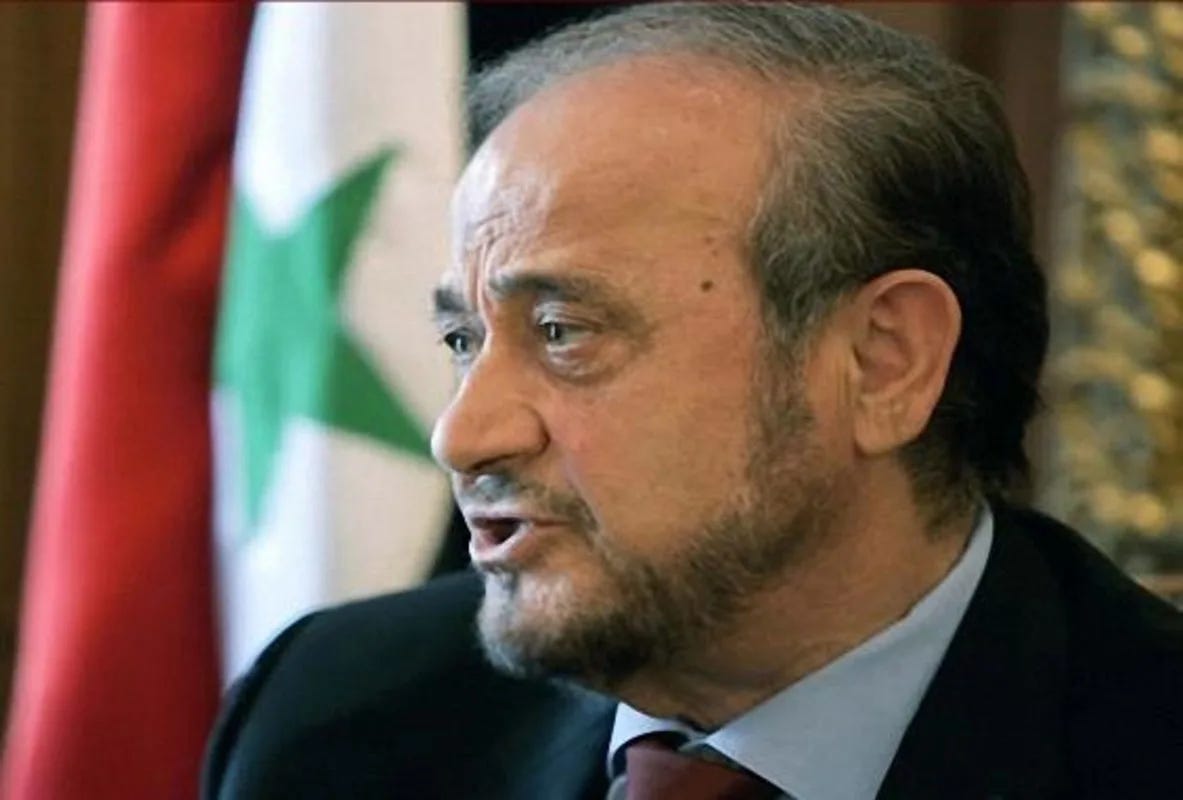
Rifaat al-Assad was not merely the brother of a president or the uncle of another. He was one of the most notorious figures in the Syrian regime throughout the 20th century, with his name tied to mass atrocities, the destruction of cities, and the burial of thousands of Syrians in mass graves before retreating to a life of luxury in European exile, funded by looted state wealth.
From Tadmur Prison to Hama, from the Defense Companies to the palaces of Paris and Madrid, Rifaat al-Assad embodied a brutal archetype of an enforcer who eluded justice for decades. He died on January 21, 2026, according to Reuters, citing two sources.
Origins and Rise to Power
Rifaat Ali Suleiman al-Assad was born in Qardaha, a village in Latakia province, the Assad family’s stronghold and heartland of Alawite influence.
He rose through the ranks of the Syrian army, becoming a prominent officer. He participated in the 1970 coup that brought his brother Hafez al-Assad to power, marking the beginning of his journey through the regime’s inner circles.
Rifaat was appointed commander of elite military units known as the “Defense Companies,” which effectively served as a private guard force for the regime.
He consolidated power within the military and intelligence apparatus, becoming one of the most feared and influential figures in the regime during the 1970s.
The Tadmur Prison Massacre (1980)
On June 27, 1980, Rifaat al-Assad orchestrated one of the most horrific massacres in modern Syrian history inside the desert prison of Tadmur.
The massacre was a retaliation for a failed assassination attempt against Hafez al-Assad. Rifaat ordered his Defense Companies to storm the prison and execute political detainees.
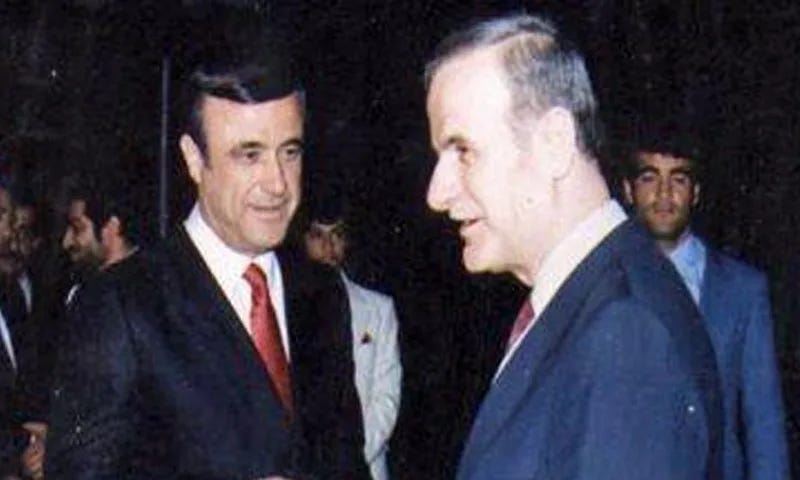
In under an hour, nearly 1,000 inmates were gunned down or killed with grenades inside their cells. The bodies were buried in mass graves, and the entire operation was shrouded in secrecy, only coming to light months later when participants were captured in a neighboring country and confessed.
The Tadmur massacre became a lasting symbol of the brutality of the 1980s in Syria. None of the perpetrators have ever been held accountable.
The Hama Massacre (1982)
Rifaat al-Assad’s criminal legacy reached its peak in February 1982, when he led a devastating military campaign to crush an uprising in the central Syrian city of Hama.
After a rebellion led by members of the Muslim Brotherhood and other opposition groups, the Syrian army and Rifaat’s Defense Companies besieged the city for nearly a month.
Entire neighborhoods were obliterated by artillery and air strikes, while mass executions were carried out under the pretense of hunting insurgents.
Estimates suggest over 10,000 civilians were killed during the onslaught, though later reports by independent human rights organizations indicated the death toll may have reached as high as 40,000.
The Hama massacre epitomized the regime’s strategy of mass intimidation and served as a brutal precedent for the scorched-earth tactics later adopted by Bashar al-Assad in suppressing the 2011 uprising.
Despite the scale of the massacre, Rifaat was never held accountable—instead, he continued to rise within the regime, his “bloody achievement” enhancing his standing.
Rift with Hafez and Exile from Syria (1984)
Rifaat’s growing power after the Hama massacre led to heightened tensions with his brother, President Hafez al-Assad. Following Hafez’s health crisis in 1983, Rifaat saw an opportunity to claim power and began positioning himself as a potential successor.
He was named Vice President in 1984 during Hafez’s medical absence, but upon his brother’s recovery, the rivalry escalated dramatically.
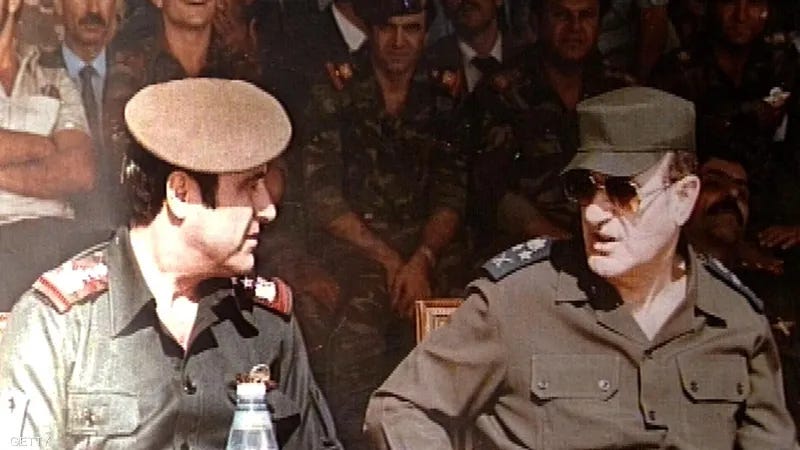
In March 1984, Rifaat attempted a coup, deploying Defense Company troops to seize strategic sites in Damascus. A near civil war was narrowly averted when Hafez intervened at the last moment.
The failed coup ended Rifaat’s direct role in Syrian politics. He was stripped of his titles and effectively exiled, marking the beginning of his long life in exile.
Years in Exile and Illicit Wealth
Rifaat al-Assad settled in Europe, moving between France, Spain, and Switzerland, living a lavish life that included opulent real estate and a private security entourage.
He crafted the image of a wealthy businessman, aided by vast sums siphoned out of Syria during his time in power. He was frequently spotted in elite resorts like Marbella, flanked by bodyguards, and owned luxurious properties across the continent.
The origins of his fortune remained deeply suspicious. Human rights groups have long asserted that his wealth was plundered from Syrian state coffers.
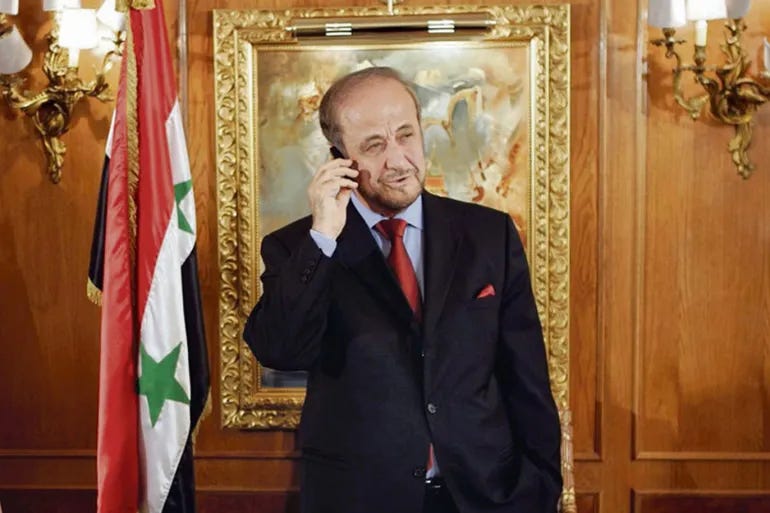
Despite his opulent exile, Rifaat never fully abandoned his political ambitions. He opposed the succession of his nephew Bashar after Hafez’s death in 2000, claiming he was the rightful heir. His self-declared leadership bid failed to gain any traction.
During the Syrian revolution in 2011, he attempted to rehabilitate his image, calling for Bashar’s resignation to “spare bloodshed.” At the same time, he downplayed the regime’s responsibility, framing the crisis as a result of accumulated errors rather than direct policy.
These overtures were widely dismissed; his blood-stained past rendered him an outcast among opposition forces, who firmly rejected any role for him.
Legal Troubles in Europe
Rifaat spent decades in Europe without facing justice for his crimes in Syria. But in recent years, corruption investigations caught up with him.
In 2013, anti-corruption organizations filed lawsuits accusing him of laundering public Syrian funds through shell companies, prompting major investigations in France and Spain.
In 2020, a French court convicted Rifaat of embezzling Syrian public funds and laundering them to purchase massive real estate holdings in France.
He received a four-year prison sentence, and authorities ordered the seizure of all his French assets valued at approximately €100 million alongside a £29 million property in London.
Though age and poor health spared him from actual imprisonment, the ruling was a landmark moment spotlighting his illicit fortune.
In 2024, Swiss prosecutors announced plans to try him for war crimes and crimes against humanity related to the 1982 Hama massacre.
This followed years of investigations and the collection of testimonies and evidence directly implicating him. Yet Rifaat continued to deny all charges, portraying himself as a politically persecuted figure rather than a war criminal.
Final Return and Death in Exile
After more than 36 years abroad, Bashar al-Assad allowed his uncle to return to Syria in October 2021 under an undisclosed deal aimed at shielding him from imprisonment in France.
Rifaat returned to Damascus under the condition that he would not assume any political or public role, as reported by a pro-regime newspaper at the time.
Photos of him with Bashar surfaced in 2023, signaling a superficial family reconciliation. But that return was short-lived. After Bashar’s fall from power amid dramatic developments in 2024, Rifaat found himself once again vulnerable.
He attempted to flee via a Russian military base but was reportedly blocked by Russian forces. According to accounts from associates, he was forced to escape on foot across the Lebanese border carried humiliatingly on the back of a bodyguard while crossing a river, a scene symbolic of the Assad family’s unraveling grip on power.
He later settled in the UAE, spending his final days away from the public eye. He died in 2026 at the age of 88, far from the Syria whose people’s blood marked his legacy.
And so, the “Butcher of Hama” died without ever facing justice for his historic crimes, leaving behind a bloody legacy that remains a stain on the Assad dynasty and an open wound in the memory of Syrians.