

Tensions between the United States and Venezuela have entered a new phase of escalation, as Washington moves from threats of economically suffocating Caracas to concrete measures on the ground. This comes amid the Trump administration’s accusations that President Nicolás Maduro’s government is operating as a “foreign terrorist organization” posing a threat to American security and stability.
On December 16, former President Donald Trump announced a sweeping blockade on all sanctioned oil tankers entering or leaving Venezuela. In a post on his platform “Truth Social,” Trump claimed Venezuela is now “completely surrounded by the largest naval fleet ever assembled in South American history.”
He insisted the blockade would remain in place until Caracas returns “all the oil, land, and other assets,” marking an unprecedented intensification in Washington’s rhetoric toward the Venezuelan government.
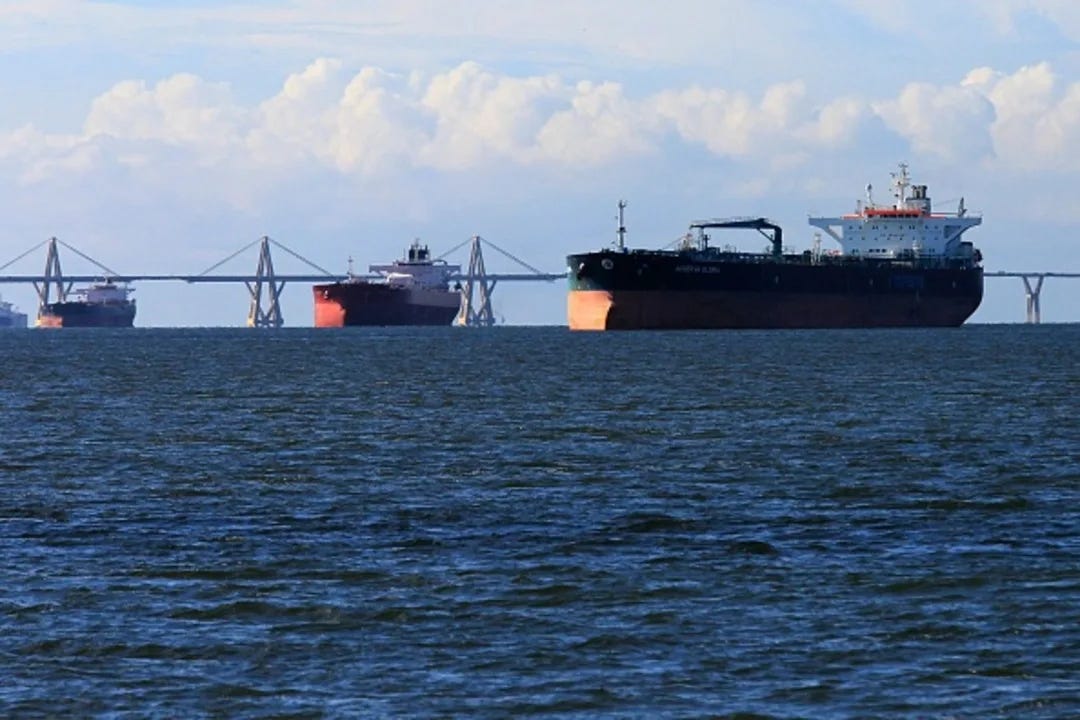
The U.S. measures imposed in the Caribbean, along with the deaths of more than 100 Venezuelans accused of drug trafficking, have given rise to what some are calling “Venezuelan oil traps.” These actions haven’t only impacted targeted vessels but have also sent shockwaves through the entire maritime shipping system, disrupting supply chains, paralyzing trade routes, and triggering widespread logistical paralysis.
In response to this logistical stranglehold threatening Venezuela’s economic lifeline, the Maduro government is being forced to adopt alternative tools and strategies to weather the blockade raising growing questions about its ability to escape Washington’s tightening grip.
Oil Traps: Crippling Maritime Movement
Washington is fully aware of oil’s central role in Venezuela’s economy. The country holds the world’s largest proven oil reserves estimated at 303 billion barrels, roughly 17% of the global total. Oil accounts for more than 90% of Venezuela’s export revenues and 80–90% of its foreign currency inflows, rendering the economy highly vulnerable to price fluctuations and external shocks.
Recognizing this, the Trump administration built its strategy on the premise of freezing Venezuela’s oil sector to erase it from the country’s economic map. This approach stems from a firm belief that cutting off this resource would destabilize the country internally and spark public unrest.
In practical terms, this strategy has led to a qualitative shift in Washington’s pressure tactics since August. Targeting oil has now taken precedence over conventional economic, financial, and administrative sanctions. December saw an unprecedented wave of interceptions targeting Venezuelan oil tankers in the Caribbean. U.S. authorities announced the seizure of a fully loaded supertanker carrying Venezuelan crude, along with two additional interception attempts over the past weekend.
Reuters described the seizure as the harshest blow dealt to Venezuela’s national oil company, PDVSA, since sanctions were tightened in 2019. Echoing this sentiment, U.S. Secretary of Homeland Security Kristi Noem said in a December 21 post on X that Washington would continue pursuing “illicit” oil movements that violate sanctions, claiming these activities fund “narcoterrorism” in the region.
The escalation didn’t stop there. Two days later, in an interview on “Fox & Friends,” Noem emphasized that Washington was not merely intercepting ships—it was “sending a message to the world that Maduro’s illegal activity is unacceptable and he must go,” reaffirming the U.S. commitment to defending its interests and people.
Counter-Strategies to the U.S. Blockade
To withstand mounting U.S. pressure, Venezuela through its national oil giant—is implementing a suite of tools and strategies aimed at keeping the Maduro government afloat. These efforts focus on sustaining oil production and circumventing sanctions. Three primary tactics stand out:
1. Tankers as Floating Storage Units
As Washington seeks to paralyze Venezuela’s oil exports, storage facilities are reaching capacity. This threatens to force PDVSA to shut down mature oil wells, a costly and risky move that could permanently damage output. To avert this, Venezuela has turned its tankers into high-cost floating storage units anchored in territorial waters. This allows production to continue, with the intent of eventually exporting oil via clandestine maritime routes.
2. The Shadow Fleet
Perhaps the most critical tool in Caracas’s arsenal is the so-called “shadow fleet”—a flotilla of aging, often unregistered tankers that flout international regulations. These vessels disable tracking systems and conduct ship-to-ship transfers in international waters to obscure the oil’s origin. The Venezuelan crude is often blended with other types to erase its fingerprint. Similar methods are used with Russian and Iranian oil.
Most of this crude ends up in China, taking advantage of vast oceanic routes that are difficult to monitor. Despite repeated seizures, some tankers manage to slip through. Data from Kpler, a firm that tracks energy shipments, shows that while exports haven’t ceased entirely, they’re experiencing severe logistical bottlenecks. Shipments are delayed, inventories are piling up, and sailing speeds have slowed dramatically.
3. Cryptocurrency Payments and International Support
Beyond maritime tactics, Venezuela increasingly relies on stablecoins like USDT to receive oil payments. This method bypasses the traditional banking system, reducing the risk of frozen assets and undercutting the U.S. dollar’s dominance in energy trade. While digital transactions are swift and cost-effective, they carry regulatory risks and market volatility.
Meanwhile, political and economic backing from countries like China and Russia remains vital. These nations see continued Venezuelan oil flows as strategically important, both for economic reasons and as a means to counterbalance U.S. influence in South America. They assist in re-exporting or blending the crude and falsifying documentation.
Targeting Internal Collaborators
In tandem with its international maneuvering, the Venezuelan National Assembly recently passed a new law criminalizing piracy, maritime blockades, and any form of support for such actions. Officially titled the “Law for the Protection of Navigation and Trade Freedoms Against Piracy, Blockades, and Other Unlawful International Acts,” the legislation aims to defend national sovereignty and economic interests from foreign interference.
The law stipulates prison sentences of 15 to 20 years for anyone involved in or facilitating maritime piracy, blockades, or surveillance of shipping activity. It also imposes fines of up to one million euros and allows for the confiscation of assets. Analysts view the legislation as primarily targeting opposition forces that support U.S. sanctions and regime-change efforts figures like María Corina Machado, who was recently awarded the Nobel Peace Prize.
In sum, while Caracas may be managing to resist the American blockade through a diverse array of creative strategies, it remains vulnerable to escalating risks and international scrutiny. The key question now is: how long can Venezuela sustain this resistance and what will be the long-term cost of its defiance?
