


The United Kingdom has imposed sanctions on several factions and commanders implicated in acts of violence against civilians in Syria’s coastal region in March 2025. Among the targeted individuals are commanders Mohammed al-Jassem (Abu Amsha) and Saif Boulad (Abu Bakr), as well as the factions “Sultan Suleiman Shah,” “Sultan Murad,” and “Hamza.”
These groups have come under the umbrella of Syria’s Ministry of Defense, which remains in the early stages of formation following the fall of Bashar al-Assad’s regime on December 8, 2024.
The sanctions present significant obstacles to the process of building a new military institution especially given that several of the individuals sanctioned had already been subject to prior US and EU sanctions for human rights violations.
This raises serious political and security implications for the functioning of the Ministry of Defense and the structure of the new Syrian Army. It also reignites debate over the government’s options in addressing targeted sanctions that intersect with questions of military discipline and accountability.
On December 19, the British Foreign Office announced sanctions against six individuals and three factions comprising four people and three entities for their roles in alleged atrocities committed during the peak of Syria’s war and in violent incidents that took place in Latakia and Tartus provinces in early 2025. The sanctions also targeted two individuals accused of financially supporting the Assad regime.
The sanctions include asset freezes, travel bans, and disqualification from holding administrative positions. The individuals targeted are:
Ghiath Dallah – Former military commander under Assad, and head of the pro-regime “Ghaith Forces.”
Moqdad Fattihah – Former regime commander and militia leader.
Modallal Khouri – Syrian-Russian businessman accused of financing regime activities.
Imad Khouri – Syrian-Russian businessman accused of financing regime activities.
Mohammed al-Jassem – Commander of the “Sultan Suleiman Shah” faction (Commander of Division 62 in the new Syrian Army).
Saif Boulad – Commander of the “Hamza” faction (Commander of Division 76 in the new Syrian Army).
According to the sanctions, the following factions are now subject to asset freezes:
Sultan Murad Division, led by Faheem Issa (Issa himself was not individually sanctioned).
Sultan Suleiman Shah Division, led by Mohammed al-Jassem.
Hamza Division (also known as “Hamzat”), led by Saif Boulad.
The UK Foreign Office stated that this new package of sanctions is part of its broader commitment to holding accountable those responsible for violations against the Syrian people whether committed by the former Assad regime or by other actors.
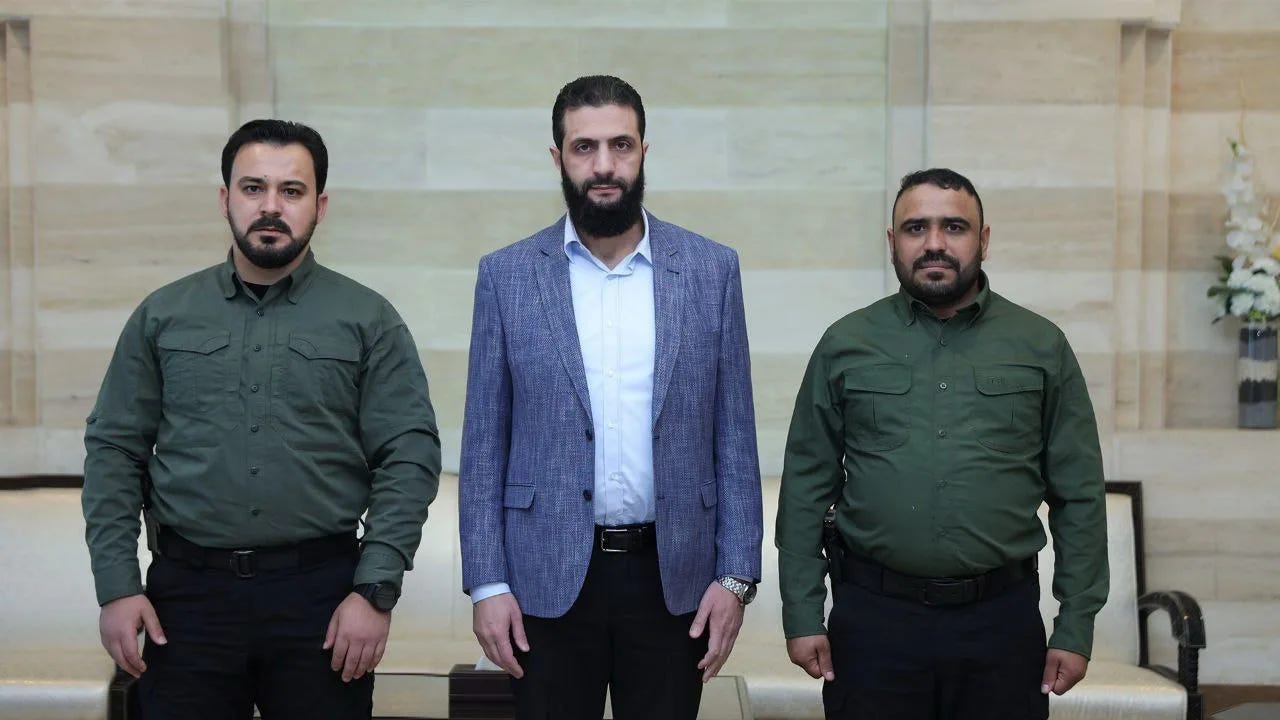
British Foreign Secretary Yvette Cooper emphasized that the sanctions send a clear message to anyone attempting to undermine a peaceful and prosperous future for Syrians. She reaffirmed the UK’s support for the Syrian people and its backing of the new Syrian government in achieving a comprehensive political transition. Cooper underscored that accountability and justice for all Syrians are essential for a successful and sustainable political settlement.
Background: Coastal Clashes and Civilian Casualties
Syria’s coastal region witnessed significant security unrest and armed clashes earlier in 2025 between government forces and remnants of the former regime. The violence began with an ambush by Assad loyalists targeting government personnel and escalated into wider confrontations, accompanied by sectarian and retaliatory abuses. Between March 6 and 10, 2025, 803 people were killed in extrajudicial violence.
This is not the first time such sanctions have been imposed. In May 2025, the European Union added Mohammed al-Jassem, Saif Boulad, and the factions “Sultan Suleiman Shah,” “Hamza,” and “Sultan Murad” to its sanctions list, citing their responsibility for serious human rights abuses in Syria’s coastal region. Abu Amsha denied that his faction had committed any violations.
Earlier, in August 2023, the US Treasury Department imposed similar sanctions on the “Sultan Suleiman Shah” Division, its leader Mohammed al-Jassem and his brother Walid, as well as the “Hamza” Division and its commander Saif Boulad, for abuses committed in northern Syria. At the time, Abu Amsha dismissed the sanctions as “purely political” and claimed he paid them no attention.
A Three-Pronged Risk
Following the collapse of the Assad regime, building a new national army was a top priority for the new Syrian administration. Initial steps included a high-level meeting between President Ahmad al-Shara’ and faction leaders to initiate integration into a unified army. This was followed by the formal dissolution of militia formations, structural reforms within the military, and the appointment of new commanders.
Both al-Jassem and Boulad were appointed as brigadier generals commanding Divisions 62 and 76, respectively in the newly formed Syrian Army. They have since appeared in official meetings, military exercises, and community engagements.
However, the UK sanctions targeting individuals and factions that are now part of the state apparatus come at a delicate moment. Syria is experiencing a phase of renewed international openness in the post-Assad era, with the new administration working to rebuild foreign relations, reintroduce Syria onto the global stage, and launch an economic recovery after years of sweeping sanctions.
Brigadier General Abdullah al-Asaad, a military and strategic expert, told Noon Post that these sanctions significantly impact the operational capabilities of the Ministry of Defense. They hamper combat logistics, undermine the army’s ability to cooperate with foreign militaries and regional actors, and disrupt both combat and administrative support systems creating serious cause for concern.
Meanwhile, international criminal law and human rights specialist Moatasem al-Kilani warned that UK sanctions on figures embedded in the new Syrian military present a genuine threat to its training and development even if the sanctions are only partial. Drawing on the cases of Iraq and Libya, he argued that sanctioned units within a military structure often lead either to underdeveloped and uneven training, as in Iraq, or to near-total paralysis of army-building efforts, as in Libya.
In his interview with Noon Post, al-Kilani outlined the risks and repercussions of the sanctions in three key areas:
Direct impact on training and empowerment: The inclusion of sanctioned individuals and factions creates what is internationally known as a “legal contamination” of the institution. This prohibits the UK and its allied nations from providing any form of assistance even non-combat support such as leadership training, discipline building, international humanitarian law education, and institutional structuring under British sanctions regulations (UK Sanctions and Anti-Money Laundering Act – SAMLA) and Syria-specific executive orders.
Obstruction of international recognition: Sanctions go beyond freezing assets or banning travel. They carry an implicit political and moral judgment that the sanctioned entities have failed to demonstrate adequate commitment to accountability and civilian protection. Their presence within the army undermines global trust in any “new national army” and prompts cautious or even non-existent engagement from Western states. This explains the repeated targeting of the same individuals by US, European, and UK sanctions.
Risk of internal fragmentation and weak military cohesion: Sanctions could result in a fragmented army composed of legally “clean” units and others burdened by sanction designations or records of abuse. This leads to disparities in training, differences in doctrine and discipline, and serious challenges in achieving unified command and control.
What Are Damascus’s Options?
In response to the clashes in Syria’s coastal region, the Syrian government formed a commission to investigate the incidents. Several individuals have since been arrested, and President al-Shara’ reaffirmed Syria’s commitment to holding all perpetrators accountable, positioning the state as one governed by the rule of law. Trials of those involved in the coastal violence began in November and December and are still ongoing.
Noon Post reached out to the press office at the Syrian Ministry of Defense for comment on the UK sanctions, but received no response at the time of publication.
Legal expert Moatasem al-Kilani outlined several scenarios available to the Syrian government in responding to the UK sanctions, each with different implications for the military’s institutional development. Drawing from international precedents, these scenarios include:
The “Partial Isolation” model (Iraq): Under this approach, the Iraqi army continued to receive US and NATO training, while sanctioned militias within the Popular Mobilization Forces were excluded from such programs. This resulted in a fragmented training process and an uneven military structure, slowing broader institutional reform. A similar path in Syria would involve separating sanctioned factions from leadership and training roles but without addressing the deeper issue of accountability.
The “Near-Total Paralysis” model (Libya): In Libya, the integration of undisciplined and sanctioned militias into the military scene led to the collapse of genuine unification efforts. International actors withheld training and support, stalling the creation of a professional national army. This would be the worst-case scenario for Syria if sanctioned factions remain embedded without accountability or structural separation.
The “Correction Path”: This is the most effective route to circumvent sanctions and aligns with the demands of the UK and EU. It entails clear legal and organizational separation of sanctioned individuals and factions from the military, full integration of compliant units, credible accountability mechanisms (including real investigations, court proceedings, or public dismissals), and legal petitions to challenge or lift sanctions through formal channels.
Gradual Rebuilding of International Trust: This scenario focuses on working with human rights organizations, allowing monitoring and documentation efforts, and fostering transparency within military institutions. It is the only path likely to reopen doors for international training, institutional support, and recognition of Syria’s new national army in the long run.
