

In his book The Quest: Energy, Security, and the Remaking of the Modern World, energy expert and historian Daniel Yergin reflects on a central paradox of global energy trade: “As energy trade becomes more global, crosses more borders, and expands across land and sea, the security of supply chains becomes more urgent. Ensuring that security requires greater cooperation between producers and consumers.
Strategic chokepoints along maritime routes create vulnerabilities for the transport of oil and liquefied natural gas whether from accidents, terrorist attacks, or military conflict. The most prominent of these vulnerabilities is the Strait of Hormuz.”
Published in 2011, the book predates the current crisis. Yet at a conference on artificial intelligence held on March 23 of this year, Yergin pivoted sharply to energy, dispensing with euphemism. With the strait effectively closed, he declared: “We are witnessing the largest disruption in the global oil sector in history. Nothing of this scale has ever happened before.”
Yergin’s remarks sought to place the present crisis in proper context even when compared with the 1973 oil embargo and the 1979 Iranian Revolution, both of which reshaped the global energy map. Neither, however, involved the outright closure of the world’s most critical strategic waterway, halting the passage of some 16 million barrels of crude oil per day.
Despite the bleak outlook, Yergin pointed to a glimmer of hope: “This crisis is unfolding in a world where the global oil and gas system is more resilient and diversified than it has been in decades. Among the structural differences is that the United States is now the world’s largest oil producer, and Saudi Arabia operates overland pipelines that transport crude to export terminals on the Red Sea, bypassing the strait entirely.”
Yanbu: The Unexpected Surge
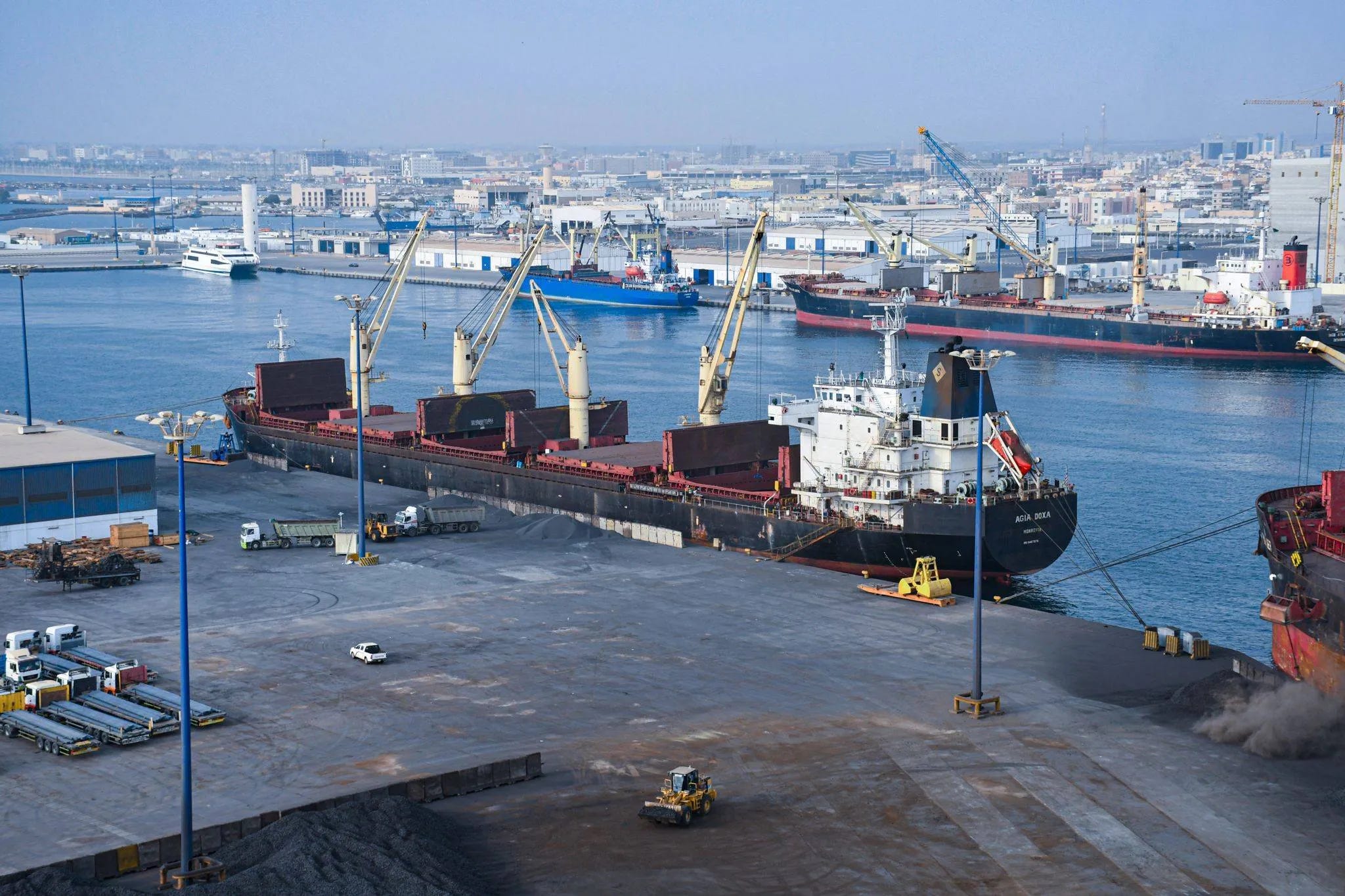
Yergin’s observation highlights a maneuver Saudi Arabia has employed since the outbreak of war—one many believe could reshape the future of Saudi oil exports away from Iran’s control over the Strait of Hormuz. On March 4, just days after hostilities began, Saudi Aramco confirmed reports that it had adjusted crude shipping operations by temporarily rerouting volumes to Yanbu port to avoid the strait.
In its coverage, Asharq Al-Awsat noted that this move was made possible by the advanced infrastructure of the East-West pipeline (Petroline), which links oil fields in the Eastern Province to Yanbu on the Red Sea coast. Stretching 1,200 kilometers with a capacity of up to 5 million barrels per day, the pipeline serves as a strategic alternative outlet, granting Riyadh logistical flexibility to manage exports away from volatile maritime routes.
According to estimates by Vortexa, a firm specializing in tracking oil and gas trade, Yanbu’s capacity could theoretically expand to 7 million barrels per day. Since early March 2026, daily throughput has reached 4.5 million barrels far exceeding the previous monthly peak of 1.5 million barrels recorded in April 2020.
Yet these figures offset only part of the roughly 13.4 million barrels per day shortfall in crude exports from the Middle East and Africa pipeline system.
Following the closure of the Strait of Hormuz, Saudi Arabia moved swiftly to recalibrate its Red Sea strategy via Yanbu. It cut production by approximately 2 million barrels per day and redirected remaining output to the Red Sea port. Supertankers lined up to receive the diverted crude, and by March 18, shipments averaged around 4.2 million barrels per day.
However, the operation has not been without disruption. A drone strike on the SAMREF refinery at the port, alongside the interception of a ballistic missile reportedly in response to the bombing of Iran’s South Pars gas field underscored the fragility of the arrangement.
Indeed, this alternative strategic outlet appears far from insulated from regional instability. Iranian missile activity has disrupted loading operations, while the possibility of Yemen’s Houthi movement entering the conflict looms, despite its reportedly limited munitions.
Since the beginning of March, Yanbu has recorded an average loading rate of between 2.5 and 3 million barrels per day. Notably, peak loading reached 5.9 million barrels on March 9, according to the International Energy Agency (IEA). Meanwhile, average tanker revenues from the Red Sea to Asia have surged to their highest level in nearly six years, approaching $270,000 per day.
Yet this surge has been accompanied by skepticism. Aditya Saraswat, head of Middle East and North Africa research at Rystad Energy, cautions that “it remains unclear whether this situation can be sustained over the long term.” He is not alone in this assessment. To understand why, one must first examine the IEA’s broader outlook on global energy distribution.
Asia: The Hardest Hit—But Permanently?
The IEA’s report, issued on March 12, 2026, confirms that the world is currently experiencing the largest disruption in energy supply in history, surpassing even the crises of the 1970s echoing Yergin’s assessment.
One of the report’s most critical focal points is Asia, where the disruption could signal a long-term decline in Gulf energy dominance. With flows through the Strait of Hormuz sharply reduced since the war began, Saudi Arabia was forced to cut exports to Asia by 38.6% in March alone from 7.1 million barrels per day to 4.3 million. This represents a significant gap for a market historically reliant on Gulf oil for nearly 80% of its supply.
The IEA anticipates that the redrawing of supply routes will create a new reality in Asia. The share of Atlantic Basin and American producers is expected to grow, with refineries in China and India already turning more heavily toward oil from the United States, Brazil, Guyana, and West Africa. Although shipments from these regions can take over 40 days to reach Asia—raising freight costs—the shift appears unavoidable.
Compounding the issue is the quality of supply. Exports from Yanbu are limited to Arab Light crude, depriving Asian refineries of the medium and heavy grades for which many are configured. As a result, refiners have been forced to adjust their processing blends and increase reliance on alternative suppliers offering similar grades.
The Yanbu Gambit: Risks Outweigh the Promise
Energy researcher Andrew Logan argues that the expansion of the conflict is not the only threat to Saudi Arabia’s strategy. Even if shipments resume smoothly, it remains uncertain whether the kingdom possesses the technical capacity to fully sustain its export plan or whether shipping crews are willing to accept the heightened risks.
Logan points to a purely logistical challenge: how far can crude from Yanbu realistically reach? Saudi Arabia has allowed clients to receive April allocations via the port, but these volumes remain incomplete and constrained by pipeline capacity.
Further limitations stem from the narrow range of crude offered primarily Arab Light. Despite around 30 tankers anchored near the port as of March 16, traffic through the Suez Canal remains well below peak levels. With instability now spreading into the Red Sea, questions persist about whether tanker traffic can continue uninterrupted.
Shipping costs present another hurdle. According to Vortexa, the Yanbu-to-Asia route is currently the most expensive major VLCC (Very Large Crude Carrier) route on the market. Daily returns run into the hundreds of thousands of dollars, reflecting both vessel scarcity and elevated operational risks. For a VLCC with a 280,000-ton capacity, shipping from Yanbu costs $12 million more per voyage than from the US Gulf Coast and $17 million more than from West Asia.
Returning to Logan’s analysis, even under the most optimistic scenario where Iranian attacks cease and capacity increases the Red Sea pipeline would only marginally offset the deficit caused by the closure of the Strait of Hormuz.
In a worst-case scenario, further attacks by Iran or the Houthis could cripple the pipeline diversion system, which is already highly vulnerable. In 2019, Houthi attacks on Saudi Arabia’s Abqaiq facility a key node feeding the pipeline halted 5.7 million barrels per day of production.
Should the Houthis escalate and close the Bab el-Mandeb Strait, a new crisis would emerge: vessels bound for Asia would be forced to reroute via the Suez Canal, potentially adding weeks or even months to transit times.
Given these constraints, Saudi Arabia does not appear to view Yanbu as a genuine long-term substitute for the Strait of Hormuz. Rather, it is an emergency measure designed to mitigate losses.
Redirecting flows through the Red Sea is no silver bullet especially now that the route itself has become a potential target in the conflict. For Yanbu to evolve into a viable alternative, Saudi Arabia would not only need to push its infrastructure to the limit, but also ensure protection against attacks and convince maritime operators that its port is safe. As Logan suggests, that may prove to be more than a tall order.