

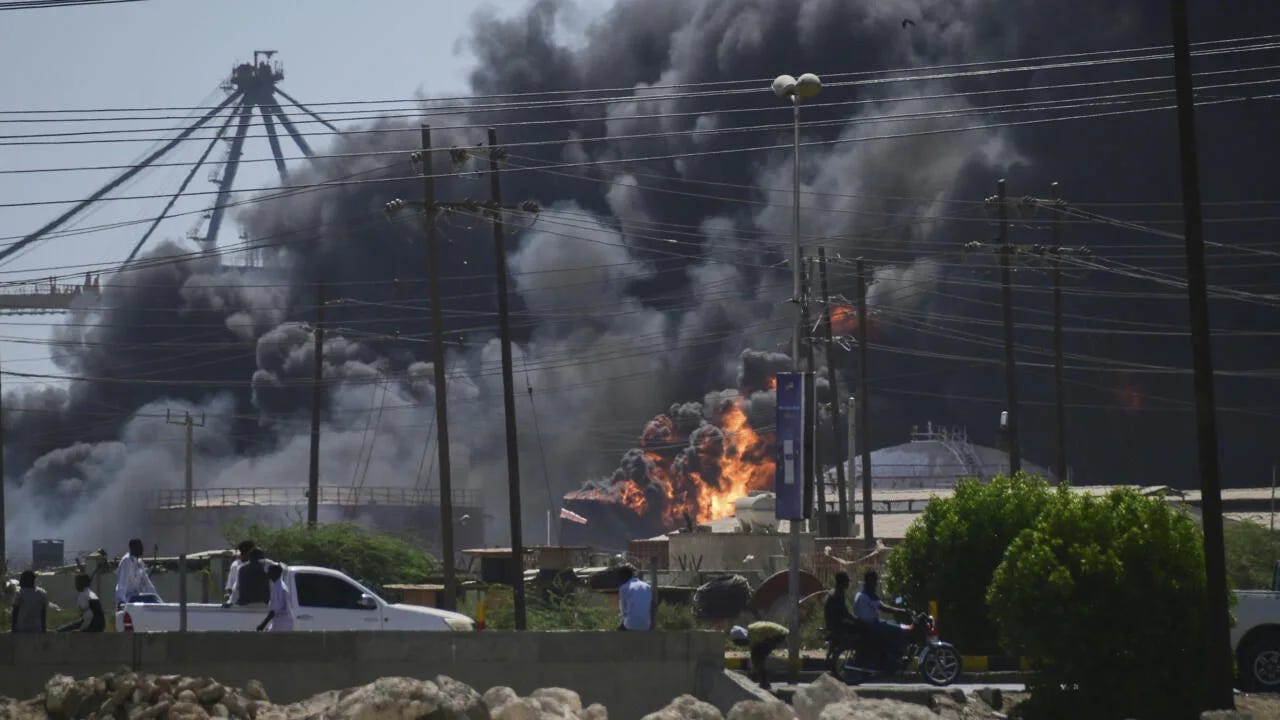
A recent investigation by The New York Times, published on February 1, has unveiled what it describes as Egypt’s direct military involvement in Sudan’s ongoing civil war. The report reveals that a secret airbase in Egypt’s Western Desert, near the East Oweinat region, has been used as a launchpad for drone strikes targeting positions held by the Rapid Support Forces (RSF).
According to the investigation, the base constitutes a critical hub in a transnational military operation, signaling a qualitative escalation in Egypt’s role in the conflict.
The findings are backed by a combination of satellite imagery, flight records, and testimonies from American officials and a so-called “Middle Eastern source.” Notably, the Egyptian Foreign Ministry and its press office, along with the Sudanese government, declined to comment, neither confirming nor denying the report. This silence has kept the story within the realm of leaks supported by technical evidence.
While some elements of the investigation echo earlier reports of Egyptian involvement following the RSF’s capture of El Fasher—with Emirati backing—the major revelation lies in the existence of a military infrastructure purpose-built for drone warfare. This adds a new layer of sensitivity to the issue, especially considering Cairo’s close alliance with Abu Dhabi, the Egyptian regime’s most prominent regional backer.
The report also suggests coordination with Sudanese and Turkish parties, pointing to a significant shift in Cairo’s approach to the Sudanese war. After nearly 1,000 days of cautious diplomacy, Egypt now appears to be moving into a phase of undeclared military engagement one that could redraw the conflict’s balance and trigger broader regional repercussions.
A Drone War Launched from the Western Desert
The investigation details a fully equipped airstrip deep in Egypt’s Western Desert, adjacent to large-scale agricultural zones built as part of a land reclamation project in East Oweinat. This location has been transformed into a launch site for advanced military drones that not only operate domestically but conduct deep strike missions across the Sudanese border part of one of the world’s largest ongoing drone wars.
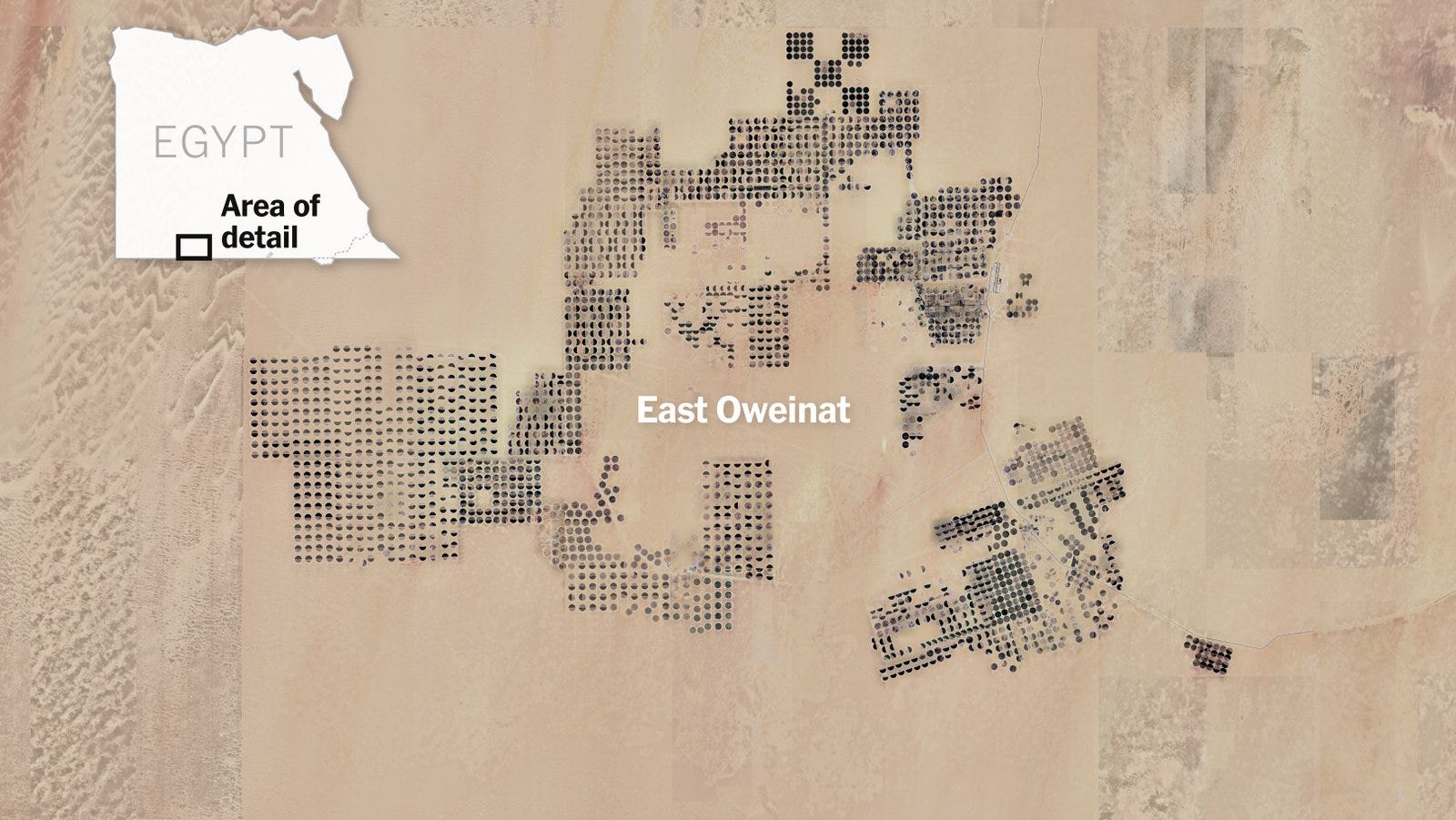
Satellite images, flight logs, and testimonies from Western and Arab officials indicate that the base has been hosting Turkish-made drones for several months. These UAVs have reportedly been used to strike RSF targets, which have been engaged in a bloody conflict with the Sudanese Armed Forces for over three years.
This shift marks Egypt’s evolution from a cautious diplomatic actor to an active though covert military participant on the side of the Sudanese army. The broader conflict remains entangled with competing interventions from the UAE, Turkey, Russia, Iran, and several Gulf states, each with their own interests and strategic calculations.
Officials cited in the investigation claim the Egyptian move followed the RSF’s capture of El Fasher in Darfur and their subsequent expansion into other regions, developments that threatened both regional stability and Egypt’s own national security. Cairo has absorbed a large influx of Sudanese refugees, heightening the urgency of securing its southern border.
Since then, the frequency of drone strikes from the East Oweinat base has intensified, targeting supply convoys and military positions in an effort to sever the RSF’s logistical lifelines stretching from Libya and Chad. The drones are reported to have long-range capabilities, able to conduct precise attacks across vast distances.
1,000 Days of Neutrality—What Changed?
Since the outbreak of the Sudanese war, Cairo pursued a policy of cautious, limited engagement, striving to maintain balanced relations with all warring factions to avoid entanglement in a costly military quagmire. Despite mounting pressure and indirect threats, Egypt stuck to this approach, absorbing escalating humanitarian and security burdens most notably the waves of displaced Sudanese civilians and the growing risk of instability along its southern frontier.
However, recent battlefield developments have upended Cairo’s calculations. The RSF’s swift takeover of El Fasher and most of Darfur has rendered neutrality increasingly untenable. The conflict has shifted from mutual attrition to a phase of reshaping power dynamics, threatening to dismantle the traditional Sudanese state structure and endangering the unity of the country.
This shift has direct implications for Egypt’s national security. The regions of El Fasher and Kordofan hold unique geopolitical significance for Cairo, beyond their immediate military relevance. They represent a critical node in Sudan’s western hinterlands, influencing cross-border flows of arms, people, and resources.
Their fall coupled with RSF leader Mohamed Hamdan Dagalo (Hemedti)’s secessionist rhetoric served as a wake-up call for Egypt that its strategic depth was no longer secure, and that continued neutrality might verge on recklessness.
Consequently, Egypt’s involvement has taken multiple forms political, military, and intelligence-related as Cairo redefines its role in Sudan from cautious mediator to strategic actor seeking to rebalance the conflict and safeguard its interests.
Between Riyadh and Abu Dhabi: Cairo’s Strategic Balancing Act
Despite repeated instances of Emirati interference in areas sensitive to Egypt’s national security—from Gaza to Yemen, Sudan, and Ethiopia—Cairo has long exercised restraint toward Abu Dhabi. The Egyptian leadership views the UAE as a crucial ally, one that played a pivotal role in supporting the regime after 2013. This history has made direct confrontation politically and strategically costly.

However, the growing complexity of regional dynamics especially with Saudi Arabia’s renewed assertiveness in Yemen has compelled Cairo to reassess. Rather than a confrontation with Abu Dhabi, Egypt has adopted a more assertive posture in defending its national interests. In this context, its recent convergence with Riyadh appears pragmatic: a recalibration of priorities and alliances in light of shifting regional currents.
While Egypt’s covert operations in Sudan may appear to challenge UAE-backed RSF forces, Cairo is unlikely to announce this involvement publicly. Such an admission could spark unnecessary tensions with Abu Dhabi, which remains keen to maintain cordial ties with Egypt. Likewise, Egypt wishes to avoid fallout that could compromise its national security calculus.
Meanwhile, the UAE is unlikely to interpret Egypt’s moves as a hostile realignment. It will likely continue to prioritize its longstanding partnership with Cairo, even as Riyadh courts Egypt into a camp potentially opposed to Abu Dhabi’s regional agenda.
Ultimately, Egypt’s strategy in Sudan appears to be unfolding in deliberate, calculated steps, shaped by battlefield realities and evolving regional alliances. Guided by a compass calibrated to political, economic, and security imperatives, Cairo now finds itself walking a tightrope.
As the Sudanese war grinds on and regional rivalries deepen, the central question remains: can Egypt achieve its strategic objectives through quiet intervention, or will the mounting complexities turn this covert engagement into a difficult test of Cairo’s ability to balance its internal needs with its external ambitions?
