

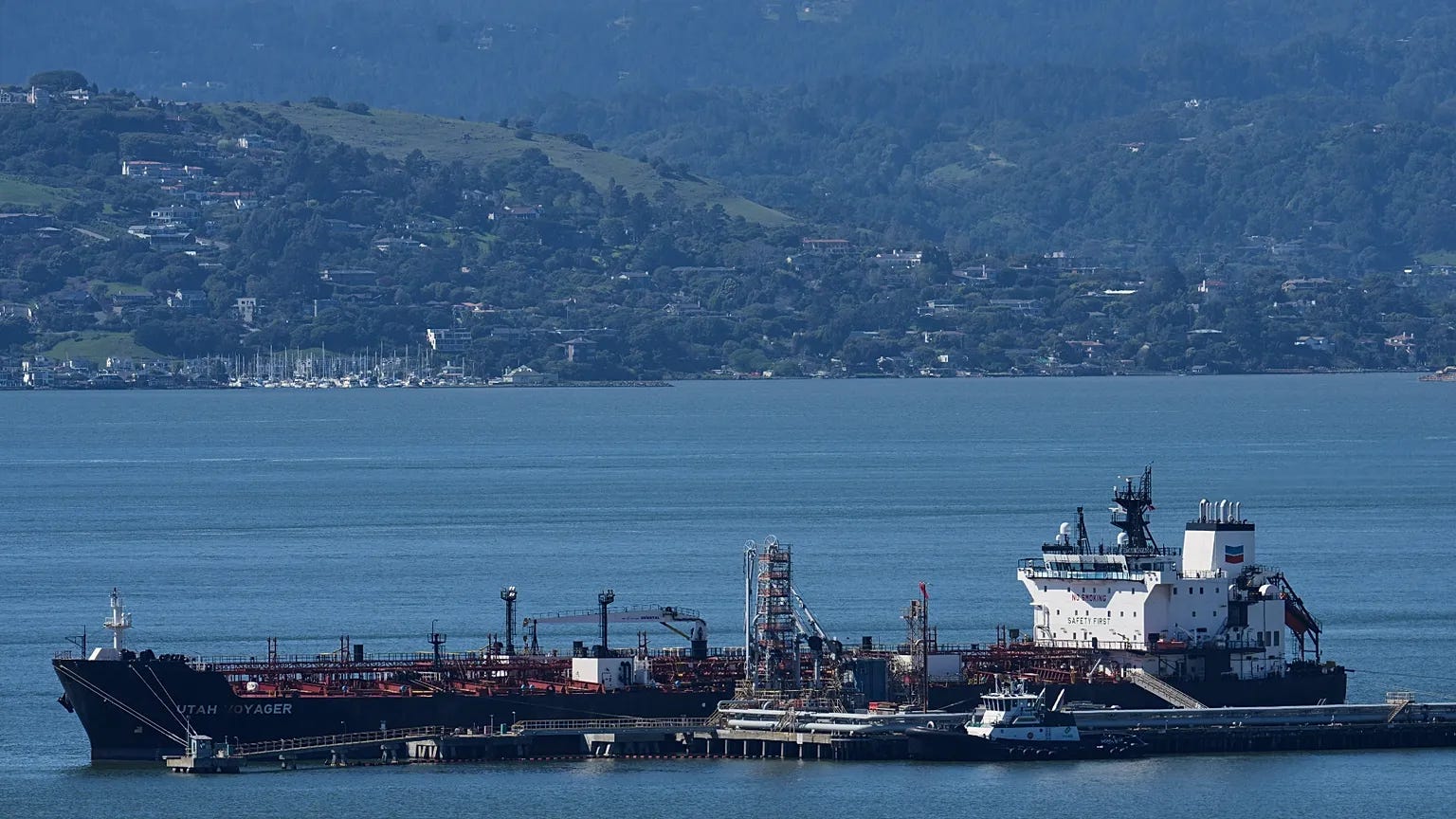
As the Strait of Hormuz choked at the outset of spring 2026 and global energy markets plunged into acute turmoil, the issue has extended far beyond rising prices and disrupted supplies. It has evolved into a race to establish alternative corridors particularly along transit routes linking the Gulf with Europe.
Amid this shift, five regional and international routes have emerged as potential mitigators of the Hormuz shock, varying in readiness and feasibility. These routes are not equal in scope: some are tied to direct Turkish initiatives, while others remain broader regional or global alternatives.
What are these routes, and what are their limitations?
1. Immediate Emergency Routes
First: The Iraq/Khabur Route
In July 2025, the International Road Transport Union (TIR) activated a new overland route connecting Turkey to Kuwait via northern Iraq. Three Turkish trucks completed the journey to Kuwait in just four days, compared to 45 days by sea.
This route depends on security conditions in northern Iraq and the TIR system. While suitable for transporting trucks and general goods, it is not viable for oil or gas shipments.
Its primary advantage lies in speed, yet its passage through unstable regions exposes it to security risks. Moreover, its capacity remains limited compared to the volumes typically transiting Hormuz.
Second: The Syria–Jordan–Saudi Route
In June 2025, Turkey and Syria signed a transit agreement eliminating the dual unloading system and granting Turkish drivers visas at border crossings.
By October 2025, Turkish Trade Minister Ömer Bolat confirmed that the corridor would enable Turkish trucks to reach Jordan and the Gulf, with visa issues addressed and road infrastructure in Syria rehabilitated.
On March 31, 2026, Ankara secured 15-day transit visas for drivers from Saudi Arabia. Bolat stated that access to all Gulf countries would take just three to four days.
This is a purely overland route for general cargo and trucking. It stands as one of the most significant emergency alternatives currently in operation. However, it remains fragile due to security conditions in Syria and Iraq, limited capacity, and its inability to transport oil or gas.
2. Broader Regional Routes with Limited Capacity
First: Suez/Red Sea Then Overland
With escalating conflict, Saudi Arabia and the UAE activated a network of “logistics corridors” transporting containers arriving at Red Sea ports such as Jeddah, Yanbu, and NEOM via trucking routes to Kuwait, Qatar, Bahrain, the UAE, Oman, Iraq, Jordan, and Yemen.
The UAE has also shifted shipments to Fujairah and Khorfakkan ports outside high-risk zones, then overland to Jebel Ali through routes linked to Etihad Rail.
This hybrid sea-land route is well suited for containers and general goods, with companies like CMA CGM offering container transport from Jeddah to Dammam, Doha, and Kuwait via trucks.
Its significance lies in providing a rapid alternative when Hormuz is impassable. However, it is costly: transporting a 40-foot container from Salalah to Dubai costs between $3,000 and $5,000, compared to $200–$400 via Jebel Ali. It is also unsuitable for large-scale energy transport.
Second: The Oman Route
Oman is promoting its ports—Sohar, Duqm, and Salalah—as alternative gateways. Authorities have introduced the “Bayan” system to accelerate permits and allow empty trucks from Gulf states to enter and collect goods.
Ports in Fujairah, Khorfakkan, and Oman lie south of Hormuz, enabling overland connectivity with the Gulf. This maritime-land corridor reduces exposure to Hormuz risks and facilitates container transport.
However, traversing the Empty Quarter increases both distance and cost, and the route remains inefficient for oil and gas transport.
3. A Distant and Costly Global Route
The Cape of Good Hope Route
This route involves ships sailing around southern Africa, extending travel time between Asia and Europe by 10 to 15 days, increasing fuel consumption by 25–30 percent, and raising vessel charter costs.
It is a fallback option during heightened risks in the Gulf and Red Sea. While suitable for certain trade flows, it is not a practical alternative.
Overall Assessment
None of these routes offers immediate capacity for transporting large volumes of oil and gas. Alternative pipeline capacities through Saudi Arabia and the UAE range between 3.5 and 5.5 million barrels per day, compared to the 15 million barrels that typically pass through Hormuz.
These corridors function more as “shock absorbers” than genuine substitutes.
How Is Turkey Attempting to Leverage These Alternatives?
Turkey’s wartime initiatives reflect more than logistical adjustments they signal broader strategic ambitions across three key areas:
1. Sustaining Trade and Preserving Gulf Market Share
Turkey’s exports to Gulf countries dropped by 36.5% in March 2026. In response, Ankara moved quickly to secure transit visas from Saudi Arabia and activate the Syria–Jordan route, reducing delivery times to three or four days.
This provides Turkish companies with critical relief and maintains the flow of goods such as textiles and food products. However, these routes do not address energy trade or reduce Gulf dependence on Hormuz.
2. Positioning Turkey as an Energy and Transit Hub
Turkish Energy Minister Alparslan Bayraktar stated that the Kirkuk–Ceyhan pipeline can transport 1.5 million barrels per day. Ankara is also considering a pipeline project for Qatari gas to Turkey and potentially onward to Europe as well as future pipelines to Hatay.
These proposals underscore Turkey’s ambition to become a key energy corridor to Europe, especially given the limited capacity of Saudi and Emirati pipelines.
However, experts caution that redirecting significant oil and gas flows to alternative overland or pipeline routes would require years of investment. Hormuz remains central to LNG flows, which cannot be quickly rerouted.
3. Advancing Mega-Projects and Converting Geography into Influence
Turkey is leveraging the crisis to promote broader geo-economic projects. The Middle Corridor (Trans-Caspian route) connects China to Europe via Kazakhstan, the Caspian Sea, Azerbaijan, Georgia, and Turkey, reducing transit time to 15 days.
According to Turkey’s Daily Sabah, experts believe this corridor could transform Turkey from a “transit state” into a “multi-dimensional logistics power.”
Meanwhile, Turkey, Iraq, Qatar, and the UAE signed a memorandum in April 2024 for the “Development Road” project, linking Iraq’s Al-Faw Port to Turkey and onward to Europe.
The project envisions highways and railways stretching from Basra to Europe, with its first phase expected by 2028 at a cost exceeding $24 billion, saving up to 10 days compared to the Suez Canal.
Backed by Gulf investments, the project faces security challenges in Iraq and Syria and remains a medium- to long-term solution. Yet it could position Turkey as a central node in Asia-Europe trade.
These routes are not true alternatives to Hormuz but rather uneven mechanisms for mitigating Gulf bottlenecks. Turkey, however, is attempting to transform this limited logistical margin into broader geo-economic leverage enhancing its strategic position in future trade and energy networks.