

On December 8, 2024, the regime of Syrian President Bashar al-Assad collapsed, bringing to a close a heavy chapter in Lebanon’s collective memory one defined by the psychological and political weight of Damascus’s influence over Lebanese decision-making. Although Syria’s direct presence had already waned in recent years, its symbolic hold remained.
With Assad’s fall, Damascus and Beirut began cautiously reexamining the boundaries of their relationship and shared interests. The two capitals are tentatively exploring avenues of engagement, though the path is complicated by thorny issues, including the refugee crisis, border control and smuggling, and detainees held in each country’s prisons.
Dismantling a Legacy and Transferring Power
The fall of the Assad regime marked the end of an era in which Damascus interfered heavily in Lebanese affairs, relying on Hezbollah and Iranian support to entrench its regional role.
Lebanese memory is still scarred by decades of Syrian tutelage (1976–2005) under both Hafez and Bashar al-Assad a period that entangled Lebanon in regional conflicts and left a lasting impact on its political psyche.
In 2025, the relationship witnessed gradual efforts toward normalization. Assad’s ouster weakened Hezbollah significantly, particularly after the new Syrian authorities expelled Iranian militias, blocked arms smuggling into Lebanon, took control of the captagon trade, and recalibrated ties with Tehran.
At the helm of this new chapter is Syrian President Ahmad al-Sharaa, who is intent on building a pragmatic political system one that opens the door to improving relations with Lebanon.
Messages, Visits, and Agreements
On December 26, 2024, former Lebanese Foreign Minister Abdallah Bou Habib sent a letter to his Syrian counterpart Asaad al-Shibani, expressing Beirut’s desire to establish “good neighborly relations” after decades of tensions.
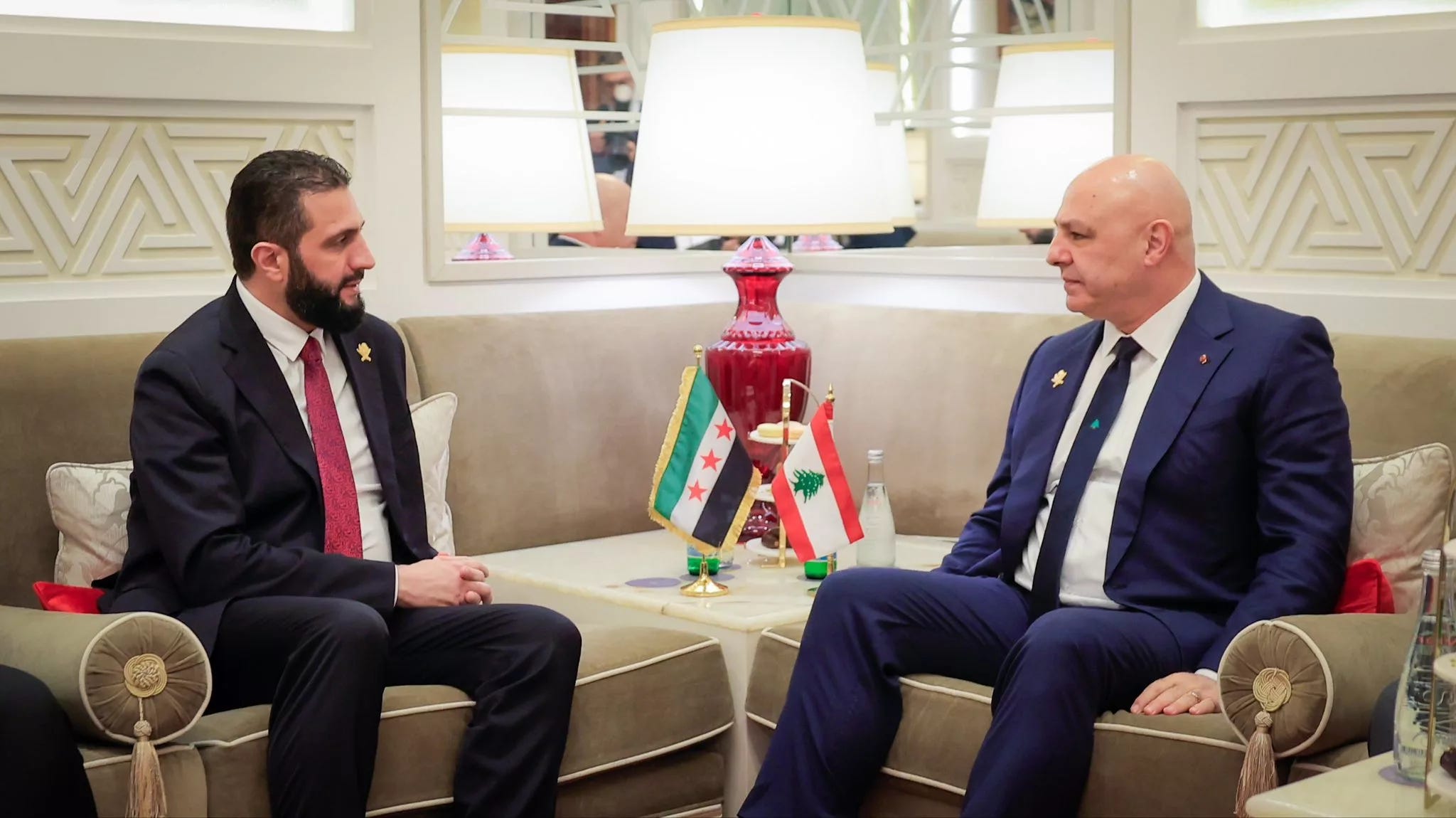
A symbolic breakthrough came in January 2025 when Sharaa hosted former Lebanese Prime Minister Najib Mikati in Damascus the first high-level meeting of its kind in 15 years. The two sides discussed border demarcation, curbing smuggling, the return of Syrian refugees, and the resolution of Syrian deposits in Lebanese banks.
Sharaa described the meeting as a chance to “turn the page” and called for abandoning “old mentalities.”
Throughout 2025, Sharaa met with Lebanese President Joseph Aoun on several occasions during regional summits in Egypt and Qatar. Their discussions focused primarily on border-related issues.
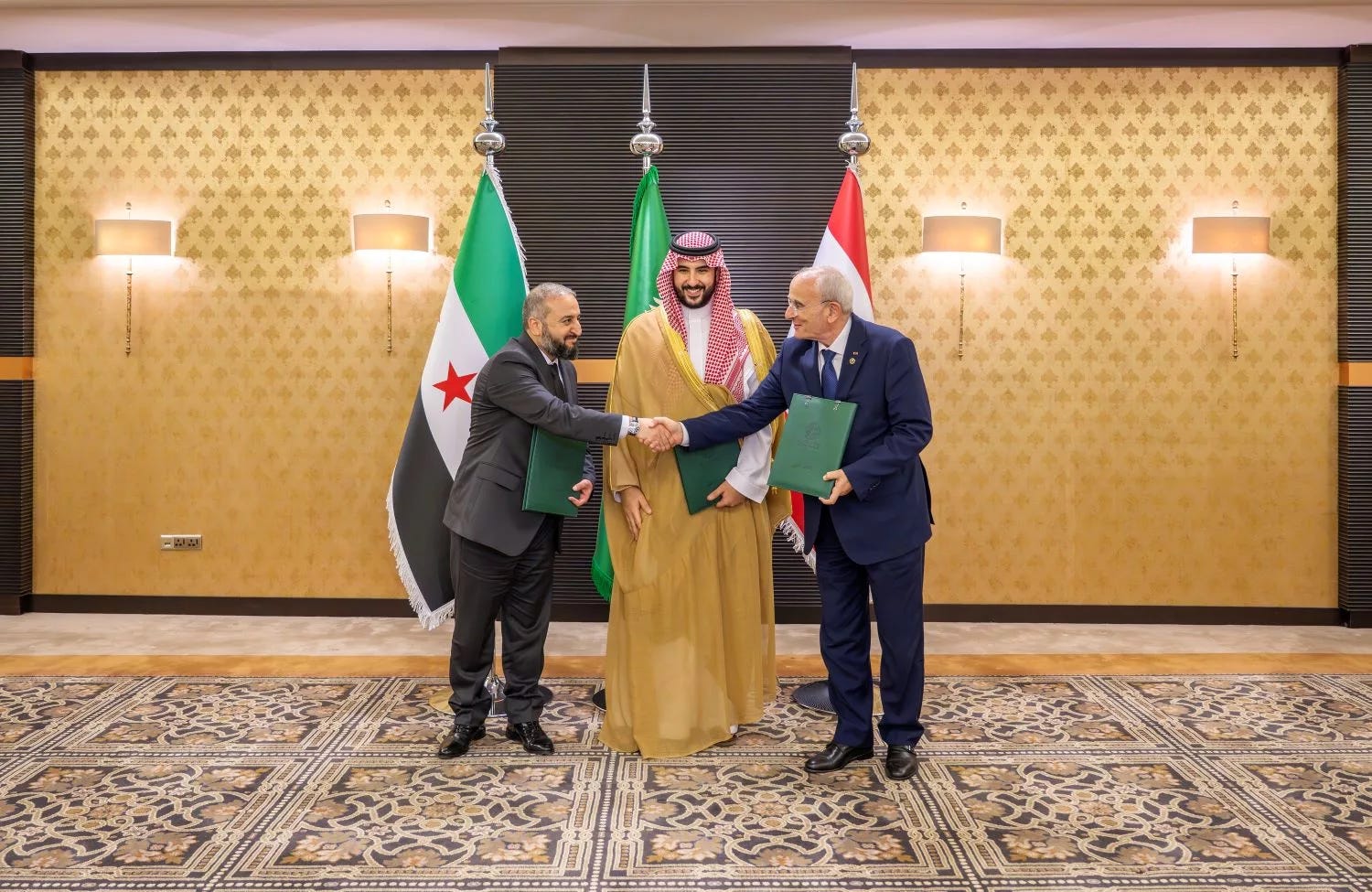
In March 2025, a Saudi-brokered security agreement was signed in Jeddah to demarcate the Syria–Lebanon border and combat smuggling.
On October 10, 2025, Syria’s Foreign Minister paid a high-level visit to Beirut the first of its kind since Assad’s departure. President Aoun emphasized the importance of building balanced relations based on mutual sovereignty and forming joint committees to address unresolved files.
Al-Shibani, in turn, stressed the need to transition toward a political and economic partnership.
The year ended with a visit by newly appointed Lebanese Prime Minister Nawaf Salam to Damascus, where both sides reiterated their commitment to non-interference in each other’s internal affairs.
Outstanding Issues Between the Two Countries
Syrian Refugees
Lebanon has hosted the largest number of Syrian refugees relative to its population, following the mass displacement triggered by Assad regime atrocities since 2011.
According to a UN update on December 5, 2025, over 1.266 million Syrians had returned from neighboring countries since Assad’s fall, including 294,000 from Lebanon as of October that year. Other reports estimate the number to have reached nearly 379,000.
However, the UN Refugee Agency warned that international funding for repatriation has plummeted, with the 2025 Humanitarian Response Plan receiving only 29% of its required funding raising serious concerns about the viability and safety of returns.
The Lebanese government has developed a repatriation plan in coordination with Damascus and the UN’s voluntary return program. Yet human rights organizations fear this could lead to forced deportations, particularly given Syria’s fragile economic situation.
Meanwhile, Damascus has urged international institutions to avoid politicizing the refugee file.
Detainees and Prisoners
The issue of Syrian detainees in Lebanese prisons remains one of the most sensitive. An estimated 2,600 Syrians are currently detained in Lebanon, with 70% held in pretrial detention. Human rights groups report that 44 detainees have died since 2022 due to poor prison conditions.
Many are accused of supporting the Syrian revolution or joining opposition groups. Damascus regards them as political prisoners and has called for their return.
In October 2025, Lebanon’s Foreign Ministry announced an agreement with Syria to repatriate prisoners not convicted of murder. However, any amnesty or judicial arrangement must be approved by Lebanon’s parliament, which is preparing for elections in 2026.
Lebanese officials fear Damascus may demand the release of individuals convicted of crimes or attacks on the army. Syria, in contrast, contends that many of the charges were fabricated under Assad’s regime and has pledged to try returnees under Syrian law.
Researchers have proposed creating a joint judicial committee to review detainee cases balancing Lebanese judicial sovereignty with human rights guarantees.
Borders and Smuggling
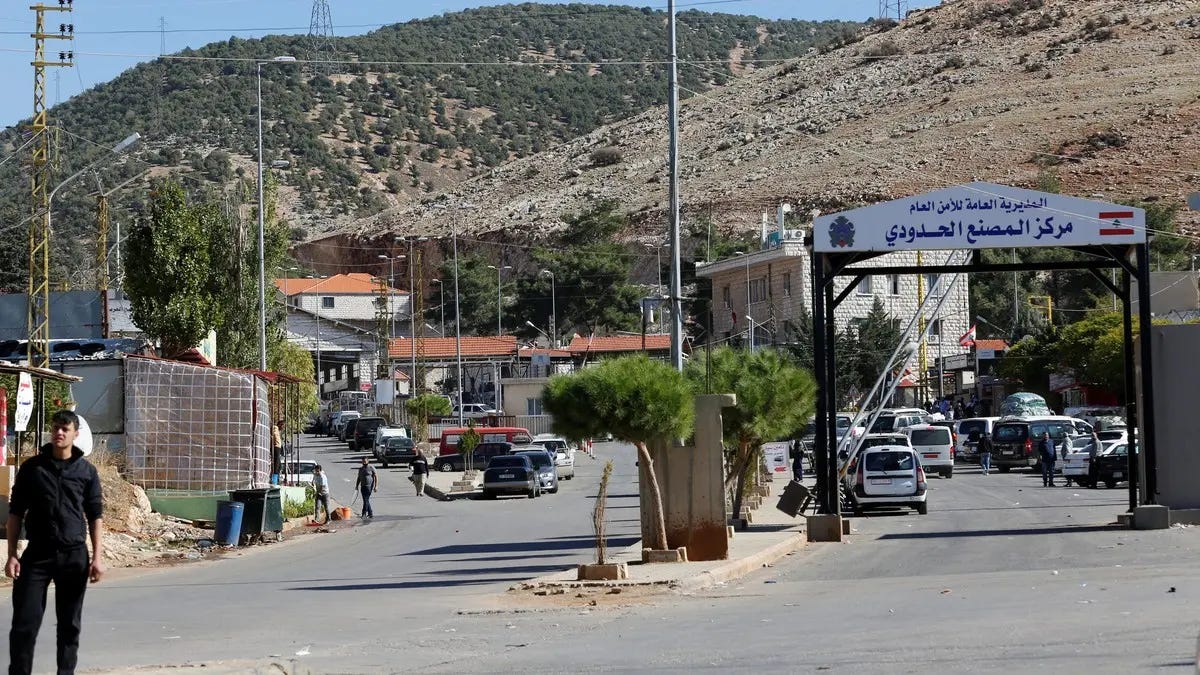
Stretching 394 km, the Lebanon–Syria border is mountainous and porous facilitating years of smuggling, especially under Assad. Weak enforcement and Hezbollah’s entrenchment enabled a thriving trade in weapons, drugs, and goods.
Since the political transition, both governments have moved to demarcate the border and crack down on smuggling through the Jeddah Agreement. The new Syrian leadership has also launched a crackdown on captagon production.
Despite these steps, the captagon and arms trade continues. Reports indicate production persists in government-untouched areas, pushing traffickers into Lebanon and Iraq. There are fears of increased involvement by Hezbollah and Bekaa clans amid Lebanon’s worsening financial crisis.
A Stimson Center report notes that Lebanon’s Bekaa Valley remains a hub for cannabis cultivation and captagon trafficking, with Jordan now a key corridor to the Gulf. New networks are also emerging in Libya and Europe.
In July 2025, border clashes erupted in Baalbek-Hermel between the Lebanese army and smugglers after Syrian forces attempted to seal illegal crossings resulting in casualties and underscoring the fragile security situation.
Scenarios for the Future of Syria–Lebanon Relations
The Middle East Council on Global Affairs has outlined three possible scenarios for the future of bilateral ties:
Conditional Cooperation: Lebanon agrees to deport Syrian detainees, finalize border demarcation, and control smuggling in exchange for Syria’s cooperation on refugee returns and trade facilitation. This scenario hinges on Beirut’s ability to overcome internal divisions and secure parliamentary approval for legal agreements.
Stalemate: Relations stagnate due to Lebanon’s refusal to release all detainees or obstruction by Hezbollah. Sharaa may respond with trade restrictions or border closures, exacerbating economic strains in both countries.
Regional/International Deal: A US-brokered agreement akin to the Taif Accord redistributes regional influence and integrates Lebanon and Syria into a broader peace plan. This would include reconstruction aid and normalization with Israel.