

Over the past two days despite global attention being fixed on Iran, its war, and its negotiations statements have emerged that tether Syria into a web of strategic lightness. The first came from Israeli Finance Minister Bezalel Smotrich, who declared that three upcoming diplomatic rounds are expected: the first in Gaza, the second in Lebanon, and the third in Syria, all aimed at expanding borders to make them “defensible.”
This coincided with remarks by Joe Kent, former director of the U.S. Counterterrorism Center, who suggested that the United States would withdraw from NATO to stand alongside Israel in the event of a future clash with Turkey in Syria.
These Israeli and American statements position Syria as an intermediary zone within an emerging framework involving multiple actors one that stands in stark contrast to the vision of Syrian President Ahmad al-Sharaa. In his most recent address, he stated: “We calculate our steps with utmost precision and are working to keep Syria away from any conflict.”
Al-Sharaa had, at the time, expressed relief, noting: “Syria has long been a battleground over the past 15 years and beyond, but today it is in harmony with all neighboring countries, both regionally and internationally.” Yet this moment of respite proved fleeting. Since his remarks, Syria has been pulled in multiple directions by competing regional plans, none of which allow it to achieve the “stability and security” he envisioned.
From these statements and implications emerges the following analysis an attempt to map the Israeli-American vision for Syria after its “liberation,” based on disclosed plans for regional economic, political, and security integration, as well as the pressures and scenarios unfolding behind the scenes. In these frameworks, Syria appears, at best, as a tool or a geographic space for implementation nothing more.
Syria: A Transit Space
Following the fall of the Assad regime in December 2024, Israel found itself facing a strategic dilemma. The expanse beyond its northern border shifted, in military and security perception, from a stable environment to a hostile one despite reassurances from the new Syrian leadership.
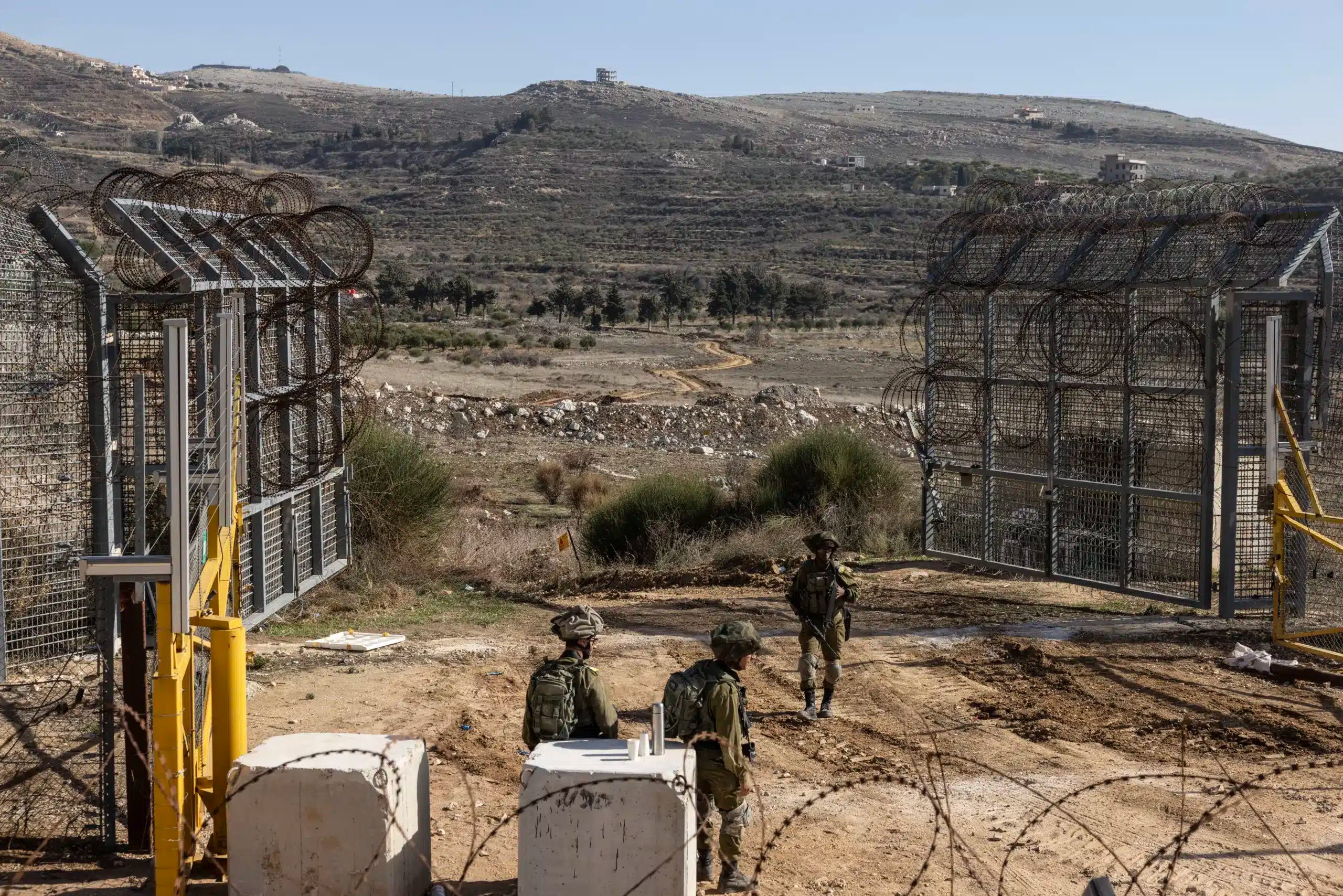
This prompted Israeli military leadership to exploit the political vacuum between regime collapse and consolidation of power, implementing a geographic and military shift by seizing the summit of Mount Hermon and surrounding areas.
Simultaneously, the Israeli Air Force asserted aerial dominance through more than 300 airstrikes targeting Syrian and Turkish threats, alongside over 20 ground operations by July 2025. These actions were guided by three core principles:
First, “preventing entrenchment,” through sustained strikes across Syria to limit hostile military activity, curb Turkish expansion, and reinforce diplomatic efforts aimed at eliminating Iranian presence and its supply lines.
Second, prolonging Syria’s fragmentation its so-called transitional phase transforming it into a security opportunity that keeps Syria weak, divided, and preoccupied, preventing military reconstruction or focus on key fronts, particularly the Golan and northern Syria.
Third, establishing long-term Israeli influence in Syria to prevent any centralized or regional power from consolidating within Syrian territory in ways that might threaten Israel’s strategic depth or restrict its operational freedom.
Through this approach, Israel has relied on a blend of military force, political maneuvering, and field control to manage post-Assad Syria, while intensifying coordination with the United States to prevent Turkish expansion that could trigger direct confrontation.
Within this context, a series of Israeli plans has emerged, placing Syria at the center of future strategic design—not as a sovereign actor, but as a corridor or transit space to facilitate Israeli expansion and block regional competitors.
Engineering Geography: The “David Corridor”
One such plan is the “David Corridor,” unveiled in April 2025. It envisions Israeli control extending from the Golan Heights through Quneitra and into southern Syrian provinces, alongside efforts to forge alliances with Syrian Druze communities and push for autonomy or independence.
The first phase has largely materialized: Israel now controls approximately 95% of Quneitra and maintains positions within 20 kilometers of Damascus, alongside strategic points overlooking routes connecting Damascus to Baalbek and Beirut.
The second phase remains underway, involving the manipulation of minority dynamics Druze, Kurdish, and even Alawite to establish a north-south corridor linking territories under sectarian and ethnic governance structures.
The U.S. al-Tanf base, located at the Syrian-Iraqi-Jordanian border triangle, forms a key node within this vision, enabling control over a strategic “Silk Road”-like route aligned with the concept of a “Greater Israel.” This route disrupts the Tehran–Baghdad–Damascus–Beirut axis while offering economic and security advantages.
The corridor also facilitates oil transport accounting for 18% of Syria’s GDP from Kurdish-controlled areas to Israeli ports, establishes influence along the Euphrates, and aligns with ongoing expansion toward the Litani River to secure water resources.
Beyond its economic role, the corridor functions as a forward defense line against Iranian and Turkish fronts, ensuring that any confrontation remains geographically distant from Israeli territory.
Beyond Syria: Regional Connectivity Without It
Israel’s strategic vision extends beyond reshaping Syria internally to bypassing it altogether. This includes economic corridors linking India to Europe via the Gulf and Israel, circumventing traditional trade routes through Syria and Iraq.
Energy and electricity interconnection projects across the Middle East similarly oscillate between including Syria as a transit route and replacing it with Israel, depending on shifting geopolitical calculations.
Projects such as fiber-optic networks, peace “triangles,” and green energy initiatives further highlight Syria’s marginalization relegating it to a controlled transit zone rather than an active participant.
Syria as a Security Instrument
More recently, Syria has reappeared in Israeli and American discourse not merely as a transit space but as a security instrument.
Following the Gaza ceasefire and the elevation of Hezbollah and Lebanon as Israeli priorities, Syria has been repositioned within a broader regional security architecture. It is no longer treated as a partner but as an operational domain part of air defense systems, intelligence-sharing frameworks, and early warning networks.
This was evident during the June 2025 and March 2026 wars with Iran, where Syrian airspace was used within Israel’s defensive strategy, both for interception and targeting.
On the ground, Syria’s role has shifted toward absorbing threats before they reach Israeli borders, particularly in relation to Hezbollah and other groups. U.S. envoy Tom Barrack underscored this in November 2025, stating that Syria would actively assist in dismantling remnants of ISIS, Iran’s Revolutionary Guard, Hamas, Hezbollah, and other networks.
Yet Syrian leadership has expressed caution. President al-Sharaa warned that such a path constitutes a “minefield” that could trigger dangerous escalation.
Reengineering Syria
Israeli strategy, echoed by several regional allies, seeks to recast Syria into one of three forms: a structural vacuum, a geographically excluded space, or a controlled transit corridor.
Prime Minister Benjamin Netanyahu has openly emphasized preventing Syria from becoming unified and strong particularly under leadership aligned with Turkey reflecting deep skepticism toward the current Syrian government.
Analysts such as Armenak Tokmajian argue that Israel is emerging as the primary architect of a new regional security order, with Syria reduced to a manageable security space.
Competing Visions
Recent developments including Turkish warnings of Israeli expansion, plans for a new Hejaz railway linking Saudi Arabia to Europe via Syria and Turkey, and internal unrest in southern Syria underscore the intensifying competition over Syria’s future.
While Damascus seeks reconstruction, legitimacy, and regional integration with Turkish and Gulf support, Israeli actions suggest that legitimacy alone will not counter expansionist strategies.
In Israeli strategic thinking, Syria is not envisioned as a cohesive state capable of recovery, but as a fluid security space reshaped, penetrated, and kept structurally weak.
Conversely, Syrian leadership aspires to rebuild the state, restore stability, and reestablish sovereignty.
Between these competing trajectories lies the central tension: a project that perpetuates Syria’s exhaustion, and another that seeks to transform it into a stable regional actor.
Perhaps what Israel ultimately fears is not merely the return of a direct threat, but the success of Syria’s recovery itself its emergence as a viable Arab model that could redirect focus toward unresolved sovereignty issues, foremost among them the Golan Heights, turning stability into a strategic concern.
