

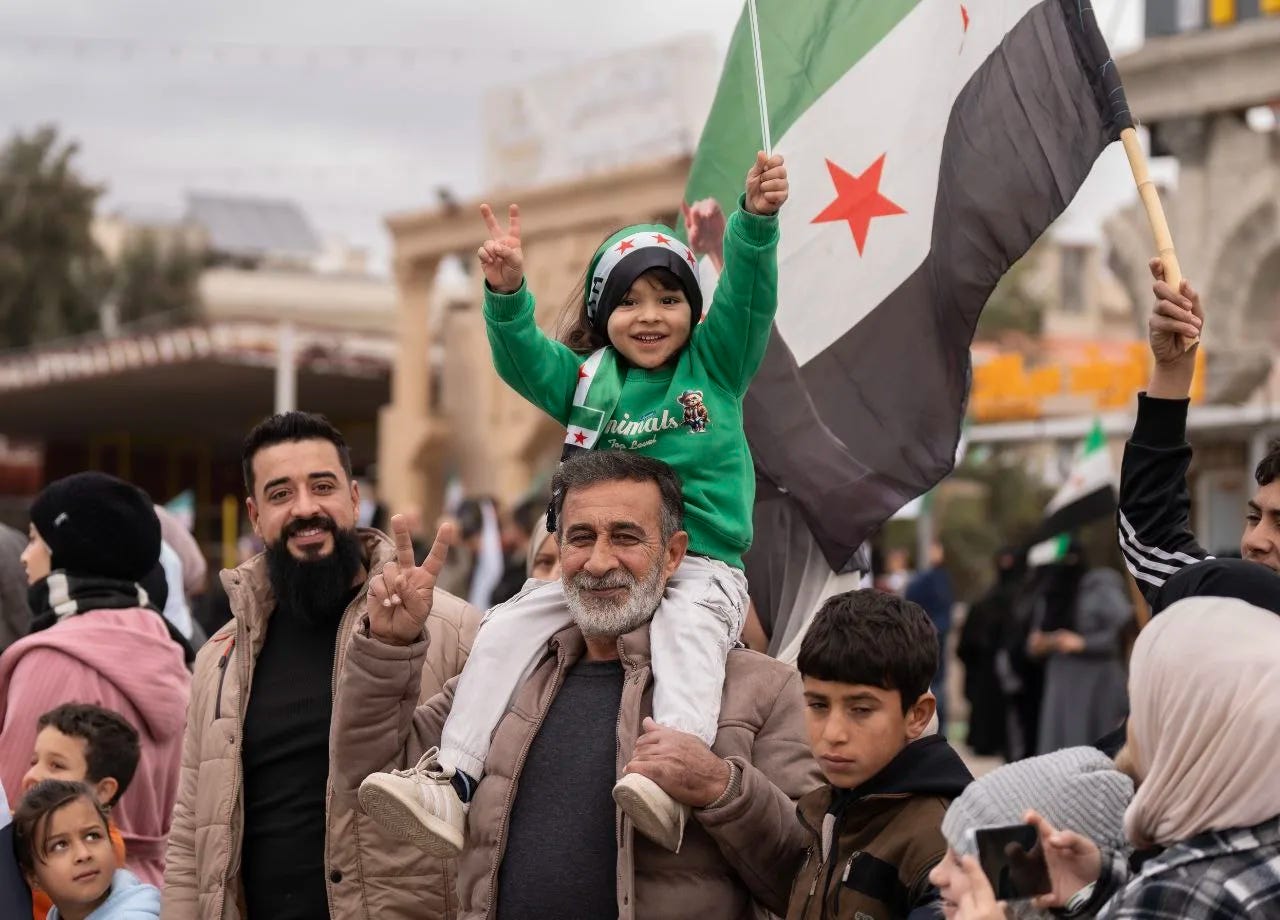
As 2025 draws to a close, Syria completes its first year outside the rule of the Ba‘th Party and the Assad family in nearly six decades, marking a watershed moment that tested the country’s ability to transition from collapse to state‑building. This report reviews the year’s key outcomes, characterized by a series of political, economic, military, and social shifts that made 2025 a pivotal year in reshaping the Syrian state and defining its new contours.
The spark of change was ignited on November 27, 2024, with the battle dubbed “Repelling the Aggression,” culminating in the fall of Bashar al‑Assad’s regime on December 8 of that year. This event redrew the entire Syrian landscape, as Ahmed al‑Shar‘a, former leader of Hayʾat Tahrir al‑Sham, emerged at the forefront of the transitional period as head of state.
Throughout 2025, actions and decisions unfolded across key milestones as the nascent administration sought to organize and recalibrate the paths of the emerging state amid complex overlaps in multiple arenas.
The result was a heavy and multifaceted harvest, encompassing both achievements and setbacks, that laid foundational structures for the country’s future making 2025 a year remembered in Syria as the first crucial test after liberation.
Political Developments
Domestically, Syria’s new administration took early steps to prevent a governance vacuum and preserve institutions. It began by forming a caretaker government under Mohammad al‑Basheer, previously head of the Salvation Government in Idlib, two days after Assad’s fall. This government served for nearly three months (December 10, 2024–March 29, 2025).
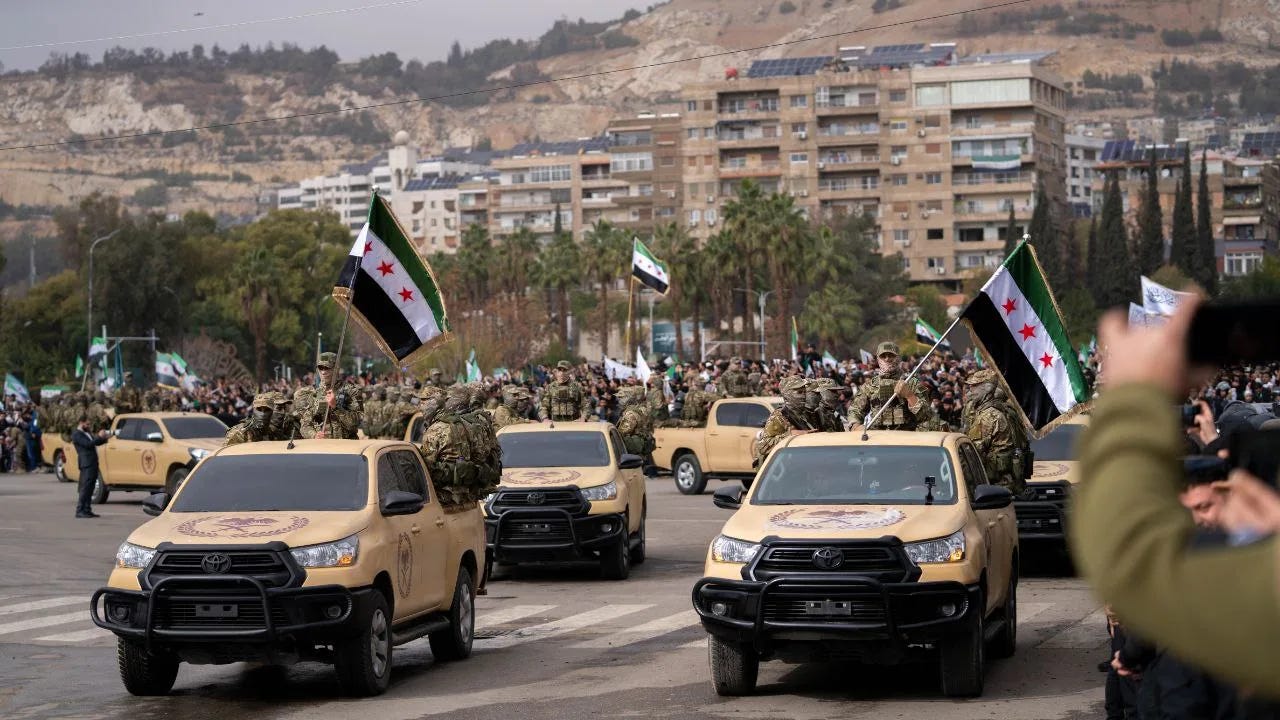
On January 29, 2025, the “Victory Conference” convened, during which Ahmed al‑Shar‘a assumed the presidency and was authorized to form a temporary legislative council for the transitional phase.
The conference’s outcomes included dissolving the Ba‘th Party and the Progressive National Front parties, dismantling former security agencies and the previous army, and rebuilding state institutions including a national army and intelligence apparatus.
All military, political, and civilian factions were to be integrated into state institutions, the 2012 constitution was annulled along with all exceptional laws, and December 8 was declared a national holiday, “Liberation Day.”
A National Dialogue Conference was held on February 24–25, incorporating outcomes from the Victory Conference and accelerating approval of a temporary constitutional declaration. A committee was established to draft a permanent constitution, emphasize human rights and citizenship, support the roles of women and youth, enhance transitional justice, and reform public institutions to ensure stability. The event faced criticism for its rapid timing, short duration, and lack of fair representation for some groups.
On March 10, 2025, an agreement was reached between the Syrian government and the Syrian Democratic Forces (SDF) containing eight points, the most prominent of which were the integration of SDF civil and military structures into state institutions, rejection of separatism and hate speech, and the creation of executive committees to monitor implementation before year’s end. The agreement, however, was not implemented, with mutual accusations of noncompliance and delay.
On March 13, President al‑Shar‘a signed a draft constitutional declaration that drew criticism over presidential powers. On March 29, a transitional government was announced with 23 ministers, including the establishment of two new ministries: Youth and Sports, and Emergency and Disaster Management.
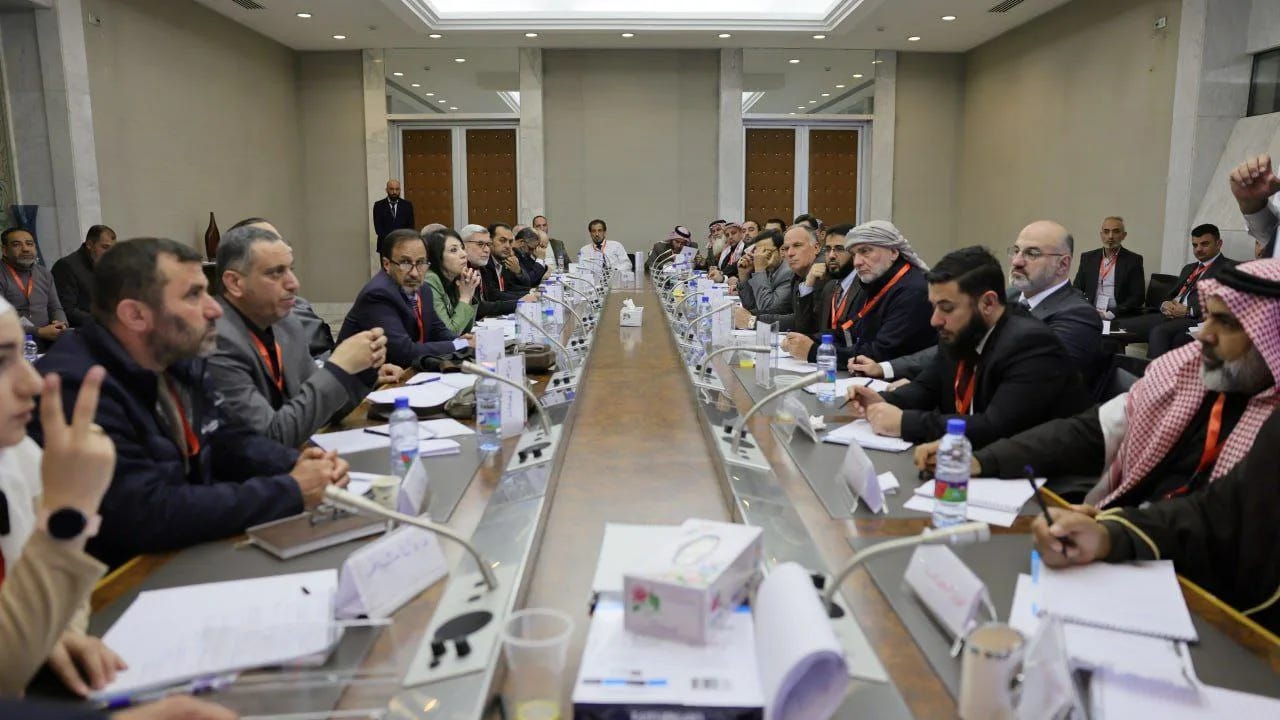
Several ministries were merged, including combining Internal Trade, Economy, and Industry into one ministry, and merging Oil, Electricity, and Water Resources into a Ministry of Energy.
Parliamentary elections were organized after fixing the People’s Assembly seats at 210, with two‑thirds (140) elected and one‑third (70) appointed by the president. Completion of the election process remains pending until the presidential appointments are announced. Some provinces were excluded for security reasons, most notably Suwayda and areas under SDF control.
On the international front, Damascus witnessed intense diplomatic activity as the new administration redefined foreign policy beyond the legacy of the previous regime, focusing on building constructive alliances, resolving disputes, and avoiding entanglement in regional conflicts. Syrian Foreign Minister As‘ad al‑Shaybani said, “We do not spurn any relationship with any country, any party, or any event that can serve Syria.”
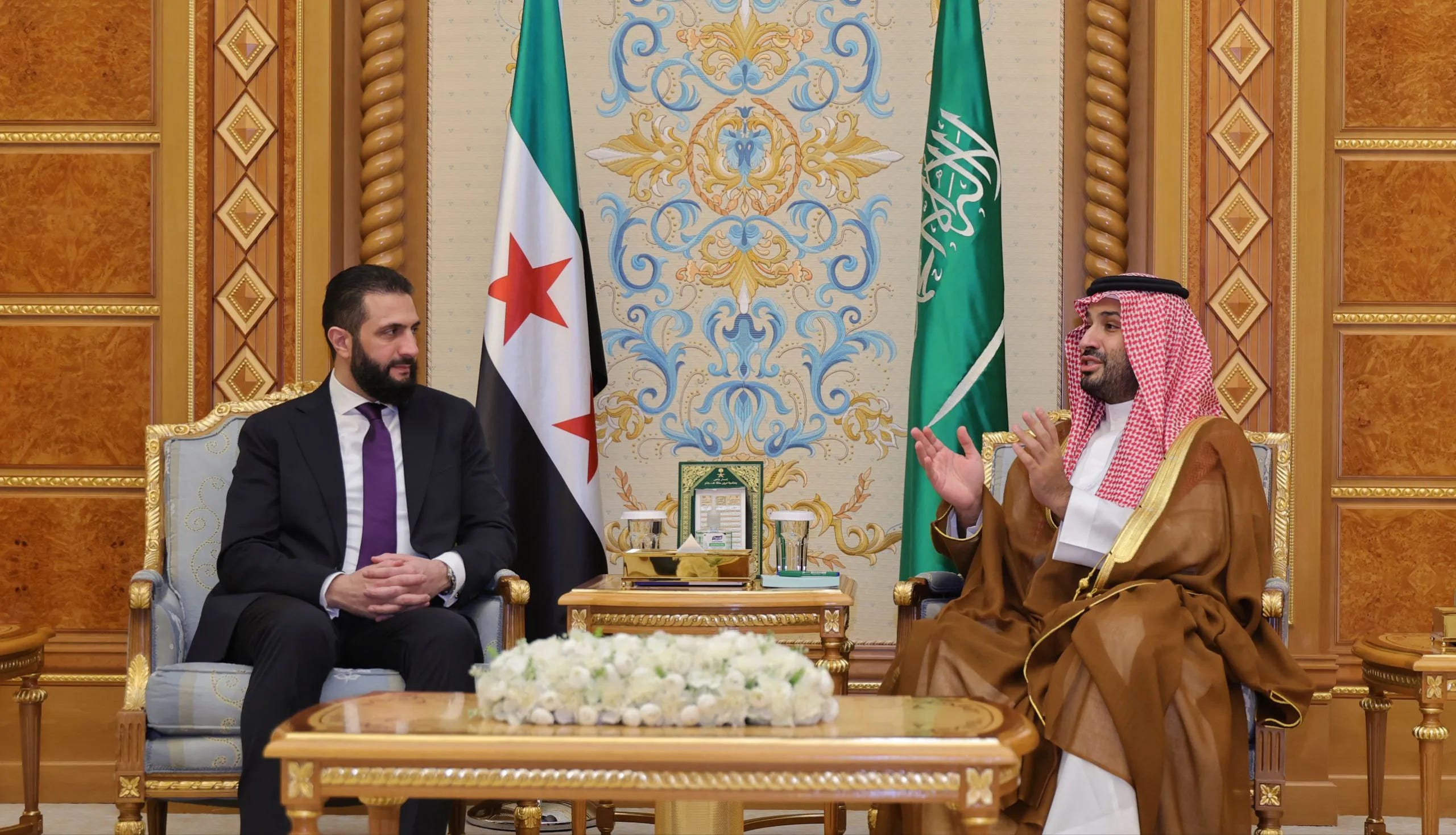
Syrian foreign policy opened new horizons with Arab states through shuttle visits, conferences, and forums, most notably with Saudi Arabia, Qatar, and Jordan. President al‑Shar‘a described Saudi Arabia as “Syria’s key to the world,” and it was his first official international stop after the fall of the old regime.
This was followed by a meeting with U.S. President Donald Trump in Riyadh in May 2025 the first formal encounter between them.
The visit of Qatar’s Emir, Tamim bin Hamad Al Thani, to Damascus on January 30, 2025, was a milestone in bilateral relations, marking the first visit by an Arab leader since Assad’s fall and underscoring Doha’s role as a steadfast ally of the Syrian people throughout the previous fourteen years, continuing political support for the new government.
Relations between Syria and the United States gradually opened after Assad’s fall, with Damascus adopting flexible positions on U.S. demands regarding political representation, counterterrorism, minority protection, and destruction of any remaining chemical weapons stockpiles.
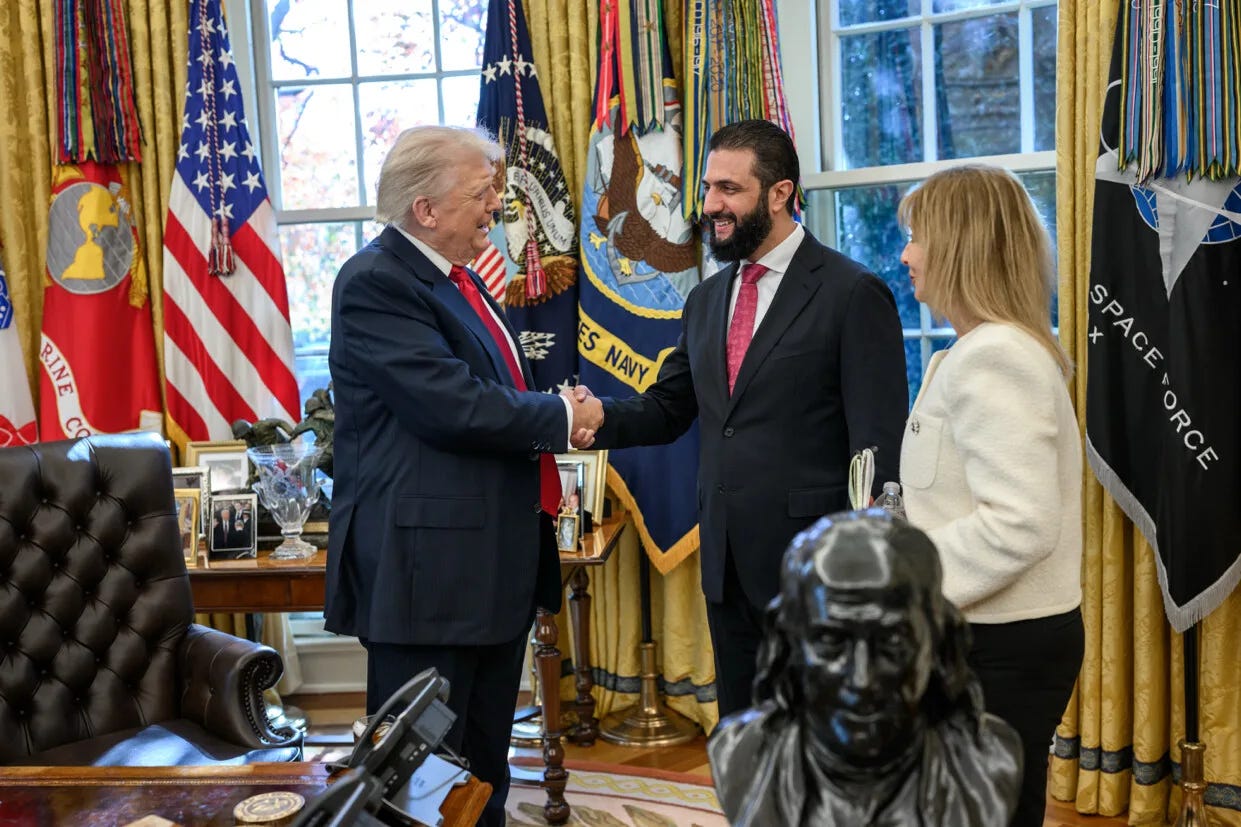
The Trump–al‑Shar‘a meeting helped pave the way for a series of measures to gradually lift U.S. sanctions, including “Caesar” sanctions. In November 2025, President al‑Shar‘a visited the White House the first for a Syrian leader in nearly eighty years with Trump repeatedly praising al‑Shar‘a as “a strong man.”
Given the historical military and political ties with Russia, including Moscow’s role in operations on Syrian soil, relations with Russia moved cautiously. Negotiations during the “Repelling the Aggression” battle resulted in the withdrawal of Russian forces from the military scene.
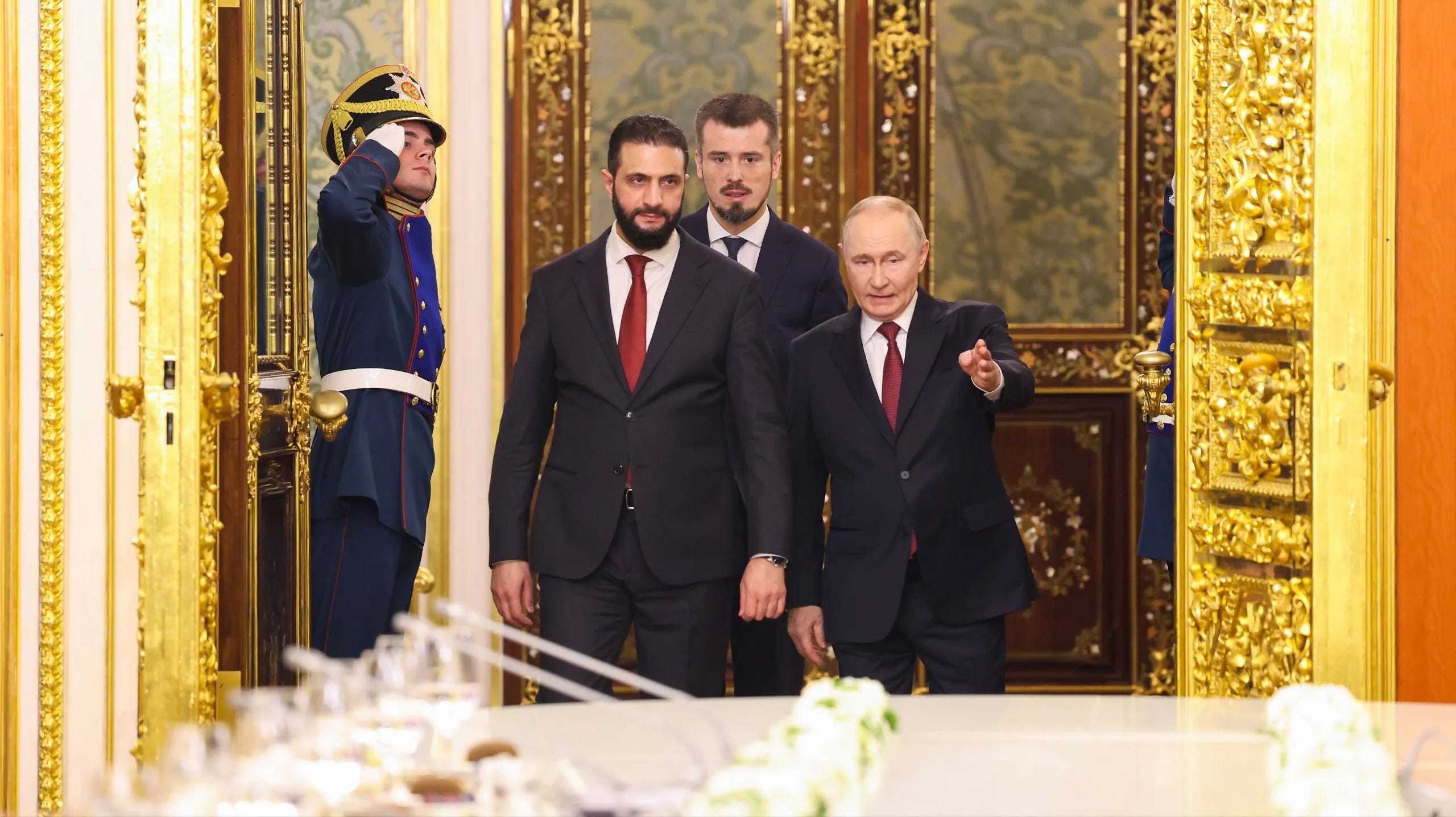
This was followed by high‑level meetings, including President al‑Shar‘a’s visit to Moscow and meeting with President Vladimir Putin in October. Foreign Minister al‑Shaybani said relations with Russia would be reorganized “in Syria’s interest first and foremost.”
Syria also normalized relations with several European countries and the U.K., anchored in commitments for cooperation. Progress included lifting sanctions, official visits, and participation in international forums, with the European Union prepared to support the government conditional on tangible progress in political transition, inclusive minority representation, respect for human rights and women’s rights, freedom of expression, accountability for war crimes, and counter‑extremism.
Foreign Minister al‑Shaybani participated for the first time in the ninth Brussels Donors Conference in March, and Damascus hosted the ninth “Dialogue Day” with Syrian civil society organizations, supported by the European Union.
Syrian–Chinese relations advanced slowly after Assad’s fall, with China’s engagement cautious and risk‑aware. The new administration focused on neutralizing Beijing’s use of veto power at the U.N. Security Council. In November, the Syrian foreign minister met his Chinese counterpart Wang Yi, marking the start of economic and security understandings.
Relations with Turkey were among the strongest post‑Assad, with Ankara the first country to re‑establish diplomatic contact with Damascus, along with supportive statements for the transitional phase and stability. President al‑Shar‘a described relations with Turkey, Saudi Arabia, Qatar, and the UAE as “ideal,” and with Egypt and Iraq as “acceptable,” expressing hope for further development.
Relations with Israel remained one of the most sensitive files. In 2025, indirect mediated talks progressed to unprecedented meetings amid repeated Israeli incursions, territorial seizures, and construction of military posts in southern Syria under various pretexts. Damascus prioritized diplomatic solutions and a return to the 1974 disengagement agreement.
Syria and Israel nearly agreed on broad security arrangements after months of negotiations in Baku, Paris, and London, but the talks faltered over Israeli demands to open a “humanitarian corridor” into Suwayda and establish a demilitarized zone. President al‑Shar‘a asserted that some Israeli policies suggested regret over the previous regime’s fall.
Economic Developments
Syria’s economy in 2025 showed early and slow movements toward recovery after years of deterioration and isolation, with the new administration gradually opening the economy and enhancing the investment climate. In May, President al‑Shar‘a declared that the war on poverty had begun in Syria.
Key economic milestones in 2025 included:
Relying on local resources and rejecting external borrowing from the IMF or World Bank.
Hosting delegations from major economies, investment conferences, and signing agreements and memorandums of understanding, alongside commitments to improve economic legislation and facilitate domestic and foreign capital participation in reconstruction and comprehensive development, including issuing Decree No. 114 to amend Investment Law No. 18 of 2021.
Direct investment reaching $28.5 billion in the first seven months of the year.
Removal of most economic sanctions on state institutions, allowing engagement with international markets and UN agencies, with forecasts of 1% GDP growth after a 1.5% contraction in 2024.
Increased trade with neighbors and the world, strengthened economic relations with Turkey and Gulf states, resumed ties with global financial institutions, and reentry into the SWIFT system.
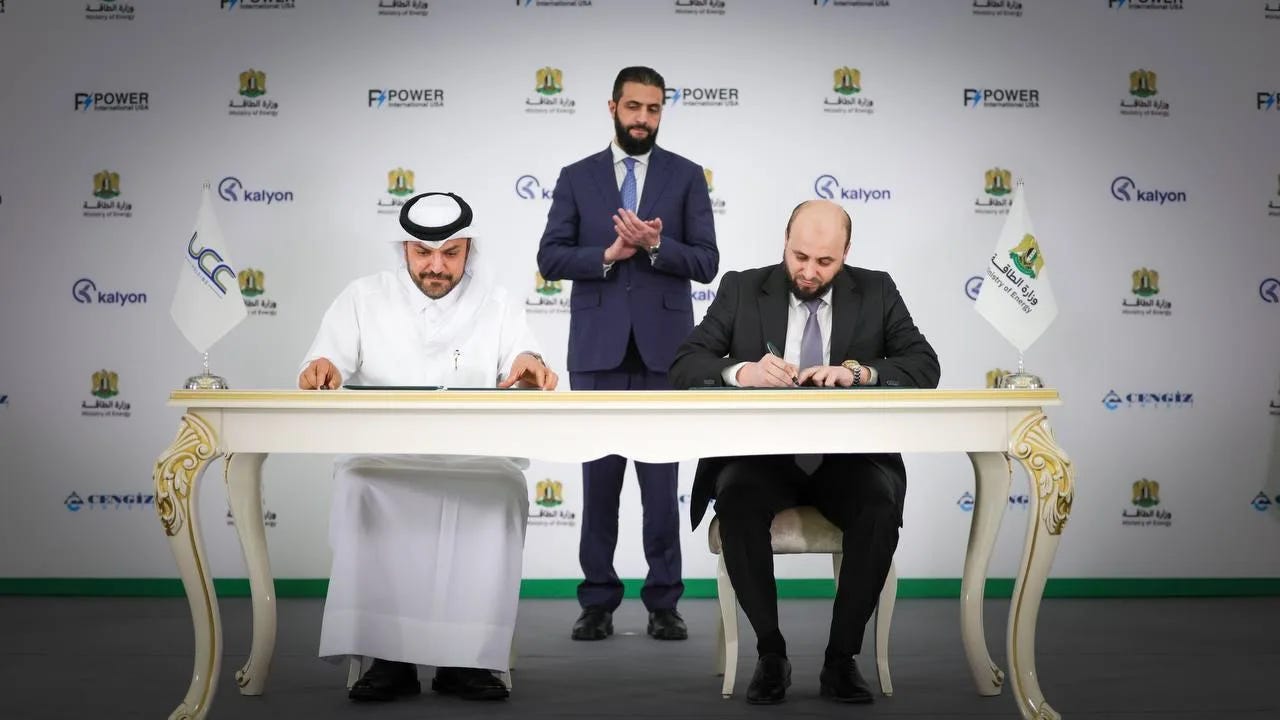
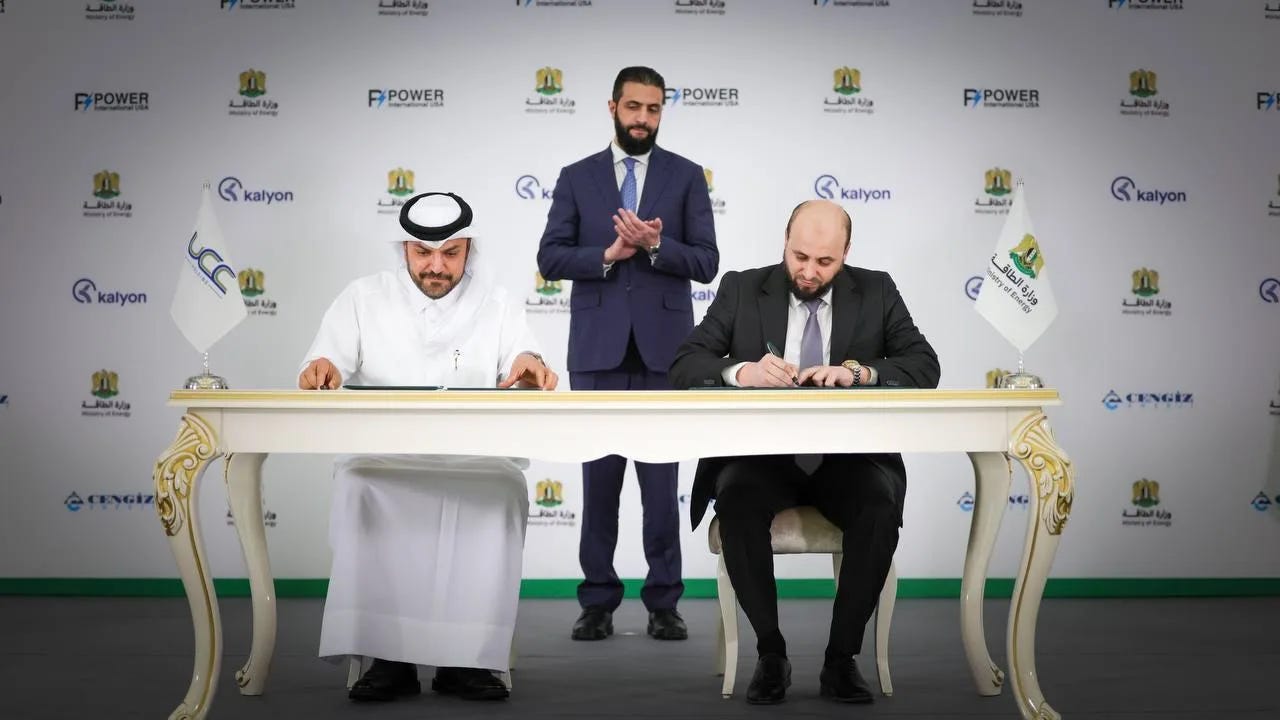
Signing ceremony of a memorandum of understanding between the Syrian Ministry of Energy and UCC Group, May 29, 2025 (Syrian Ministry of Energy). Relative stability of the Syrian pound against foreign currencies, helping stabilize basic goods prices, launch of a new Syrian currency with redesigned notes and symbols, and removal of two zeros from the old currency.
Wage increases of nearly 200%, with differentiated raises for judiciary employees and promises of reforms for education, health, and regulatory agency salaries, though timing was unspecified.
Partial improvements in electricity access, followed by significant tariff hikes to the highest levels in decades up to 60 times in some categories.
Eased import restrictions and inflows of foreign goods, reducing some prices though most remained high relative to purchasing power.
The Central Bank of Syria signed a memorandum with Mastercard to develop digital payment systems.
Creation of a Development Fund for reconstruction and infrastructure rehabilitation relying on individual and institutional donations, grants, and monthly subscriptions, along with partnerships with international development funds.
Fundraising campaigns across several provinces that reportedly exceeded $1 billion.
These steps represented Syria’s primary attempts in 2025 to recover from the Assad regime’s legacy and alleviate economic and livelihood crises. Reconstruction costs were estimated at around $216 billion amid one of the world’s most severe humanitarian crises, with 16.5 million people including 7.8 million children needing assistance, 7.4 million internally displaced, and more than 1.2 million returnees lacking basic services.
The World Bank described Syria’s situation as “highly volatile,” linking economic recovery to improved security, institutional stability, eased sanctions, and increased international economic participation, and noting the government’s difficult task of rebuilding economic confidence after over a decade of conflict.
A Reuters investigation found that Syria’s new leadership was quietly restructuring an economy burdened by corruption and long‑standing sanctions under the oversight of Hazim al‑Shar‘a, the president’s older brother.
Social Developments
Security tensions across various regions in 2025 had intertwined political, military, and social dimensions, directly affecting community fabric and local stability. In Syria’s coast, clashes erupted between Ministry of Defense units and remnants of the former regime after pro‑Assad armed groups ambushed government forces.
The confrontations widened, acquiring sectarian and retaliatory characteristics, resulting in hundreds of extrajudicial killings between March 6 and 10.
In Suwayda, deadly confrontations in July claimed at least 1,013 lives from various factions, including local Suwayda groups, government forces, and tribal Bedouin fighters, alongside Israeli interventions targeting government sites. As of December 4, about 155,000 people remained displaced due to these clashes.
The Syrian government acknowledged violations on the Suwayda coast and announced investigative committees, followed by public trials in November and December, with judicial proceedings ongoing.
On May 17, President al‑Shar‘a issued decrees establishing the National Authority for the Missing and the National Authority for Transitional Justice. However, both bodies proceeded slowly with limited tangible impact by year’s end, despite the enormous stakes, with an estimated 150,000–300,000 missing or forcibly disappeared and thousands implicated in abuses, compounded by entrenched institutional legacies of widespread violations.
To reinforce national identity, in July the government unveiled a new visual identity for Syria, with a revised national emblem the “Syrian Golden Eagle.”
The displacement file remained a significant transitional challenge, with about 7 million people living in host communities and camps. By August 21, 2025, 4.8 million were residing outside camps, while 1.4 million remained in 1,782 camps and displacement sites in the northwest and northeast. Meanwhile, Syria saw gradual returns, including over 1.2 million refugees from abroad and nearly 2 million internally displaced returning to their original areas.
Military Developments
The military landscape in Syria remained one of the most complex aspects of the transitional period in 2025, given the multiplicity of factions and the presence of foreign fighters. Key developments included:
Meetings with faction leaders in preparation for their integration into the national army, followed by dissolution of military formations at the Victory Conference and beginning the structuring of a new army with leadership appointments.
Promotions of defected officers and faction commanders to formal military ranks, including the rank of Major General bestowed upon Marhaf Abu Qasrah, who served as Minister of Defense during the caretaker period and continued through the transition.
On May 17, the Ministry of Defense announced the completion of integrating all military units into its structure while continuing administrative organization of the armed forces, issuing codes of conduct and military discipline on May 30.
The Ministry of Interior merged the Police and General Security into a single body—the Provincial Internal Security Command and appointed 12 internal security commanders for the provinces, excluding Raqqa and Hasakah.
On November 11, Syria joined the International Coalition to Counter ISIS as its 90th member, a move described as a pivotal moment in regional cooperation.
The integration of the Syrian Democratic Forces into the Syrian army under the March 10 agreement continued to falter amid disagreements over mechanisms and discrepancies in reported personnel numbers.
Emergence of a so‑called “National Guard” in Suwayda, led by Hikmat al‑Hijri, comprising about 30 local factions including members and commanders who formerly served in Assad’s forces, adding complexity to the military scene in the south.
Continued presence of groups hostile to the new authority, including remnants of the former regime seeking to perpetuate chaos and evade accountability, and ideologically driven groups such as ISIS as a resurgent foe, alongside the emergence of “Saraya Ansar al‑Sunna,” more visible in media than on the ground.
In conclusion, the achievements of Syrian authorities in 2025 provided a solid foundation from which to pursue more impactful progress for Syrians in the coming year across political, security, economic, and social dimensions.
