

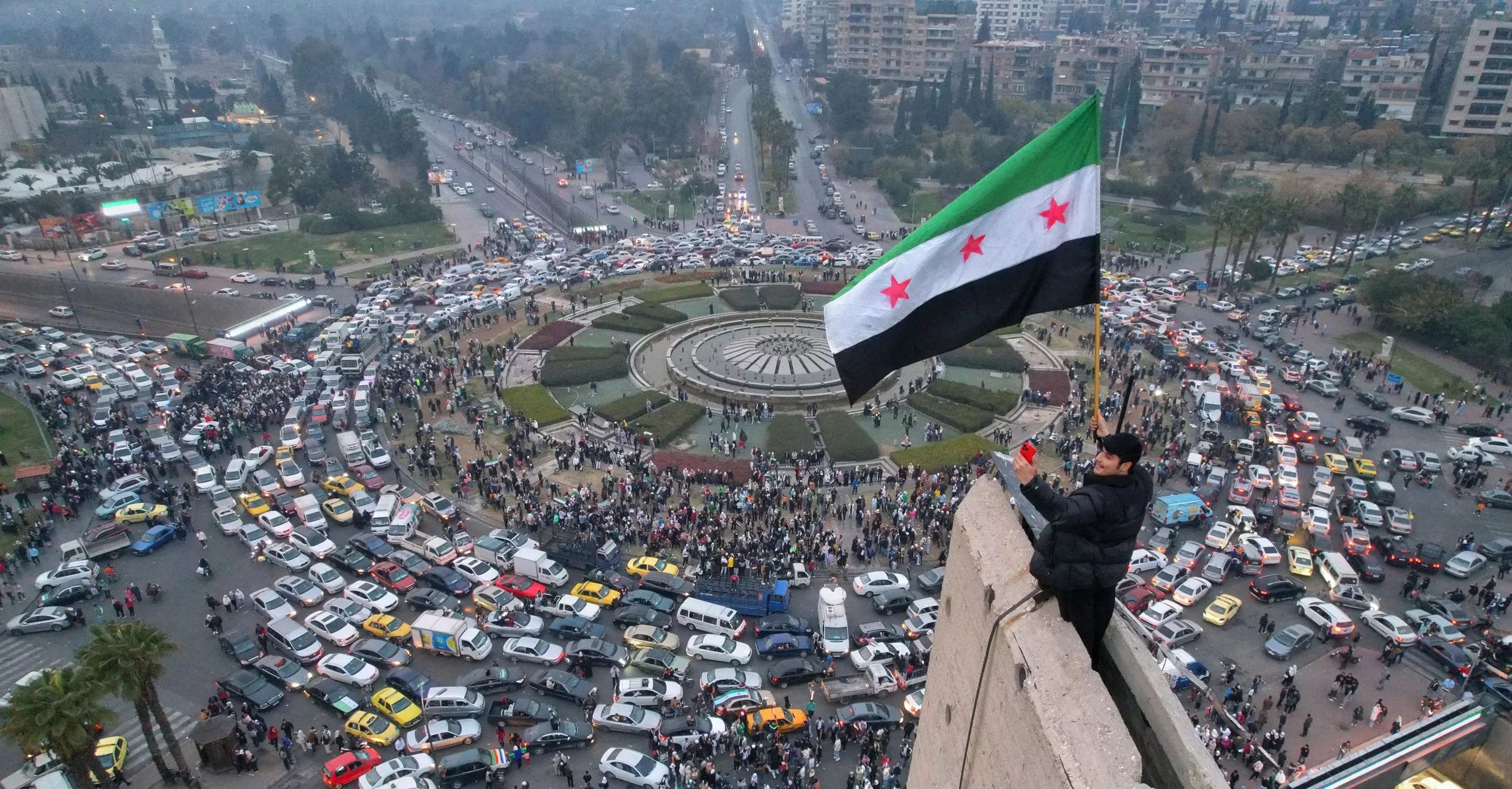
More than a decade after the Syrian revolution erupted unleashing sweeping political and economic transformations a pressing question looms: Can Syria today lay the foundation for its own revival and begin rebuilding its shattered economy?
Germany, which rose from the rubble of World War II, and Rwanda, which emerged from the horrors of genocide to become one of Africa’s fastest-growing economies, offer two distinct models of post-conflict recovery.
By examining Syria’s ongoing reform initiatives, this article explores the country’s potential to draw on these examples and chart a realistic course toward recovery, stability, and sustainable growth.
What’s Happening on the Ground?
Today, Syria is emerging from years of war burdened by a legacy of economic devastation and financial collapse. Yet, the country has also begun to witness a wave of reform that is gradually reshaping its economic landscape.
As pockets of stability expand and government institutions resume operations, the state has embarked on a series of fundamental reforms ranging from changes in monetary and fiscal policy to tax modernization, price liberalization, and efforts to attract investment.
While the path remains long and complex, recent developments suggest the beginning of a structured attempt to lay the foundations for a new economic order.
The first of these shifts began with monetary policy. Syria’s central bank announced its readiness to issue a new currency, aiming to modernize the cash supply, replace worn-out banknotes, and regulate liquidity without increasing the money supply.
According to Governor Abdelkader Housriyeh, the goal is to restore confidence in the Syrian pound and reorganize cash circulation as part of a broader monetary reform agenda.
In a pivotal development, Syria also reconnected to the global SWIFT banking system after nearly 14 years. This reestablished international financial messaging channels, facilitated remittances and external transactions, and was hailed by the central bank as a vital step toward reintegrating Syria into the global financial system.
Meanwhile, the banking sector has entered a phase of unprecedented reform. The government launched a comprehensive plan to restructure public banks and modernize their management.
Commercial banks were required to recognize losses tied to the Lebanese financial crisis and provision accordingly. A new Deposit Insurance Authority was also established to protect depositors and boost confidence in the banking system.
On the fiscal front, the Ministry of Finance completed a new draft income tax law based on principles of fairness, simplicity, and competitiveness. The law includes broad exemptions and the implementation of an electronic invoicing system, alongside the creation of a dedicated tax court.
A separate draft law on sales tax was also approved, paving the way for the introduction of value-added tax (VAT) and the eventual elimination of the decades-old consumption tax.
As part of broader trade reforms, the Customs Ports Authority issued a unified tariff schedule that slashed customs duties by up to 60% a move designed to support local industry, agriculture, and investment.
In tandem, the government began gradually lifting subsidies on key goods from bread to fuel and electricity as part of a long-overdue restructuring of a subsidy system that has drained the national budget for decades.
While these changes have raised the cost of living, the government argues they are necessary to stabilize the market, pledging to expand social safety nets to protect vulnerable populations during the transition.
Domestically, the country has seen large-scale national fundraising campaigns under government sponsorship, collecting nearly $637 million so far to support reconstruction efforts. A presidential decree also established the Syrian Development Fund with pledged capital of around $85 million, aiming to finance reconstruction projects and create jobs through innovative financing tools such as interest-free loans.
In a sign of returning investor confidence, President Al-Shara revealed that Syria attracted some $28 billion in investment inflows over the past ten months driven by a new investment law that received both regional and international praise. However, he cautioned that the real challenge lies in effective implementation and ensuring a stable business environment.
Further bolstering the reform landscape, several US and European sanctions were suspended, most notably Washington’s temporary 180-day freeze of the Caesar Act a significant easing of the long-standing sanctions regime.
Germany: Rebuilding from the Ashes
When World War II ended in 1945, Germany stood as one of the most devastated nations in modern warfare. Cities like Dresden, Cologne, and Hamburg were reduced to rubble by intense bombing campaigns.
In Cologne, the population plummeted from 750,000 pre-war to under 32,000. Food production fell to 51% of its 1938 level, and industrial output collapsed to one-third of its former capacity.
The German currency was virtually worthless; a pack of American cigarettes could fetch hundreds of marks on the black market. Barter became widespread, prompting economist Walter Eucken to describe the economy as having regressed to a “primitive state.”
In this grim context, a major question arose: Was Germany’s post-war economic boom a natural byproduct of reconstruction or the result of sweeping reforms that changed the rules of the game? Economists have long debated the origins of the so-called “German Economic Miracle.” Some argue it was an inevitable outcome of rebuilding; after all, the destruction of capital often triggers a temporary productivity surge.
Others maintain that the real turning point came with the radical reforms of 1948 led by Ludwig Erhard a view supported by economist Richard Reichel, whose study showed that reconstruction alone couldn’t explain Germany’s extraordinary growth in the 1950s and ’60s. He identified a “growth bonus” of around 1.5% attributable directly to the 1948 reforms.
Walter Eucken, leader of the Freiburg School, laid the philosophical foundation for Germany’s new “social market economy.” Eucken believed recovery required free markets, fair competition, anti-monopoly policies, a disciplined state role, and limited but effective social protections. Erhard, his protégé, turned these theories into policy.
On June 20, 1948, Erhard announced a dual program over radio that would radically reshape the economy. He replaced the Reichsmark with a new currency the Deutsche Mark and slashed the money supply by 93%, tackling inflation and restoring trust in the currency.
On the same day, he eliminated most wage and price controls. The impact was immediate: store shelves filled with goods, absenteeism fell sharply, and industrial output doubled in just six months tripling in two years. By 1958, output was four times higher than in 1948. The move restored confidence and launched one of the fastest industrial recoveries in modern history.
Germany also received aid from the US-led Marshall Plan, totaling $13.6 billion (around $183 billion in today’s terms), of which Germany received about 11%. Yet most economists agree the plan played only a supporting role, contributing no more than 5% of GDP. The main drivers were Erhard’s reforms: currency stabilization, price liberalization, lower taxes, and a restored faith in free enterprise.
Rwanda: Rapid Recovery
Just 30 years ago, Rwanda was the site of one of the worst genocides in modern history. In 1994, over 800,000 people were killed in just 100 days. Yet today, Rwanda is one of Africa’s fastest-growing economies.
Since Paul Kagame came to power, Rwanda’s leadership has focused on social cohesion. Hate speech was criminalized, ethnic labels like “Hutu” and “Tutsi” were removed from the constitution, and local courts were set up to deliver justice and reparations.
These measures helped foster genuine national unity and created a climate of political and security stability conditions the government insists are prerequisites for economic revival.
Rwanda also declared corruption its “number one enemy” and launched an aggressive crackdown. It now leads Africa in anti-corruption rankings. Business conditions improved dramatically, with company registration reduced to just five hours. This spurred the creation of around 10,000 new businesses annually.
Despite 70% of the population working in agriculture, Rwanda pursued a long-term strategy to transition toward a knowledge- and service-based economy. World Bank data shows that Rwanda’s GDP grew 7.8% in the first half of 2025, after averaging 8.4% between 2022 and 2024 driven by investment, services, and tourism.
Agriculture remained central, but was reorganized to boost productivity and rural incomes. It became a key growth engine, lifting over a million people out of poverty in a nation of 14.6 million.
Rwanda also capitalized on its natural beauty to become a top tourist destination, with visitor numbers rising from 667,000 in 2010 to 1.6 million in 2019. Its “sports diplomacy” through partnerships with clubs like Arsenal and Paris Saint-Germain boosted its international image and attracted investment.
Today, 95% of Rwanda is covered by high-speed internet, 75% of the population has access to electricity, and major investments have been made in education and healthcare. Women now make up 64% of the national parliament—the highest percentage in the world.
Where Does Syria Stand?
The German and Rwandan cases offer two distinct post-crisis recovery paths. Their experiences highlight both opportunities and constraints facing Syria.
National Reconciliation
Rwanda anchored its recovery in national reconciliation and justice, facilitating the return of tens of thousands of refugees. Germany benefited from a supportive post-war international environment that prioritized its internal stability.
Syria, by contrast, faces more complex dynamics. While there is some international consensus around stabilizing the country, internal divisions persist exacerbated by external actors, particularly Israel, whose interventions have hindered national reconciliation efforts. This makes Syria’s path more challenging but also more urgent, as economic recovery depends heavily on restoring internal trust.
Monetary Reform
Germany’s turning point came with sweeping monetary reforms in 1948, which replaced the currency and liberalized prices revitalizing trade and eliminating the black market. Syria is following a similar path, but more gradually. Unlike Germany, however, Syria lacks a ready-to-restart industrial base, and must build its productive infrastructure almost from scratch.
Fighting Corruption
Rwanda adopted a strict zero-tolerance stance toward corruption, helping it become Africa’s anti-corruption leader. Syria has taken important initial steps, but remains in the early stages of developing robust oversight mechanisms.
Price Liberalization
Germany lifted price controls in one bold stroke, while Rwanda redirected subsidies toward productivity. Syria has chosen a phased approach, less socially disruptive but slower in economic impact requiring strong social safety nets to cushion vulnerable groups.
Germany benefited from strong international confidence and strategic foreign investment. Syria has attracted some Gulf capital, but improving the overall business climate and building international trust remains a major challenge tied closely to ongoing political and economic reforms.
External Support
Marshall Plan aid accounted for less than 5% of Germany’s GDP; Rwanda, by contrast, relied on foreign aid for 30–40% of its post-genocide budget. Syria has seen only partial sanctions relief so far, with no large-scale support package placing more pressure on domestic reform.
Germany and Rwanda both show that reconstruction alone does not create miracles. Sustainable recovery demands deep structural reform, an improved investment environment, and, crucially, national reconciliation. Rwanda’s example also warns against overreliance on foreign aid its growth faltered when donor support declined, underscoring the need to build a resilient, productive economy.
For Syria, the most viable path forward lies in harnessing its domestic strengths much like Rwanda did with agriculture, services, and tourism. By investing in sectors where it holds a comparative advantage, simplifying regulations, attracting both local and foreign investors, and tapping into the expertise of its vast global diaspora, Syria can begin crafting its own recovery model.
Ultimately, forging a Syrian path to recovery requires a clear economic vision, a genuine commitment to national reconciliation, and strong political will to prioritize institutional reform and anti-corruption efforts paving the way for a transition from a crisis-adapted economy to one capable of sustainable growth.
