

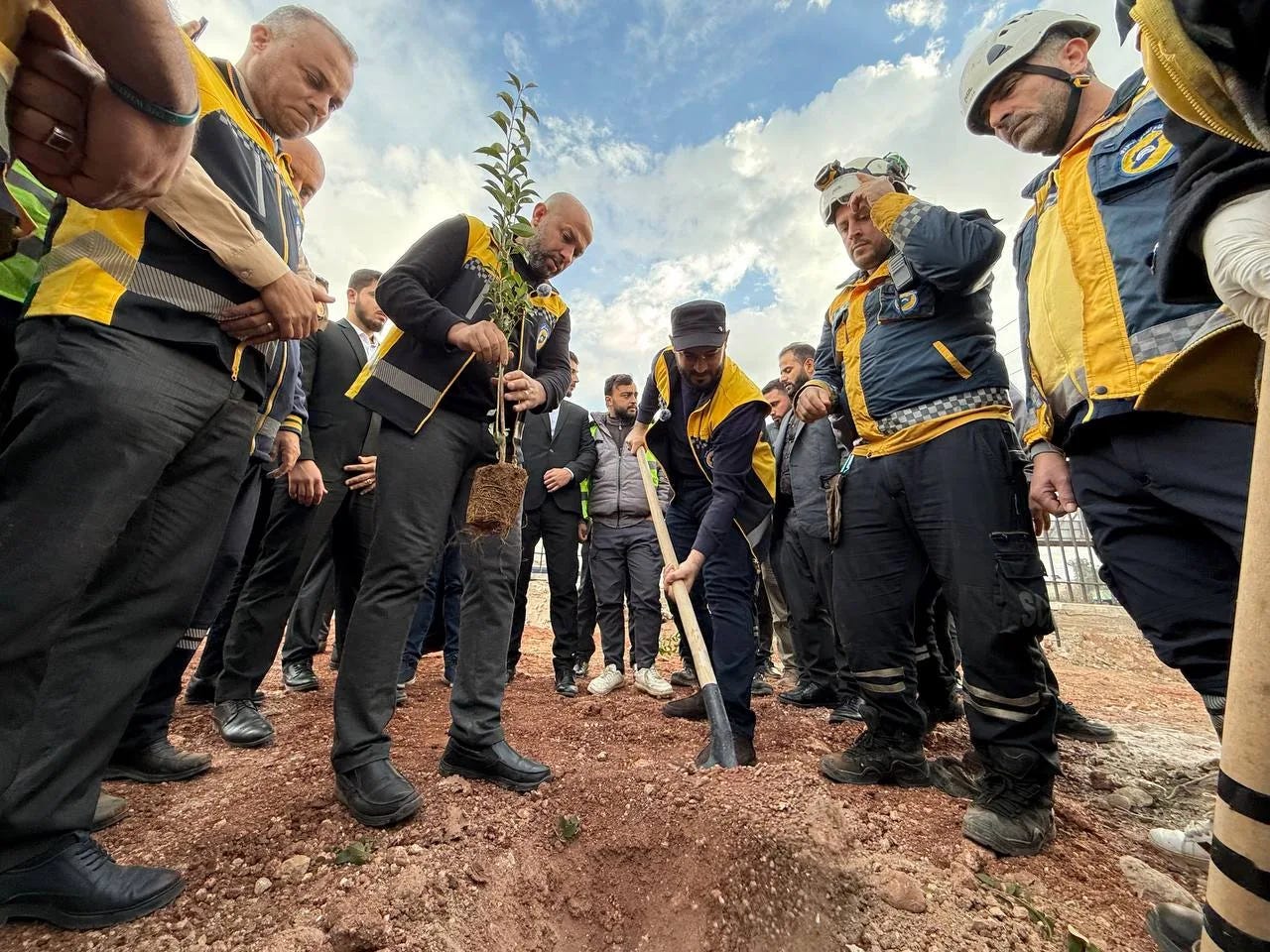
Reforestation campaigns have emerged as a central feature of Syria’s environmental response, representing one of the most prominent local efforts to restore green cover after years of extensive ecological degradation. Syria’s forests and trees were among the casualties of war, subjected to repeated wildfires, widespread deforestation, drought, and a sharp decline in irrigation and maintenance.
Following the collapse of Bashar al-Assad’s regime, several Syrian regions launched a variety of tree-planting initiatives under banners such as “Our Countryside is Green,” “A Tree for Every Soldier,” and “Together to Restore Idlib’s Greenery.”
These campaigns have spanned cities including Damascus, Quneitra, Deir ez-Zor, Hama, Aleppo, and Latakia, aiming to plant hundreds of thousands of saplings.
Overseen by a diverse mix of government bodies, ministries, provincial authorities, environmental directorates, civil society organizations, local associations, volunteer teams, and grassroots initiatives, these efforts have mainly targeted forest areas, city entrances, and highway medians.
According to the data accompanying these projects, the campaigns seek to improve the local environment, restore ecological balance, expand green spaces, and enhance forest cover.
This report examines the state of Syria’s reforestation efforts in terms of sapling varieties, overseeing bodies, types of land targeted, the campaigns’ environmental impact, the challenges they face, and their potential to revive the country’s green cover.
A Depleted Ecosystem
Over the past 14 years, Syria’s vegetation has experienced a steep decline, particularly its forests and trees. This deterioration stems from a complex combination of factors: drought, illegal logging, frequent wildfires, government neglect, overgrazing, and military operations. Fruit-bearing trees, especially olive trees, have suffered the most.
In Daraa Governorate in the south, olive trees numbered around six million across 30,000 hectares in 2010. By 2023, the number had halved to three million, with cultivated land shrinking to approximately 22,901 hectares. In Idlib, an estimated 1.5 million olive trees have been lost in recent years.
A report by the Conflict and Environment Observatory (CEOBS) revealed that Syria lost about 3,505 hectares of forest in 2020 alone a 159% increase compared to 2019. Nearly 20% of the country’s forests have disappeared since 2000.
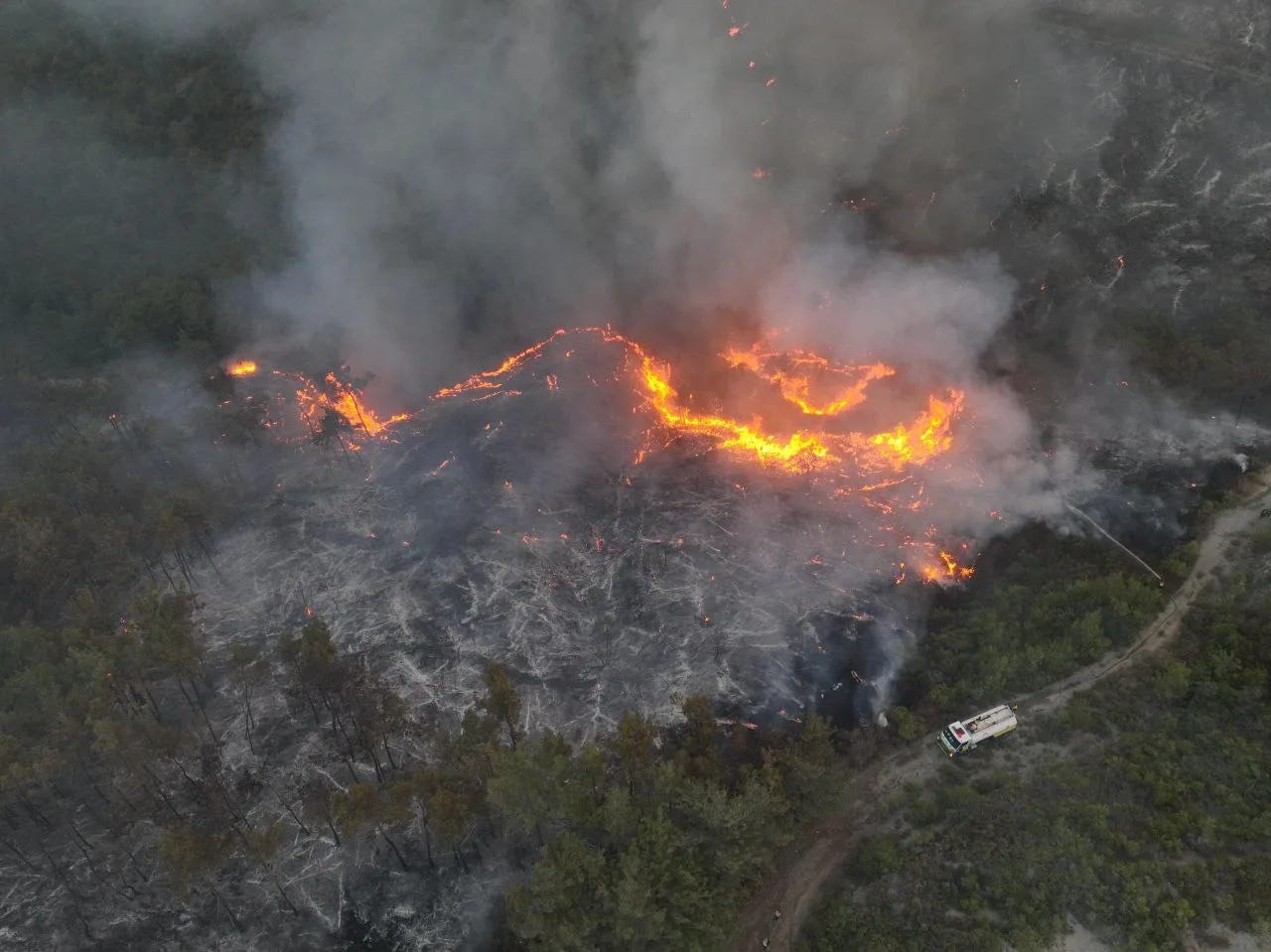
The coastal provinces of Latakia and Tartus, which together contain over three-quarters of Syria’s forested areas, have seen repeated fire outbreaks. Between 2010 and 2018, wildfires consumed over a quarter of Syria’s forests, with more than 2,000 fires recorded, affecting over 100,000 hectares along the coast. From 2021 to 2024, 83% of the tree cover in Syria’s natural forests was lost, amounting to roughly 6,100 hectares.
In July 2025, wildfires once again swept through Latakia and Tartus, directly and indirectly affecting about 50,000 people and 127 villages. More than 18,000 hectares of farmland and forests were damaged, along with 117 irrigation systems and 202 beehives, while over 150,000 trees were lost.
Reforesting Syria’s War-Scarred Terrain
Over the past two months—and continuing still—reforestation activities have intensified, aligning with Syria’s tree-planting season, which typically begins with the first rains and stretches from November to February. During this window, moist soil and moderate temperatures offer optimal conditions for saplings to take root. However, these dates vary depending on local climate, frost severity, and plant species.
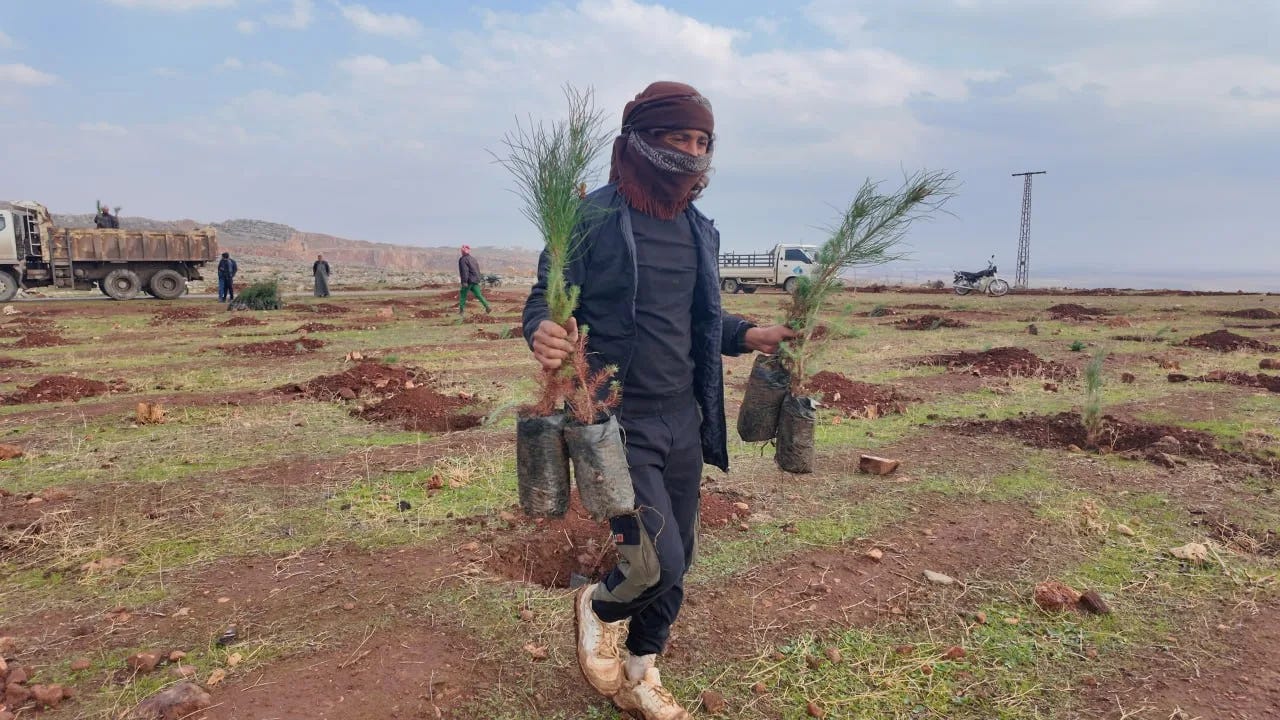
According to a survey by Noon Post, the most notable reforestation campaigns across Syria include:
Rural Damascus – “Our Countryside is Green”: 500,000 saplings
Idlib – “Together to Restore Idlib’s Greenery”: 350,000 saplings
Multiple governorates – “A Tree for Every Soldier”: 200,000 saplings
Damascus – “Damascus is Green and Will Remain So”: over 100,000 saplings
Aleppo: 50,000 saplings
Latakia (Basit and Beit Halibiyeh sites): 10,000 saplings
Quneitra: 7,000 saplings
Hama – “Our Streets are Green”: 7,000 saplings
Other tree-planting activities were organized to coincide with public events and community-driven initiatives, with saplings planted along city roads, in parks, schools, and universities. These involved volunteer teams, students, faculty, and local residents. In Hama’s countryside, the Al-Ghab Development Authority continued its work on the afforestation of Karakat Forest, though the number of trees planted remains undisclosed.
Idlib’s Director of Agriculture, Engineer Mustafa Al-Muwahhid, stated that by December 28, 2025, the reforestation campaign had planted around 120,000 olive saplings and 2,000 forest saplings, with a goal of reaching 200,000 olive trees and 150,000 forest trees across areas like Kafr Nabl, Khan al-Sabil, Harem, Khan Sheikhoun, and the Idlib-Saraqib road.
Rural Damascus Governor Amer al-Sheikh explained that the “Our Countryside is Green” campaign aims to beautify city entrances, plant both forest and fruit trees, and distribute saplings to farmers, thereby supporting the national economy and improving the province’s environmental conditions.
Campaign director Abdulrahman Ghabis noted that the initiative seeks to plant 500,000 saplings in 45 days across much of Rural Damascus. However, he acknowledged that this remains “a small part” compared to the extensive environmental damage, with losses estimated at 8 million seedlings. The campaign relies on collaboration with local communities, farmers’ associations, and municipalities for sapling distribution.
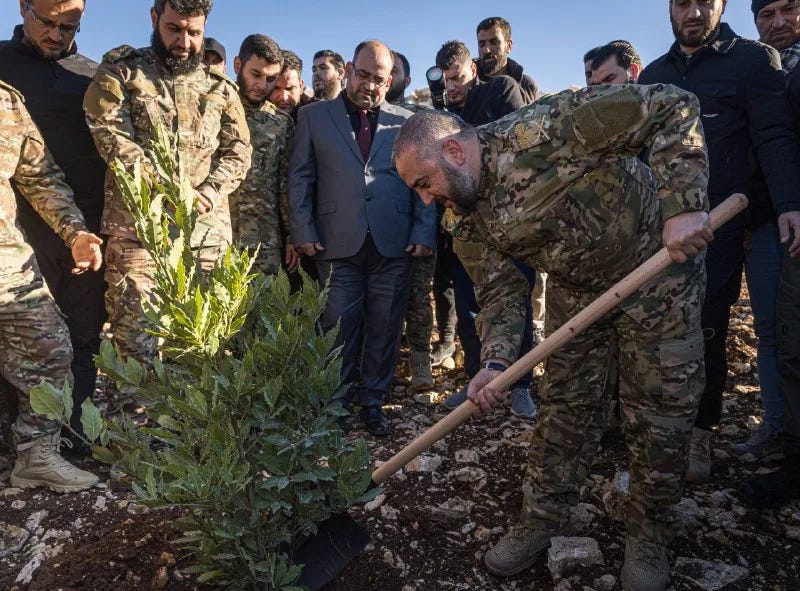
The Syrian Ministry of Defense’s media office told Noon Post that the “A Tree for Every Soldier” campaign uses carefully selected forest and native species tailored to each region’s climate and environmental conditions to ensure high survival and sustainability rates. The campaign spans the country, with particular focus on areas devastated during the war, especially damaged forests, in an effort to restore vegetation and ecological balance.
In this phase, the campaign aims to plant over 200,000 trees as part of a broader effort to rehabilitate nature destroyed by the former regime, raise environmental awareness, and link military service with national and humanitarian responsibility.
The Defense Ministry, in coordination with the Agriculture Ministry, oversees the care and sustainability of these plantings, under the direct supervision of Defense Minister General Marhaf Abu Qasra. The campaign launched from the hills of Kabina symbolic of destruction and rebirth as the starting point for a nationwide journey to restore life to the land and affirm that protecting the homeland includes safeguarding its environment and future.
According to Majd Suleiman, Director of the Forestry Department at the Agriculture Ministry, the campaigns primarily plant bay laurel, stone pine, eucalyptus, and carob, alongside species adapted to local conditions. They target fire-damaged and encroached areas, as well as city entrances and main roads.
He identified key challenges: protecting newly planted trees from trespassing, wildfires, and overgrazing, as well as water scarcity and harsh climate conditions. Reforesting remains a priority due to forests’ environmental, industrial, climatic, and aesthetic value.
Forest Rehabilitation and Campaign Viability
Amid Syria’s ongoing humanitarian crisis, concerns persist about the continued logging and deforestation, casting doubt on whether current reforestation campaigns can meaningfully address the vast ecological damage or restore destroyed forests.
The Ministry of Agriculture told Noon Post that the campaigns contribute to restoring damaged areas and increasing vegetation density. It outlined several steps to rehabilitate degraded forests:
Full protection for areas affected by medium-intensity fires, allowing natural regeneration via seeds or underground parts like bulbs and rhizomes.
Intervention in severely burned areas through dispersal of native seeds from nearby regions to restore dominant species.
Expert assessment of burned sites by technical committees to determine best rehabilitation methods, including whether to protect without intervention or proceed with reforestation, while preventing soil erosion and promoting vegetation recovery.
Prevention of invasive species in forest sites per forestry regulations.
Seed collection from burned and nearby sites to preserve Syria’s native genetic traits.
To combat illegal logging, the Ministry is increasing the number of forest guards and enforcement officers. It also provides citizens with about 80% of the firewood produced from forest thinning and development at subsidized rates, and has issued permits and licenses to ease legal wood harvesting, helping curb illegal activities.
Agricultural engineer Anas Abu Tarboush told Noon Post that for reforestation campaigns to succeed and meaningfully revive Syria’s green cover particularly in forested and damaged areas they must be integrated into a national plan.
This includes supporting farmers with fruit trees, rebuilding forests, fostering environmental education in schools and universities, and establishing long-term plans to protect new plantings.
He stressed that selecting the right timing and climate-compatible species is essential, along with community involvement and consistent technical and financial support. He also recommended learning from neighboring countries’ unconventional reforestation methods, such as aerial seed dispersal in mountainous regions, and called for stricter measures to prevent illegal logging.
