

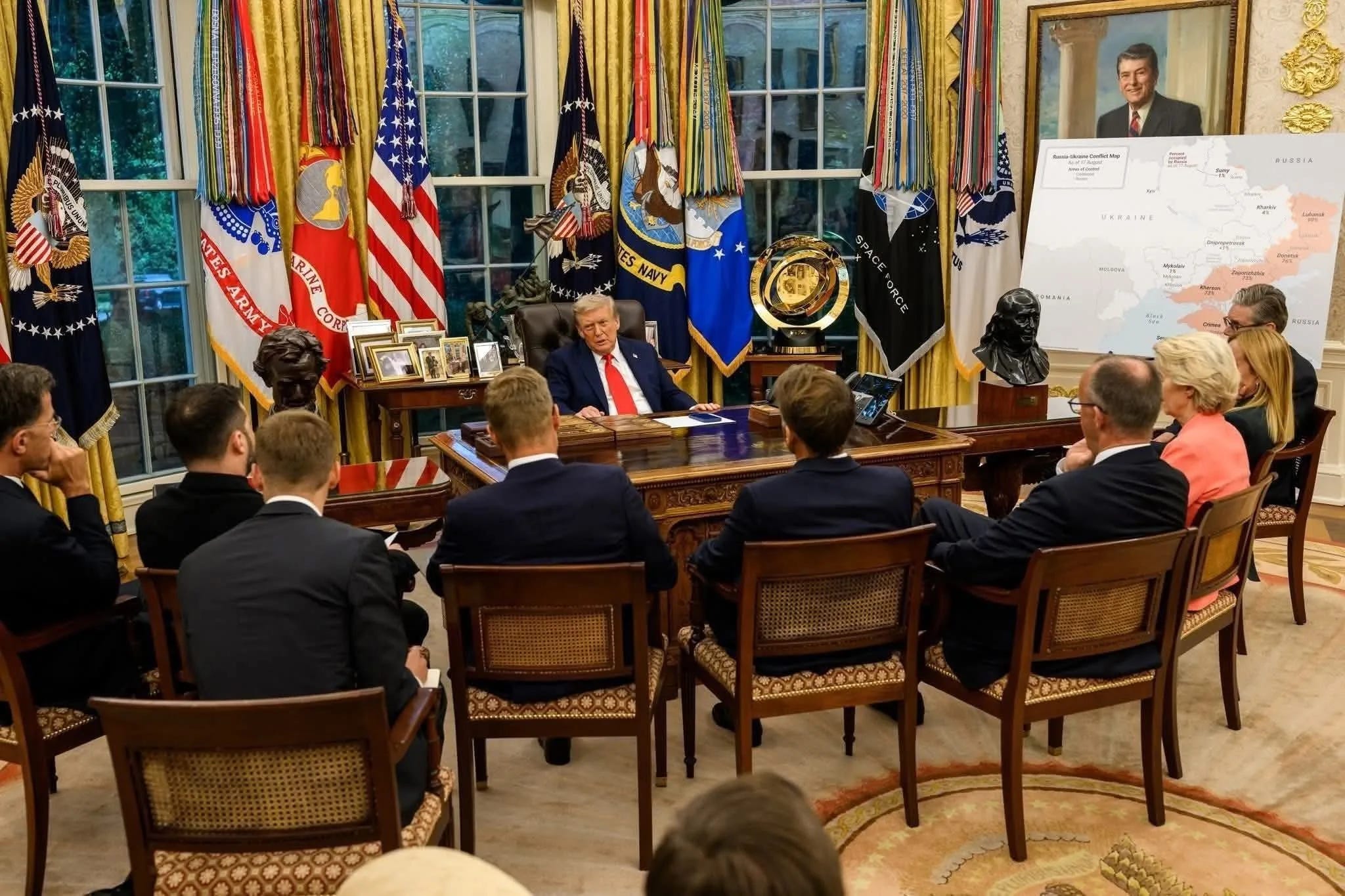
As the American–Israeli war against Iran escalates, the contours of a deeply complex geopolitical crisis are coming into view one that extends far beyond the Middle East and strikes directly at the heart of the transatlantic alliance.
The reverberations of this confrontation have not been limited to military targets. Instead, they have triggered an unprecedented political earthquake between Washington and its European allies. Where do European countries stand on the war, and how prepared are they to intervene militarily?
This report examines Europe’s positions on the American–Israeli war against Iran.
1. Spanish Rejection and Threats of Sanctions
Spain has emerged as the spearhead of European opposition to Washington’s approach. Prime Minister Pedro Sánchez has taken a firm stance against involvement in the conflict, rallying behind the slogan “No to war.”
Madrid translated that position into concrete policy by openly refusing to allow the United States to use the jointly operated military bases at Rota and Morón to launch combat strikes against Iran.
Sánchez warned that the military escalation amounts to a “game of Russian roulette with the fate of millions,” stressing that Spain would not participate in a campaign that violates international norms.
The stance angered US President Donald Trump, who launched a scathing attack on Madrid, describing Spain as a “terrible ally.”
Trump did not stop at rhetoric. He announced that he had ordered the Treasury Secretary to sever all trade relations with Spain, exploiting Madrid’s refusal to raise its NATO defense spending to 5 percent.
Facing what it described as economic coercion, the European Commission swiftly intervened to affirm its protection of the bloc’s collective interests raising the specter of a full-scale transatlantic trade war.
2. An Independent French Course
Rather than fall in line, France has chosen a path that reflects its longstanding ambition to preserve strategic autonomy.
President Emmanuel Macron openly declared that the military operations launched by Washington and Tel Aviv had taken place “outside the framework of international law.”
He stressed that Paris cannot accept unilateral American–Israeli military actions that destabilize the entire region and push it into the unknown.
To translate this political stance into military positioning, Macron ordered the aircraft carrier Charles de Gaulle to deploy to the Mediterranean while strengthening French air defenses in Cyprus to protect European interests exclusively.
This French posture reflects a deeper strategy aimed at leveraging the crisis to advance genuine European “strategic autonomy,” distancing the continent from what Paris views as reckless American military adventures. The move is also accelerating the erosion of institutional trust between Paris and Washington.
3. British Hesitation and American Mockery
The government of British Prime Minister Keir Starmer has found itself caught between the pressures of the historic “special relationship” with Washington and mounting legal and ethical constraints.
In the early days of the military operations, London declined to grant the United States permission to use its strategic bases particularly Diego Garcia and British air bases in Cyprus citing serious concerns about the legality of the strikes.
Although Britain eventually reversed course and allowed limited use of its facilities for missile interception and defensive purposes, the initial hesitation was enough to spark a deep crisis of confidence.
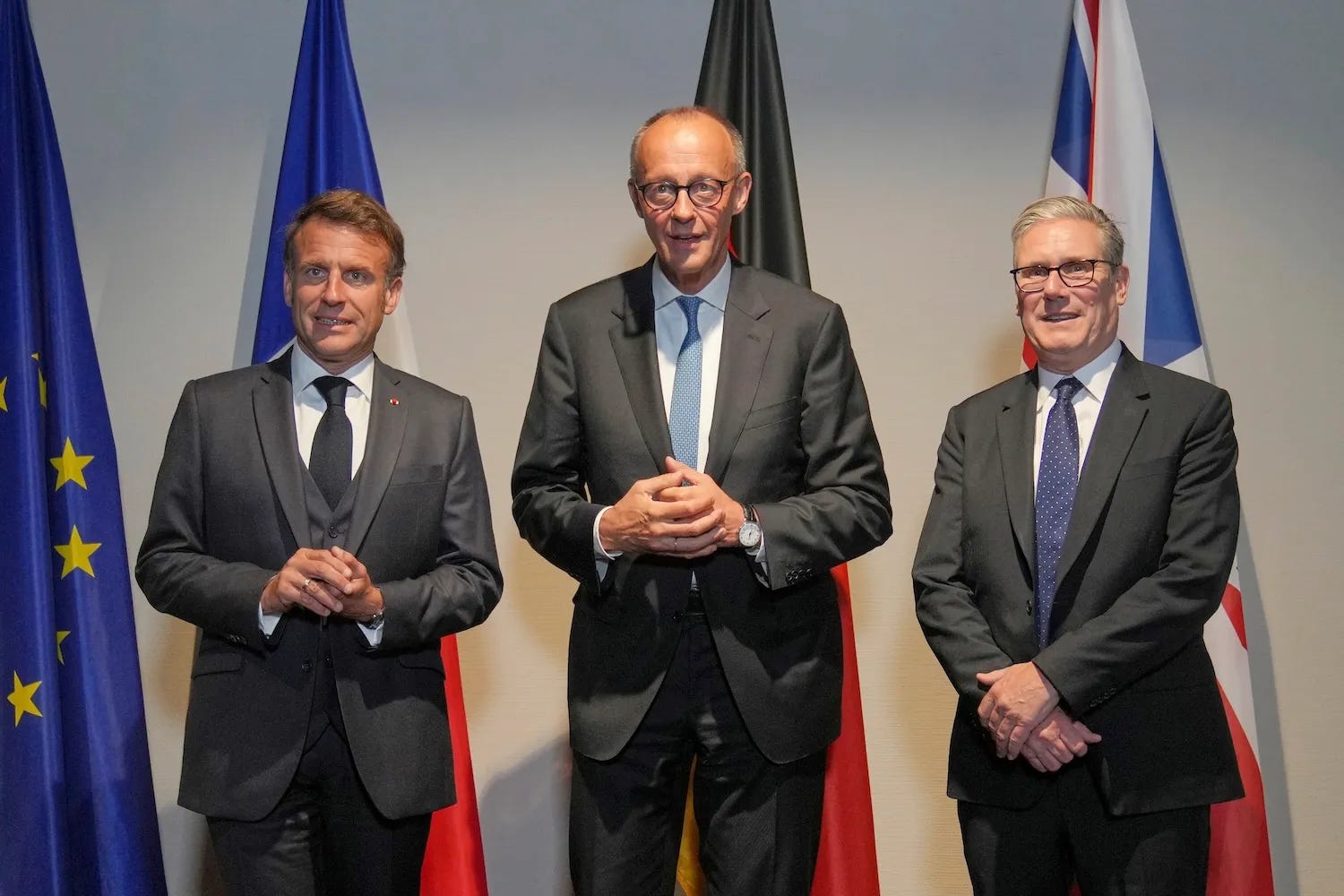
Trump publicly mocked Starmer, saying in a media statement, “We’re not dealing with Winston Churchill here,” expressing deep disappointment at Britain’s delay.
He added bluntly that he did not actually need their help to wage a war in the Middle East remarks that underscored a dismissive attitude toward one of Washington’s closest allies and hinted at the potential marginalization of Britain’s role in the future.
4. Constitutional Constraints in Germany
In Berlin, extreme caution has defined the German response, articulated by Chancellor Friedrich Merz during his recent visit to Washington.
Merz clearly indicated that military plans aimed at political change in Tehran “are not without serious risks and repercussions.” He also voiced doubts about whether military force alone could impose a new reality without dragging the region into a broader regional war.
In practical terms, Germany has tied any potential military involvement to prior approval by the Bundestag, adhering strictly to its constitutional framework.
While Merz appeared flexible regarding US pressure for European allies to increase defense spending, he has maintained a safe distance that prevents Germany from becoming entangled in an open conflict that could undermine its energy security and economic stability.
5. Italy Will Not Send Troops
Italy, given its geographic position and relative dependence on energy imports, views the crisis through the lens of its direct impact on Mediterranean stability.
Prime Minister Giorgia Meloni expressed deep concern, placing the crisis within the broader context of a collapse of international law that began with the war in Ukraine. At the same time, she called on Tehran to halt its attacks against Gulf states.
Deputy Prime Minister Matteo Salvini echoed that position, stating: “Italy is not at war with anyone. We have always said we would not send troops to Ukraine, and I imagine we will not send troops to Iran either.”
He added: “Supporting an alliance of free and Western nations is one thing; sending soldiers to a battlefield is another and that is not part of the plan.”
Salvini continued: “The issue concerns the lives of people in Italy and around the world. For me, diplomacy will always remain the best path.”
6. Contradictions Within the European Bloc
At the same time, sharp contradictions have emerged among Western institutions themselves. The European Union’s High Representative for Foreign Affairs, Kaja Kallas, warned of a deteriorating diplomatic environment and called for restraint.
Kallas described the situation in the Middle East as “dangerous,” emphasizing that the European Union is coordinating with Arab partners to explore diplomatic pathways aimed at reducing tensions.
Meanwhile, NATO Secretary-General Mark Rutte quickly praised the American operations targeting Iran’s nuclear and missile capabilities.
This divergence between European calls for de-escalation and NATO’s support for the strikes reveals a profound structural crisis in the formulation of a unified European foreign and security policy.
Redefining Transatlantic Relations
Europe’s responses to the conflict did not emerge in a vacuum. Since late 2025, the continent has been reassessing its relationship with Washington following the first year of Donald Trump’s return to the White House a year marked by tensions across multiple fronts: security (Ukraine and NATO) and economics (tariff disputes).
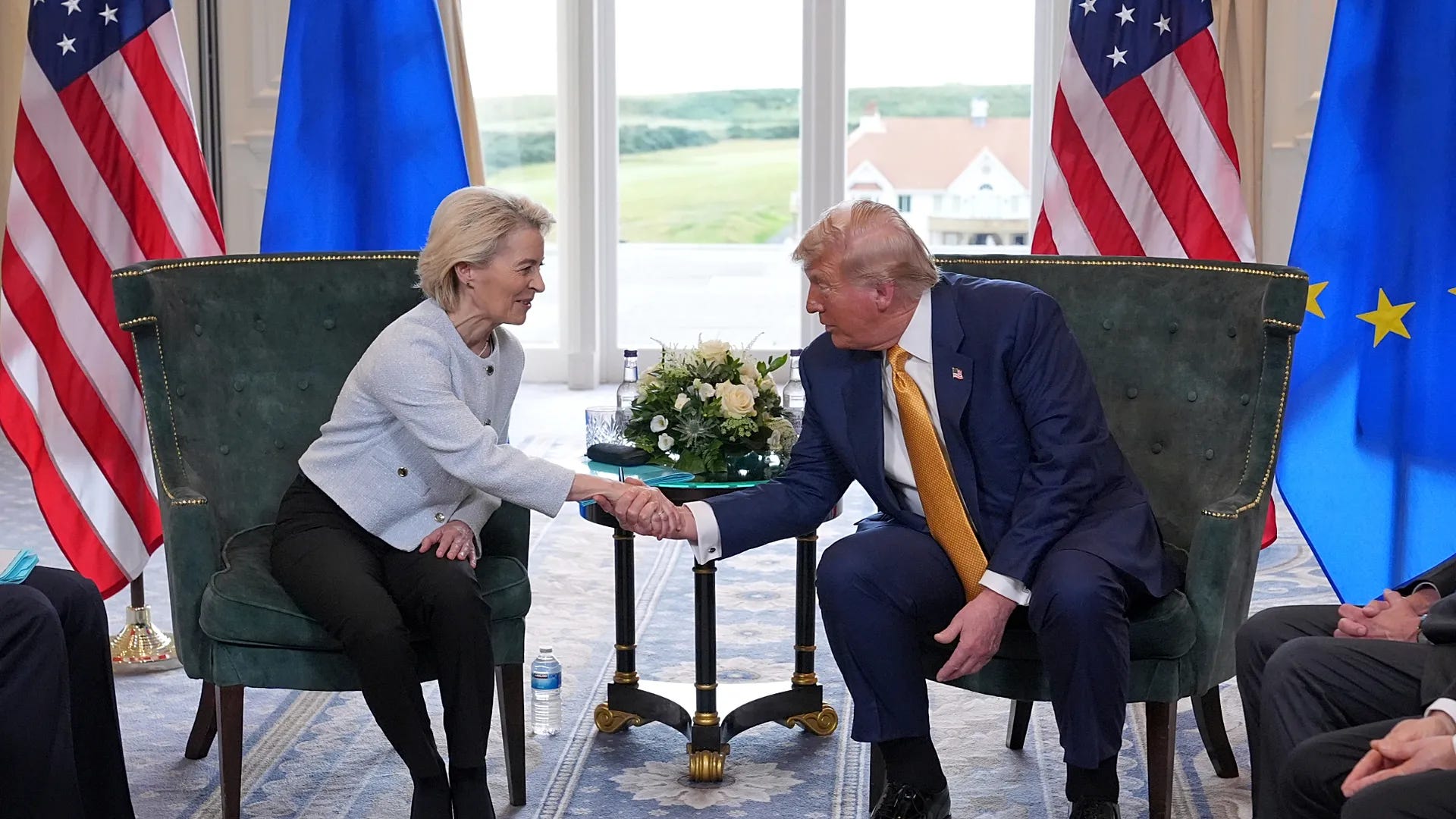
This reality was evident in the Trump administration’s actions from its earliest days. In July 2025, when Trump met European Commission President Ursula von der Leyen in Scotland, the encounter was far from the cordial or symbolic meetings that once characterized transatlantic diplomacy. Instead, it culminated months of escalating tension.
Trump questioned the value of NATO for the United States and hinted that Washington might ignore the alliance’s collective defense principle.
He revived the idea of purchasing Greenland from Denmark as if it were a commodity.
He did not hesitate to impose punitive tariffs on imports from the European Union and the United Kingdom.
The height of the European shock came in November 2025 with the release of the US National Security Strategy, which portrayed Europe as a weak partner that must be “reshaped.” The document declared that the era of global dependence on the United States as the “giant of the international order” was over and urged Europeans to shoulder their own defense burden.
The crisis spilled into the economic arena in April 2025 when Trump imposed sweeping tariffs on EU imports (20 percent) and increased duties on steel and aluminum (from 25 percent to 50 percent).
Faced with the shock, the European Union adopted countermeasures, including retaliatory tariffs on American goods worth €72 billion, and Brussels threatened to deploy its new Anti-Coercion Instrument against the United States.
Yet Europe’s security dependence on Washington amid the war in Ukraine narrowed its room for maneuver. The crisis ultimately ended in a July 2025 deal that European leaders described as humiliating and a clear concession to Washington. The agreement included:
The European Union eliminating most industrial tariffs on American products.
Washington maintaining tariffs of 15 percent on European exports three times higher than before the trade war.
Europeans committing to invest $600 billion in the United States and purchase $750 billion in American energy by 2028.
For that reason, the divisions visible today are not merely tactical disagreements or diplomatic sparring. They represent a structural rupture that threatens the entire architecture of the Western alliance.
The open war against Iran launched without United Nations Security Council authorization has led experts to describe the current moment as the “great rupture” of the global order.
It is unfolding within the broader trajectory of the Trump administration’s policy of imposing facts on the ground while disregarding European reservations and wielding economic threats to pressure allies rather than consulting them.