

In the second century BCE, Emperor Wu of the Han Dynasty dispatched General Zhang Qian westward to forge alliances against the Xiongnu tribes. Though Zhang was captured and remained in captivity for 13 years, he eventually escaped and returned to China.
Upon his return, the emperor sent him on another mission to neighboring peoples, relying on his deep knowledge of regional routes. In doing so, Zhang Qian laid the foundations for the first routes stretching from China to Central Asia, eventually connecting with Europe.
These routes, which extended from the Chinese capital of Chang’an to Europe via Central Asia and the Middle East, gained fame and utility for various purposes: diplomacy, religion, scholarship, trade, and the transport of goods such as Chinese tea, paper, gunpowder, perfumes, and incense.
Silk was the most prominent Chinese export along this route, leading German geologist Baron Ferdinand von Richthofen in the mid-19th century to coin the term “Die Seidenstraße” or “Silk Road.”
Spanning 12,000 kilometers over land and sea, the Silk Road enabled China to expand its trade, export its culture, and extend its influence across the ancient world. It reached its peak during the first millennium under the Roman and later Byzantine empires, as well as China’s Tang Dynasty (618–907 CE).
However, with the emergence of new trade routes between Asia and Europe, the expansion of the Crusades, Mongol advances in Central Asia, and increasing economic isolation among Asian states, Silk Road commerce declined. Today, the Chinese Communist Party is reviving the legacy in a bid for global influence.
The First Steps
In the 1990s, China transitioned from isolation to becoming an economic powerhouse, thanks to a series of reforms led by Deng Xiaoping. These included opening trade routes, encouraging foreign investment, and granting farmers rights to their land.
The Chinese economy soared to record growth rates. Chinese products proliferated worldwide, standards of living improved for millions, poverty declined sharply, and education levels surged.
Within this context, efforts emerged to reestablish the Silk Road and project Beijing’s influence globally. Among the early initiatives was the Eurasian Land Bridge, a railway network stretching from Lianyungang in eastern China to Rotterdam in the Netherlands via Kazakhstan, Mongolia, and Russia.
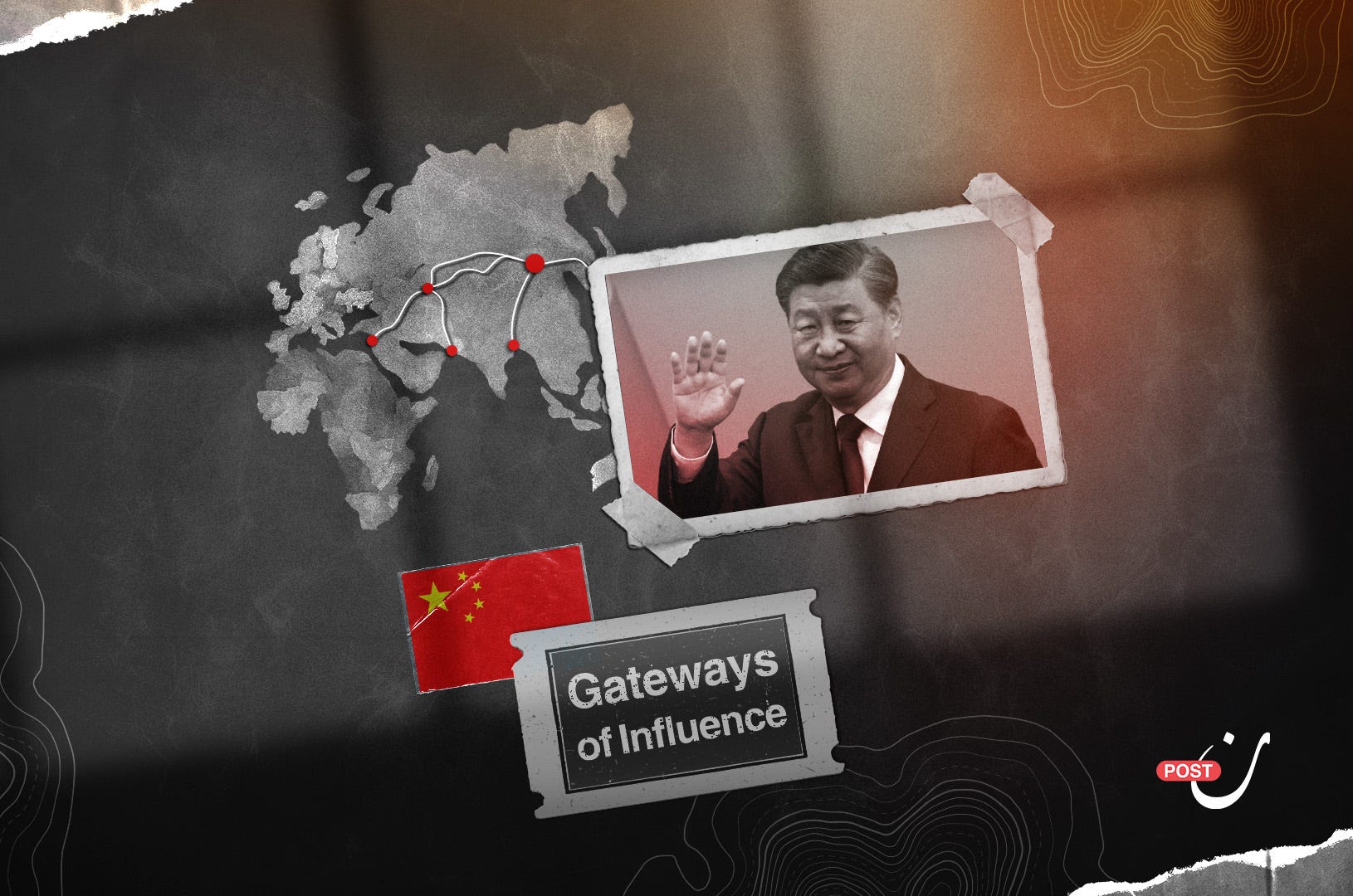
While significant for moving Chinese goods to Europe, this project fell short of Beijing’s global ambitions. In 2013, China launched the “Belt and Road Initiative” (BRI), a sweeping strategy rapidly endorsed by over 70 countries.
Six years later, President Xi Jinping convened the first Belt and Road Forum, attracting representatives from 150 countries. The summit aimed to promote a vision of China as a global economic nexus.
Project Details
China’s initiative seeks to connect nearly half the world’s population through a vast network of highways, railways, air routes, seaports, energy pipelines, and simplified border crossings. It envisions integrating one-fifth of global GDP by establishing expansive trade and investment links.
To support this, China has funded hundreds of Special Economic Zones designed to create jobs and foster technological adoption, including 5G networks spearheaded by telecom giant Huawei.
Initially, the initiative consisted of two components: the overland Silk Road Economic Belt and the Maritime Silk Road. Collectively dubbed “One Belt, One Road,” the project eventually became the Belt and Road Initiative.
The Maritime Silk Road extends from China through Singapore and India to the Mediterranean, while the land-based component includes six corridors: the New Eurasian Land Bridge, the China-Mongolia-Russia Corridor, the China-Central Asia-West Asia Corridor, the China-Indochina Peninsula Corridor, the China-Pakistan Economic Corridor, and the Bangladesh-China-India-Myanmar Corridor.
Crucially, the Chinese state guarantees the initiative, with its four state-owned banks financing the projects. Private sector participation is excluded, drawing criticism for the initiative’s state-centric model.
Major Investments
Key projects include a vast rail network connecting 62 Chinese cities with 51 European cities across 15 countries. In 2017, the first freight train from China to the UK arrived in London after an 18-day, 12,000-kilometer journey through seven countries. This route offers shipping at half the cost of air freight and saves two weeks compared to sea transport.
In Pakistan, China has launched infrastructure projects under the China-Pakistan Economic Corridor, linking the country’s southern coast to Kashgar in China. Plans include highways, hydropower dams, and an upgraded Gwadar Port on the Arabian Sea.
As of last year, China had signed over 200 cooperation agreements related to the BRI with more than 150 countries and 30 international organizations, encompassing two-thirds of the global population and 40% of global GDP.
According to Chinese sources, the initiative has driven 3,000 cooperation projects and attracted $1 trillion in investments. From 2013 to 2022, China’s total trade with BRI partner countries reached $19.1 trillion, with an annual growth rate of 6.4%.
Since 2013, China has invested $25 billion directly under the BRI, with projections suggesting total spending may exceed $1 trillion.
Originally focused on linking East Asia and Europe, the BRI has since expanded to Africa, Oceania, and Latin America, becoming one of the most ambitious infrastructure endeavors in history.
China has signed BRI-related agreements with 52 African countries, targeting roads, ports, and railways. Chinese investments in Africa surged to over 20% of total foreign investment by 2020, up from just 3% two decades earlier.
Chinese loans have supported airports, highways, and rail systems, including the “Silk Road” railway linking Kenya’s capital Nairobi to the port city of Mombasa.
In December 2022, Tanzania signed a $2.2 billion deal with a Chinese firm to complete a railway connecting its main port to neighboring countries. China has also turned a small Tanzanian coastal town into what may become Africa’s largest port, while building similar infrastructure in Namibia and Nigeria.
Supporters and Skeptics
Turkey strongly backs the BRI, viewing it as a means to amplify its Mediterranean influence and leverage its strategic east-west geography. China, in turn, sees Turkey as a critical partner.
Russia is also a key supporter. President Vladimir Putin has praised the BRI as a catalyst for Eurasian cooperation and sustainable economic development. The initiative bolsters both Russian and Chinese standing, especially under Western sanctions, though it also risks sparking competition over Central Asia.
Pakistan is another key ally, having received $25 billion in direct Chinese investment through the China-Pakistan Economic Corridor, which has created around 240,000 jobs. For China, this ensures a faster, safer trade route.
In Europe, the UK has signaled support. Former Finance Minister Philip Hammond pledged British expertise in project financing, calling for collective action to realize the BRI’s potential.
Most African nations have embraced the initiative to attract investment and consolidate power. China has leveraged this to expand its footprint and control resource-rich areas.
However, some countries have grown wary. Italy, initially the first G7 nation to join, is now reconsidering its participation. Prime Minister Giorgia Meloni recently signaled Italy’s intent to withdraw, reflecting tensions with the US.
The US is the staunchest critic, viewing the BRI as a challenge to its economic and political interests. Washington is countering by enhancing infrastructure in Central Asia, Africa, and Europe, though critics argue it falls short of local needs.
European skepticism is also rising. The EU has unveiled 70 infrastructure projects as part of its counter-strategy. European Commission President Ursula von der Leyen pledged €300 billion over five years to support infrastructure in developing countries.
India actively opposes the BRI, warning that it aims to dominate Asia by trapping neighbors in debt and undermining their sovereignty. India seeks to position itself as a regional alternative.
China’s reliance on Pakistan fuels Indian security concerns, particularly because the economic corridor passes near disputed Kashmir.
Japan, too, remains wary of China’s ambitions. Tokyo has committed over $300 billion in public and private funds for Asian infrastructure and partnered with India on the Asia-Africa Growth Corridor to link ports from Myanmar to East Africa.
Strategic Goals
China has spent roughly $1 trillion on the BRI so far, with forecasts suggesting total costs may reach $8 trillion. The initiative is driven by multiple goals, notably the need to offload industrial overcapacity. China produces 1.1 billion tons of steel annually but consumes only 800 million domestically.
Since the 1990s, China has relied on industry and exports to grow its economy. To maintain momentum, it must create secure, diversified trade routes.
Currently, most Chinese trade flows through the Malacca Strait near Singapore, a US ally. Reviving and upgrading the Silk Road offers Beijing safer access to global markets.
The BRI also aims to reposition China at the center of global trade, boosting household incomes and lifting more citizens out of poverty.
Additionally, the initiative secures long-term energy supplies from the Middle East and Central Asia, supporting China’s industrial expansion. It also facilitates economic restructuring, wage growth, and internationalization of the renminbi.
Access to vast mineral wealth in the Middle East and Africa, such as copper-rich Democratic Republic of Congo, further motivates the initiative. China controls over 80% of copper mines in the country.
Strategically, the BRI supports China’s global ambitions. It enables military expansion such as the overseas base in Djibouti and consolidates influence via debt-based diplomacy, as seen in Sri Lanka, where China leased the Hambantota port for 99 years after Colombo failed to repay loans.
Even when debts are repaid, recipient countries often align with China in international forums, supporting its positions on Taiwan and Uyghur issues.
Future Prospects
Despite its ambitions, the BRI faces significant pushback. China’s lending practices have drawn criticism for fostering debt dependency and undermining sovereignty.
While China markets the BRI as a “win-win” partnership, critics argue it burdens poor countries with unsustainable loans aimed at securing Chinese geopolitical interests.
As of last year, Chinese construction contracts under the BRI totaled $2 trillion comparable to the size of the Russian or Canadian economy with actual sales reaching $1.3 trillion.
According to Beijing, the Export-Import Bank of China holds BRI-related loans worth 2.2 trillion yuan ($307.4 billion) across 130 countries, averaging $2.4 billion per country. Many African governments have sought loan deferments or relief.
Projects in low-income countries have also fueled corruption and democratic backsliding, drawing ire from civil societies.
Consequently, Chinese investment in Europe has dropped to its lowest since 2010, reaching €6.8 billion last year. Mergers and acquisitions have also declined in Africa.
Some governments are now canceling or delaying BRI projects including railways, ports, and trade zones due to financing disputes, land rights, labor concerns, and technology issues.
Others have questioned the projects’ cost-effectiveness, as seen in Laos, Kyrgyzstan, Uzbekistan, and Malaysia. Environmental concerns further fuel opposition, despite China’s 2021 pledge to stop building overseas coal-fired power plants.
Despite opposition from the US and parts of Europe, the BRI could still spur global economic growth. Yet, caution is warranted regarding China’s expansionist policies.