

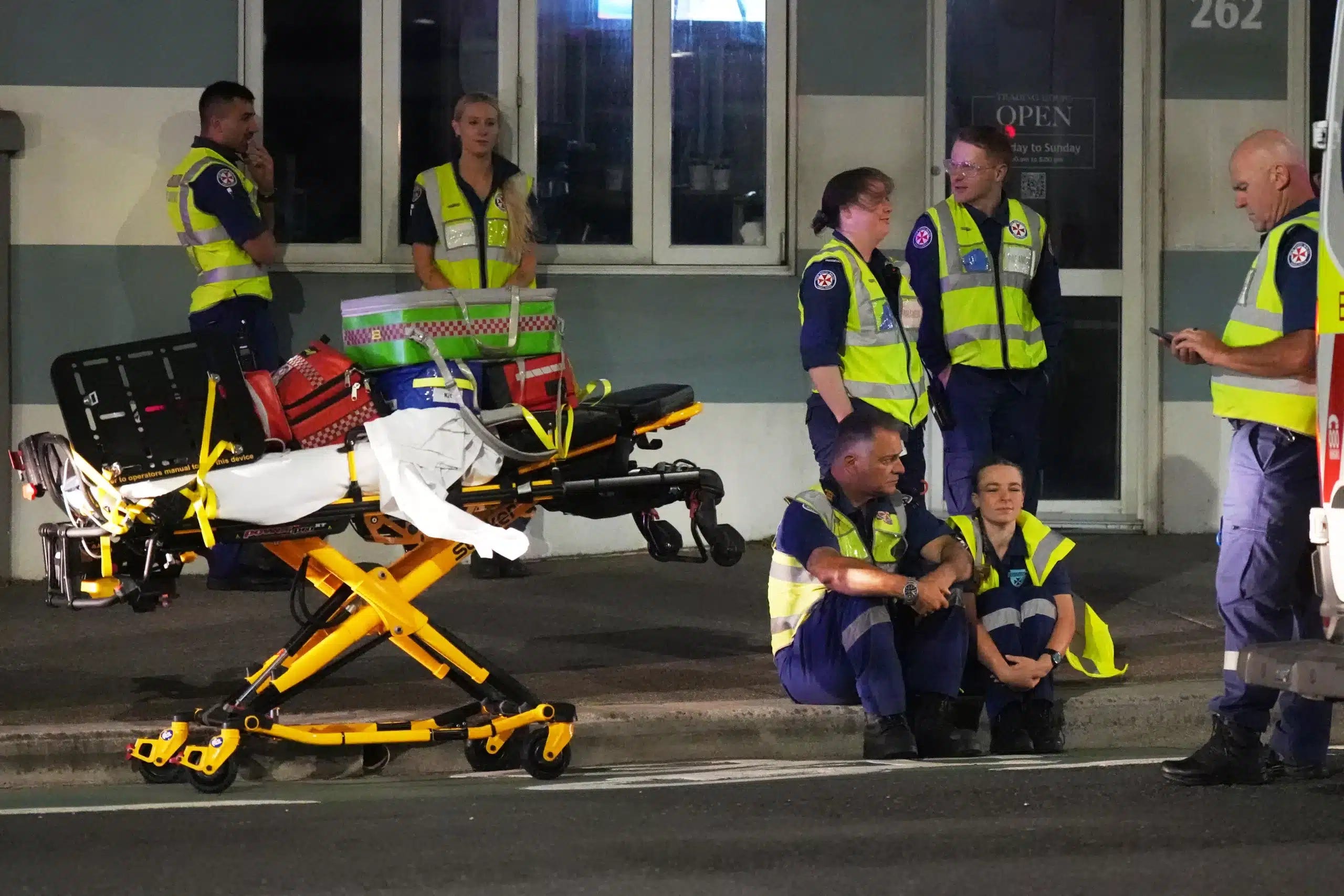
The way several Western media outlets covered the attack on a Hanukkah festival at Bondi Beach in Australia has stirred considerable controversy, with some coverage veering beyond the bounds of professional journalism and into the realm of prepackaged interpretive frameworks.
This coverage recycled a narrative that instinctively tied the incident to Muslims and “antisemitism,” while dragging the Gaza war and the Palestinian uprising into the story — despite the fact that official investigations have not established any ideological motives or affiliations for the perpetrators.
This report examines how prominent Western newspapers and websites handled the December 14 attack. It breaks down the biases and flaws in their reporting and highlights the gap between verified facts and the media discourse presented to the public.
Headlines and Coverage from Western Outlets
Reuters
“Antisemitism” Frame: Reuters claimed the attack was “the most serious in a series of antisemitic attacks since Israel’s war in Gaza,” placing the event within a narrative of “rising hatred against Jews.”
Link to Palestinian Recognition: The British agency reported that Israeli Prime Minister Benjamin Netanyahu condemned Australia’s recognition of a Palestinian state, claiming it fuels hostility an attempt to frame the attack as a direct consequence of this move.
Connection to Gaza War: Another Reuters report tied the incident to pro-Palestine protests in Australia, focusing on demands for stricter laws to protect Jews. However, it failed to highlight reassurances given to the Muslim community.
The Guardian
Hinting at Islam: Although the Australian Prime Minister stated there was no evidence linking the attackers to any organized cell, The Guardian described the assault as a “terrorist attack.” Many saw this as an attempt to implicitly associate Muslims with terrorism especially since the attackers (a father and son) were of Pakistani Muslim origin.
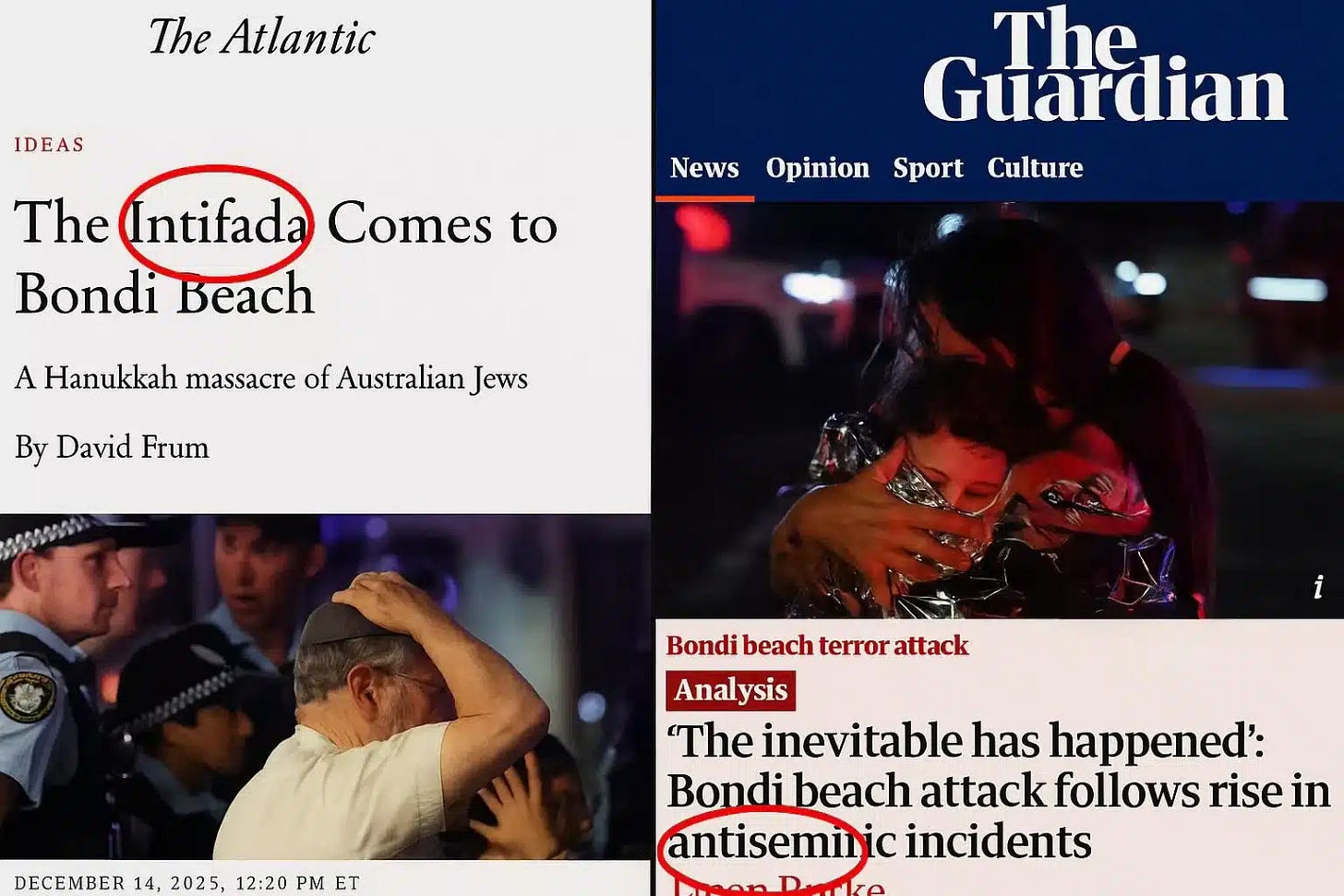
Some Western media outlets linked the attack to what they termed “anti-Semitic incitement” following the war in Gaza. Blaming Pro-Palestinian Activists: In a separate analysis, The Guardian quoted voices blaming “pro-Palestinian elements” for inflaming antisemitic rhetoric, particularly in the aftermath of the Gaza war.
Ignoring Alternative Views: The Guardian gave considerable space to statements from Australian officials but did not offer equal attention to condemnations issued by Islamic or Arab organizations denouncing the attack.
Other Media Outlets
PBS and The New York Times: Both chose headlines laden with presumption, such as “Mass shooting at Jewish festival fuels antisemitism fears” and “Australian Jews feel abandoned after antisemitic attack.”
CNN and BBC: These networks linked the assault to what they called “antisemitic incitement” following the Gaza war, without referencing condemnation from Australia’s Muslim community.
The Atlantic and The New York Times: Both contextualized the Bondi incident within the Palestinian uprising and the Gaza conflict, presenting a pre-formed political lens that preempted investigative outcomes and framed the attack as an extension of the Palestinian cause within Western societies.
Flaws in the Coverage
Reflexive Linking to the Palestinian Cause: Most Western outlets linked the attack to “antisemitism” within the context of the Gaza war despite the lack of any official confirmation. This framing risks obscuring alternative explanations and narrows public understanding.
Neglect of Muslim and Arab Condemnations: Reuters and The Guardian, among others, failed to highlight public denunciations from the Australian National Imams Council and various Islamic organizations that described the attack as horrific and called for unity. This omission can falsely suggest that Muslims are either complicit or indifferent.
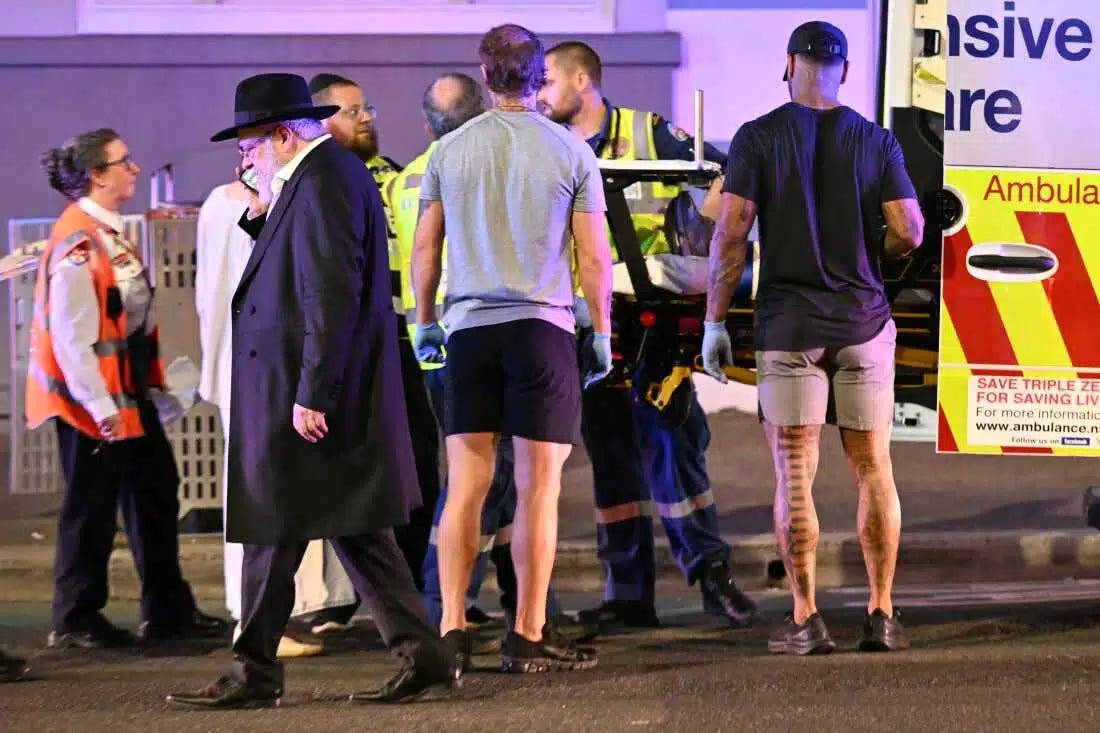
Western media coverage reproduced a discourse that automatically linked the event to Muslims and “anti-Semitism”. Focus on Identity: Several reports emphasized the attackers’ ethnic and religious backgrounds, describing the event as part of an alleged wave of “Islamist terrorism” without presenting evidence.
Generalizing Blame, Fueling Islamophobia: Implicitly pointing fingers at Muslims as a group holds entire communities responsible for individual acts, exposing them to hostility and discrimination in Australia and beyond.
Ignoring Historical Context of Anti-Muslim Discrimination: While the reports echoed Jewish communities’ fears, they failed to address the long-standing history of racism against Arabs and Muslims in Australia including denaturalization, media demonization, and policies that may provoke radical reactions.
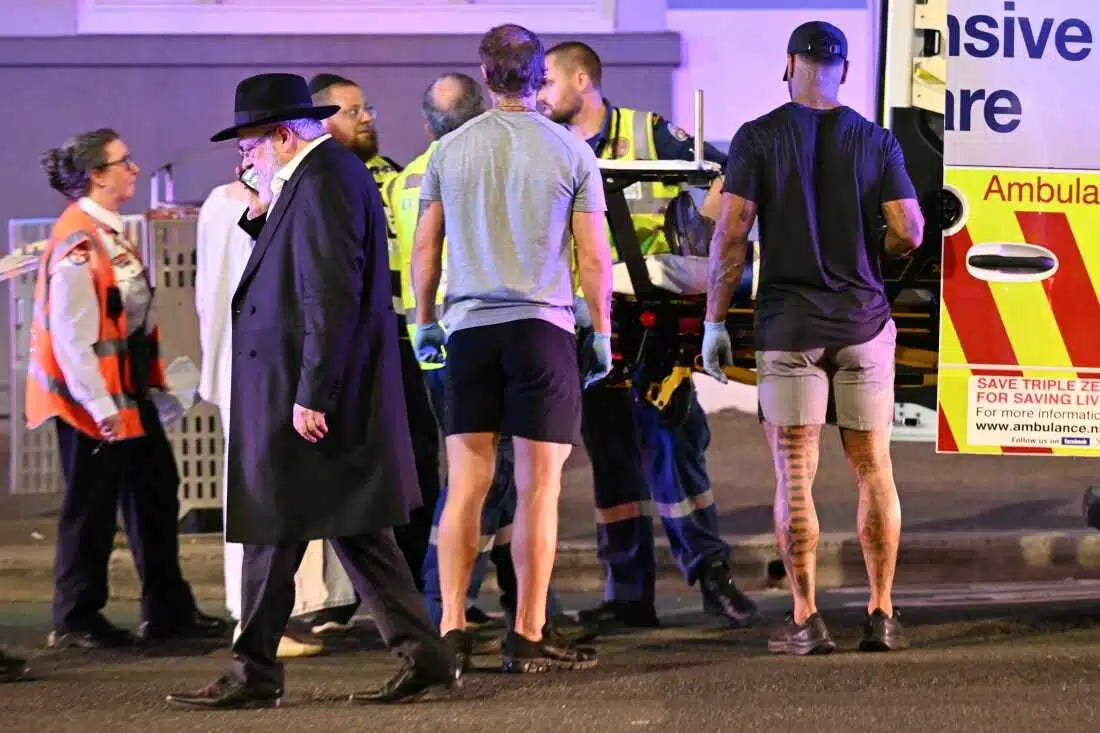
When Facts Disrupt Prepackaged Narratives
Amid this distorted Western media coverage, one piece stood out an article by renowned British-American journalist Mehdi Hasan, which offered a critical perspective that disrupted the narrative many outlets had sought to establish from the outset.
Hasan focused on the psychological toll such incidents take on Muslim minorities in the West the fear that extends beyond the immediate violence to the dread that the perpetrator might be Muslim, which then results in collective blame and social pressure long before investigations conclude.
In his article, Hasan wrote:
“While the attackers were Muslim, the man who stopped the massacre and risked his life to save dozens of Jews was also Muslim a Syrian immigrant.”
He continued:
“Yes, Ahmad Al-Ahmad, a 43-year-old fruit shop owner and father of two, was shot twice in the arm and hand while confronting and disarming the gunman. Not only is he Muslim, he’s a Syrian refugee from Idlib.”
Hasan did not downplay the horror of the attack, but he exposed the Western media’s selective emphasis highlighting the identity of the assailant while sidelining the hero’s story because it didn’t fit the prevailing ideological framework that often vilifies Islam and migrants, casting the event as further “evidence” for preconceived narratives.