

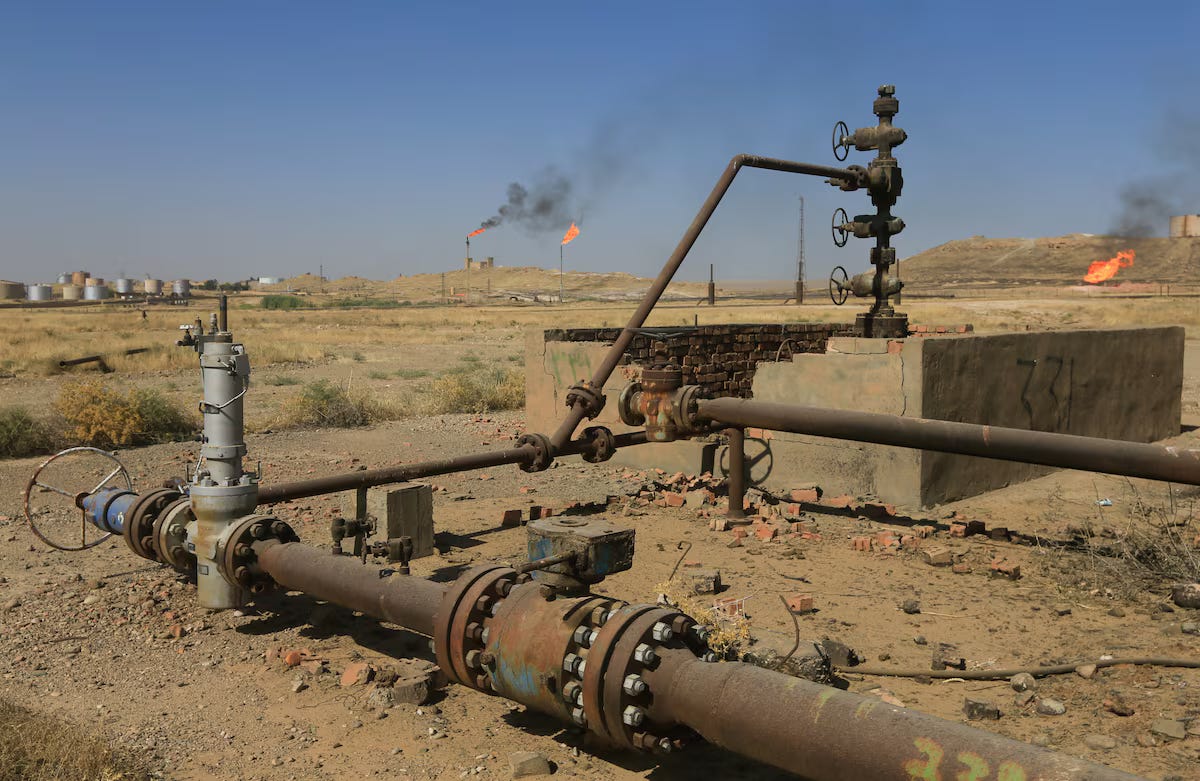
Over the past several years, the Kirkuk–Ceyhan oil pipeline had effectively faded into irrelevance. The aging federal line, which once connected the oil fields of this northern Iraqi city to the Mediterranean via Turkey, was shut down in 2014. Northern exports were subsequently rerouted through the Kurdistan Region’s pipeline network, which is linked to Turkey’s port of Ceyhan.
In March 2023, flows to Turkey came to a halt following an international arbitration ruling that required Ankara to pay approximately $1.5 billion to Baghdad for exports conducted without its consent. Until February 2026, the bulk of Iraqi oil continued to flow southward to the gulf, while exports from the Kurdistan Region persisted at around 200,000 barrels per day.
But with the outbreak of the U.S.-Israeli war on Iran, the Kirkuk–Ceyhan pipeline shifted from a stalled legal and political dispute into a potential lifeline reshaping the balance of power between Baghdad and Erbil, and reopening the door for Turkey to reclaim a central role.
Why Has Ceyhan Returned Now?
The equation was upended with the closure of the Strait of Hormuz in March 2026. The disruption of exports via the gulf dealt a heavy blow to southern Iraq, where the majority of the country’s oil is produced and exported. Output from southern fields dropped by roughly 70 percent to 1.3 million barrels per day, while total Iraqi production fell to around 1.4 million barrels.
This came as Standard & Poor’s warned that the continuation of such conditions would place severe pressure on Iraq’s public finances, given that oil accounts for roughly 90 percent of state revenues.
As a result, the Kirkuk–Ceyhan file is no longer merely a legacy dispute over authority and transit fees. It has become a pressing question of how to secure an alternative outlet to mitigate the shock.
Baghdad has therefore moved along two parallel tracks:
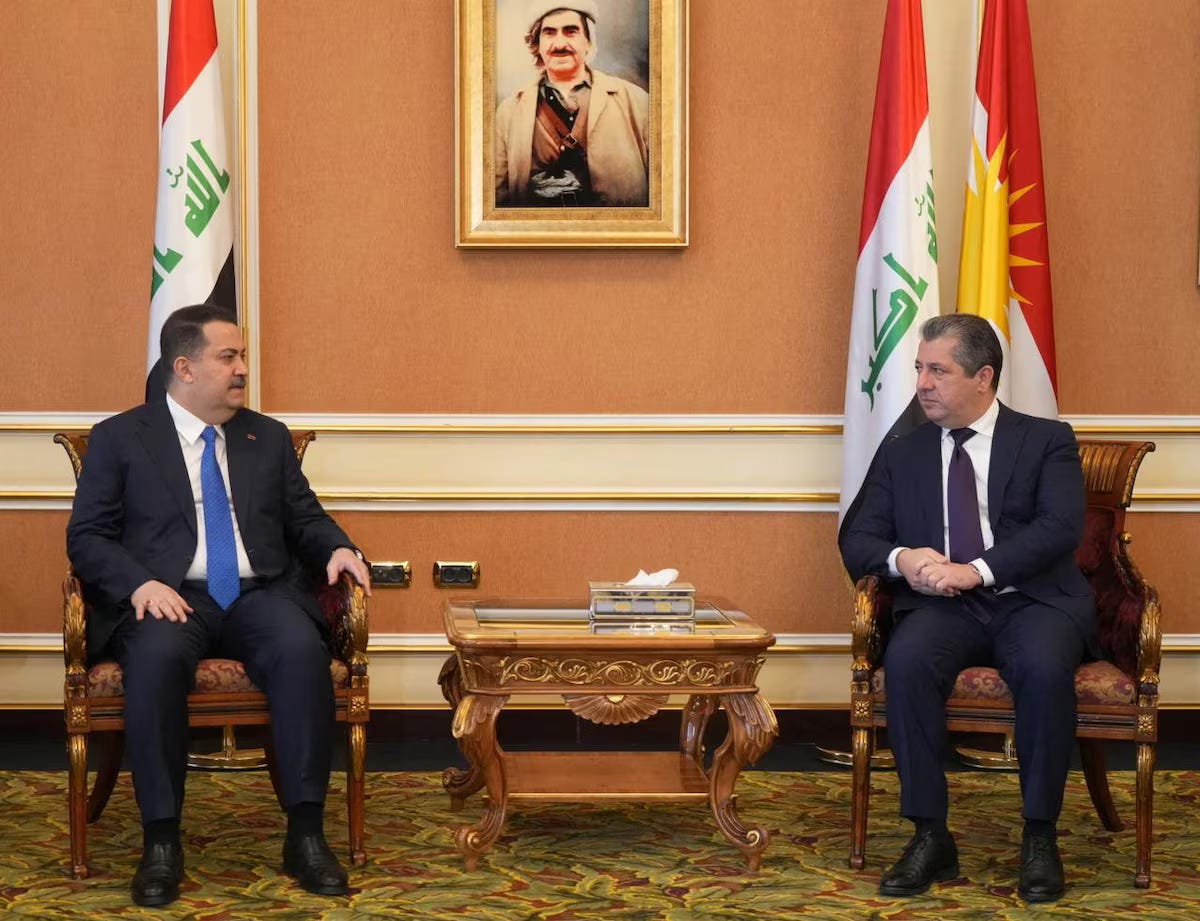
The first was immediate and emergency-driven: in early March, the Oil Ministry requested that Erbil allow at least 100,000 barrels per day of Kirkuk oil to be pumped through the region’s network to Ceyhan.
The second was more strategic. On March 16, Oil Minister Hayan Abdul Ghani announced that Iraq had begun inspecting a 100-kilometer segment of the old federal pipeline, in preparation for resuming direct exports from Kirkuk to Ceyhan without passing through the region. The initial capacity is projected at 250,000 barrels per day, potentially rising to 450,000 if Kurdish oil is included.
In this sense, Hormuz has revived Kirkuk–Ceyhan not as a single pipeline, but as a set of routes and a set of negotiating tools.
How Should This Return Be Understood?
To grasp the current complexity, one must first distinguish between the routes.
The Iraqi–Turkish pipeline is governed by a 1973 agreement and has a historical capacity of around 1.5 to 1.6 million barrels per day.
However, the direct federal line that Baghdad is now seeking to revive has remained offline since 2014 following attacks by the Islamic State group.
By contrast, in 2013 the Kurdistan Region built a parallel network linking its fields to Fishkhabur and onward to Turkey, enabling it to export oil independently. This triggered a long-running dispute with Baghdad over who holds the authority to sell, load, and manage revenues.
When the arbitration ruling was issued in March 2023, it halted northern flows via Turkey to the port of Ceyhan not Iraq’s entire exports.
At the time, around 450,000 barrels per day were suspended, including 370,000 from the Kurdistan Region and 75,000 of federal oil, according to Reuters.
Here lies the crux: the “return of Ceyhan” today does not refer to a single route, but to two parallel tracks. The first is an emergency political agreement to resume exports through the region’s network. The second is a federal project to revive a direct Kirkuk–Ceyhan line that bypasses Erbil.
How Did Hormuz Shift the Balance Between Baghdad and Erbil?
The closure of Hormuz exposed Baghdad’s heavy reliance on the south, prompting the federal government to use the crisis to reassert control over northern oil policy.
It therefore requested that the Kurdistan Region facilitate exports through its network, but later accused Erbil of imposing “arbitrary” conditions on the pipeline’s use.
Erbil rejected this characterization, arguing that Baghdad had failed to address the underlying security and economic challenges facing the region’s oil sector from protecting fields and companies to easing trade and financial restrictions.
The dispute has thus evolved beyond export rights into a broader question of who sets the terms of resumption and who bears the risks.
Under the pressure of war, the two sides reached an agreement on March 17, 2026, establishing a joint committee to prepare for the resumption of exports via the regional pipeline to Ceyhan. Revenues would return to the federal treasury, alongside new security measures to protect fields and ensure operational continuity.
Yet this agreement, in itself, does not equate to reviving the direct federal pipeline that Baghdad is simultaneously working to restore.
In other words, Erbil accepted an exceptional step under extraordinary circumstances, but did not abandon its conditions. Nor did Baghdad relinquish its longer-term objective: reducing its dependence on the region as an indispensable transit corridor.
What Does Turkey Want?
Turkey is not merely a transit point in this story. Since flows stopped in 2023, the Kirkuk–Ceyhan pipeline has remained idle, depriving Ankara not only of transit fees but also of geopolitical leverage in Iraq’s energy sector.
In July 2025, Turkey announced that the existing agreement governing the pipeline would expire in July 2026, while presenting a draft of a broader new deal encompassing oil, gas, petrochemicals, and electricity.
In essence, Ankara is not simply seeking to resume flows it aims to redefine its energy relationship with Iraq.
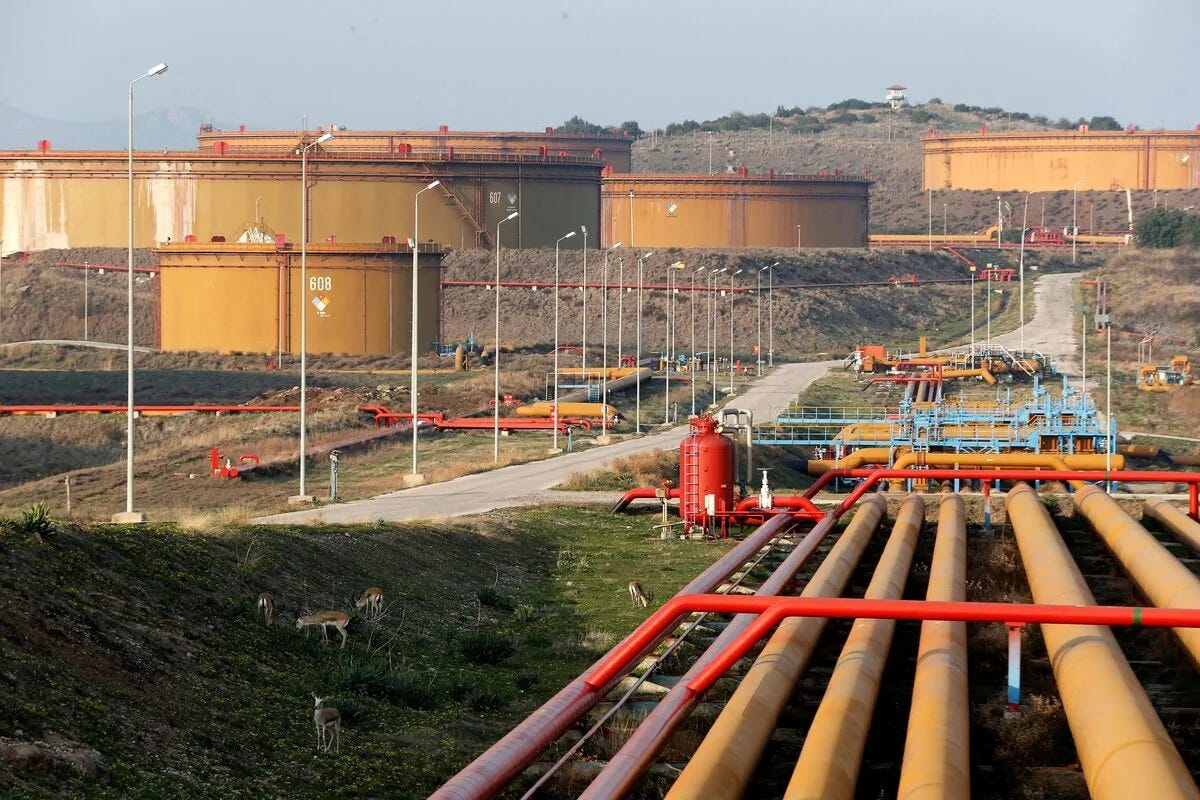
Energy Minister Alparslan Bayraktar made this clear, stating that any new agreement must include a mechanism to ensure full utilization of the pipeline’s capacity, estimated at around 1.5 million barrels per day. He also floated the possibility of extending the line to southern Iraq.
From this perspective, the closure of Hormuz strengthens Turkey’s argument: if the Gulf can be disrupted or closed, diversifying export routes via the Mediterranean is no longer a luxury, but a necessity.
Turkey’s position therefore goes beyond receiving oil it seeks to transform Ceyhan into a cornerstone of a broader energy corridor linking Iraq to Turkey and the Mediterranean under new terms.
A Temporary Fix or a Lasting Reconfiguration?
So far, the numbers suggest that while Ceyhan offers a critical outlet, it cannot replace the الجنوب. Iraq has lost roughly 2 million barrels per day in exports, and markets view the pumping of 100,000 barrels per day via Ceyhan as “not a major shift,” even if it buys time.
Even Baghdad’s projected capacity between 250,000 and 450,000 barrels per day if Kurdish oil is included remains far below pre-war southern export levels, which formed the backbone of Iraq’s economy.
Ceyhan alone will not rescue Iraq, but it alleviates the bottleneck and provides a strategic lever that did not exist weeks ago. More importantly, the March 17 agreement appears less like a final settlement and more like a war-imposed truce.
Erbil has agreed to resume exports through its network under “exceptional circumstances,” while tying this to continued negotiations with Baghdad over trade constraints and security guarantees for companies.
Meanwhile, Baghdad is pressing ahead with rehabilitating a direct federal route to reduce reliance on the region, and Turkey is preparing to leverage the impending expiration of the current legal framework to push for a broader deal.
The revival of Ceyhan, therefore, is neither a decisive victory for Baghdad nor a clear defeat for Erbil. Rather, it represents a reshuffling of the cards among three actors, each seeking to turn crisis into negotiating advantage.