

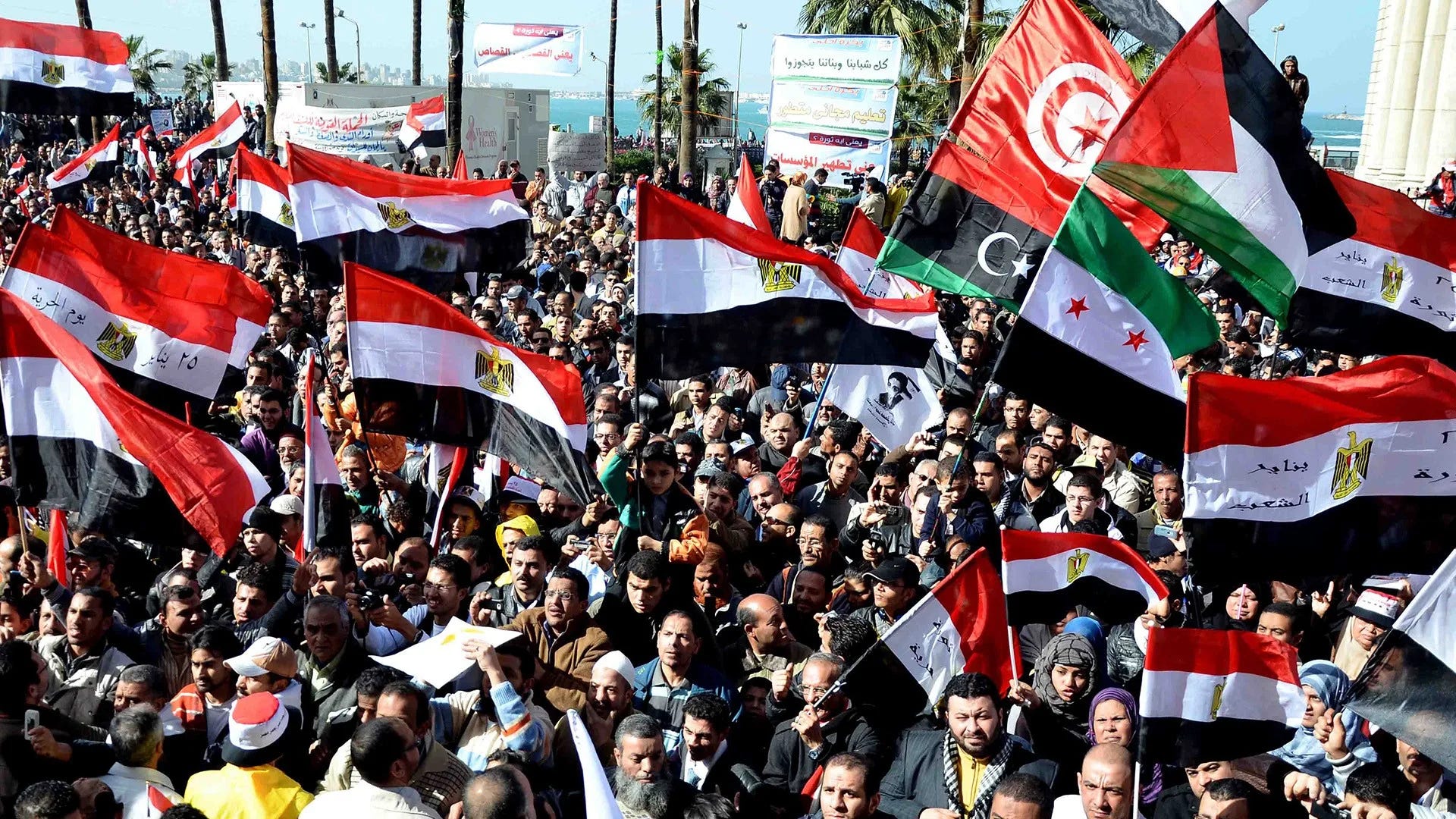
The experience of the Arab Spring generation stands as one of the most profound historical ruptures and complex socio-political transformations in the modern history of the Eastern Mediterranean. In less than a decade, this generation moved from being a central political actor seeking to forge a new social contract based on dignity, justice, and human rights to a fragmented mass subjected to systematic “recycling” by both regional and international systems.
The breakdown of the January moment in Egypt was not merely a temporary political setback or a localized defeat; it marked the launch of a comprehensive engineering project led by counter-revolutionary forces. This project sought not only to suppress protest but to dismantle the “core nuclei” of this generation and redirect its energies almost entirely outside the political arena.
The rebellious citizen, who once broke the barrier of fear in the streets, was recast as raw material to be consumed in alternative economic and security tracks. Roles and boundaries were redefined in ways that ensured the continuity of authoritarian regimes and safeguarded the interests of regional and global powers.
This article attempts to deconstruct the mechanisms through which this generation was contained how it was transformed from an agent of reform or revolution into numbers in exile records, cheap labor in the global market, or silent bodies in their own homelands, crushed by the “dangerous trade-off” between security and freedom.
Dismantling of the Regional Order
Post-2013, the regional order adopted a calculated strategy of fragmentation, designed to eliminate any possibility of cross-border collective action. Within this framework, the phenomenon of “Liquid Alliances” emerged as a central instrument for managing the phase pragmatic, temporary partnerships devoid of ideological or institutional commitments, unified solely by the goal of managing conflicts to prevent the rise of democratic forces, especially those linked to political Islam.
Traditional frameworks of Arab joint action, notably the Arab League—now impotent—were replaced by security coalitions led by the UAE, Saudi Arabia, Egypt, and Jordan. These alliances worked to dry up sources of popular mobilization and criminalize protest under the banner of “counterterrorism.”
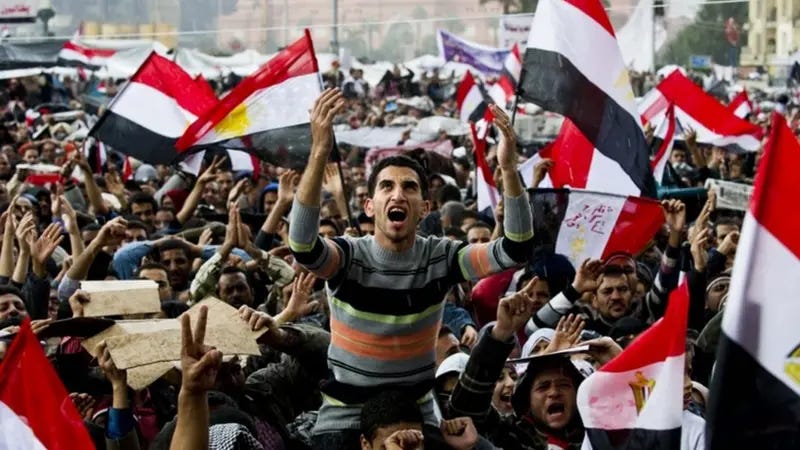
This approach stemmed from a structural anxiety and an ever-present fear of change, leading regimes to adopt a strategy of “destruction followed by abandonment of internal conflicts,” where managed chaos became a tool of control and external security intervention a precondition for sustaining fragile political life.
These partnerships, along with brutal domestic repression especially in Egypt, Saudi Arabia, and the UAE contributed to the erosion of civil society and the creation of hostile economic environments. Young people’s energies were redirected toward proxy wars in Syria, Libya, and Yemen, and later in Sudan, transforming them from advocates of democracy into instruments in broader geopolitical conflicts.
In other words, this generation was “recycled” as fuel for regional conflicts or as bargaining chips in negotiations between regional powers and Europe. This effectively emptied the Arab Spring of its revolutionary and moral content, reducing it to a crisis of “managing massive human flows.”
The regional order didn’t merely confront the generation of change head-on; it restructured the region itself, leaving no space for future political action only pathways to migration or enrollment in transnational armed groups serving cross-border agendas.
The Carceral State and the Making of the “Silent Citizen”
Domestically particularly under the military regime that emerged in Egypt after the July 2013 coup we witnessed the gradual formation of what French philosopher Michel Foucault termed the “Carceral State”: a system that extends beyond prison walls to encompass the entire public sphere, with the modern state at its center.
This state is built upon a strategy of “political extermination” targeting all forms of independent organization, offering society a perilous bargain: security and stability in exchange for the complete abandonment of political rights. Here, the “silent citizen” emerges not as a passive absence of opinion, but as a form of individual resilience imposed by a climate of fear, reinforced by an enormous legal and media arsenal that demonizes activists and criminalizes any criticism of the president or state institutions.
Silence thus became a reward, and the ideal citizen is now one who is detached from public affairs, focused solely on survival amid harsh neoliberal policies that have impoverished the middle class—the same class that was a major engine of the January revolution.
Repression did not stop at the individual. It extended to the families of activists through “proxy punishment” or contagious repression, resulting in what has been termed the “depoliticization” of households. Violations against relatives created internal pressures on youth to withdraw from public life, eroding social capital and dismantling the networks of solidarity that had fueled the uprisings.
At the same time, widespread NGOization of what remained of public activism turned many activists into professionalized “employees” of international organizations bound by technocratic language and funding agendas that distanced them from genuine political struggle and severed their connection with the broader public.
This form of political exit, though offering some individuals relative protection, served to strip the movement of its revolutionary charge and transform it into bureaucratic projects and reports, in a global system increasingly indifferent to democratic and human rights values.
These accumulated pressures gave rise to widespread political depression among Arab youth, with rising levels of anxiety, despair, and a sense of futility especially among those aged 18 to 30. This collapse in morale is not a mere byproduct; it is a central pillar of the counter-revolutionary strategy, which aims to discipline consciousness and convince this generation that any attempt at change inevitably leads to either collective ruin or personal imprisonment.
Thus, regimes succeeded in transforming the 2011 “energy of hope” into energy of fear or indifference, allowing the system to persist without constant confrontation where society itself becomes the enforcer of self-surveillance.
Transnational Exile
Leaving one’s homeland no longer guarantees escape from state control; rather, it marks entry into a new phase of economic and security “recycling” beyond borders. Today, we live in the golden age of transnational repression, as authoritarian regimes pursue their opponents abroad through digital surveillance, abuse of Interpol red notices, and direct threats of assassination or abduction. They even erase dissidents from official records by denying the renewal of essential documents.
Exile has thus transformed from a potential site of resistance into a battlefield ruled by fear, where exiles are often silenced to protect their families back home, turning diaspora communities into withdrawn and isolated groups that prefer difficult individual integration over collective opposition.
Economically, the Arab Spring generation has been absorbed into the global labor market as cheap labor, raw material, or exploited talent. Massive youth and brain drains from Egypt, Syria, and Lebanon have created enormous losses in national human capital, while the Global North benefits from these ready-made energies without bearing the costs of their education or training.
This reality has entrenched a chronic state of waiting for Arab youth, stuck in a kind of social adolescence, unable to start families or build stable futures in their home countries. This drives them to chase any opportunity for migration, even through illegal routes or smuggling networks that trade in their bodies or through recruitment into wars that have nothing to do with their cause.
Reducing the refugee or migrant to a mere “economic unit” reflects the internationalization of the Arab Spring’s failure, transforming it into a bureaucratic file in Brussels or Washington a matter of managing these human masses without allowing them any political impact, whether locally, regionally, or globally. In some of the most tragic cases, they have been weaponized as demographic bargaining chips to pressure the European Union.
Thus, the cycle of “fragmentation and recycling” is complete: those who remain at home are silenced or imprisoned, while those who flee are economically drained or hunted down leaving the regional order insulated from any real threat by the very generation that once held the keys to change.
Ultimately, the fate of Egypt’s January generation should not be read as a total defeat, but as the story of a suppressed potential stifled by a deliberate regional strategy of slow, methodical dismantling rather than brute repression alone.
The counter-revolution succeeded in redirecting this generation’s energy away from collective action and national projects, toward individualized survival whether in the heavy silence of the “Second Republic” or in fragile functional integration across the diaspora, under a new social contract based on suspended security and consumption, not citizenship and rights.
Yet this suppression does not equate to extinction. The revolutionary experience despite its unraveling has reshaped collective consciousness in ways that cannot be erased by force or technology.
The January generation, even amid fragmentation and retreat, still carries in its political memory the “genes of change” born in the squares. Meanwhile, the regimes remain incapable of addressing the structural crises that sparked the initial uprising.
Thus, the real bet lies not in reclaiming the past, but in reconstructing these scattered selves in exile and in silent homes into new solidarity networks capable of penetrating the carceral state and reclaiming agency beyond the maps drawn by the regional order to reproduce its dominance.
