

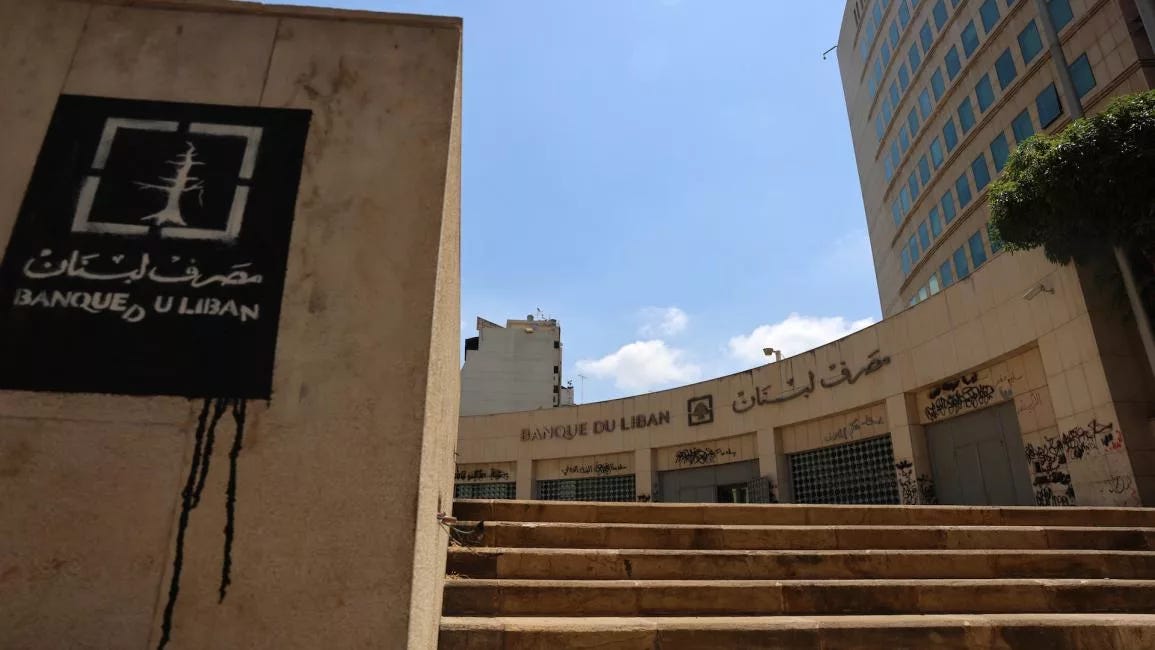
Syria’s banks are now grappling with one of the most complex challenges since the sector’s founding: a massive exposure to the collapsed Lebanese banking system, where deposits worth hundreds of millions of dollars have been frozen.
With the new government adopting a more candid approach in acknowledging financial losses, the key question is: how can Syrian banks regain their footing within the six-month deadline set by the Central Bank?
This article examines the roots of the crisis, the financial realities of Syrian banks, the available restructuring options, and, ultimately, the crucial question: who will shoulder the burden of these frozen deposits?
Syria’s Exposure and the Historical Backdrop
For decades, Syrian institutions and individuals relied on Lebanese banks as a natural extension of the domestic financial system especially due to restrictions on dollar transactions within Syria. Since the 1960s, when Syria embraced a socialist model and imposed tighter capital controls, Lebanon became the “offshore bank” for Syrians.
Following Syria’s 1979 designation as a state sponsor of terrorism and its deepening global isolation, Lebanese banks emerged as a critical channel for trade and finance. After a partial economic liberalization in 2005, financial ties grew even stronger as Lebanese banks entered the Syrian market.
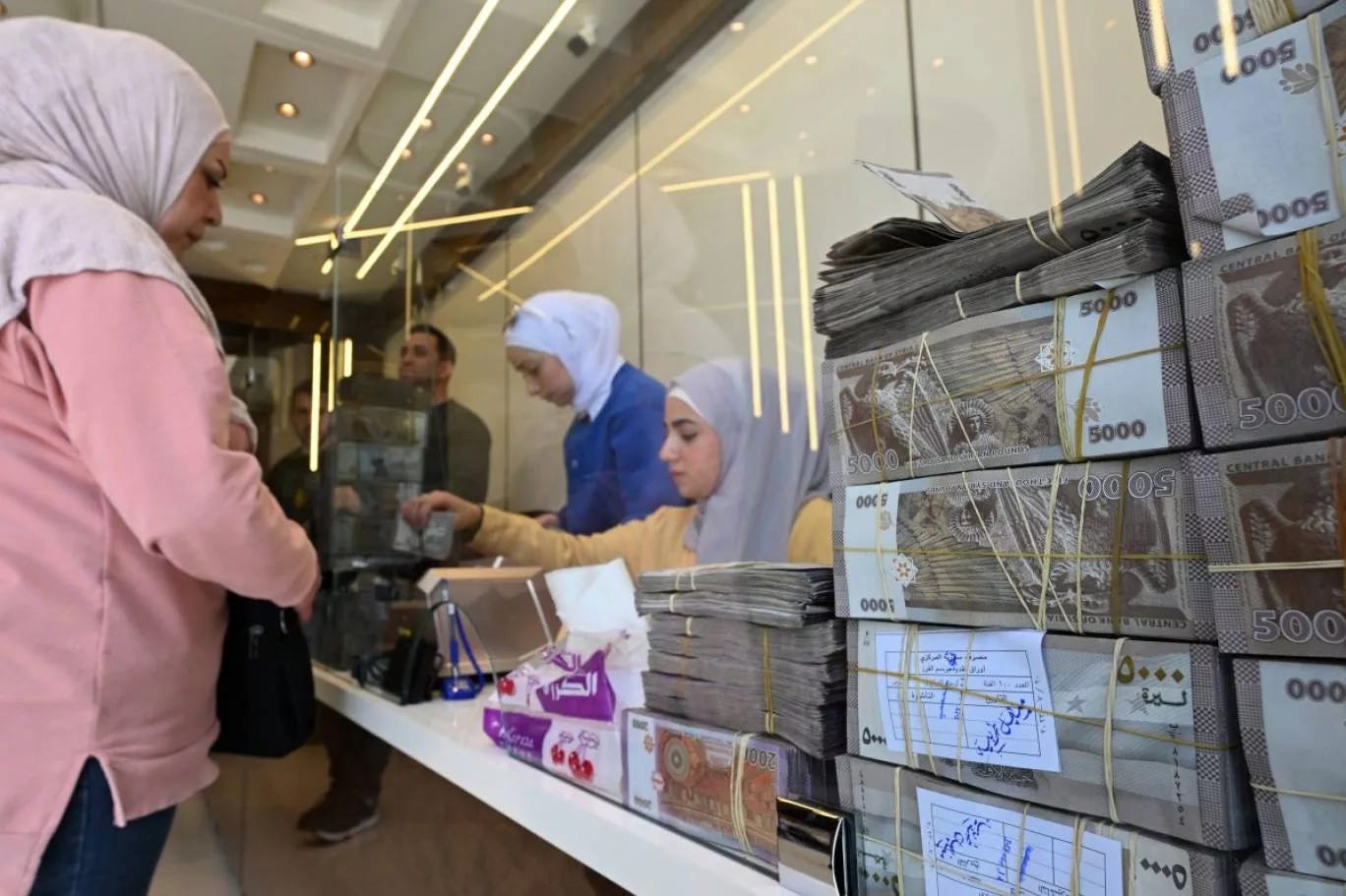
Following the outbreak of the Syrian conflict in 2011, Western sanctions pushed Syrian companies to rely on Lebanese banks to circumvent restrictions until the Lebanese banking sector collapsed in 2019. That long-standing relationship meant a significant portion of Syria’s liquidity was effectively trapped in Lebanon.
These deposits flowed through two main channels: direct transfers from Syrian businesses and traders seeking secure access to dollars and to finance imports, and through the Syrian banks themselves, which opened accounts with Lebanese banks to facilitate foreign operations. Over time, in the absence of viable international banking alternatives, these balances swelled significantly.
After Lebanon’s financial collapse, strict withdrawal limits and transfer bans were imposed, and banks effectively stopped honoring dollar deposits. This wasn’t a political decision, but the result of widespread insolvency among Lebanese banks, which became unable to meet their obligations.
As reported by Reuters on October 21, 2025, the Central Bank of Syria estimates that frozen Syrian deposits in Lebanon now amount to approximately $1.6 billion. The central bank has instructed Syrian banks to fully recognize these potential losses and set aside 100% provisioning within six months marking a shift from external crisis to a direct threat to the financial stability and solvency of Syria’s banking system.
The Financial Standing of Syrian Banks
Recent disclosures from private Syrian banks, published on the Damascus Securities Exchange website, show that total deposits in Lebanese banks stand at about $360.5 million a figure significant enough to reshape the sector’s solvency map.
This exposure highlights the structural fragility of the sector and raises tough questions about banks’ ability to absorb such losses within the six-month timeframe. It underscores the importance of understanding actual capital strength, the nature of realized vs. unrealized profits, and each bank’s capacity to withstand the shock.
On paper, Syrian banks appear to be well-capitalized, with registered capital ranging from 5 billion to 120 billion Syrian pounds. These numbers seemed robust when the banking law was passed in 2001, and 1.5 billion SYP equaled around $30 million.
But with the exchange rate now hovering around 11,055 SYP/USD, the situation looks starkly different: 5 billion SYP equals just $452,000, while even the largest bank with 120 billion SYP holds only $10.8 million in real terms.
In other words, most Syrian banks now operate with actual capital between half a million and 11 million dollars well below the benchmarks that were once enforced in Syria two decades ago.
This dramatic erosion in dollar-denominated capital leaves Syrian banks with limited capacity to absorb external losses chief among them the frozen Lebanese deposits and reveals a deep gap between balance sheet figures and actual financial resilience.
Massive “Paper Profits”
At first glance, the financial disclosures suggest some banks are posting extraordinary profits—largely due to unrealized gains from revaluing assets and foreign currencies. For example:
Qatar National Bank – Syria reports over 2.2 trillion SYP in unrealized gains.
Banque BEMO Saudi Fransi shows around 986 billion SYP in the same category.
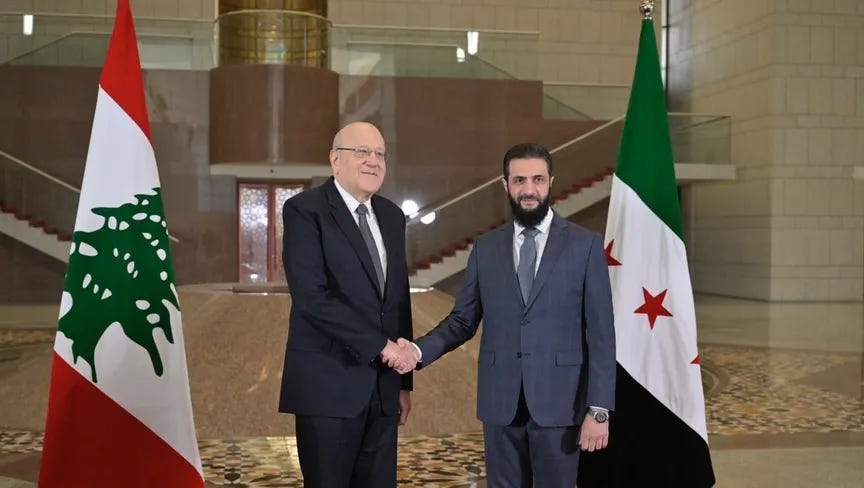
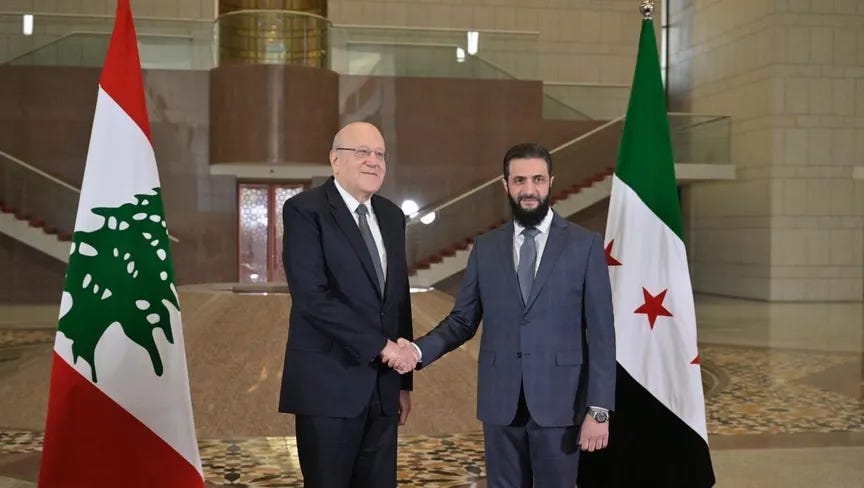
Syrian President Ahmed al-Sharaa receives caretaker Lebanese Prime Minister Najib Mikati at the People’s Palace in Damascus, Syria - @grandserail
But these massive figures do not reflect real financial strength. They’re not derived from banking activities or credit expansion, and they can’t be converted into liquid capital to offset losses from Lebanese deposits. These are purely accounting gains that fluctuate with the exchange rate.
While these numbers may give the illusion of strong balance sheets, actual asset values and liquidity remain weak. Hence, such profits are unreliable foundations for restructuring or crisis absorption strategies no matter how large they appear.
Weak Operating Profitability
A closer look at operating profits those earned from real banking activity reveals a far less optimistic picture. Many private banks post modest earnings or outright losses, despite their impressive paper gains. Examples include:
Shahba Bank: Recorded a realized loss of approximately 77 billion SYP.
Arab Bank – Syria: Reported a loss of about 18 billion SYP.
Larger banks like IBTF and Al Etihad Bank posted operating profits, but these remain modest compared to the scale of unrealized revaluation gains.
This divergence reveals a harsh truth: Syria’s banking sector operates in a deeply depressed environment, with declining credit and weak economic activity. While paper profits may appear large, the banks are struggling to generate real, sustainable earnings to strengthen their capital base or absorb real losses.
The Frozen Deposits in Lebanon: A Direct Threat to Shareholder Equity
The second set of data provides the most sensitive snapshot: the actual amounts of Syrian bank deposits in Lebanese banks and the direct hit they represent to capital and shareholder equity.
Across the private banking sector, total deposits in Lebanon amount to 3.99 trillion SYP, or roughly $360 million at current rates.
Banks with High Exposure: Serious Solvency Risks
Some banks show dangerously high exposure ratios where Lebanese deposits represent a significant portion of their total deposits or even exceed their shareholder equity:
Shahba Bank: Has 569 billion SYP (about $51.5 million) in Lebanon, compared to only 414.9 billion SYP in domestic deposits ($37.5 million). This means 137.2% of its total deposits are in Lebanon the highest exposure ratio in the entire sector. Even worse, shareholder equity of just 46.3 billion SYP covers only 8% of this exposure.
Fransabank Syria: Holds 440 billion SYP ($39.8 million) in Lebanon 58.7% of its deposits with equity covering just 22% of that.
Arab Bank – Syria: Shows a 23.4% exposure, but its equity covers 226% of this on paper. However, this is largely inflated by unrealized profits and does not represent real liquidity.
Banque BEMO Saudi Fransi: Despite a 32% exposure, its equity only covers 47% of the Lebanese deposits.
In all these cases, any partial or full loss of Lebanese deposits would hit shareholder equity first and could seriously undermine these banks’ viability.
Low-Exposure Banks Still Not Immune
Other banks such as IBTF, Bank Al-Sham, Bank of Jordan, and National Islamic Bank show minimal or zero exposure to Lebanon. However, their capital structures still suffer from the same systemic weaknesses plaguing the sector.
Medium-Exposure Banks at Risk of Capital Erosion
Banks like Al Etihad, Syria & Overseas, and Al Baraka have moderate exposure (6%–33%). Though their equity theoretically covers this exposure (109%–235%), much of that coverage is again based on inflated book values, not liquid assets.
The Six-Month Restructuring Challenge
The Central Bank’s decision to require full recognition of frozen Lebanese deposits within six months has triggered concern within the industry. Many bankers see the decision as “justified in principle but unrealistic in timing,” given the scale of losses and the limited financial tools available.
The Central Bank governor emphasized that the move is not political but part of compliance with long-ignored regulations. “Denial is no longer an option,” he noted. “Acknowledging the problem is now essential.”
Some affected banks have reportedly begun preliminary talks with Arab financial institutions—from Jordan, Saudi Arabia, and Qatar about potential acquisitions or capital partnerships. These discussions are in early stages and may take longer than the imposed deadline allows.
For Syria’s new government, this file is a top priority. A healthy banking system is critical for any future economic recovery or reconstruction effort. The six-month deadline represents a real test of whether banks can shift from acknowledging the crisis to building a resilient foundation.
What Are the Available Crisis Scenarios?
Syrian banks now face four main pathways to deal with their losses within the six-month window. Each has global precedents offering lessons and limits:
1. Capital Injections via New Shareholders or Foreign Acquisitions
With the Syrian government unable to inject capital, the most viable option is attracting foreign investors or enabling partial takeovers.
This resembles the Barclays model in 2008, when the British bank avoided collapse by raising $12 billion from Qatari and Emirati investors without government support.
2. Mergers Between Weak Banks
Merging institutions to create stronger entities capable of absorbing losses is another proven path. A notable case was the Lloyds-HBOS merger in the UK (2008), which prevented the collapse of one of Britain’s biggest banks.
3. Creating a “Bad Bank” to Isolate Toxic Assets
This model transfers bad assets to a separate entity. Ireland’s NAMA (2009) is a prime example, allowing Irish banks to resume normal operations. However, this requires specific legislation and funding—making it hard to implement within six months.
4. Orderly Liquidation of Non-Viable Banks
If a bank fails to meet capital or merger requirements, it may face liquidation. The Laiki Bank case in Cyprus (2013) saw small deposits transferred to a solvent bank, while large depositors absorbed part of the losses.
Why a “Capital Increase + Mergers” Strategy Is the Most Feasible
These two tracks are the most actionable under current Syrian law and don’t require new legislation. Capital increases are possible via foreign investors (up to 49%) or local shareholders. Mergers are also permitted under existing legal frameworks and supervised by the Central Bank.
This mix combines immediate relief with longer-term restructuring. It spreads losses over larger balance sheets and injects much-needed liquidity offering Syrian banks a viable path to comply with regulations and preserve financial stability.
Ultimately, the losses won’t disappear but will be distributed based on each party’s ability to absorb them. With the state unable to cover these losses and the Central Bank playing no compensatory role so far, shareholders are likely to bear the brunt whether through capital increases, share dilution, or mergers.
Meanwhile, Lebanon’s banks remain unable to repay in the foreseeable future. The real outcome will depend on the regulatory boldness and willingness of Syrian banks to take tough, but necessary, decisions to prevent a deeper collapse.
