

The U.S.–Israeli war on Iran was launched with expansive objectives, foremost among them the overthrow of the regime, alongside targeting the nuclear and ballistic missile programs, which have constituted the backbone of the Islamic Republic’s long-term strategic investment over decades.
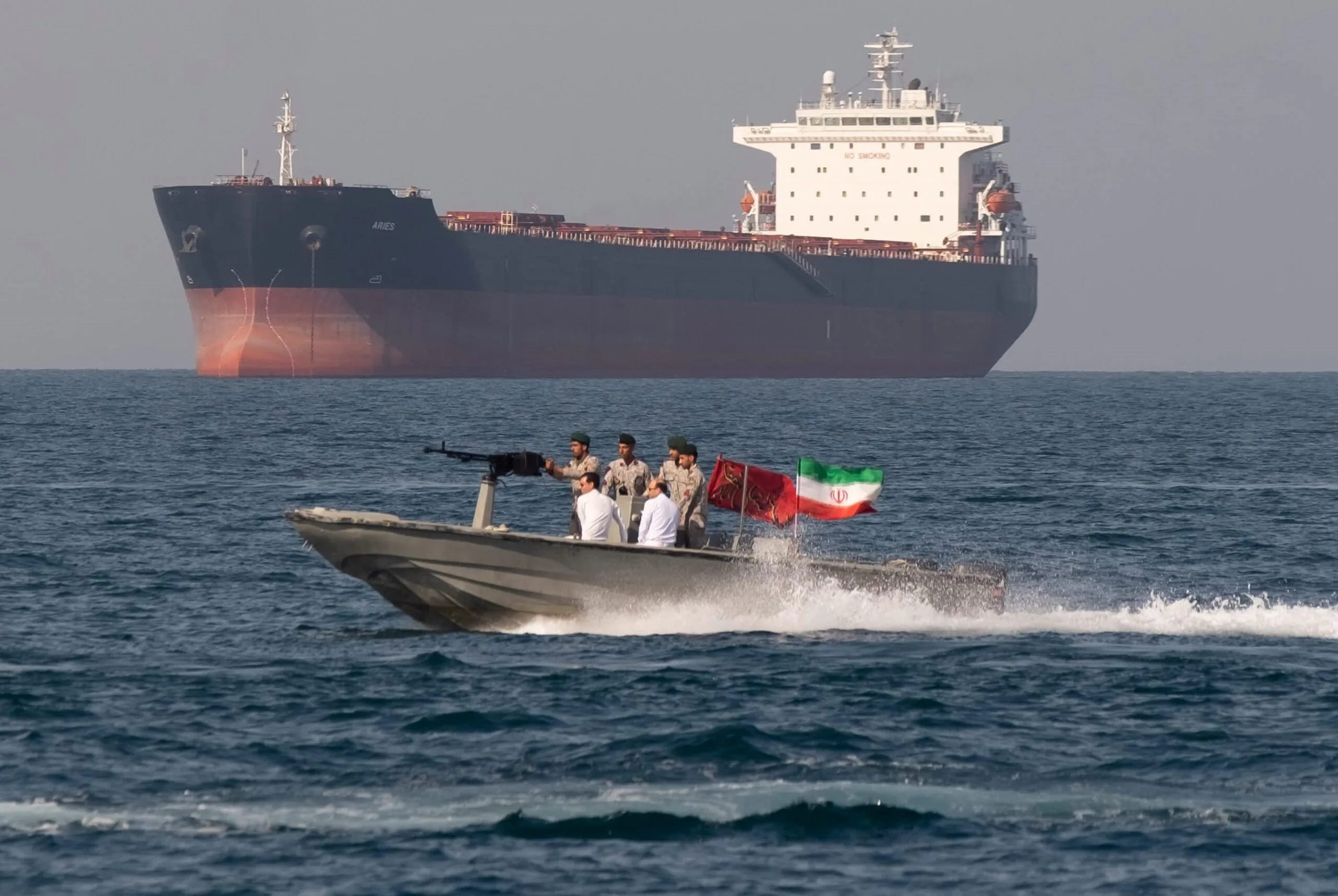
However, the trajectory of the confrontation quickly produced a strategic impasse that reordered the priorities of the conflict. This was reflected in Iran’s demonstrated ability to effectively shut down the Strait of Hormuz from the very first days, pushing global energy markets to unprecedented levels of pressure and transforming the strait into a central instrument in the management of the confrontation.
Within this context, an Iranian approach is taking shape that seeks to transform the Strait of Hormuz into a strategic leverage card one capable of offsetting the costs of war and reconstituting Iran’s regional and international position through a vital asset that generates both revenue and influence.
At the same time, the ongoing bilateral talks between Tehran and Muscat are emerging as a practical entry point for recalibrating the legal status of the strait, within arrangements that would grant the two littoral states exclusive authority over managing transit. This opens the way for the formulation of a new model that combines de facto control on the ground with formal legal structuring.
How Does International Law Address Maritime Straits?
International law rests on a delicate balance between written texts and actual state practice. This extends to patterns of behavior that gradually crystallize over time into stable international conduct, within a framework that prevents every “fait accompli” from automatically becoming a legal rule. Instead, facts are subjected to a complex test that determines which of them may rise to the level of binding obligation.
In this context, what is known as customary international law emerges as the pathway through which practice is transformed into legal rule, through the convergence of two elements: the consistency and repetition of behavior on the one hand, and its association with broad international acceptance accompanied by a sense of legal obligation on the other.
Accordingly, the legal classification of maritime straits is addressed at two complementary levels: a written contractual framework and an accumulated customary one. The United Nations Convention on the Law of the Sea (UNCLOS) constitutes the most important legal framework in this regard, as the comprehensive instrument regulating the use of seas and oceans. It entered into force in 1994, though its foundations extend back to earlier agreements and established customary rules.
Looking to the origins, the Corfu Channel case represented a foundational moment in regulating passage through straits. In its ruling, the International Court of Justice established a customary rule affirming the right of ships including warships to non-suspendable passage through international straits in peacetime.
This principle was subsequently codified in the 1958 Geneva Convention on the Territorial Sea, before being further developed and expanded within the broader framework of UNCLOS.
Within this framework, passage through straits is governed by three principal legal regimes. The first is the regime of transit passage, as established by UNCLOS, which guarantees freedom of navigation and overflight for all ships and aircraft through straits connecting parts of the high seas or exclusive economic zones, without discrimination based on nationality or on civilian or military character.
This right includes the passage of submarines in a submerged state, as this represents their normal mode of operation. The regime itself emerged alongside the expansion of the territorial sea to 12 nautical miles, which resulted in the disappearance of most high seas corridors within straits.
The second regime is innocent passage, the older and more deeply rooted concept in international law. It is defined as passage that is not prejudicial to the peace, good order, or security of the coastal state. This regime applies in the territorial sea, as well as in straits that do not meet the conditions for transit passage. It grants coastal states the authority to take measures to prevent any passage that loses its “innocent” character.
The fundamental difference between the two regimes lies in the scope of authority granted to the coastal state. Transit passage does not permit the suspension or restriction of passage, even in cases of military maneuvers, and allows ships, aircraft, and submarines to fully exercise freedom of transit. By contrast, innocent passage provides a broader margin for coastal state intervention where its security or public order is affected.
In addition, there exists a third regime applicable to straits wider than 24 nautical miles, where parts remain within the high seas or exclusive economic zones. In such cases, freedom of navigation applies in those areas, alongside the application of innocent passage in the portions adjacent to coastlines.
Major International Straits and Their Legal Status
International straits do not operate under a unified legal regime, despite the existence of UNCLOS as a comprehensive framework. Legal arrangements vary depending on geographic, historical, and political specificities. Some straits fall directly under the convention’s rules, others are governed by special treaties, and still others occupy gray zones where customary law intersects with political arrangements.
The Strait of Gibraltar stands as one of the most prominent examples of straits governed by stable customary practice. It constitutes a strategic passage linking the Mediterranean Sea with the Atlantic Ocean and separating Africa from Europe. Navigation through it is governed by entrenched international practice, despite the ongoing political dispute between Spain and the United Kingdom over sovereignty in surrounding areas.
The Strait of Malacca, for its part, represents a vital artery of global trade, linking the Indian Ocean with the Pacific Ocean and extending between the Malay Peninsula and the island of Sumatra. It is managed within a cooperative framework involving Indonesia, Malaysia, and Singapore, and is subject to the navigation rules set out in UNCLOS, ensuring the continuity of commercial flows through one of the busiest maritime corridors in the world.
Similarly, the Bab el-Mandeb Strait occupies a highly sensitive position as the southern gateway to the Red Sea and a critical link between Gulf energy markets and trade routes toward Europe. While it is governed by the regulatory framework of UNCLOS, its strategic importance has made it vulnerable to recurring disruptions that directly affect maritime security and global supply chains.
In contrast, certain straits are governed by special legal regimes, as is the case with the Bosporus and the Dardanelles, which are subject to the Montreux Convention. This agreement grants Turkey regulatory powers that exceed the general framework of UNCLOS, particularly with regard to the passage of warships and the imposition of restrictions on vessels belonging to non–Black Sea states.
Within this diversity, the Strait of Hormuz stands out as a complex case that combines high strategic importance with significant legal ambiguity, given its location between Iranian and Omani waters and its direct connection to global energy security.
The Strait of Hormuz and Iran’s Legal Obligations
The legal situation of the Strait of Hormuz is marked by a high degree of complexity, resulting from the overlap between treaty-based obligations and the interpretive positions of the states concerned. Iran has signed the Geneva Convention on the Territorial Sea, UNCLOS, and the Vienna Convention on the Law of Treaties, but has not ratified any of them, placing it in a legal position that allows broader latitude in interpreting its obligations.
By contrast, the United States and Israel both also non-parties to UNCLOS maintain that the regime of transit passage constitutes a settled rule of customary international law, and is therefore binding regardless of ratification.
When Iran signed UNCLOS in 1982, it declared that certain provisions, foremost among them transit passage, do not reflect existing customary rules but rather represent treaty-based arrangements among the parties. From its perspective, this means they do not apply to non-ratifying states.
This position is reflected in Iran’s national maritime law issued in 1993, which recognizes the regime of innocent passage under specific conditions, without any reference to transit passage or acknowledgment of the Strait of Hormuz as an international strait in the sense defined by the convention.
Geographically, the strait extends approximately 90 nautical miles and narrows at certain points to around 21 nautical miles, placing its waters entirely within the territorial seas of Iran and Oman. Roughly one-fifth of global oil supplies around 20 million barrels per day passes through it, granting it exceptional weight in the global energy security equation.
Most navigation occurs through Omani territorial waters, which offer safer routes within a traffic separation scheme approved by the International Maritime Organization.
The core legal complexity stems from the strait’s location connecting two exclusive economic zones, which—under Article 37 of UNCLOS—would subject it to the regime of transit passage. However, Iran adheres to a different interpretation, maintaining that prevailing customary law enshrines innocent passage as the applicable regime.
Oman, the other state overseeing the strait, ratified UNCLOS in 1989 but, like Iran, requires prior authorization for the passage of warships. The United States rejects this requirement, viewing it as an unlawful restriction on freedom of navigation.
In light of this, the Strait of Hormuz presents a compounded legal situation that can be described as a “legal vortex,” where competing interpretations intersect with strategic interests, and no single governing rule commands consensus.
This reality opens the door for different actors to impose their own readings and deal with the strait according to conflicting conceptions, reflecting a sharp entanglement between law and politics in managing one of the world’s most sensitive maritime corridors.
The War Dilemma and the Path to Resolution
Since February 28, 2026, the Strait of Hormuz has entered a new phase of geopolitical instability following joint U.S.–Israeli military strikes on Iran, which included the assassination of Supreme Leader Ali Khamenei.
Tehran responded through the Revolutionary Guard and the armed forces with a series of missile and drone attacks targeting U.S. bases, sites in the occupied Palestinian territories, and locations in Gulf states, alongside direct warnings of a ban on navigation in the strait, which quickly translated into an actual disruption of shipping.
In the first phase, Iran moved toward a comprehensive closure of the strait. On March 3, 2026, it announced the suspension of passage and carried out direct attacks on vessels attempting to transit. This coincided with the launch of the U.S. military operation “Epic Rage,” which targeted Iran’s command-and-control infrastructure, Revolutionary Guard bases, missile systems, and naval assets.
During this period, 21 confirmed attacks on commercial vessels were recorded by March 12. U.S. President Donald Trump declared his intention to reopen the strait by force, repeatedly asserting that Iranian naval capabilities would be destroyed. However, developments on the ground demonstrated the persistence of effective Iranian control over navigation in the strait.
With the difficulty of imposing a direct military reopening, Iran shifted in the second phase to a model of selective management. It established a “safe corridor” north of Larak Island near Bandar Abbas, where ships are subjected to inspection and verification procedures before being granted passage.
Maritime reports described this arrangement as resembling a coercive “customs booth” system imposed by force, coinciding with legislative efforts in the Iranian parliament to impose fees on transiting vessels. Cases of actual payments in Chinese yuan were recorded.
In the third phase, this model evolved into explicit political discrimination in granting passage rights. On March 27, the Revolutionary Guard announced a ban on vessels linked to the United States, Israel, and their allies, while allowing ships from specific countries including China, India, Malaysia, and Pakistan to pass.
Other states began pursuing direct arrangements with Tehran to secure transit for their vessels. Iran later exempted Iraqi ships from restrictions, reflecting the transformation of the strait into a tool of foreign policy.
These developments sharply affected shipping traffic. By March 31, only 292 commercial vessels had passed under Iranian supervision a decline of approximately 95 percent compared to pre-war levels, according to UNCTAD data. Brent crude prices exceeded $100 per barrel on March 8, peaking at $126, in what was described as the largest disruption to energy supplies since the 1970s.
Turning Crisis into Opportunity
Iran is seeking to leverage the Strait of Hormuz crisis as a means of reshaping its legal status, by introducing a new demand within settlement conditions for ending the war: securing international recognition of its sovereignty over the strait. This aligns with early statements by the new Supreme Leader, Mojtaba Khamenei, emphasizing the continued use of the strait’s closure as a strategic instrument.
Within this framework, Tehran is working to formulate a new protocol for managing the strait, based on requiring prior arrangements for all transiting vessels, including agreements with Iran and Oman and the acquisition of permits before passage even in peacetime.
Under this vision, the two littoral states would become directly responsible for regulating navigation and ensuring security. Iranian Deputy Foreign Minister Kazem Gharibabadi.This indicates the possibility of subjecting ship traffic to joint supervision and coordination aimed at ensuring safety, environmental protection, and the provision of services.
The Iranian proposal is grounded in a legal approach that argues its non-ratification of UNCLOS limits its binding force upon it, and that interpretive space within customary international law particularly in narrow straits within territorial waters opens the door to redefining navigation rules. Within this framework, Tehran proposes the possibility of imposing fees on transiting vessels, provided they are linked to actual services such as security, environmental monitoring, and navigational coordination, thereby granting the measure a defensible legal basis.
In contrast, this approach faces clear legal objections. Prevailing legal scholarship suggests that imposing general transit fees in an international strait contradicts established norms of navigational freedom, even if fees for specific and direct services are accepted. This view rests on the principle that transit passage, as the governing regime for international straits, does not permit coastal states to impose restrictions or financial burdens that constrain this right.
At the same time, bilateral negotiation tracks between Tehran and Muscat have begun at the level of deputy foreign ministers, with the participation of technical and legal teams from both sides. These discussions focus on arrangements for managing the strait and ensuring stability in navigation, reflecting a trend toward consolidating the role of the two littoral states as the primary authority in regulating transit, within a framework of joint governance.
The true significance of this approach lies as much in its timing as in its substance. Concluding a bilateral protocol before the end of military operations would impose a new negotiating reality that would be difficult to reverse later. Even if a broader agreement is reached, the persistence of such a protocol would leave it in place as an independent legal framework between two sovereign states, requiring a separate process to amend or dismantle it.
Thus, the Iranian effort shifts from seeking explicit international recognition of sovereignty over the strait to consolidating that sovereignty through regulated practice anchored in a bilateral agreement establishing a joint governance mechanism that circumvents the need for formal international endorsement.
This reflects a calculated transition from contesting legal texts to imposing legally structured realities, thereby reshaping the rules governing one of the world’s most critical maritime corridors.
What Does It Mean for Hormuz to Become a “Strategic Asset” for Iran?
From an economic perspective, Iran seeks to transform control over the Strait of Hormuz into a stable source of income through the imposition of transit fees. Estimates indicate that approximately 20 million barrels of oil passed daily through the strait; imposing fees on tankers could generate monthly revenues in the hundreds of millions of dollars. When including liquefied natural gas shipments, this could constitute a significant share of Iran’s energy revenues.
These figures gain further significance when compared to the revenues of the Suez Canal, which generates comparable monthly income despite being an artificial waterway under full sovereign control. Tehran is effectively seeking to replicate a similar model in a natural passage with a far more complex legal status.
Politically, Iran’s objective extends beyond immediate economic returns to establishing a precedent that could be replicated in other contested maritime corridors, including regions such as the South China Sea, where sovereignty disputes intersect with vital global trade routes. This makes the Hormuz model a test case for redefining the relationship between geography, sovereignty, and law.
The role of Oman, the other state overseeing the strait, is also critical. Muscat may view the proposed arrangements as an opportunity to secure economic gains and relative stability, particularly given its more limited oil resources compared to its Gulf neighbors, thereby increasing the likelihood of accepting a temporary framework for managing the strait.
Within this framework, Iran is operating according to a pattern aimed at shifting from a position of absorbing economic losses resulting from military strikes to one of active agency—producing a new reality on the ground through which the legal classification of the strait is reshaped. In this sense, the war is transformed from an economic burden into an opportunity to rebalance power dynamics by constructing a sustainable resource and a long-term negotiating lever.
Should the Iranian–Omani arrangement succeed, Tehran would not merely have imposed a new equation of control over one of the world’s most critical maritime corridors. It would also have inaugurated a trajectory of accumulating strategic gains that extend beyond the war itself recasting the strait as a sovereign, revenue-generating asset and a source of enhanced stability, regime consolidation, and regional repositioning, under a legal framework capable of gradual entrenchment over time.
