

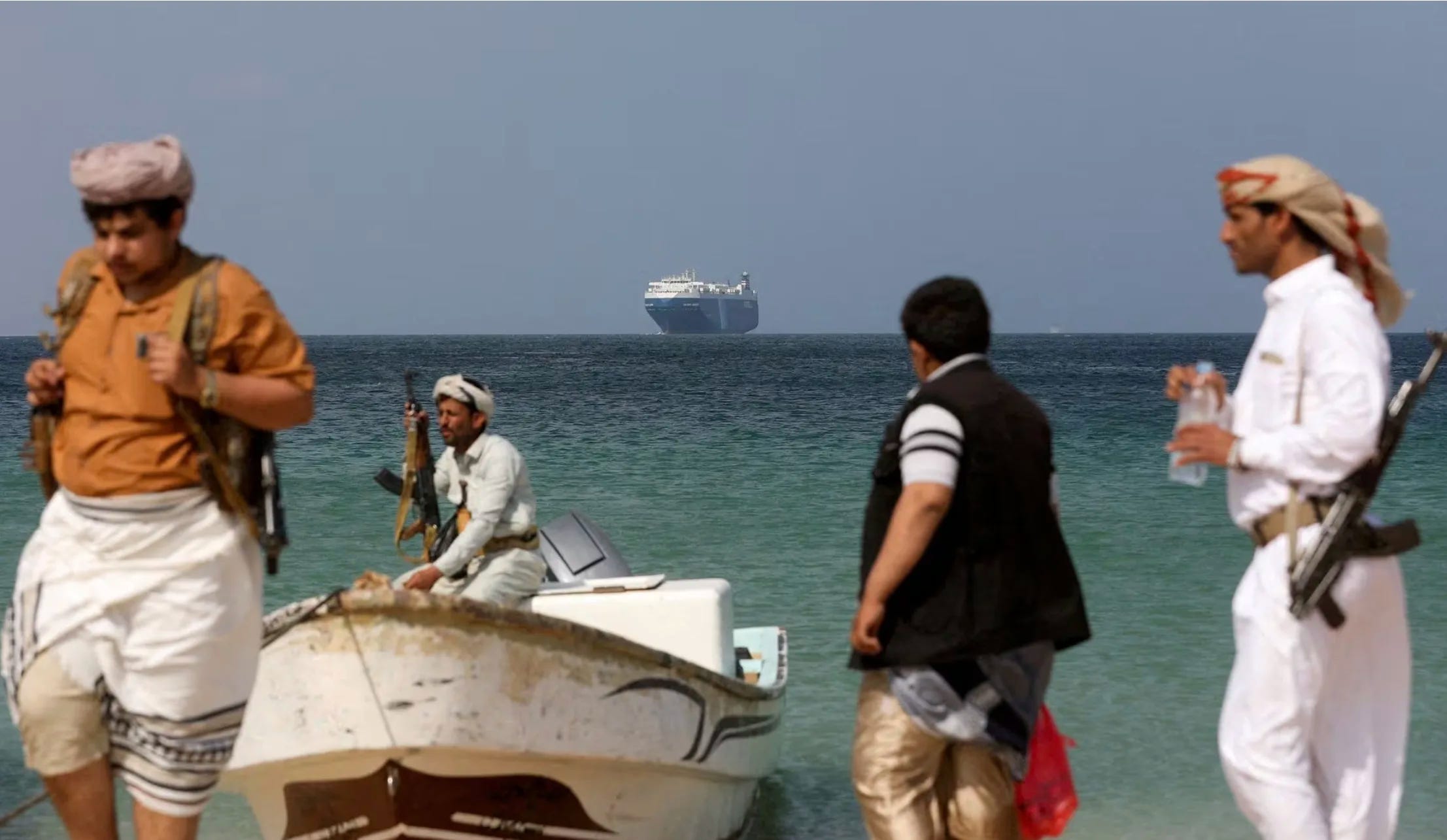
Since the outbreak of the ongoing American-Israeli war against Iran, global attention has been fixed on developments unfolding by the hour. All scenarios remain open regarding the possible expansion of the battlefield from Iran and Israel to the Arab Gulf states and even the opening of new fronts in the countries of the Horn of Africa, where all parties to the current conflict have sought to establish a foothold.
In recent weeks, reports issued by research centers focused on the Middle East citing Western intelligence assessments have pointed to intensified activity in the Horn of Africa, particularly in African states bordering the Red Sea. These movements are reportedly led by the Houthi movement, widely regarded as one of Iran’s most significant instruments in the region.
This comes amid armed skirmishes between the Houthis and their opponents on several Yemeni battlefronts, particularly along the western coast. The escalation also coincides with growing public anger in areas under Houthi control due to the deteriorating living conditions of residents there.
Shared Objectives
A report issued by the Middle East Forum suggests that the Houthi movement is likely to expand its operations beyond Yemen toward East Africa, particularly Somalia. The report argues that the United States made a strategic miscalculation by viewing the Houthis merely as a Yemeni insurgent group. According to the analysis, the Houthis have evolved into a transregional militia by integrating their operatives into networks of armed groups outside Yemen.
This strategy, the report notes, aims to deliberately expand the theater of confrontation toward East Africa as part of a broader effort to enhance their operational capabilities and build lasting regional influence.
Speaking to Noon Post, Colonel Fares Al-Kindi, head of the External Relations Department in the Moral Guidance Administration of Yemen’s Ministry of Interior, said that talk of Houthi expansion in the Horn of Africa is not new. Over the past several years, he noted, the group has worked to strengthen ties with Somalia’s Al-Shabaab movement as well as with pirates and other armed militias, based on a principle of mutual interests among these factions groups that have carried out numerous operations threatening international security. The Yemeni government, he added, had warned of such developments early on.
According to the Middle East Forum report, the Houthis have transferred light weapons, explosives, drone components, and financial resources from territories under their control to Somalia.
The group has also reportedly engaged in training exchanges, technical assistance, operational planning support, and targeting guidance, while using existing smuggling networks to facilitate the transfer of military resources.
Since the early days of the war in Yemen, the Yemeni government has accused the Houthis of recruiting Africans particularly from Ethiopia and Somalia to fight on their behalf. The Houthi movement has never publicly responded to these accusations.
During a visit to Cairo in November last year, Eritrean President Isaias Afwerki warned of what he described as a foreign agenda aimed at militarizing the Red Sea, targeting both the Horn of Africa and Yemen and driven by shared strategic objectives.
In late December, Israel recognized Somaliland as an independent state from Somalia. Houthi leader Abdul-Malik al-Houthi described the move as “an act of aggression against Somalia, Yemen, and the region’s security,” accusing Tel Aviv of seeking to establish a military and intelligence foothold near the Bab al-Mandeb Strait. At the time, he threatened that Israel would face attacks on any military presence it establishes in Somalia.
Concrete Evidence
The Horn of Africa comprising Somalia, Djibouti, Ethiopia, and Eritrea holds significant strategic importance due to its geographic position and proximity to key maritime and land routes, particularly the Red Sea and the Bab al-Mandeb Strait. This strategic value helps explain the competition between the United States and Israel on one side and Iran and its proxies on the other to extend their influence over the region.
Abdulsalam Mohammed, head of the Abaad Center for Strategic Studies, confirmed that research teams at the center have monitored coordination and integration between Houthi activities and those of Somalia’s Al-Shabaab movement as well as other pirates.
According to Mohammed, the Houthis have recruited members of these groups in the Al-Luhayyah area of Yemen’s Hodeidah province over the past five years. He added that the Houthi movement has used drug trafficking and human smuggling networks as cover for military objectives that ultimately serve Iranian interests in the region.
In remarks to Noon Post, Mohammed said there is considerable evidence that the Houthi movement has already expanded its presence in the Horn of Africa. He suggested that the group is waiting for a “zero hour” signal from the Iranian regime to ignite tensions in the Bab al-Mandeb region and across the Horn of Africa.
A report issued by the United Nations Security Council’s Panel of Experts on Yemen on October 17, 2025, also highlighted the growing cooperation between the Houthis and the Al-Shabaab movement. The report noted that such collaboration not only benefits both sides but also aligns with the Houthis’ broader strategy to expand their influence across the region.
The UN report documented joint Houthi and Al-Shabaab operations targeting at least 25 commercial vessels in the Gulf of Aden and the Red Sea using missiles, drones, and rocket-propelled munitions. The two groups have also reportedly coordinated threats against commercial shipping routes and exchanged logistical support networks.
According to the report, the Houthis have trained Al-Shabaab fighters in drone technology, improvised explosive device manufacturing, and techniques for extracting ransom payments from governments.
Hebrew-language media outlets have also expressed concern over the Houthis’ growing presence in the Horn of Africa. Earlier reports in the Israeli newspaper Yedioth Ahronoth warned that “the Houthis are expanding into Africa and moving closer to Israel,” describing the threat as “greater than what we currently see.” The newspaper added that “Houthi prosperity in Africa may continue, and Israel must keep a vigilant eye on developments.”
Political sources believe that Houthi concerns are not driven solely by symbolic solidarity with the Palestinian cause but also by direct security calculations. A potential Israeli presence in Somaliland, they argue, would represent a strategic encirclement from the southwest, especially as Israel has already established military and intelligence footholds across several areas of the Red Sea.
A journalist close to the Houthi movement, who spoke to Noon Post on condition of anonymity, said that beyond the instructions the group receives from commanders of Iran’s Islamic Revolutionary Guard Corps regarding Houthi operatives in the Horn of Africa, the Houthis also fear that U.S. military bases in Djibouti alongside potential Israeli bases in Somaliland could be used to launch strikes against Houthi leadership.
Such fears stem partly from events on August 28 last year, when Israel assassinated several ministers from the Houthi administration in Sana’a an operation that observers believe could be replicated on a larger scale.
“M. A.,” a Yemeni citizen in his fifties living in Sana’a, argues that the Houthi movement is evading responsibility toward citizens in areas under its control by inserting itself into international conflicts unrelated to the Yemeni people. Speaking to Noon Post, he said:
“The Houthis took an honorable stance when they supported the Palestinian people in Gaza, which is a religious and national duty. But as a Yemeni, I reject the idea that we should become a tool in Iran’s hands, especially when the policies of its regime have harmed Arab societies.”
Despite the escalating American military campaign and Israel’s participation in the war against Iran Colonel Fares Al-Kindi of Yemen’s Interior Ministry believes it is unlikely that the geographic scope of the conflict will expand to the Horn of Africa. He argues that the Iranian regime has suffered severe blows, particularly following the killing of Iran’s Supreme Leader, Ali Khamenei.
Political analyst Mohammed Al-Kumaim, however, holds a different view. In remarks to Noon Post, he predicted that the current war could expand and eventually reach the Horn of Africa.
“If Iran continues striking American interests and the United States intensifies its attacks to the point of threatening the collapse of the Iranian regime,” Al-Kumaim said, “the Houthis will undoubtedly enter the confrontation in defense of that regime.”