

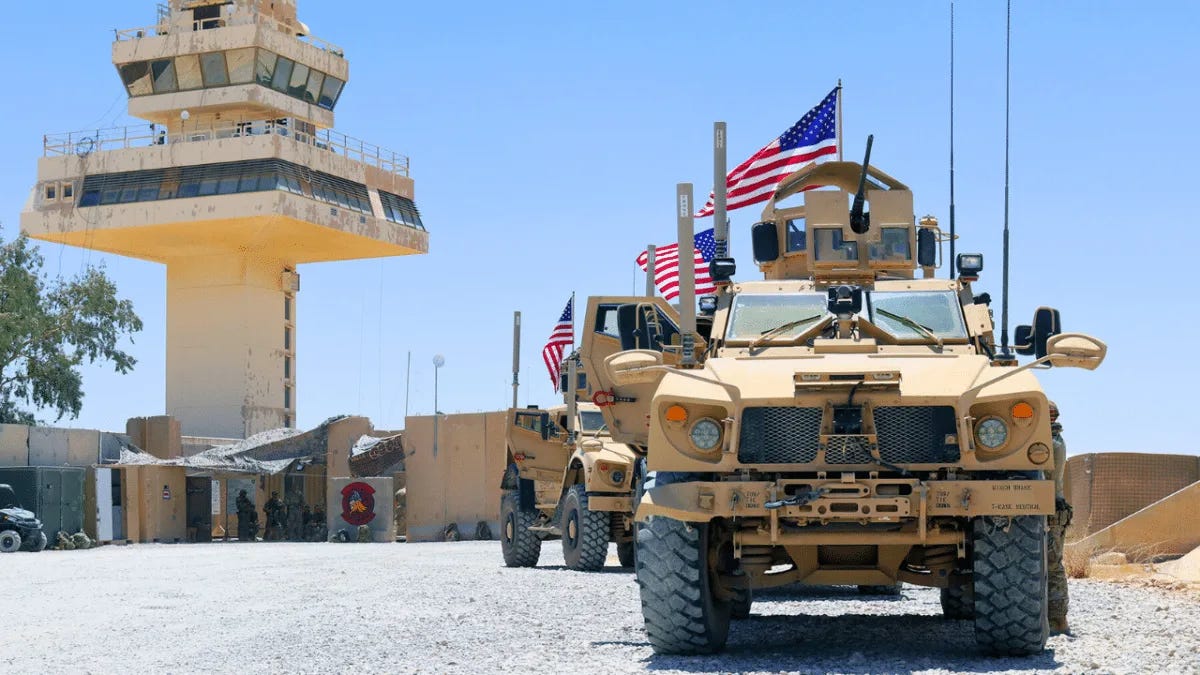
At the outset of 2026, Baghdad ushered in a new chapter by announcing the withdrawal of the last international coalition troops from Ayn al-Asad Airbase in Iraq’s western Anbar province, officially handing over full control to the Iraqi army.
For years, the base had symbolized the American military presence in Iraq and served as a hub for coalition operations against the Islamic State. It also became a frequent target of Iran-backed militias during periods of heightened regional tension, especially after the assassination of Iranian General Qassem Soleimani in early 2020.
Now, the Iraqi government is portraying the withdrawal as marking the end of the “international coalition” era and the beginning of a bilateral security partnership with Washington. The move reinforces Baghdad’s internal messaging on the state’s exclusive control over arms and eliminates any justification for the continued existence of armed groups outside official institutions.
Why Does It Matter?
Ayn al-Asad is one of the largest military bases in Iraq and the most significant logistical and training hub in the vast desert region of western Iraq.
It has hosted American and international forces throughout the campaign against ISIS and afterward, functioning as a central point of coordination between coalition and Iraqi forces in the border province of Anbar.
The base held symbolic weight in the confrontation between Washington and Tehran, having come under repeated attacks by Iran-aligned factions opposed to the US military presence.
Among the most notable incidents was the January 2020 Iranian ballistic missile strike, which came in retaliation for Soleimani’s killing. The strike caused traumatic brain injuries among dozens of US troops, though no fatalities were reported.
Other attacks followed in 2020 and 2021, as Iraqi militias loyal to Iran launched sporadic rocket assaults to pressure for a full American withdrawal.
Ayn al-Asad also carried political and public symbolism. High-level American officials visited the site during their trips to Iraq including then-President Donald Trump in late 2018 solidifying the base’s status as an icon of US presence.
As such, the transfer of Ayn al-Asad to Iraqi control is a pivotal indicator of shifting military dynamics in the country. It closes a chapter that began with the return of US forces to Iraq in 2014 to combat ISIS.
While the withdrawal of the last US troops garnered much attention, it was the culmination of a years-long process of gradually reducing foreign military presence in Iraq. The following is a timeline of key milestones in the US drawdown.
Domestic Implications
The American departure from Ayn al-Asad has immediate political and security implications within Iraq. For years, Iran-backed militias justified retaining their weapons outside state control by citing the US “occupation.”
With foreign forces now vacated from Iraqi bases, these groups face growing pressure to disarm or integrate their fighters into official institutions.
Prime Minister Mohammed Shia’ al-Sudani has repeatedly stated that the government is committed to ensuring that only the state holds arms. He also noted that this objective was contingent upon the full withdrawal of coalition forces.
In late 2025, al-Sudani reaffirmed that the coalition exit would continue through September 2026 due to the diminished ISIS threat. He stated, “There’s no longer a justification for the presence of foreign forces now that security and stability have been achieved. At that point, there will be a clear program to eliminate all weapons outside state institutions this is a demand shared by all.”
The government’s framing of the withdrawal as a sovereignty win has bolstered its position in confronting the militias. Signs of this shift have already emerged: in the final weeks of 2025, several senior militia leaders expressed at least rhetorical willingness to accept state control over arms.
Qais al-Khazali, leader of Asaib Ahl al-Haq, declared support for the principle of exclusive state control over weapons, saying: “We are now part of the state.”
Other groups, including Ansar Allah al-Awfiya and Kataib Imam Ali, issued statements endorsing a shift to political activity and the demilitarization of their roles.
Even leaders within the Popular Mobilization Forces (PMF) the umbrella organization encompassing most of these militias voiced support for regulating arms under state command in accordance with the constitution.
Nevertheless, divisions remain within the factions, especially regarding the practical implementation of disarmament. Powerful groups like Kataib Hezbollah and other Iran-aligned formations continue to approach the issue cautiously.
Analysts suggest some militias may seek new justifications for maintaining their arsenals citing lingering ISIS threats or the ongoing US presence in the Kurdistan Region particularly if they perceive their political influence as threatened or their weaponry as a regional bargaining chip.
What Remains of the US Presence?
Despite the announcement of a “full withdrawal,” the reality on the ground is more complex. A limited number of US troops remain in Iraq though not under the purview of the federal government specifically in the semi-autonomous Kurdistan Region in the north.
According to Pentagon officials, several American advisers and trainers will continue operating from bases in Erbil and Duhok at the request of the Kurdistan Regional Government (KRG).
One of the most prominent of these is Harir Airbase in Erbil province, where US personnel provide support to Kurdish Peshmerga forces and monitor ISIS remnants across the Syrian border.
The Iraqi committee overseeing the end of the coalition mission noted that “coordination with the international coalition will continue regarding the elimination of ISIS remnants in Syria, through their presence at a base in Erbil.”
Iraq’s security remains closely linked to developments in neighboring Syria. Approximately 2,000 US troops are stationed in eastern Syria, relying in part on bases in Iraq especially in Kurdistan for logistics and resupply.
This interconnectedness contributed to the delay in the full US exit from Ayn al-Asad. According to al-Sudani, “Developments in Syria” necessitated the temporary retention of a small American unit at the base until early 2026. As long as US forces remain across the border, the withdrawal file will continue to stir political debate.
For Iran-backed militias, the mission may not be considered complete while American troops are still present anywhere on Iraqi soil. Observers expect such groups to escalate demands for a “total” withdrawal a stance that may not command national consensus given the sensitive nature of Kurdish-US relations.
In the end, the transfer of Ayn al-Asad marks a historic milestone for Iraq: the close of a turbulent era that began with the 2003 invasion, followed by the ISIS war, and years of maneuvering between Washington and Tehran on Iraqi soil.
Yet what follows is just as critical. In the coming months, Baghdad will face a major test — can it assert a new reality: a sovereign state, free of foreign combat troops, capable of disarming its militias, and safeguarding its security through balanced cooperation with the international community?