

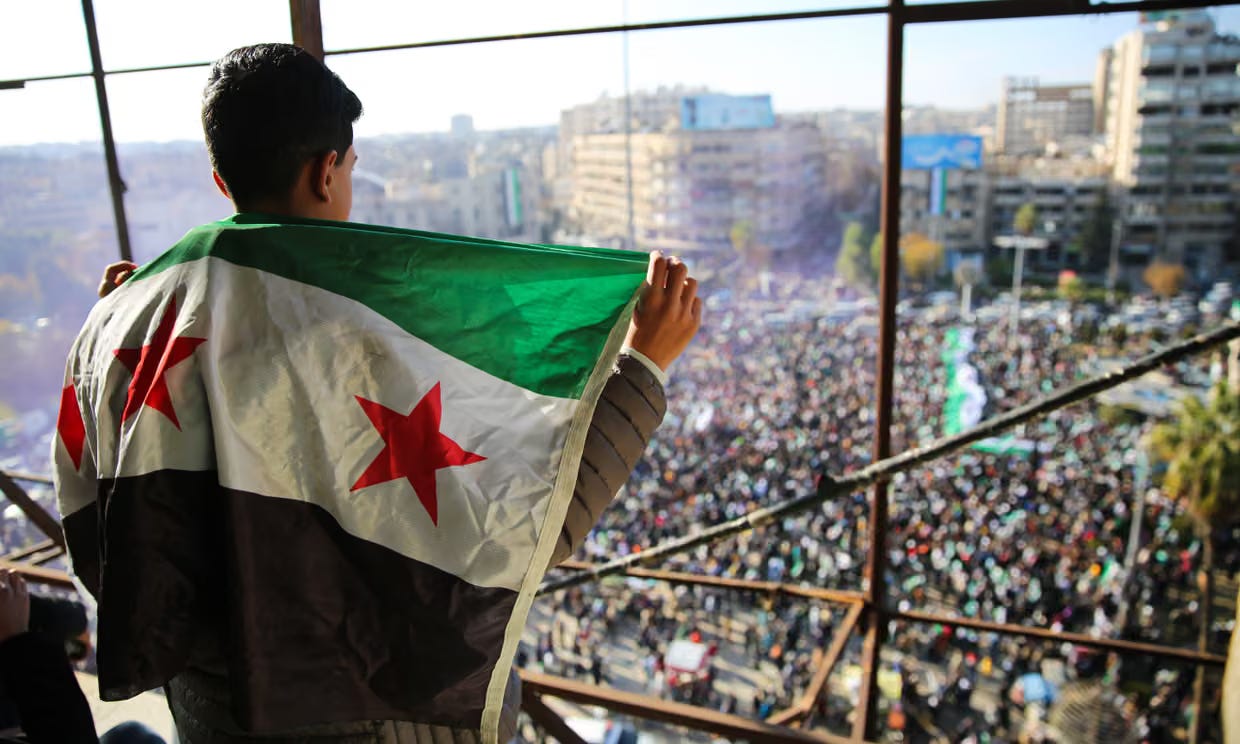
In a moment as monumental as the fall of the Syrian regime, it’s difficult to separate the personal from the collective. These two realms long intertwined through years of exile and loss are now blending to the point where every individual story seems part of a grander narrative.
So I’ll write moving between the two between what I felt, and what Syrians around me experienced certain that Syrian readers will find reflections of their own journeys and joys.
After long years of despair, we Syrians in exile grew numb to the news. The red banners and urgent breaking news no longer gripped us like they once did. Bad news became routine, recurring events we barely acknowledged almost as if we had learned to coexist with pain.
That numbness deepened in Assad’s final year, the year of normalization, when we began to feel we had lost our homeland and perhaps the right to return. Longing for Syria became an ordinary, daily ache. We spoke of it like a distant land we could no longer see or change.
Then came the last week of November. Time stopped in front of our screens TVs or laptops streaming the news live, phones tracking social media, and the expanding swaths of green on the map. Sleep, food, and all human needs lost meaning.
The question “How are you?” was replaced with “How far have they reached?” Everything hinged on the regime’s next move.
Luckily, I didn’t sleep on the night of December 8th. I watched with my own eyes the most significant breaking news of all: “Damascus without Bashar al-Assad.” It was a feeling too complex for words a mix of disbelief, joy, and fear that it might not be real. I couldn’t hold back tears.
I immediately called my childhood friend, and we cried together, celebrating a dream reborn after years of waiting. Only then could I sleep again. This time, knowing that the journey of migration and exile might finally end, and that I had a homeland I could at least visit in the summer and speak of with my friends.
That morning, I woke as if the world had changed overnight. The streets that had embodied our exile for the past decade overflowed with joy. Syrians celebrated in every city across the globe, waving our new flag, hugging and weeping, sharing sweets, and rediscovering a happiness we thought was lost forever.
Most importantly, we chanted in the past tense: “Syria has lived, and the eternal has fallen.” A historic moment witnessed by the entire world.
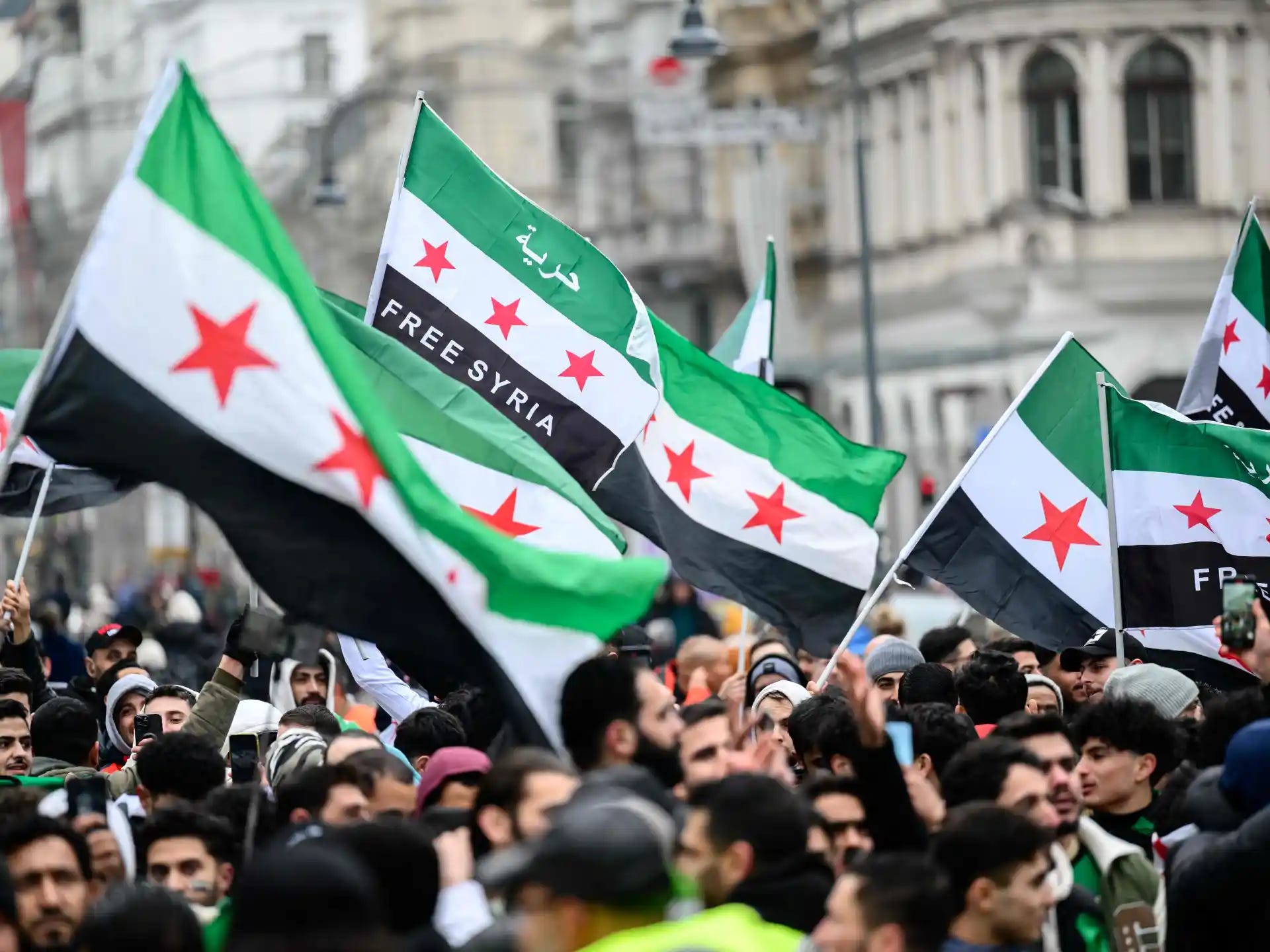
Amid these scenes of jubilation, my father’s tears remain the most vivid image in my mind. He and his generation had lived through both Assads, dreaming of revolution long before my generation was even born.
While we exchanged a lighthearted “Mabrouk,” he and his friends greeted one another with “Alhamdulillah ‘ala salameh” thank God for your safety as if emerging from a long, dark tunnel.
That’s where our conversation began, trying to relive the moment through his eyes.
What was the first thing that came to mind when you heard the news? How did it reach you? Was there someone specific you wanted to contact immediately?
“Joy. Immense joy is what comes to mind when I remember that moment. I was drained from a full week of following the military operations.
I fell asleep and woke to my daughter’s tears telling me the regime had fallen... I cried like never before. A martyred brother stirred within me that’s who I wanted to speak to.”
As both a writer and a daughter, I have to pause here. My father is no exception—he represents nearly every Syrian household. He wasn’t the only one who remembered a martyr in that moment. Every Syrian family carried a name, a face, someone who had vanished but lived on in memory.
If we were to scroll through old social media posts today, we’d find ourselves staring at the images of those we wish could be with us now. This is a moment of joy, yes but one filled with absence. That’s what makes Syrian joy heavier, more layered than any other.
Speaking of this complicated joy, my father added: “We all postponed our fears, or even denied them.”
That hesitation was visible on every Syrian face in the celebrations. Despite the faint unease, each person had witnessed five decades of waiting. So I asked: When you think of fifty years of rule, which scenes or moments surface first? And do those memories come back differently now, compared to before the fall?
“Definitely the moments of my arrest, and times I had to hide or stay off the radar until the ‘security study’ was over... The fear, the anxiety at every checkpoint. The panic in my mother’s and father’s eyes.
In my beloved’s eyes. But also the pride. I chose to oppose the regime when I was just ten years old! At ten, I founded an organization we called ‘The Peace Pioneers,’ in response to the Baath’s ‘Baath Pioneers’... Can you believe that? I can hardly believe it myself.”
His words took me back to my own childhood—our childhood—when we chanted slogans not as heroes, but because we were forced to. We supported the regime, the unity of the nation, ready to defend it with little stomping feet and voices that didn’t understand what they were saying. Today, as we celebrated in the streets, my friend told me she could finally take her children born in France to visit their home in Homs for the first time.
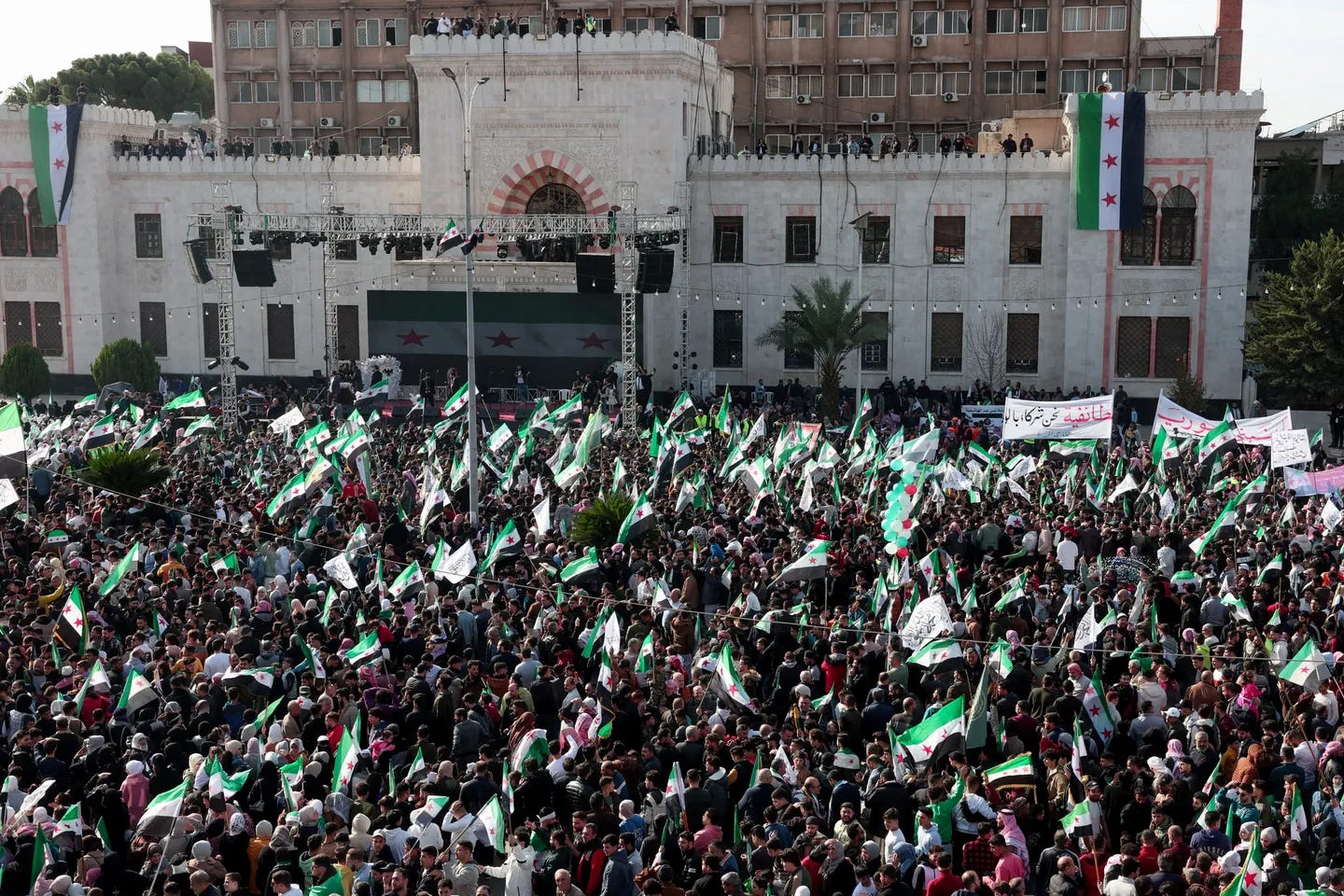
They could now see the country she’d always told them about: their grandmother’s house, her food, the cousins, the gifts, the Eid games. Our simplest dreams had come back to life. The question of return without concessions suddenly seemed answerable.
We joked about passport renewal fees after the fall. One of us said he’d gladly pay whatever it takes, as long as it wasn’t going to Assad. Perhaps the most joyful moment was our unanimous decision: “This summer, we’re going to Syria, inshallah.” Invitations to visit every city flowed.
What can we offer Syria now?
Amid joy and cautious optimism, the fall of the regime marked a turning point a moment to answer: What now? What can we do?
Many of us, especially the youth, began looking for ways to engage. Those who had boycotted the regime had no excuse anymore. Those afraid of civil or political work inside Syria now saw an opening.
Civil society organizations operating from exile began exploring ways to shift their work to Syria. Political actors, too, mobilized. From the very morning after the regime’s fall, we began seeing new initiatives aimed at supporting democratic transition, preserving the revolution’s gains, and realizing its dreams.
In this context, we spoke to “Sara” (a pseudonym), a civil society activist who had worked in northern Syria and in exile. She recalled her joy when she saw vehicles bearing her organization’s logo enter regime-controlled areas, accompanying the liberation: “Suddenly, I felt justice might actually be possible.
When I saw those vehicles entering Damascus, I didn’t care who made it happen. What mattered was that we could now go back to Syria.”
In addition to her organizational work, Sara has begun thinking about operating from the Netherlands. She noted that many exiles had given up hope, saw no point in political work, or weren’t interested at all especially the younger generation who grew up in exile.
But after the fall, many became deeply invested in contributing to their homeland. As a law graduate, she says: “Now’s the time to give back.
What are we doing here? A lot of people still can’t return to Syria right now, but they want to help. We started small held a session on transitional justice. We’re beginning to create spaces for dialogue now that fear is gone. We’re asking: What are our priorities as a Syrian people?”
How does working inside Syria differ from working in exile?
“The priorities are different. Inside Syria, people are focused on economic and daily survival. Outside, we have privileges that let us move beyond that. We have access to organizations and European parliaments. We can, for example, support health and education sectors…”
A year after the fall, we all agree: the reunions between exiled Syrians and their families back home are unforgettable. We watch the videos as if they are our own homes and relatives.
Sara returned to her home in rural Damascus. What was once, in her words, an “impossible dream,” became reality. She recalled the despair of leaving, believing she’d never return and compared it to the feeling of coming home: “I visited our house. I had accepted that we’d never return. We left afraid, terrified. But we came back to people greeting us with ‘Hold your head high’... It felt like nothing short of victory.”
Today, one year after the regime’s fall, life feels like a new chapter. Syrians are trying to find their place in the broader landscape, redefining roles and responsibilities, searching for ways to contribute to rebuild what was destroyed, and to restore the ties severed by displacement. In every city and home, new stories are emerging: of reunions, initiatives, and small projects.
Today, we must rejoice despite the long road to justice. And we must acknowledge: our joy is a collective political act.