

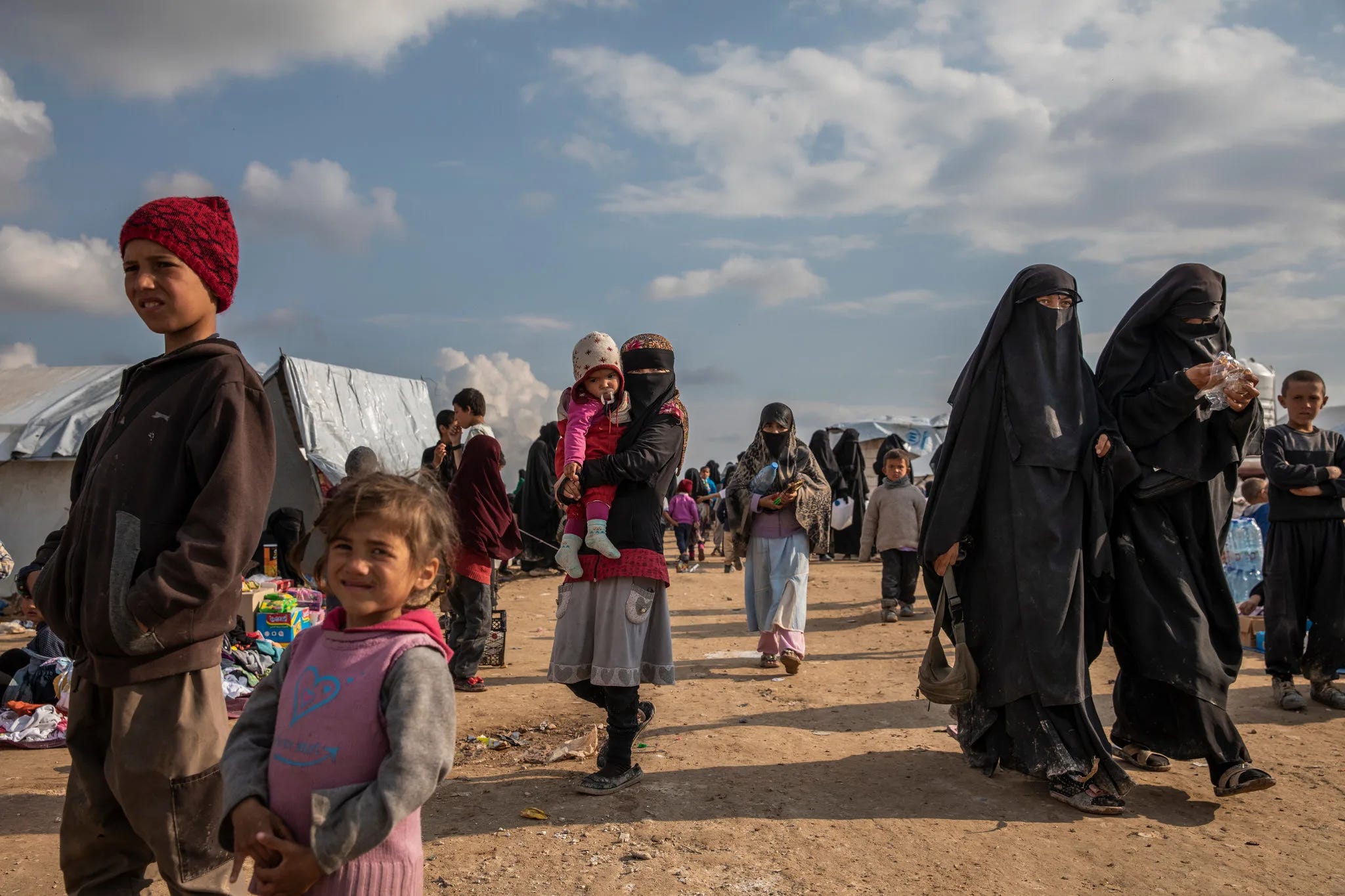
Years after the military collapse of the so-called Islamic State in Syria and Iraq marked by the fall of its last stronghold in the town of Baghouz in Deir ez-Zor province in eastern Syria in 2019 the repercussions of that violent period continue to haunt thousands of families linked to its former members. Women and children, in particular, find themselves confronting a deeply complex social and legal reality.
Across camps scattered in northern and northeastern Syria, as well as in local communities where some of these families have returned, familial ties to ISIS members have become a heavy stigma that shadows every aspect of daily life.
While some women are attempting to rebuild their lives after years of war and living under ISIS control, a generation of children is growing up under extraordinary circumstances, facing challenges related to legal identity, education, and social integration.
This reality raises sensitive questions about the future of this group and how to strike a balance between holding perpetrators accountable for ISIS’s crimes while ensuring that women and children are not condemned to bear the consequences of actions for which they hold no direct responsibility.
Mona al-Mahmoud, the former wife of an ISIS member, says the years following the group’s collapse have been the most difficult of her life not only due to harsh living conditions, but also because of the enduring societal stigma attached to families of former members. Many women who lived through that experience, she explains, now find themselves trapped between a heavy past and an uncertain future.
Al-Mahmoud, whose husband was killed in a U.S. airstrike in 2018, says her life changed entirely after the group’s fall. She became solely responsible for her children under extremely difficult circumstances, all while living in constant fear of the stigma that follows them wherever they go.
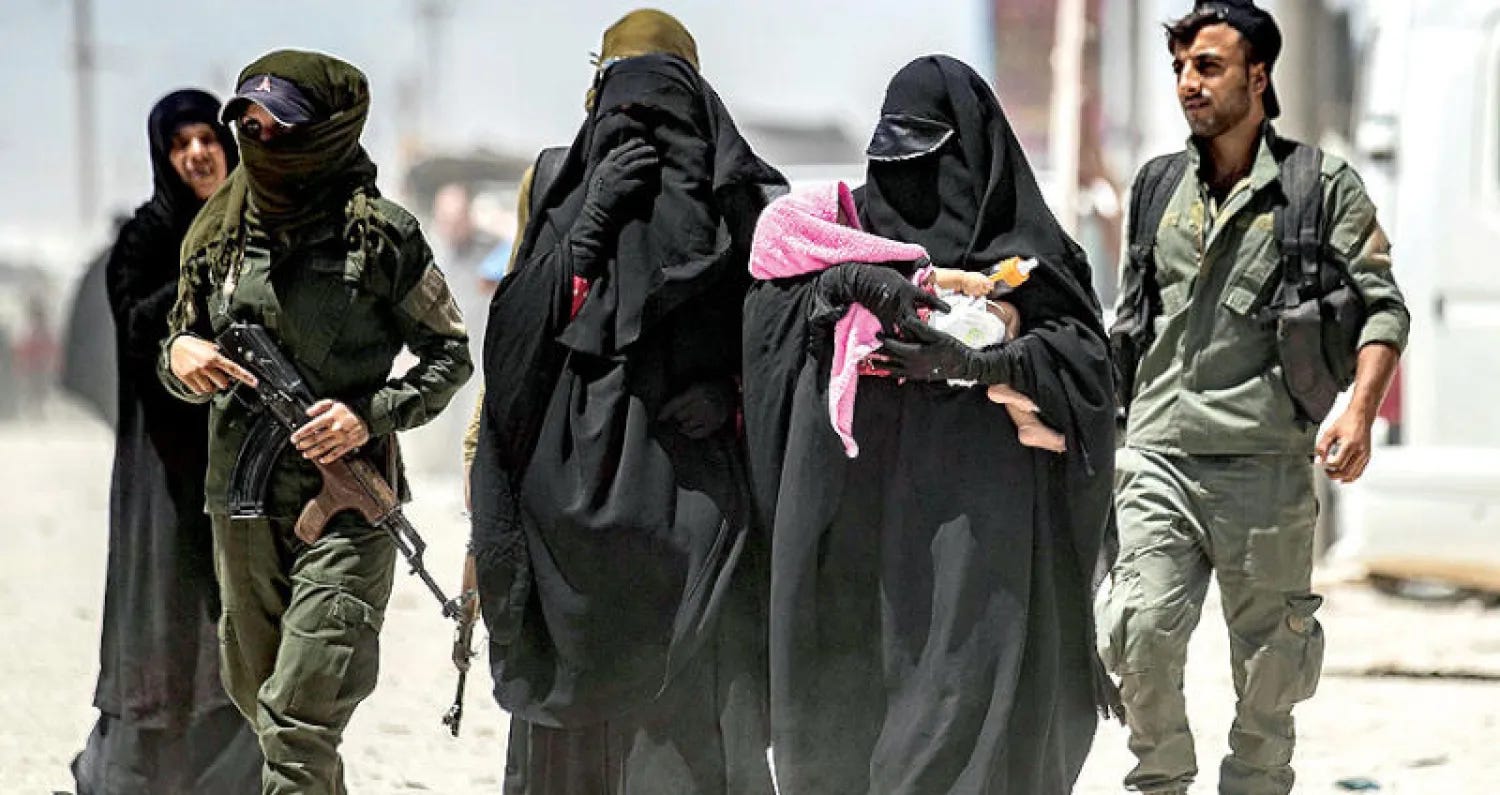
She believes that the children and wives of ISIS members are paying a price for crimes they did not commit, as society often judges them through the lens of their fathers’ past rather than as children deserving of a second chance.
One of the most pressing challenges, she notes, is the lack of official documentation and nationality. Many children lack clear identity papers, preventing them from accessing education and basic services, and creating a persistent sense of instability and fear about the future.
She adds that many women who were married to ISIS members are now trying to start anew and distance themselves from the past. Yet the path toward reintegration is fraught with difficulty, as they continue to face suspicion and accusations. Some women, she emphasizes, were themselves victims of circumstance or coercion, making their reintegration a process that requires meaningful support.
She concludes by saying that many women who lived through this experience want to turn the page and begin again but achieving that requires genuine societal acceptance that allows them and their children to live with dignity like any other members of society.
An Uncertain Future Shaped by Complex Challenges
Dr. Hamida al-Sheikh Hussein, a specialist in modern social criticism, says children from ISIS-affiliated families face intricate legal and social challenges despite bearing no responsibility for their parents’ actions. These children, she argues, stand before an uncertain future shaped by issues of identity and societal acceptance.
One of the primary challenges, she notes, concerns nationality. A significant proportion of these children are born to foreign fighters of non-Syrian nationalities, creating legal complications related to civil rights and identity verification. The issue becomes even more complex in cases involving children of unknown parentage, where no documentation exists to establish identity.
These legal issues intersect with deep-rooted social complexities, particularly in tribal societies where lineage and family affiliation are of paramount importance. This reality may directly affect these children’s futures as they grow older and encounter critical social milestones such as employment or marriage.
Regarding the wives of ISIS members, al-Sheikh Hussein notes that many still adhere at varying degrees to the extremist ideology once promoted by the group. Some adopted these beliefs out of conviction, and this lingering ideological influence may hinder their reintegration and potentially contribute to the transmission of such ideas to their children.
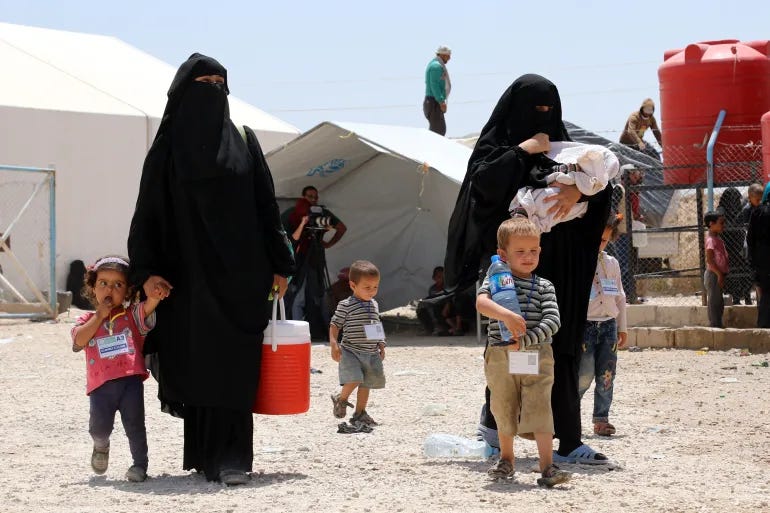
She stresses that addressing this issue requires a comprehensive approach that goes beyond security measures. Essential first steps include legal and governmental solutions that recognize these children and work to regularize their status—whether through granting nationality or establishing legal frameworks that ensure their civil rights.
Humanitarian organizations, she adds, can play a vital role by launching rehabilitation and reintegration programs that open new intellectual horizons and incorporate moderate religious perspectives to counter extremist narratives.
Providing access to education and employment opportunities is also fundamental, as it enables these individuals to build stable lives and participate productively in society.
Ultimately, she concludes, addressing this issue requires cooperation between governments, international organizations, and local communities to prevent this group from becoming a permanent victim of conflict or a potential breeding ground for renewed extremism.
Distrust and Social Exclusion
In many communities that suffered under ISIS rule or its crimes, perceptions of families associated with former members remain marked by suspicion and distrust. This outlook continues to shape the lives of women and children, many of whom face difficulties returning to or integrating within their communities.
In some cases, this perception translates into informal social exclusion—such as refusal to rent homes to these families, limited access to employment, or reluctance to allow children to interact with their peers in schools.
Leila Hamou, a specialist in humanitarian law and psychosocial support, warns that the stigma attached to these families constitutes one of the most serious challenges they face. If left unaddressed, it may produce long-term counterproductive consequences.
Hamou, who has worked on psychosocial support sessions for women leaving al-Hol camp, describes a “closed cycle of marginalization” that could extend across generations. Denying these families opportunities for integration or access to basic rights may deepen their isolation and potentially contribute to the re-emergence of extremism in new and more complex forms.
A Crisis of Legal Identity
One of the most critical issues facing children linked to ISIS families is obtaining official documentation and legal identity. Many were born during the group’s rule in areas without functioning civil registration systems or within camps lacking clear mechanisms for recording births.
In other cases, children face difficulties establishing legal parentage particularly if the father is missing, unknown, or a foreign national. Syrian law does not grant mothers the ability to pass nationality to their children, further complicating matters.
Lawyer Hamdoush al-Ali, a specialist in civil status and human rights, warns that the absence of documentation creates a complex legal and humanitarian problem that could persist for years. Without birth certificates or civil records, these children are denied fundamental rights, including access to education.
He cautions that this situation risks producing an entire generation living in a state of “legal non-existence” individuals not officially registered and lacking legal recognition, with serious long-term implications for both the children and the stability of their communities.
Education: Between Right and Reality
Education remains one of the most critical tools for breaking cycles of marginalization and facilitating reintegration. Yet for children associated with ISIS families, the path to school is often fraught with obstacles.
Civil activist Maha al-Huwaidi notes that stigma remains a major barrier to reintegration, extending beyond social perceptions into education, employment, and legal rights. In Raqqa, she says, many returnees continue to be treated based on familial association rather than individual responsibility—amounting to a form of collective social punishment.
Beyond social and legal challenges, many women and children suffer from lasting psychological trauma stemming from years of war, displacement, and life in camps.
Mental health counselor Intisar Mohammed explains that stigma compounds these wounds, often resulting in isolation, depression, anxiety, and a persistent sense of insecurity. Children, in particular, struggle to understand why they are rejected, which can lead to feelings of injustice and long-term emotional distress.
Journalist Ahmed al-Assaf warns that continued marginalization could increase the risk of future radicalization. Social isolation and lack of integration may create fertile ground for extremist ideologies to re-emerge.
Without early intervention and reintegration efforts, he cautions, cycles of extremism may persist across generations.
In mid-April 2024, Amnesty International released a report documenting serious violations against detainees in northeastern Syria following ISIS’s defeat.
The report estimated that around 56,000 individuals were being held—many arbitrarily and indefinitely—under conditions involving torture, inhumane treatment, and gender-based violence.
Amnesty Secretary General Agnès Callamard stated that the Syrian Democratic Forces committed war crimes, including torture and unlawful killings, while noting that the United States played a key role in establishing and maintaining the detention system.