

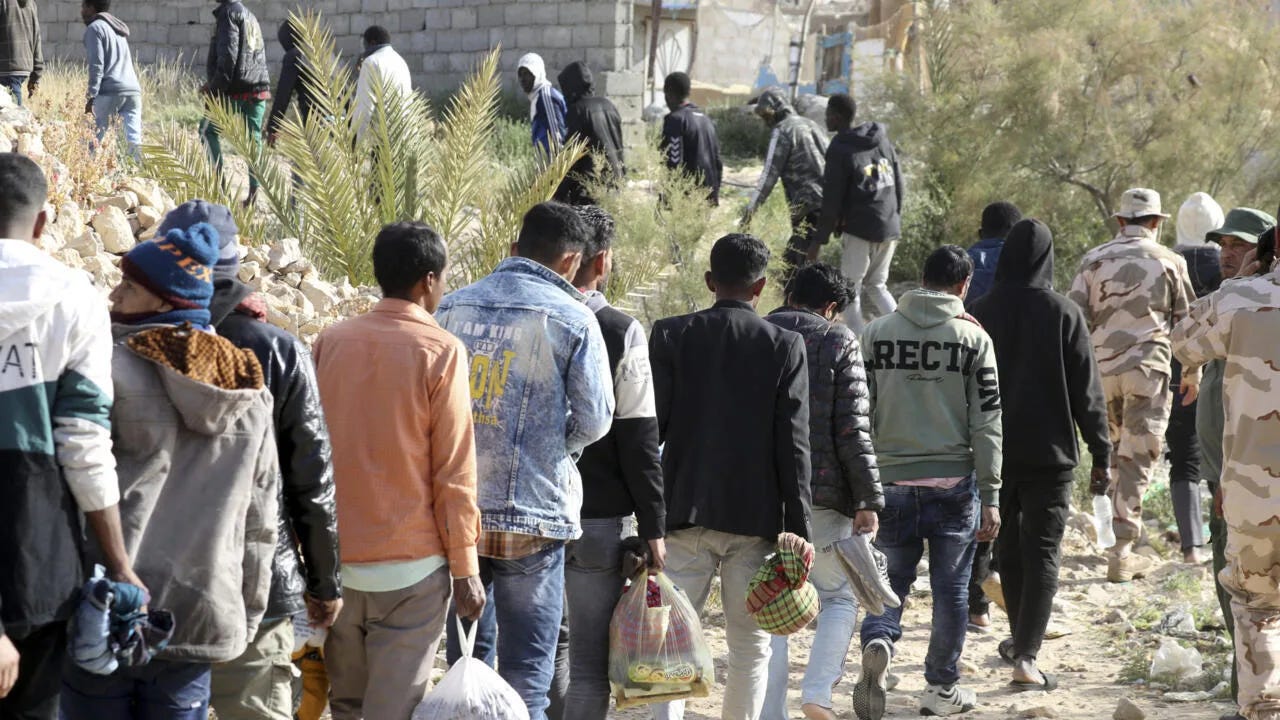
In a small village in Egypt’s Sharqia Governorate, Mohamed Salah sits among a group of locals searching for any trace of their missing relatives. These young men left Egypt two years ago on an irregular migration journey through Libya, one that ended in tragedy when their boat sank off the Greek coast.
While some bodies were recovered and returned, Mohamed’s brother and several others from the village never came back. Residents believe many of them were not on the ill-fated boat, but were instead detained in Libya. Yet no official confirmation has ever been provided.
Mohamed’s brother is just one of thousands of Egyptians believed to be missing in Libya. According to the International Organization for Migration (IOM), roughly 4,200 irregular migrants are currently held in official Libyan detention centers, with another estimated 3,000 in informal facilities run by smuggling networks.
Although these figures include various nationalities, Egyptians account for the majority due to the country’s proximity to Libya’s eastern border.
The Migration Scenario
In 2016, Egypt woke up to the tragic news of a migrant boat capsizing just 12 kilometers off the coast of Rashid (Rosetta) in Beheira Governorate. The catastrophe, later dubbed the Rashid Boat Disaster, claimed the lives of 237 people, including Egyptians, Syrians, and other African nationals.
At the time, Egypt was both a source and a transit country for irregular migration sending migrants abroad while also serving as a departure point for others.
Following that disaster, Egyptian authorities ramped up efforts to prevent irregular migration from its shores. During the first Egypt-EU summit in Brussels on October 22, 2025, President Abdel Fattah el-Sisi emphasized his country’s success in halting such journeys, stating: “Not a single boat has left Egypt carrying irregular migrants to European shores since 2016.”
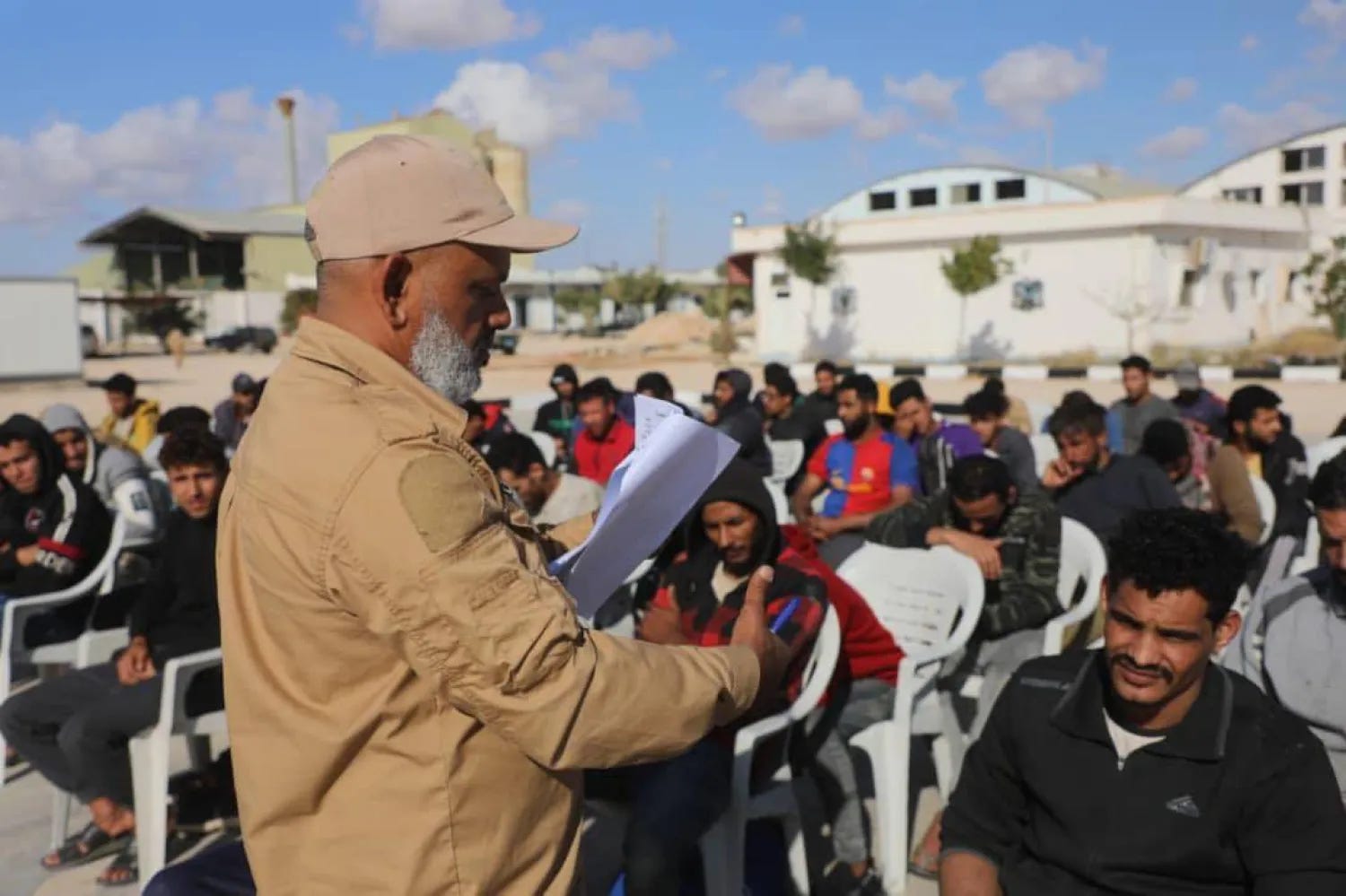
While technically accurate, this assertion overlooks a crucial shift: irregular migration routes have not ceased but merely changed course. Instead of departing by sea from Egyptian shores, migrant -primarily Egyptians- now travel overland through the western desert into Libya. From there, they attempt to cross to Italy or Greece via the Mediterranean.
According to Abdel Qader Abdel Rahman (a pseudonym), he traveled from his village in Abnoub, Assiut Governorate, using a network of smugglers. His journey began with a domestic flight to Borg El Arab airport, followed by travel to Egypt’s western border. There, a smuggler handed him off to another across the border.
A vocational school graduate, Abdel Qader was lured by friends already in Italy who shared pictures of comfortable lives and high wages. Through them, he was put in touch with a smuggler via a social media page. But upon arriving in Libya, reality hit hard.
His friends weren’t in Italy they were still in Libya, working unpaid on an olive farm. They had been coerced into contacting others from their village, enticing them to follow the same path under threat of death if they refused.
Abdel Qader spent several months on that farm, enduring abuse and severe malnutrition. Eventually, the smuggler forced him to call his father and demand a ransom of 150,000 Egyptian pounds to secure his return.
His father raised the amount through high-interest microloans, reportedly at rates of up to 100%. The payment was transferred via Egyptian intermediaries, and Abdel Qader was eventually sent back home physically broken and severely undernourished.
His story echoes that of Mohamed Salah’s brother, who, despite being aware of the risks, was convinced by promises of a “free” trip to Libya. In this scheme, no upfront payment is required; instead, migrants are told the costs will be deducted from their future earnings in Italy.
But upon arrival, families receive extortion calls demanding up to 200,000 pounds. Those who can’t pay are held in warehouses, subjected to torture, forced labor or even killed.
Al-Raddaa Prison
Khalifa Mostafa was among 200 relatives of missing Egyptians who gathered at the Ministry of Foreign Affairs in Egypt’s new administrative capital in December. They were seeking any information about their loved ones Khalifa’s nephew, Ziad Mostafa Khalifa, disappeared three years ago at the age of 16.
A smuggler had persuaded his father that because Ziad was a minor under European law, he would qualify for asylum in Italy and eventually gain citizenship. The smuggler charged the family 150,000 pounds.
However, the boat carrying Ziad was intercepted by Libyan authorities and returned to shore. Ziad and others on board were placed in detention centers. According to information obtained by his family, Ziad was sent to Mitiga Prison, commonly known as Al-Raddaa Prison.
Controlled by a powerful militia known as the Special Deterrence Force, or Raddaa Force, the prison was originally established a year after Muammar Gaddafi’s fall. Initially tied to the military council in Tripoli, it later came under the Ministry of Interior’s authority.
Though it was officially dissolved by the Government of National Accord (GNA) in 2018, it was soon reconstituted as an independent entity: the Special Deterrence Apparatus for Combating Terrorism and Organized Crime.
Led by Major Abdel Raouf Kara, the group remains loyal to the GNA, which is hostile to the Cairo-backed Libyan National Army under Khalifa Haftar.
While the exact number of Egyptians detained in Al-Raddaa remains unknown, it’s frequently mentioned in disappearance reports. One such case is Atef Mohamed Habib, who vanished in August 2016 while holding a valid passport.
After his disappearance, several individuals contacted the family, demanding money in exchange for his release claiming he was held at Al-Raddaa. The family reached out to numerous official channels, but received no conclusive information.
Last Hopes
With no reliable information from authorities, many Egyptian families have turned to social media to search for their missing loved ones. Dozens of online groups have been created to share photos and seek leads. Among those searching is Abanoub Atef, cousin of 16-year-old Ibram Khaled Shamoun, who went missing in Libya in October.
“Ibram is my uncle’s only son,” Abanoub says. “He wanted to help support the family because of poverty, and his friends who migrated before him made it all sound so promising.”
The family only learned of Ibram’s departure after he had already left. Smugglers often tell migrants the journey will be free, with costs later deducted from their Italian wages. But once en route, Ibram called home requesting money. Upon arrival in Libya, another demand followed bringing the total cost to 420,000 pounds. The father took out microloans and sold livestock to pay.
Even then, an additional 30,000 pounds was requested, which the family didn’t pay because Ibram went missing.
They reached out to Egypt’s Ministry of Foreign Affairs and the public prosecutor, especially since others from the same village vanished during the same journey. But no answers have been provided.
According to Egypt’s Ministry of Migration, 14 governorates are the most common sources of irregular migrants, with Dakahlia, Beheira, Kafr El-Sheikh, Sharqia, Assiut, Sohag, and Fayoum among them.
A Complex Web
Migration researcher Amira El-Tahawy notes that since 2016, many drowning incidents have occurred, while other migrant boats are turned back by Libyan coast guards both official and rogue. Those onboard are often detained, delaying any clarity about who survived or perished.
El-Tahawy criticizes the Egyptian embassy’s handling of the crisis. Families rarely receive support unless the migrant is involved in a criminal case. In other situations, intervention only comes if the IOM or Libya’s anti-illegal migration agency pushes for deportation.
She adds that while the embassy made some detention center visits in November, the efforts were short-lived. Many families still cling to hope that their relatives are alive, held by non-state actors, and remain vulnerable to constant extortion.
No accurate figures exist on how many Egyptians are missing in Libya, but certain areas—like Abnoub in Assiut—have reportedly lost hundreds. Libya’s east-west division complicates the situation further. An informal agreement between the rival governments allows limited repatriation through shared border crossings with international oversight, but coordination is weak.
Both Egyptian embassies in eastern and western Libya have limited effectiveness. The western embassy reportedly operates just two days a week.
El-Tahawy refutes claims of organized kidnappings by armed gangs. She says most disappearances stem from disputes between smugglers and intermediaries, citing the Greece shipwreck case where survivors were threatened to continue luring others. When they refused, families were blackmailed.
Families also fall victim to scammers who pose as informants claiming their relatives are imprisoned, then demand money for their release. Desperate, many families pay, hoping for a miracle.
El-Tahawy criticizes Egyptian authorities for treating grieving families with disdain, blaming them for their children’s decisions to migrate irregularly.
Official Response
Following a protest by families of the missing, the Egyptian Ministry of Foreign Affairs released a statement confirming it is coordinating with Libyan authorities at the highest levels to determine the fate of the missing citizens and ensure proper action is taken.
The ministry said efforts are underway in both Tripoli and Benghazi through the Egyptian embassy and consulate, in coordination with Libyan institutions and relevant departments in Cairo.
These efforts reportedly led to the release of 131 Egyptians from a Libyan detention center on November 27. Their return followed intensive negotiations between the embassy in Tripoli and Libyan authorities.
Meanwhile, Libya’s Volunteer Rescue Room, which tracks missing persons, confirms a sharp rise in reports of missing Egyptians -particularly minors- over the past two years. Many, it notes, entered the country legally via Libyan airports.
The group adds that the complexity of Libya’s internal divisions and overlapping authorities makes it difficult to track detainees. Migrants may be held in facilities under the Ministry of Migration or imprisoned under the Ministry of Interior for unlawful entry. The presence of smuggling gangs and unofficial detention centers further muddies the waters.
Egypt may have sealed its coasts against irregular migration, but it has yet to resolve the economic pressures that drive its youth to risk everything. The sea may be calm but the fate of thousands remains in peril.