

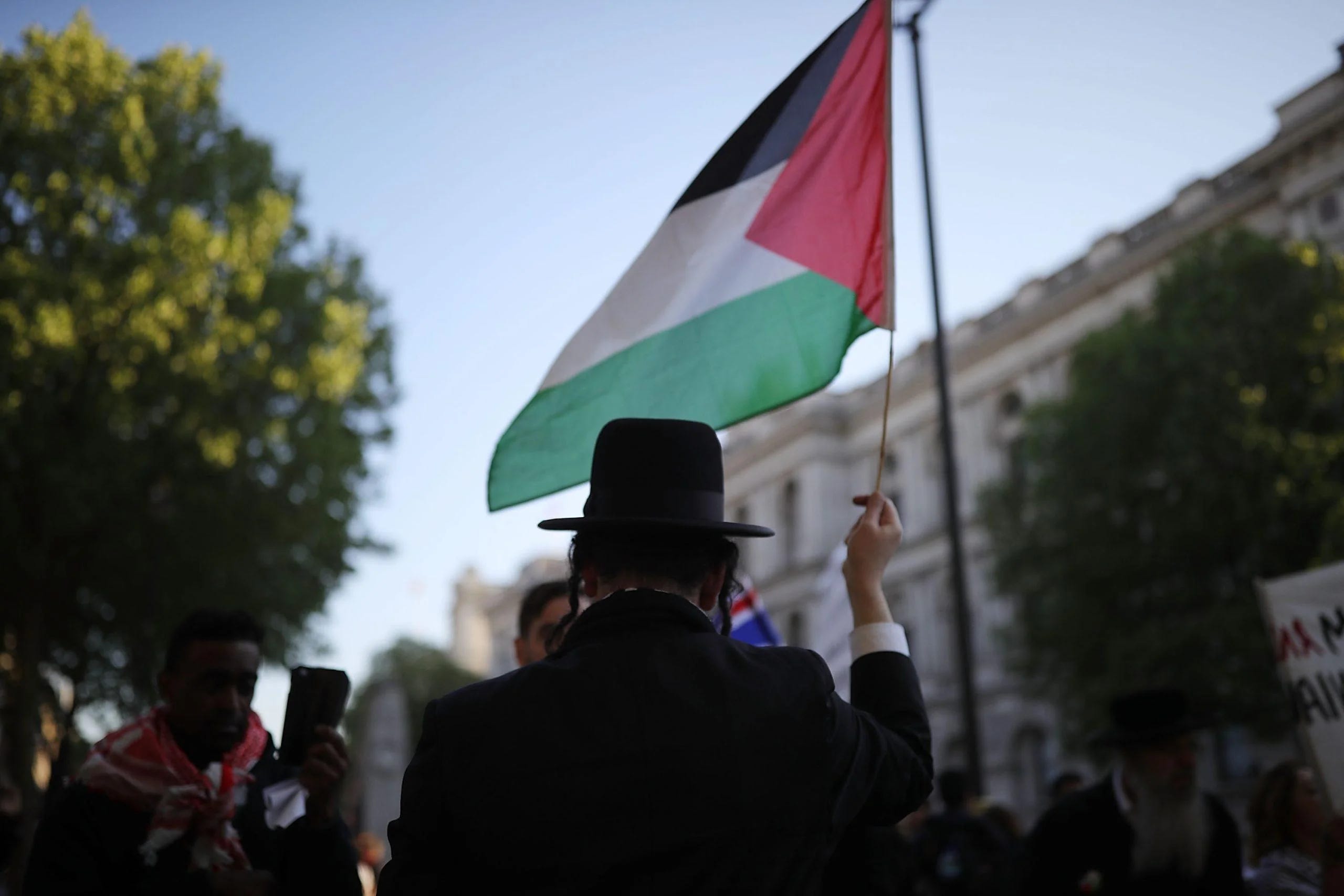
In dominant Western political and media discourse, “Israel” is widely presented as the state representing Jews everywhere. Any criticism of its policies or foundational nature is often swiftly reduced to the charge of “antisemitism.”
Yet this narrative turned into a tool of moral and political blackmail clashes with an uncomfortable reality: the existence of Jews who fundamentally reject Zionism, deny the legitimacy of “Israel,” and publicly stand with Palestinians against the occupation.
Among such groups, Neturei Karta stands out as a uniquely unsettling case: a movement of Jews who view Zionism as a dangerous religious deviation, and “Israel” as an illegitimate entity both theologically and morally.
They regard what has been done to Palestinians as a crime that cannot be justified not by the Holocaust nor by any modern nationalist rhetoric.
Origins and Historical Roots of the Schism
Neturei Karta did not emerge in a vacuum. It must be understood in the broader historical context of Orthodox Jewry in Palestine before the establishment of the Israeli state.
Contrary to Zionist claims that Palestine was “a land without a people,” cities like Jerusalem hosted longstanding Jewish communities under Ottoman rule communities that lived as religious minorities, not as agents of a sovereign political project.
These communities, known as the Old Yishuv, had no political ambitions; their presence in Palestine was entirely religious in nature, and they maintained good relations with local Arabs.
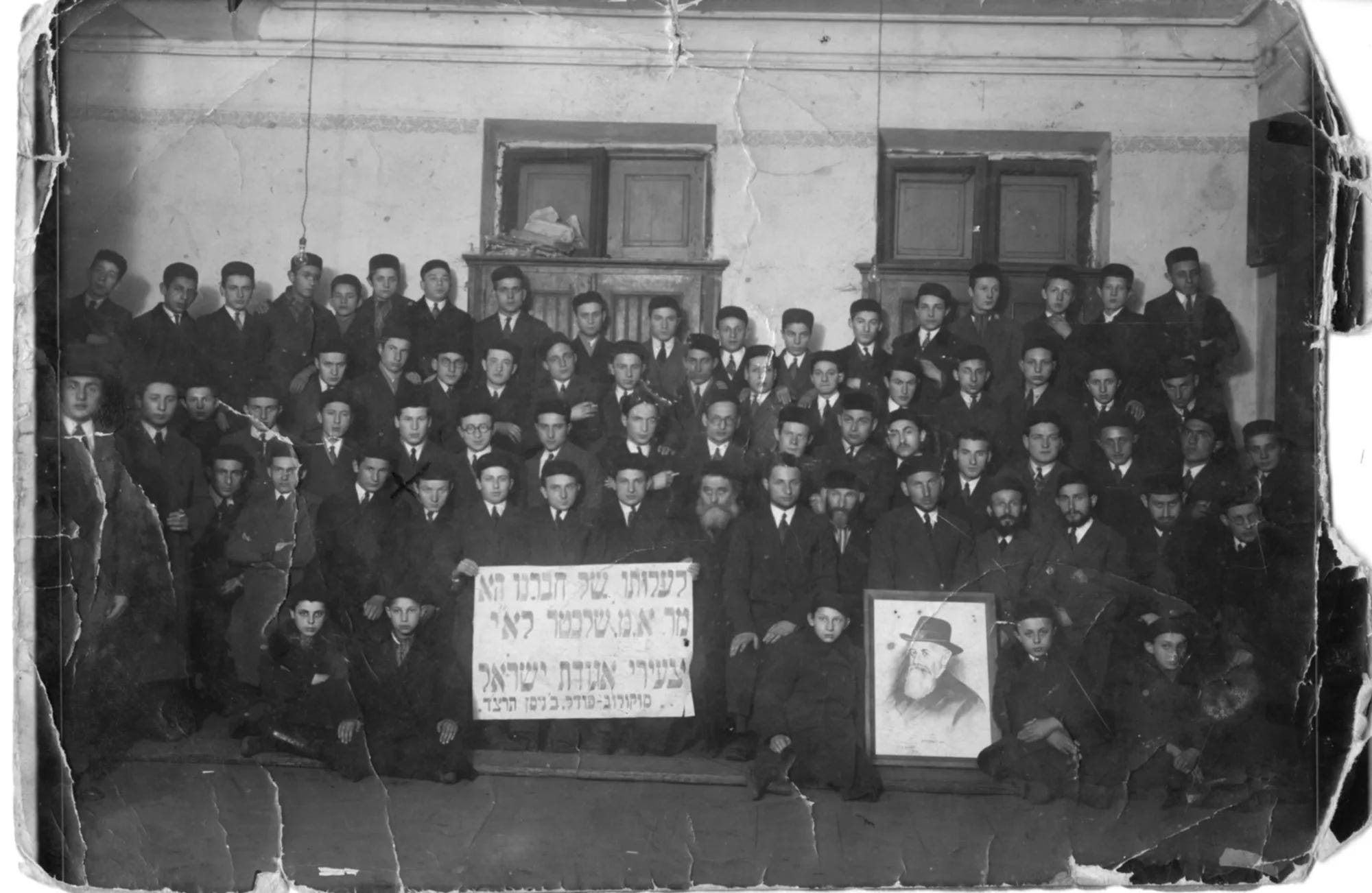
But with the rise of the Zionist movement in the late 19th century, Orthodox Jews viewed Zionism with deep suspicion as a secular European project that sought to transform Judaism from a spiritual faith into an ethnic nationalism, and from a moral message into a colonial tool.
Opposition to Zionism wasn’t limited to Jews alone. The Pope at the time publicly opposed the First Zionist Congress in Basel in August 1897, a gathering that also faced significant opposition from rabbinical authorities. In the early 20th century, Orthodox Jews worldwide established the Agudath Israel party as an umbrella for anti-Zionist Jews.
For years, this party was a major obstacle to the Zionist movement’s plans to establish a Jewish state in Palestine. However, dramatic political shifts put it to the test particularly after the 1917 Balfour Declaration, in which Britain pledged support for a “national home for the Jewish people” in Palestine. This gave Zionists a platform of legitimacy and accelerated Jewish immigration.
Under the British Mandate, which formally began in 1920, Jewish immigration and political organization expanded. Agudath Israel began to experience internal shifts and pragmatic repositioning, eventually coordinating with Zionist institutions and supporting immigration to Palestine, especially after the horrors of the Holocaust a turn seen by hardline religious elements as a betrayal of their theological principles.
These developments led to internal fractures. By the mid-1930s, a formal split occurred. Prominent rabbis like Amram Blau and Aharon Katzenelbogen led a decisive break from the party, denouncing any attempt to merge religion with the Zionist political project and rejecting “Israel” still just a Zionist idea at the time as an illegitimate concept.
In 1938, the name Neturei Karta (“Guardians of the City” in Aramaic) was formally adopted. The group saw itself as defenders of religious purity, guardians of Jerusalem’s sanctity from nationalist exploitation, and steadfast opponents of what they saw as a heretical deviation: Zionism.
Over the years, many Neturei Karta activists relocated to cities like London and New York, fleeing Israeli authority or harassment, or rejecting the legitimacy of living under Israeli rule. Some were expelled for refusing to pay taxes or cooperate with the state. Despite this, the movement retained its main headquarters in Jerusalem.
Ironically, this pressure contributed to the group’s growth, with major hubs emerging in New York and London. There, they built educational institutions, publishing houses, and organizations such as “Friends of Jerusalem,” estimating their followers and supporters in the thousands across dozens of Jewish communities worldwide.
But Neturei Karta’s importance lies not in its size, but in its symbolic and political weight. It shatters the Zionist claim promoted from within “Israel” that it represents Judaism.
The group exposes the deep contradiction between Judaism as a spiritual covenant governed by divine law, and Zionism as a modern nationalist project rooted in colonialism, ethnic cleansing, and dominance.
Palestine and the Holocaust in the Eyes of Neturei Karta
Neturei Karta doesn’t merely criticize Israeli policies it denies Israel’s very legitimacy. It argues that “Israel” is not just a political imposition, but a religious and legal aberration: a state founded through expulsion, without divine sanction, and by a secular movement alien to Jewish law.
Their stance on the Holocaust is perhaps the most controversial. They do not deny the Holocaust in fact, many members are descendants of survivors and consider it a great human tragedy. But they draw a clear distinction between the European catastrophe and the political project of Zionism that followed in Palestine. They categorically reject the use of the Holocaust as political justification for dispossessing Palestinians.
The movement sees Zionism’s exploitation of the Holocaust as selective and manipulative—a means to legitimize a new injustice committed against a people who had no role in Europe’s crimes. It opposes turning the Holocaust into an “ideological shield” protecting “Israel” from moral and legal accountability.
To Neturei Karta, using the memory of Jewish victims to produce new victims is a grotesque distortion of history and a double moral offense.
Their critique goes further, accusing certain Zionist leaders of silence, negligence, or even collusion during the Holocaust era arguing that calls for help from European Jews were ignored in favor of hastening their migration to Palestine.
One of the movement’s key theorists, Rabbi Moshe Hirsch, condemned the idea of establishing a state in Palestine in response to Hitler’s crimes. “If Hitler’s crimes justified the creation of a Jewish state,” he argued, “why not in Berlin or the heart of Germany, rather than on the ruins of Palestinian lives and land?”
On the other hand, secular Zionists view Neturei Karta as traitors and “collaborators with Palestinians.” Within “Israel,” they are dismissed as a marginal sect of ultra-Orthodox Jews who do not represent the Jewish people.
Their religious opposition to Jewish return to the Holy Land is framed as theological extremism, especially as some early rabbis did support migration before Zionism’s political rise.
Zionists also argue that the religious prohibition against Jewish sovereignty was voided after the Holocaust, as the conditions under which it was accepted no persecution were no longer met.
Neturei Karta members have faced accusations ranging from attending Iran’s controversial Holocaust denial conference to allegedly accepting funds from Yasser Arafat’s government and maintaining ties with Hamas.
An Early Confrontation with the Zionist Project
From its inception, Neturei Karta adopted an openly hostile stance toward Zionism, refusing to recognize any of its institutions. This positioned the group in constant conflict with “Israel,” making it an internal adversary that undermines the very moral foundation on which the state claims to be built.
When “Israel” declared independence in 1948, Neturei Karta was among the first to reject it, escalating its struggle against Zionism. In the early years, the group worked to remove Jerusalem, including its historic anti-Zionist neighborhood Mea Shearim, from Israeli control, or at least relocate its followers to the Arab-held sector of the city.
Their efforts to internationalize Jerusalem ultimately failed, leaving the group under Israeli rule. As a result, they focused on preserving their anti-Zionist character within their communities, resisting political normalization.
In a scene that exposes the fragility of the supposed Jewish consensus promoted by Zionism, Neturei Karta leaders regularly stage public protests in Jerusalem, burning Israeli flags especially on Israel’s independence day as a symbolic rejection of its legitimacy.
Historical records show that confrontations between the group and Israeli security forces began in the state’s earliest years. Leaders like Rabbi Amram Blau were arrested and put on trial. In one notorious case, Rabbi Jacob de Haan, a key figure trying to cancel the Balfour Declaration, was assassinated widely believed to be on Zionist orders.
Neturei Karta also rejects the 1947 UN Partition Plan, calling instead for a single Palestinian state encompassing all the land, with no Israeli state alongside it.
Their resistance isn’t merely symbolic. Members live in relatively closed neighborhoods, speak Yiddish instead of modern Hebrew, and pray daily for the peaceful dismantling of the Israeli state and the return of the land to Palestinians.
The movement forbids any interaction with Israeli institutions: its Jerusalem-based followers boycott elections, refuse state aid, some even reject using Israeli currency or registering their children as Israeli citizens.
Neturei Karta’s aim is not only to reject the Israeli state, but to erase it from the global map and sever any connection between Judaism and Zionism insisting that Jews have no right to dispossess Palestinians. This has brought them unusually close to the Palestinian cause and to Arab communities.
Staunch Support for the Palestinian Cause
In its stance on Palestine, Neturei Karta adopts a tone rare in Jewish circles. It doesn’t merely condemn the occupation it declares Palestinians the rightful owners of the land. What happened in 1948, it insists, was a historic injustice with no religious or political justification.
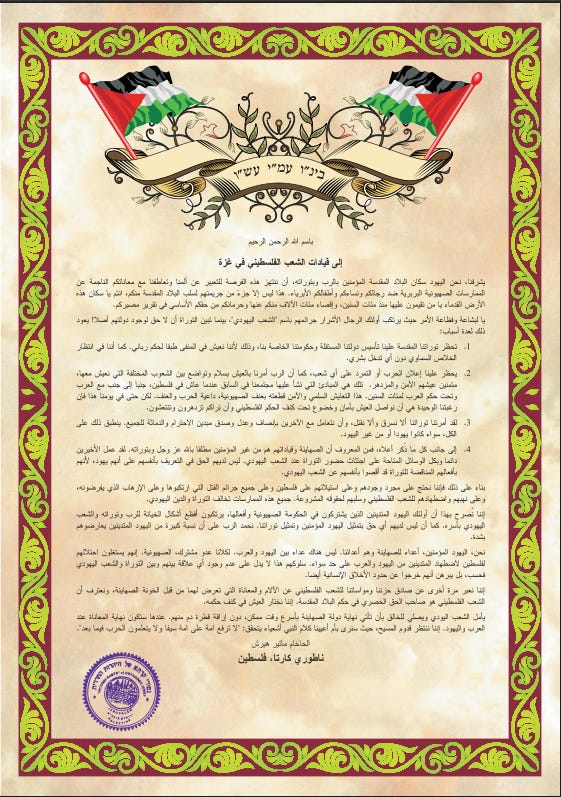
Documents and testimonies show that Neturei Karta has gone beyond symbolic solidarity. It established relations with Palestinians and has identified its members in Palestine as “Palestinian Jews.” In 1988, they raised Palestinian flags in Mea Shearim, home to roughly 5,000 of their followers a deeply symbolic act in the heart of a city that “Israel” claims as its capital.
Their ties to Palestine have evolved into real partnerships. The movement’s most notable relationship was with President Yasser Arafat, and particularly Rabbi Moshe Hirsch, who took over leadership after Rabbi Amram Blau’s death in 1974. Hirsch opened direct channels with Palestinian leadership and leveraged his diplomatic skills to build ties with Israel’s regional adversaries, including Iran.
Despite opposing the Oslo Accords for recognizing “Israel,” Neturei Karta reaffirmed its support for Palestinian rights. In 1993, Hirsch accepted the post of Minister for Jewish Affairs in the Palestinian Authority and became an advisor to Arafat a move that deeply shocked Israeli political circles. He was later attacked with a chemical substance that left him blind in one eye.
Their outreach wasn’t limited to the PLO. Neturei Karta engaged with Palestinian resistance movements, attending rallies and joining convoys in solidarity with Gaza, including the high-profile “Viva Palestina 2” convoy in 2009 despite Israeli harassment and media smear campaigns.
Following the launch of Operation Al-Aqsa Flood on October 7, 2023, Neturei Karta reaffirmed its anti-occupation stance, releasing statements supporting Palestinian operations not only as reactions to injustice, but as expressions of a religious and moral struggle rejecting the legitimacy of “Israel.”
Globally, their presence in pro-Palestine protests grew. In cities like New York and London, they joined rallies condemning the bombing and siege of Gaza posing a deeper embarrassment to “Israel” than typical international solidarity because it came from Jews who reject the use of Judaism to justify occupation.
Inside occupied Palestine, Neturei Karta leaders joined anti-war demonstrations in Tel Aviv and Jerusalem, becoming targets of political incitement, media demonization, and physical threats. Israeli National Security Minister Itamar Ben-Gvir even publicly called for their deportation to “enemy” states like Syria or Iran.
These relentless campaigns—from arrests and deportations to foreign funding crackdowns—reflect the threat Neturei Karta poses. Zionists see them as traitors who undermine the image of Jewish unity around statehood, so much so that Israeli media largely ignores them to maintain a façade of national consensus.
Yet as long as the occupation continues, this internal voice however numerically marginal is a breach in the Zionist wall. It stands as proof that truth can emerge from within, and that a colonial project’s gravest threat is a moral unraveling from inside. Judaism, it reminds the world, is bigger than a state, and Palestine was never “a land without a people,” but a homeland taken by force.
