

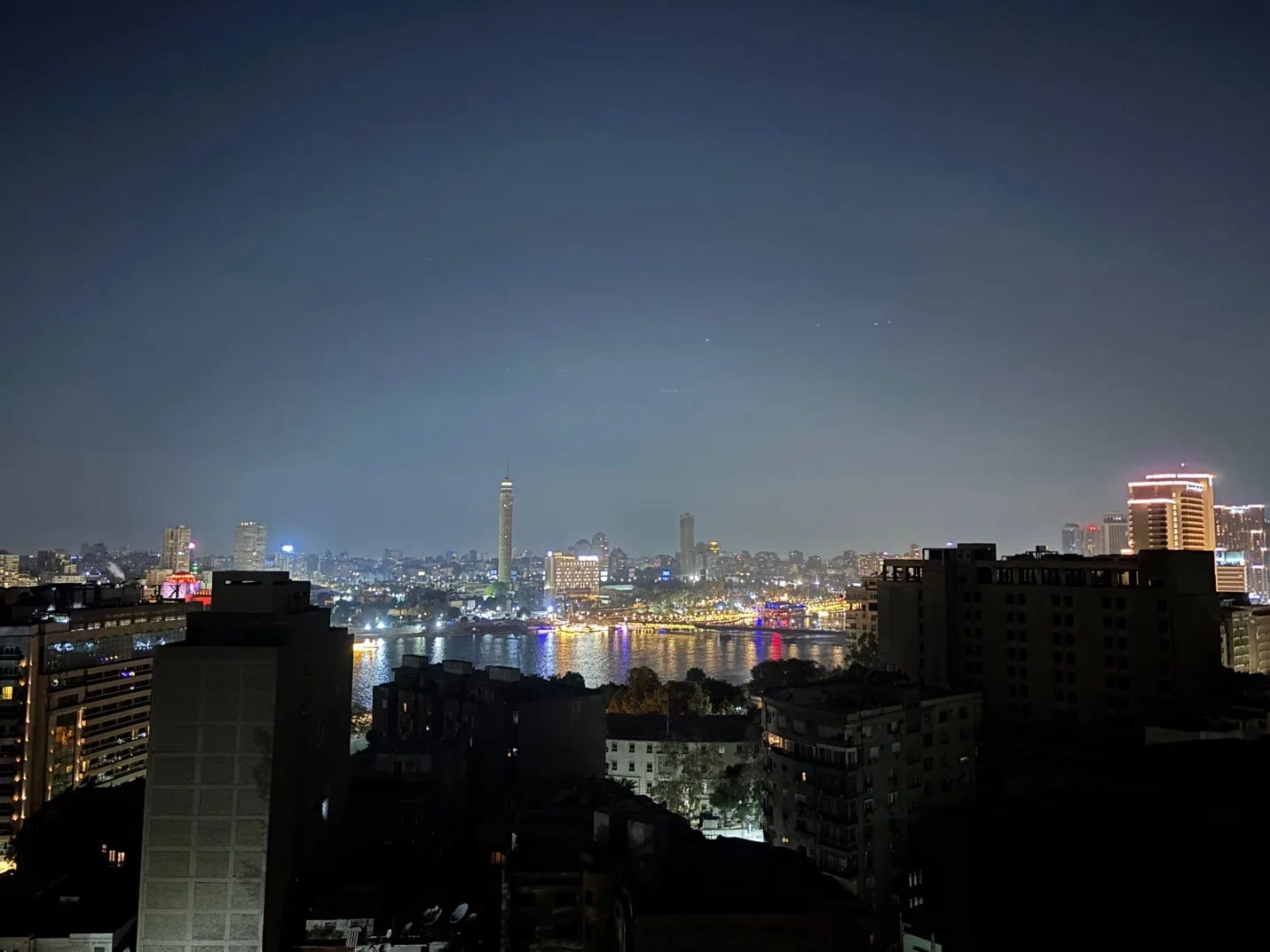
Who would have imagined that Cairo a city accustomed to staying awake until dawn, its nights long resembling day under a blaze of lights could dim in this way? That millions of Egyptians would find themselves compelled to return home early, or at least abandon their nightly routines of leisure and strolling, after most entertainment venues and commercial outlets were shuttered save for pharmacies and essential goods stores under austerity measures driven by electricity pressures amid ongoing regional escalation?
From the very first day of the U.S.-Israeli war on Iran in late February, Egypt appeared to have been thrust into the heart of the confrontation, despite not being a direct party to it. The initial reverberations of the conflict did not take long to strike the Egyptian economy, with their effects gradually seeping into the lives of ordinary citizens those now bearing the cost of a crisis they had no hand in creating.
The structural fragility of Egypt’s economy, combined with its geographic proximity to the theater of operations, has made Cairo one of the capitals most exposed to the trajectories and outcomes of this war.
With each new escalation, the national economy appears increasingly vulnerable to external shocks and less capable of withstanding disruptions that span energy, trade, shipping, and investment turning any broad regional tension into a severe test of the state’s resilience and containment capacity.
Although the Egyptian government swiftly moved at the outset of the war to activate what it described as a “crisis room” in an effort to absorb the fallout and limit potential losses, the outcomes proved harsher than many had anticipated. Egyptians suddenly found themselves in the direct line of economic fire, paying the price of a conflict that is not theirs.
This heavy toll has been compounded by the absence of clear strategic visions and the persistence of flawed monetary and economic policies pursued in recent years, which have constrained the economy’s ability to absorb shocks or maneuver through major crises.
Energy… The First Shock
In a country that relies on imports to cover roughly one-third of its energy needs, it was only natural for a war of this magnitude to leave an immediate mark on the domestic energy market. Supply chain disruptions, compounded by impaired navigation through the Strait of Hormuz through which roughly a fifth of global oil and liquefied natural gas trade passes alongside sharp increases in international prices, have placed Egypt’s market under significant strain in recent weeks.
This was reflected in the rise of Brent crude prices from $73 per barrel before the war to $105 as of Sunday, March 29 an increase exceeding 45% compared to the previous month driving up import costs.
The situation was further exacerbated when Israel halted natural gas exports to Egypt from the Tamar and Leviathan fields in the eastern Mediterranean, cutting off supplies estimated at around 1.1 billion cubic feet per day. Although flows later resumed, they remained below agreed levels under bilateral agreements.
This turbulence pushed Egypt’s petroleum import bill to approximately $2.5 billion this month, compared to $1.2 billion in January, prompting the government to adopt exceptional measures to rationalize energy consumption.
In this context, the Ministry of Electricity and Renewable Energy has been compelled to implement a plan aimed at reducing natural gas consumption in power plants by around 100 million cubic feet per day by 2026, partly through expanding reliance on renewable energy sources as an alternative.
The challenge is compounded by the fact that natural gas remains the backbone of Egypt’s electricity sector, accounting for between 75% and 82% of total generation capacity. Any disruption in supply or forced reduction in reliance inevitably affects grid stability, industrial activity, and production lines, turning the current energy crisis into not merely a technical challenge but a comprehensive economic test.
Currency and Gold Markets… The Fastest Rebound
The second and most immediate shock emerged in the currency market. Within hours of the war’s outbreak, the Egyptian pound came under pressure, with the dollar rising from around EGP 46.6 to nearly EGP 53.4 within a month, reflecting mounting market anxiety over renewed strain on the local currency after a brief period of relative stability.
In parallel, the domestic gold market surged as a traditional safe haven during times of uncertainty. Prices jumped by approximately EGP 500 ($9.5) per gram, signaling a shift in public behavior toward precautionary savings.
By Sunday, March 29, the price of 24-karat gold had exceeded EGP 7,915 ($152.2) per gram, while 21-karat reached EGP 7,254 ($139.6), and 18-karat stood at EGP 5,935 ($114). These figures underscore how the war’s impact has extended beyond macroeconomic indicators into the daily financial realities of citizens.
Suez Canal… Mounting Losses
The Suez Canal remains one of the most exposed economic fronts to regional escalation. As a vital artery of the Egyptian economy and a major source of foreign currency, it is highly sensitive not only to global trade flows but also to shifts in the security landscape of the Red Sea and surrounding region.
With recent escalations including attacks on vessels in the Strait of Hormuz and rising threats to Red Sea navigation the canal faces growing pressure at a particularly delicate moment for Egypt’s economy.
President Abdel Fattah el-Sisi recently stated that the canal is incurring monthly losses of approximately $800 million due to regional instability, with total losses in 2024 alone nearing $7 billion in revenue. These figures highlight the canal’s position at the forefront of sectors impacted by ongoing maritime disruptions.
As concerns mount over the potential escalation in the Bab el-Mandeb Strait, particularly with Houthi involvement, pressures on the canal are expected to intensify further, potentially leading to greater revenue declines and broader economic repercussions.
The Everyday Economy in the Crosshairs
The war’s repercussions have not been confined to formal economic sectors. Beyond rising energy costs, declining canal revenues, currency volatility, and surging gold prices, the impact has extended—perhaps most painfully—to the everyday economy on which millions of Egyptians depend.
This sector suffered a major blow following the government’s decision to close shops, malls, entertainment venues, cafés, and restaurants at 9 p.m. as part of energy-saving measures. While framed as a necessary response to wartime pressures, the decision has had immediate and profound social and economic consequences.
In a country where nighttime activity is integral to economic and social life, evening hours represent peak business periods for many small enterprises. Early closures therefore translate into lost income, reduced wages, and heightened financial strain for millions already facing economic vulnerability.
The situation is further complicated by government moves to expand remote work or reduce working hours for some public sector employees measures that, while intended to curb consumption, raise questions about their broader economic and social costs.
Perhaps the most severe impact lies in rising inflation, fueled by disruptions in energy and currency markets, alongside successive price increases in goods and services. This comes in the wake of a significant fuel price hike on March 10, ranging between 14% and 17% one of the steepest increases in recent years.
Here, the true cost of war becomes evident: it is not only reflected in macroeconomic indicators but also in the daily lives of citizens, who once again find themselves paying the price of a crisis they did not create.
Ultimately, a country need not be a direct participant in war to bear its full cost. Economic fragility and policy inefficiencies alone are enough to place it at the heart of the storm.
In Egypt’s case, this reality is particularly stark. Once again, the ordinary citizen stands as the primary victim shouldering the burden of both domestic imbalances and regional turmoil, paying the price through daily hardship and economic insecurity.