

No sooner had the Syrian Democratic Forces (SDF) withdrawn from Syria’s Jazira region than the scale of the humanitarian catastrophe that had festered under its rule began to surface.
Although numerous international organizations had documented abuses over the years, the reality on the ground proved harsher than even the bleakest reports suggested. For the first time, aerial footage captured the extent of the devastation in Syrian cities governed by the SDF.
Residents, speaking openly before cameras without fear of repression, recounted years of coercion, injustice, and persecution under what they described as an unforgiving security apparatus.
The violations attributed to the SDF were widely perceived as systematic. While presenting itself to the world as a guardian of democracy, critics say it dismantled democratic practices at home looting resources, impoverishing local communities, abducting and conscripting children after imposing its ideology, and imprisoning dissenters in clandestine detention centers. Women, meanwhile, were showcased as symbols of empowerment in a narrative many locals describe as carefully curated for external consumption.
Crumbling Infrastructure
Among the most striking scenes observed after Syrian state forces retook former SDF-held areas was the profound collapse of public services a portrait of administrative failure during years of self-rule.
In Al-Hasakah, residents reportedly transported drinking water by animal cart. In Raqqa, families relied on the polluted waters of the Euphrates River amid the absence of safe and reliable alternatives.
“When we returned to Raqqa after it was liberated from ISIS, it was a city in ruins no bridges, no buildings, not even sewage systems,” Mazen al-Haj, a Raqqa resident, told Noon Post.
He added that during the years of SDF control, residents rebuilt their homes largely through personal initiative and the assistance of local charities, citing what he described as the absence of meaningful institutional support.
In Deir Ezzor, Abdul Karim al-Atiya, a worker with the Amal Organization, told Noon Post that basic services in the village of Baghouz were nearly nonexistent. Appeals from residents to connect service lines to operate water filtration plants, agricultural cooperatives, and health centers reportedly went unanswered.
Al-Atiya argued that the neglect was deliberate. He said ambulances supplied by the international coalition to certain health centers were seized by the self-administration.
A report by the Syrian Dialogue Center documented deteriorating infrastructure across northeastern Syria, noting that more than 400,000 people in eastern provinces were deprived of water after electricity pumping from Tishreen Dam to the Allouk water station ceased, compounded by worn-out facilities and operational shortcomings.
Electricity provision suffered repeated and prolonged outages due to weak infrastructure and continued hostilities targeting main supply stations, including Tishreen Dam, leaving entire neighborhoods without power for extended periods.
In what residents describe as a pattern of exacerbating hardship, the SDF reduced diesel subsidies for water tank operators and raised fuel prices, directly affecting water and electricity costs. The self-administration—SDF’s civilian governing arm—imposed steep sanitation taxes despite deteriorating municipal services and limited budget allocations.
The Region’s Economy: Wealth Amid Deprivation
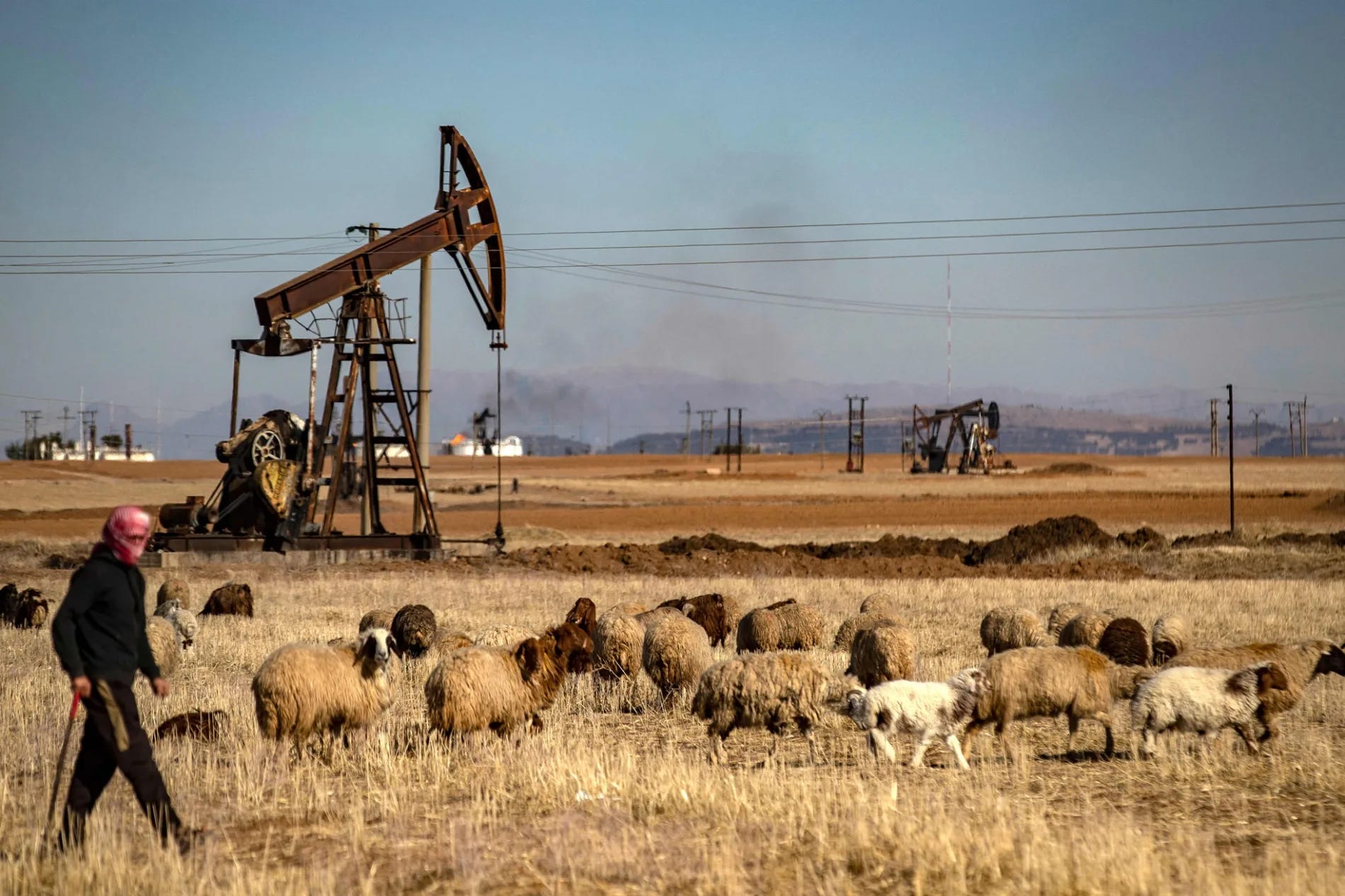
The Jazira region has long been known as Syria’s “breadbasket,” home to nearly 90 percent of the country’s oil and gas resources and encompassing the Tigris and Euphrates rivers and their tributaries.
Despite these assets, critics argue that the self-administration diverted resources to consolidate power rather than improve living standards. Many residents, already marginalized under the Assad era, saw their economic hardship deepen.
Al-Atiya said fuel allocations for agricultural land covered less than half of seasonal needs and were ill-suited for cooperative machinery, forcing farmers to purchase higher-quality fuel at their own expense. The result, he said, was declining productivity and the abandonment of once-fertile lands.
Winter diesel distributions were reportedly insufficient and of poor quality, pushing some residents toward unsafe heating alternatives.
Controversy also surrounds the oil sector. The British company Gulfsands Petroleum reported that its assets in Block 26 in northeastern Syria were reactivated in 2017 without its consent, producing nearly 20,000 barrels of oil equivalent per day, leading to losses exceeding $3 billion.
The company lamented that these resources did not benefit the Syrian people but instead fueled unregulated black-market trade, increasing corruption risks and causing unsafe extraction practices with severe environmental and public health consequences.
A report titled The Political Economy of the Autonomous Administration of North and East Syria, authored by economist Sinan Hatahet, highlighted what it described as a contradiction between the SDF’s proclaimed model of decentralized “social economy” and a reality of centralized control by committees affiliated with the Democratic Union Party (PYD).
According to the report, mechanisms of economic control included:
Direct control of the energy sector: The administration maintained secrecy over production volumes, sales channels, and revenues while restricting local refineries to compliant operators.
Taxation and customs systems: Taxes and fees were imposed across professions, alongside progressive income taxes and customs duties at border crossings.
Monopolies and patronage networks: Business figures linked to PYD officials reportedly enjoyed exclusive import rights and financial privileges.
Control over agricultural and real estate resources: Authorities regulated prices of strategic crops and managed extensive landholdings, overseeing licensing and land taxation.
Ideological Grip
Economic dominance was accompanied, residents say, by restrictions on freedom of expression. Those who broke with official ideology risked arrest or disappearance.
One Syrian man, celebrating the return of Syrian state control over his area in Deir Hafer east of Aleppo, described life under the SDF: “You feel suffocated you cannot speak or express yourself. You feel as if you are not human, not even alive.”
Al-Atiya described meetings in Baghouz centered on the ideology of Abdullah Öcalan, the imprisoned leader of the Kurdistan Workers’ Party (PKK). Neutrality, he said, meant exclusion from institutional and public life; dissent carried accusations of ISIS affiliation and imprisonment.
Umm Abdullah, a teacher who requested anonymity, said she was dismissed for refusing to write a story promoting SDF ideology in the classroom.
The SDF regularly organized rallies demanding the release of Öcalan, detained in Turkey since 1999, warning that non-participants could lose access to bread, fuel, or employment.
A report by Amnesty International titled Injustice, Torture and Death in Detention in Northeast Syria documented arbitrary detention, enforced disappearance, torture, and inhumane conditions leading to deaths, alongside allegations of mass graves and sexual violence.
Children at the Center of Abuses
Abuses extended to children. The Syrian Network for Human Rights documented 623 cases of child recruitment by the SDF and affiliated groups between 2011 and 2023, with cases continuing even after integration agreements with the Syrian government.
The Revolutionary Youth Organization, linked to the PKK, was cited as a primary vehicle for recruitment through “soft induction” targeting children in schools and public spaces before transferring them to training camps or outright abductions.
Reports from the Danish Immigration Service’s fact-finding mission described ideological indoctrination aimed at severing children’s ties to their families, particularly in displacement camps such as al-Hol and Roj.
Boys were reportedly separated from their mothers at puberty under the pretext of rehabilitation, transferred to closed centers such as Houri and Orkesh, and assigned new names to ensure loyalty.
The SDF was reported to be detaining some 29,000 children in al-Hol and Roj camps described as the largest concentration of arbitrarily detained children globally. Living conditions were harsh, with documented drownings in open sewage pits and restricted medical access.
Amnesty International further reported that approximately 1,000 boys and young men detained as minors were subjected to torture to extract confessions, including beatings and electric shocks, with some held in solitary confinement for up to 18 days.
Women as a Tool of Western Legitimacy
Women were central to the SDF’s public narrative. Around 24,000 women were reportedly recruited, alongside underage girls. In 2013, the Women’s Protection Units (YPJ) were established as an all-female military wing.
International media frequently spotlighted Kurdish female fighters as symbols of liberation, reinforcing the SDF’s portrayal as a secular, democratic force. Statements were disseminated through English-language outlets such as ANF News to cultivate international legitimacy.
Critics argue that the empowerment narrative masked internal contradictions. While Kurdish women aligned with PKK ideology were elevated, Arab women reportedly faced marginalization. Reports documented cases of arbitrary detention and enforced disappearance of female activists, as well as sexual abuse in detention facilities.
For many residents, the SDF era may have ended, but its legacy remains. As discussions emerge about reintegrating certain elements into state institutions, questions of justice and accountability loom large. Crimes, residents insist, do not expire with time.
