

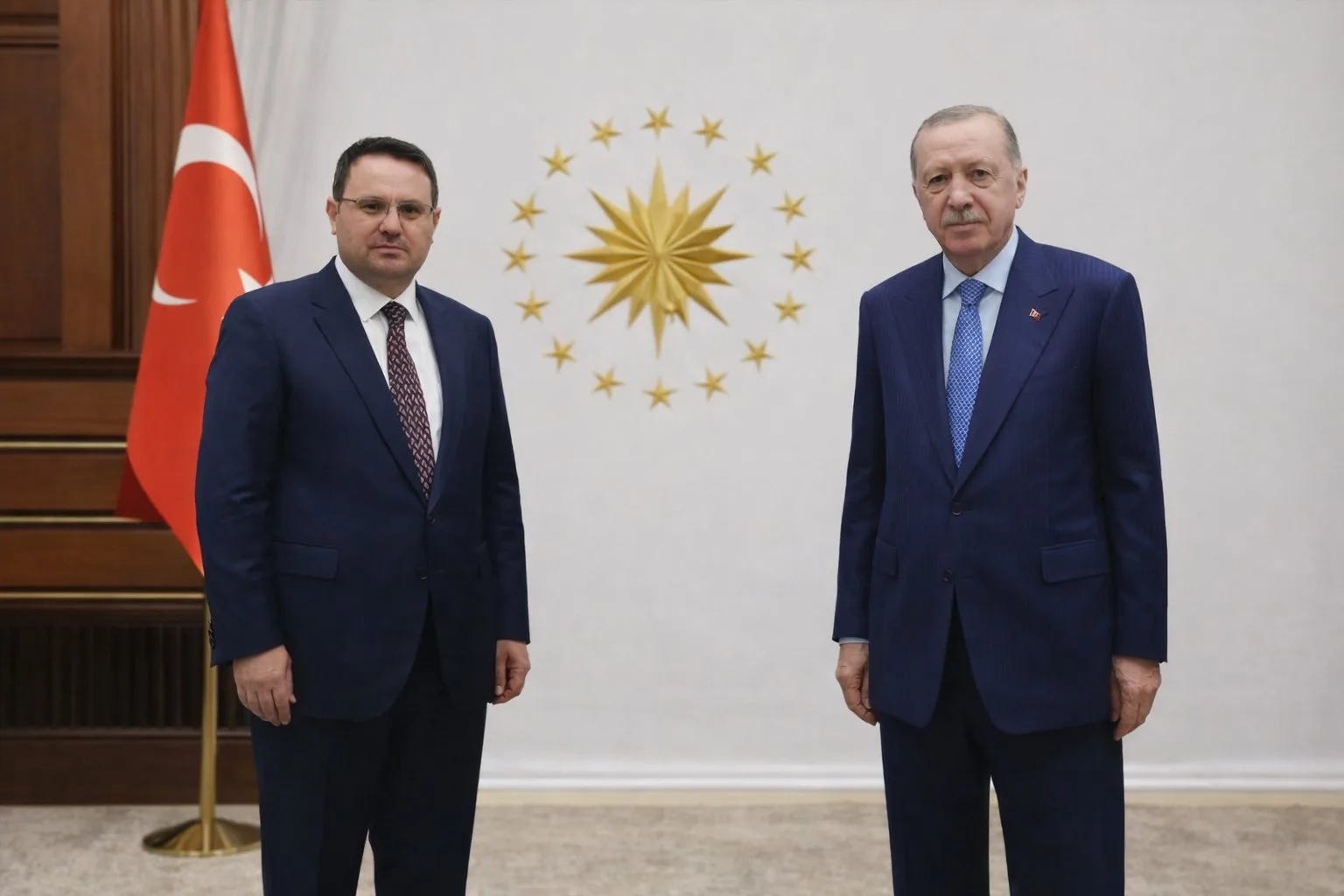
Late on Wednesday, February 10, 2026, President Recep Tayyip Erdoğan announced a long-anticipated cabinet reshuffle, appointing Istanbul Chief Public Prosecutor Akın Gürlek to replace Justice Minister Yılmaz Tunç, and naming Erzurum Governor Mustafa Çiftçi as the new interior minister in place of Ali Yerlikaya.
This marks the first cabinet reshuffle since the hard-fought May 2023 elections in which Erdoğan and the ruling Justice and Development Party (AKP), alongside its ally the Nationalist Movement Party (MHP), secured the parliamentary majority needed to form a government.
Yerlikaya assumed the interior portfolio for the first time in that government, overseeing an intensified campaign against organized crime, drug trafficking, and irregular migration. During his tenure, Syrian refugees were subjected to stringent security measures, and dozens were deported prior to the fall of the Assad regime.
Following its 2023 electoral victory, the AKP had signaled an interest in pursuing legislative reforms and strengthening judicial oversight, placing judicial independence at the heart of political debate and confrontation particularly amid investigations targeting opposition politicians and mayors.
The new appointments have drawn both praise and criticism, given the backgrounds and legacies of the two men. Who are they, and how have political actors responded to the reshuffle?
Who Is Mustafa Çiftçi, the New Interior Minister?
The moniker “the memorizer minister” was among the first popular reactions to Mustafa Çiftçi’s appointment. Social media platforms were flooded with videos of him reciting the Quran, particularly from his participation last year in a Quran memorization competition organized by the Directorate of Religious Affairs for huffaz in Erzincan, where he won first place.
Çiftçi has spoken about his lifelong commitment to Quranic study: “In 1983, I completed my memorization of the Holy Quran at the Hafazan Nurani Center affiliated with the Directorate of Religious Affairs in Konya, under the supervision of the late Ismail Kitenci. Forty-one years have passed since then, and I have never been separated from the Quran. I have dedicated an hour each day to its study.”
Born in 1970 in Çumra district of Konya, Çiftçi graduated from the Imam Hatip High School in Konya in 1990, then from the Faculty of Political Science at Ankara University in 1995, majoring in public administration. In 2007, he earned a master’s degree in public administration and political science from Selçuk University’s Institute of Social Sciences, and in 2011 graduated from the Faculty of Theology at Ankara University.
A year later, he obtained another master’s degree in public administration from Van Yüzüncü Yıl University. He is currently pursuing studies at Ankara University’s Faculty of Law.
His extensive and ongoing academic trajectory reflects a philosophy he openly espouses: “A person grows old the day they stop learning; one who abandons learning is old whether they are twenty or eighty,” as noted in his official biography on the Erzurum Governorate website.
Çiftçi is fluent in English and Arabic, married, and the father of three children.
He began his career as a district governor candidate in Konya in the 85th term, serving in several Turkish provinces before moving to central administration as head of department at the General Directorate of Personnel Affairs in the Interior Ministry.
He later became private secretary and chief advisor to the Speaker of the Grand National Assembly. Between 2018 and 2023, he served as governor of Çorum, before being appointed governor of Erzurum in 2023 a post he held until his elevation to the Interior Ministry.
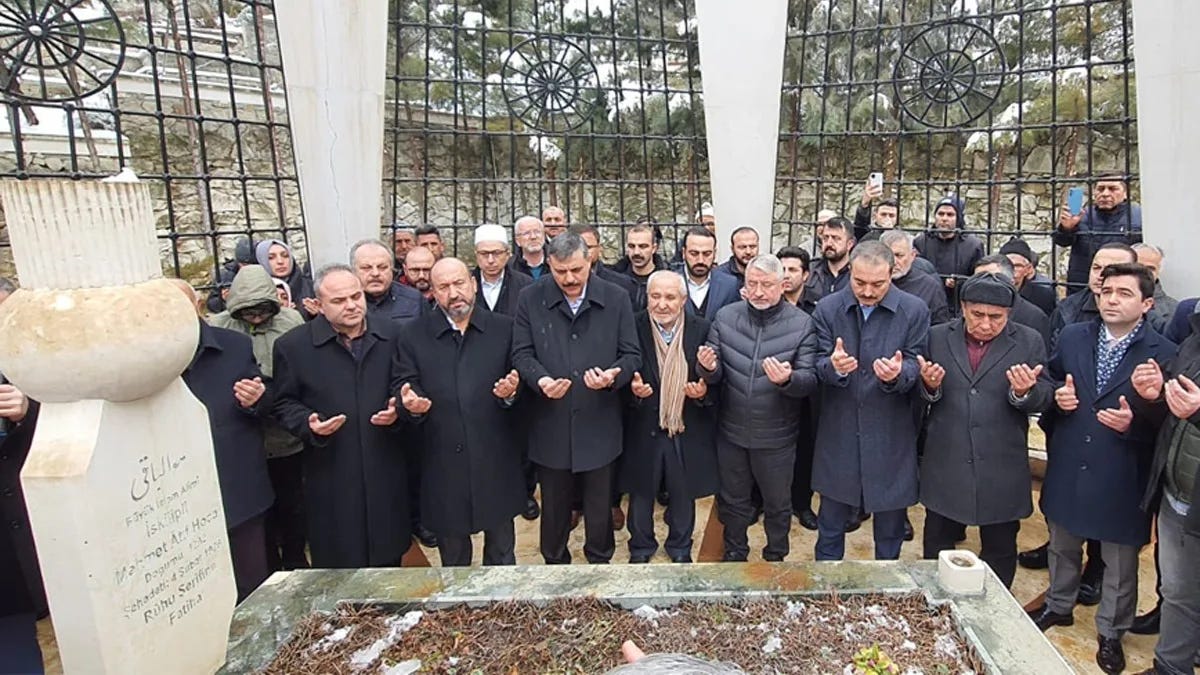
Çiftçi is widely regarded as aligned with Turkey’s conservative current. While governor of Çorum, he attended a memorial ceremony at the grave of İskilipli Atıf Hoca, a controversial figure in the republic’s early history who was executed in 1926 after being convicted by an Independence Tribunal for opposing republican reforms, particularly the dress laws.
Conservative supporters view Atıf Hoca as a victim and martyr for his religious convictions, while Kemalist and traditional republican circles regard him as an opponent of the republican order. The former governor’s participation in the memorial reignited debate over the current state’s relationship with the legacy of the Independence Tribunals and the boundaries of religious symbolism in official spaces.
The new minister is also known for his close rapport with citizens and strong communication skills. In his first remarks after the appointment, he bid an emotional farewell to the people of Erzurum:
“I feel sadness—there is a sorrow that comes with departure. Yet I leave Erzurum with peace of mind, knowing that I fulfilled my duty to the best of my ability. Together with all our colleagues and partners, we worked tirelessly to improve production, employment, security, and public order in our city.”
Regarding his new responsibilities, he said: “The task before us is extremely difficult. I ask God for guidance and support. We will work relentlessly to combat crimes against individuals, property crimes, drug offenses, and irregular migration.”
Who Is Akın Gürlek, the New Justice Minister?
While circles close to the AKP focused on the cultural legacy and national identity embodied by the new interior minister, the appointment of Istanbul’s chief prosecutor Akın Gürlek as justice minister provoked anger among opposition groups.
Since becoming Istanbul’s chief public prosecutor in 2024, Gürlek has overseen investigations targeting the Republican People’s Party (CHP), including probes into former Istanbul Mayor Ekrem İmamoğlu on charges of financial corruption. İmamoğlu has been in prison since his arrest in March of last year, alongside other opposition mayors.
Opposition figures fear that with expanded powers, Gürlek could widen these investigations to other provinces, including the capital Ankara, whose municipality is headed by Mansur Yavaş.
Born in Nevşehir in 1982, Gürlek graduated from Marmara University’s Faculty of Law in 2005. After serving in various judicial posts, he became a member of the 37th High Criminal Court in Istanbul and later presided over the 14th High Criminal Court in the city.
In 2022, he was appointed deputy justice minister, during which time he was responsible for the Council of Judges and Prosecutors. On October 2, 2024, he was named Istanbul’s chief public prosecutor.
During his tenure presiding over the criminal court, the trial of Selahattin Demirtaş and Sırrı Süreyya Önder on charges of terrorist propaganda took place. Demirtaş was sentenced to four years and eight months, and Önder to three years and six months a ruling that formed the basis for imposing a political ban on Demirtaş.
Gürlek, who has faced repeated criticism over the investigations he pursued as chief prosecutor, received public backing from President Erdoğan, who declared: “No one can point fingers at our judiciary,” without naming him directly.
He is also known to enjoy the support of the MHP and maintains direct communication with the president. His entry into the Cabinet and the National Security Council is expected to grant him greater influence in shaping Turkey’s security policies.
Reactions
Among reactions to the new appointments, journalist İbrahim Karagül, known for his proximity to the ruling coalition, argued that the current international phase poses major challenges for Turkey, making leadership choices within government and state institutions a sensitive political matter.
He described the appointments of Çiftçi and Gürlek as reflecting a preference for figures with deep-rooted political awareness and experience in safeguarding the state and its institutions an extension of Turkey’s governing, security, and judicial traditions capable of consolidating the domestic front at a time requiring high political cohesion.
Journalist Fatih Tezcan characterized the appointments as a strong blow against street gangs, coup plotters, terrorist organizations, and subversive activities.
For her part, Gül Çiftci, a senior CHP official, wrote on X: “Appointing Istanbul’s chief public prosecutor as justice minister is a clear reward for the operations he has carried out against our party since October 8, 2024.”
She went on to criticize the judiciary: “We will continue to expand the scope of truth and the struggle against a judicial system established against the will of the people.”
Meanwhile, CHP leader Özgür Özel who had previously described the justice minister as a “mobile guillotine” following the arrest of the Esenyurt mayor on charges of belonging to a terrorist organization said Gürlek’s appointment represents a continuation of what he called a “judicial coup attempt” during his tenure as prosecutor and the latest step in a broader assault on his party.
Speaking to reporters at a memorial ceremony for a former party leader, Özel declared: “We will not surrender… They will not be able to stop our march toward power.”
The reshuffle comes amid accelerating international shifts and a growing Turkish regional role within emerging alliances, alongside risks linked to developments in Iran affecting borders, migration, and security. It also coincides with the PKK disarmament process and internal reconciliation efforts in Turkey, as well as ongoing developments concerning the integration of the Syrian Democratic Forces into the new Syrian army.
All of this lends particular weight to forthcoming appointments in the judicial and security institutions. The decisions taken in the coming weeks will reflect the Turkish state’s approach to these challenges and clarify the evolving relationship between political authority, the judiciary, and the security apparatus at an exceptional moment in the region’s history and in Turkey’s regional posture.
