

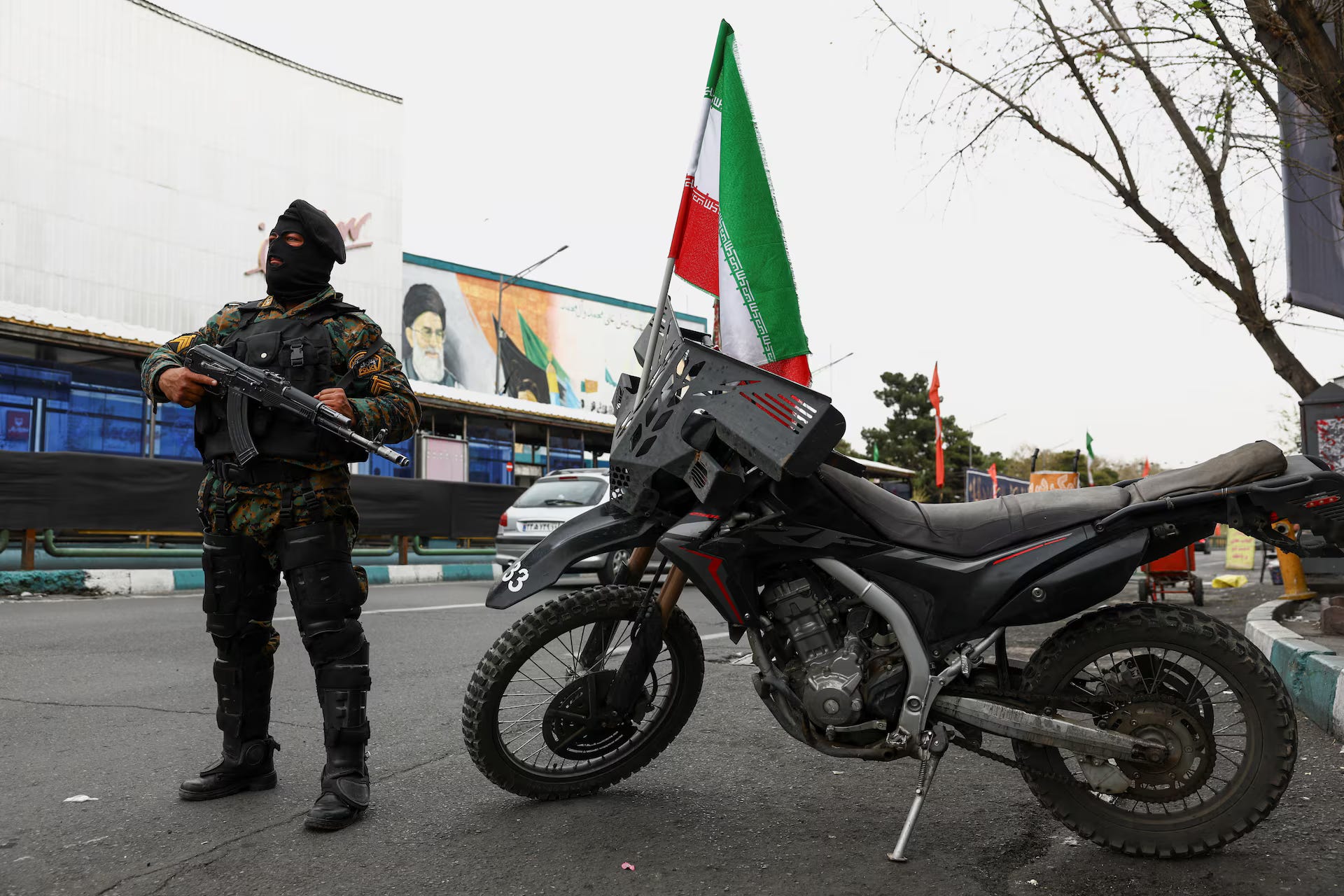
As the US-Israeli war on Iran enters its second month, the issue of “espionage” and “collaboration with the enemy” has taken on an expanded role in Iran’s official discourse, becoming a direct component of domestic governance under the pressure of external confrontation.
No longer framed as a limited security matter, the issue is now presented as a tool to safeguard the “home front” during wartime. Authorities argue that such strictness is necessary to prevent information from reaching adversaries, while human rights advocates contend that the war has provided cover to broaden pre-existing surveillance and punitive mechanisms.
From redefining danger to expanding the law
1. Redefining espionage and internal threat
With the outbreak of war, Iran’s official rhetoric has portrayed the confrontation as an existential battle that extends beyond military strikes to include infiltration, unrest, and providing internal cover for the enemy.
Within this framework, authorities have expanded the definition of certain acts. “Espionage” is no longer limited to the transfer of military secrets, but now includes:
Sharing coordinates of targeted locations
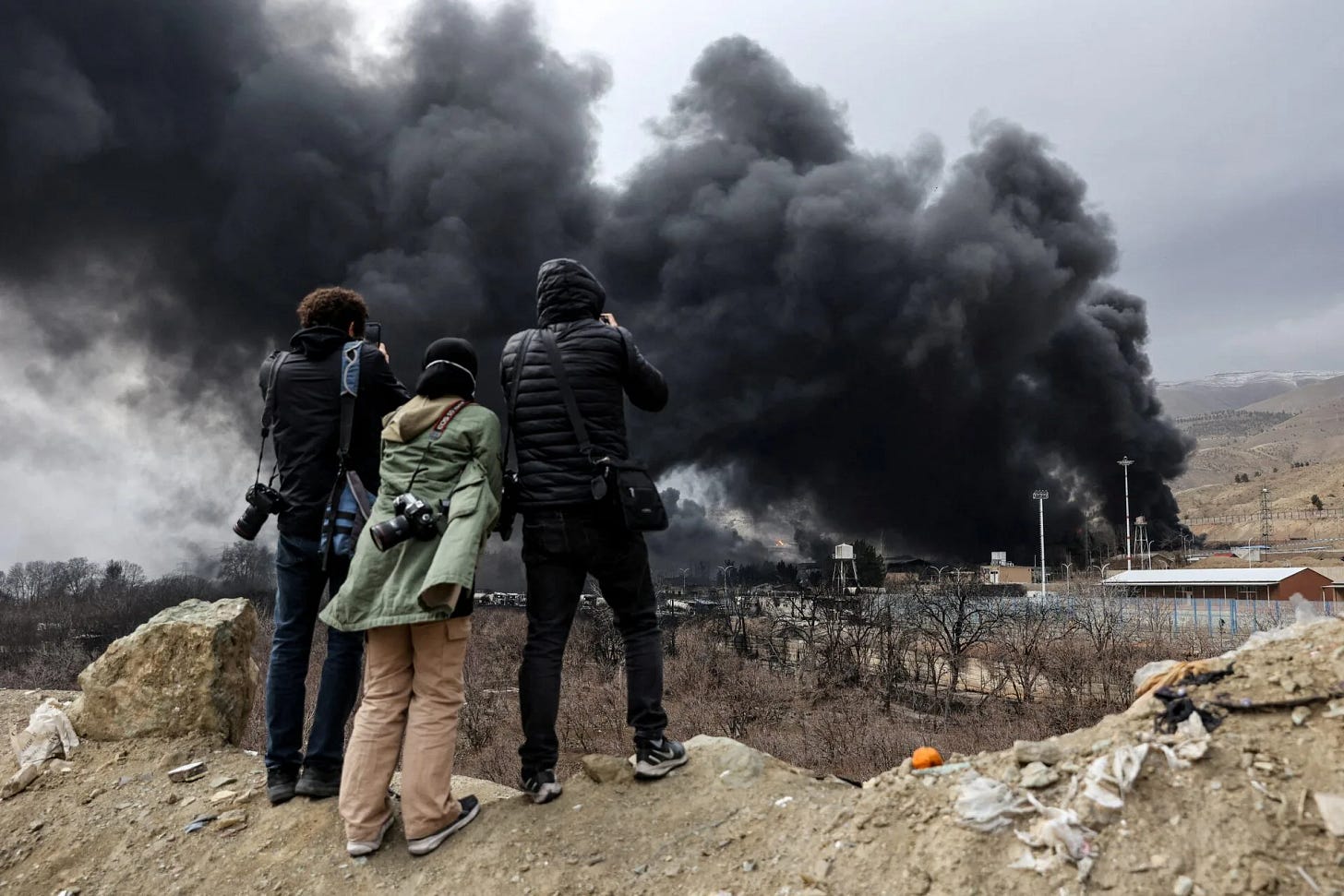
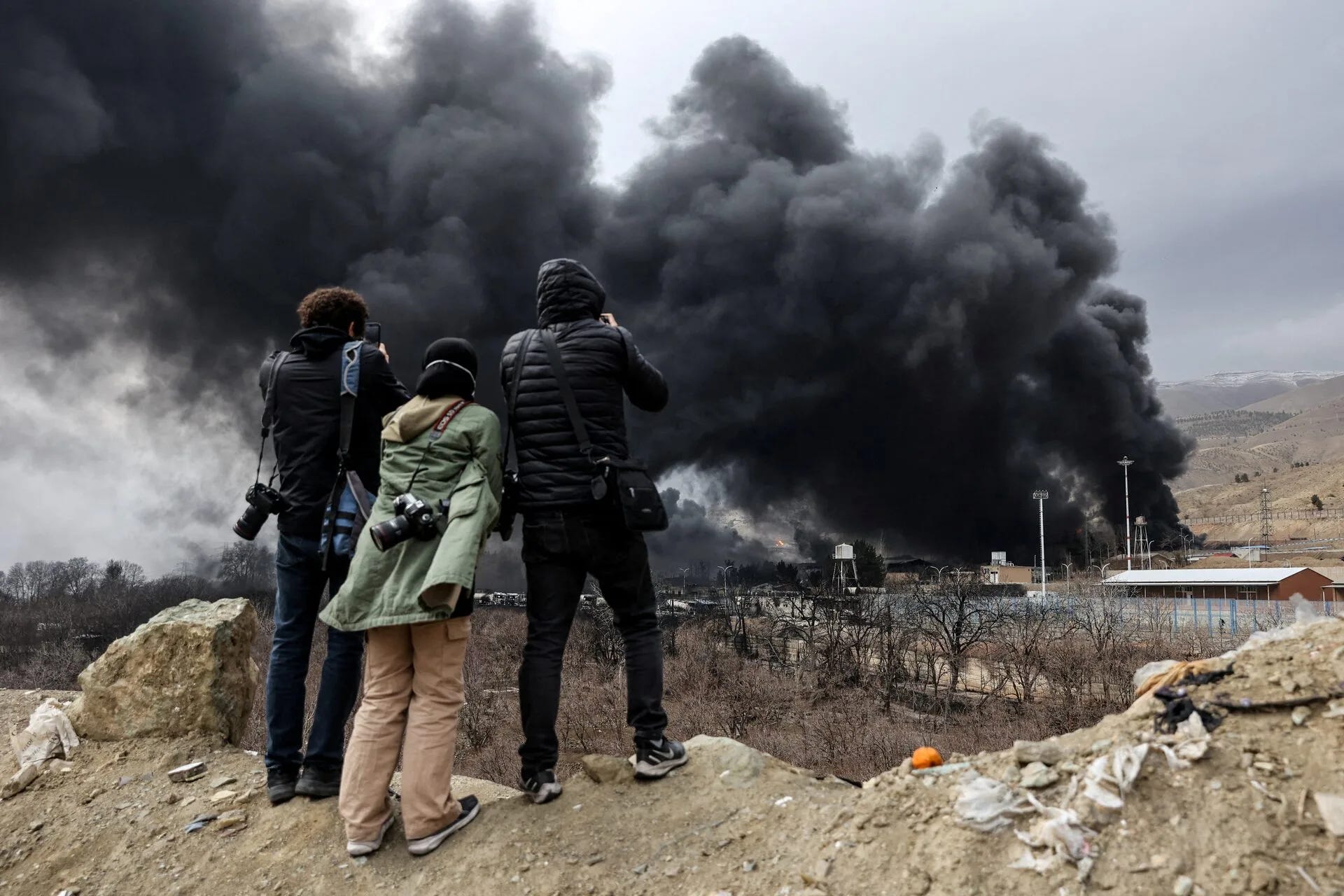
Publishing images of damage
Relaying information to foreign media outlets
Certain forms of photography and online posting
2. The 2025 law: an existing text with an expanded function
This expansion did not begin from scratch with the 2026 war. In June 2025, following a 12-day confrontation with Tel Aviv, parliament passed a law classifying certain forms of cooperation with “Israel” or hostile states as “corruption on earth.”
Judiciary chief Gholamhossein Mohseni Ejei justified the move by arguing that the war had exposed legal gaps that needed to be addressed, while supporters said the law was essential to counter drones and cyberattacks.
With the current war, this legal framework appears to have taken on a broader role. On March 31, judiciary spokesperson Asghar Jahangir stated that the amended law allows for:
The death penalty
Asset confiscation
Considering the publication of photos or videos as a form of intelligence cooperation
On March 9, the Public Prosecutor’s Office confirmed that the assets of those assisting the “enemy” could be confiscated, whether they reside inside or outside the country.
This expansion has sparked clear opposition. According to an analysis by the National Iranian American Council (NIAC), the law broadens the interpretation of “corruption on earth” to include technical and media cooperation with the United States or “Israel,” potentially elevating penalties to execution or long-term imprisonment.
Similarly, 57 Iranian legal experts warned of a “legal catastrophe” due to the vague definition of espionage, while the United Nations cautioned that parliament had expanded the death penalty to include “spreading false information” on social media.
Tightening control on the ground
The expansion has not been limited to rhetoric and legislation; it has been implemented through arrests, searches, surveillance, and punishment.
1. Arrests and charges
On March 17, 2026, police chief Ahmad Reza Radan announced that 500 individuals had been arrested since the start of the war on charges of “sharing information with enemies,” warning that possession of Starlink devices could expose owners to the harshest penalties.
On March 24, police reported the arrest of 466 individuals over online activities deemed threatening to national security. The judiciary spokesperson added that around 200 indictments had been issued.
Reuters, citing judicial sources, reported that:
Those accused of espionage may face execution and asset confiscation
More than 1,000 people were arrested over images or content considered harmful to national security
Meanwhile, the rights group Hengaw stated that 1,700 people were arrested between February 28 and March 26.
2. Prosecutions and trials
Authorities have not stopped at arrests; they have emphasized faster prosecutions and the implementation of sentences. Reuters quoted the deputy head of the judiciary as saying that cases related to detainees from the January 2026 protests had been concluded and that sentences would be carried out, stressing that there would be “no mercy” for those cooperating with the enemy.
Human Rights Watch reported that the government established “special courts” to try “traitors” and urged parliament to expedite executions.
3. The Basij and checkpoints
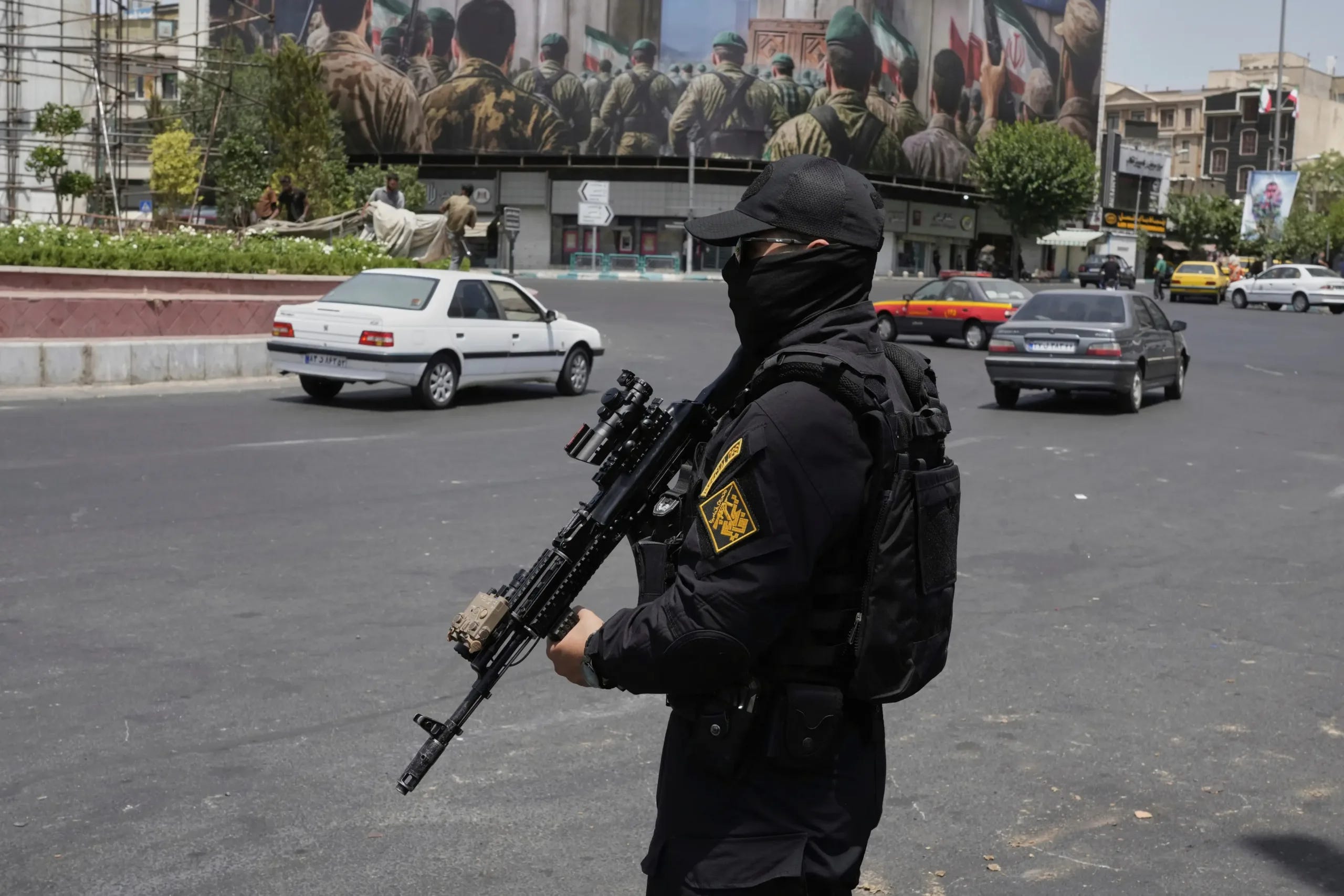
The Basij militia has emerged as a key field instrument in controlling the streets. On March 30, Reuters reported that authorities had set up checkpoints inside cities and at their entrances. A Revolutionary Guard official, Rahim Nadali, indicated that the minimum age for volunteers had been lowered to 12 due to personnel shortages.
According to Human Rights Watch, these checkpoints have been used to:
Search cars, phones, and pedestrians
Arrest individuals suspected of sharing anti-government content
The UN fact-finding mission documented arrests based on phone content and incidents of gunfire targeting vehicles attempting to evade checkpoints.
4. Digital surveillance and punishment
Digital surveillance reveals that the current crackdown did not begin with the war, although the conflict has provided additional justification. Since January 8, 2026, authorities have imposed a near-total internet shutdown following widespread protests. As the war continues:
Hundreds of Starlink devices have been confiscated
Authorities reiterated that their possession is illegal
Reuters suggested that tens of thousands may have been smuggled into the country
Penalties for users have been intensified
In addition, authorities have spoken of confiscating the assets of “collaborators,” while Human Rights Watch warned of accelerated executions. The UN fact-finding mission noted an “unprecedented rise” in executions.
After the war… what is the regime trying to prevent?
The official justification ties these measures to wartime needs and protecting the home front. However, several indicators suggest that the objective extends beyond managing the current military moment to shaping the post-war phase.
Reuters, citing sources inside Iran, reported that authorities are concerned not only with wartime dynamics but also with what may follow once strikes cease—particularly as Iranians confront a devastated economy. As a result, some measures appear aimed at preventing a future internal explosion, including:
Deploying the Basij in the streets and restricting opposition access to public space
Threatening to confiscate the assets of Iranians abroad
Lowering the recruitment age for the Basij
Maintaining digital restrictions and online surveillance
Human rights organizations such as Human Rights Watch and Amnesty International argue that the regime is leveraging wartime conditions to expand its security and surveillance apparatus. They have documented the arrests of lawyers, journalists, and activists, and warned of the targeting of Kurdish, Arab, Baha’i, and Christian minorities under accusations of “espionage” and “mercenarism.”
Ultimately, what the war has changed in Iran is not only the level of severity, but also the definition of what constitutes espionage or collaboration with the enemy.
While the state maintains that it is protecting the home front, critics argue that it is expanding mechanisms of control that extend beyond the war itself. The current crackdown thus appears less like a temporary wartime measure and more like a durable security architecture poised to endure.