

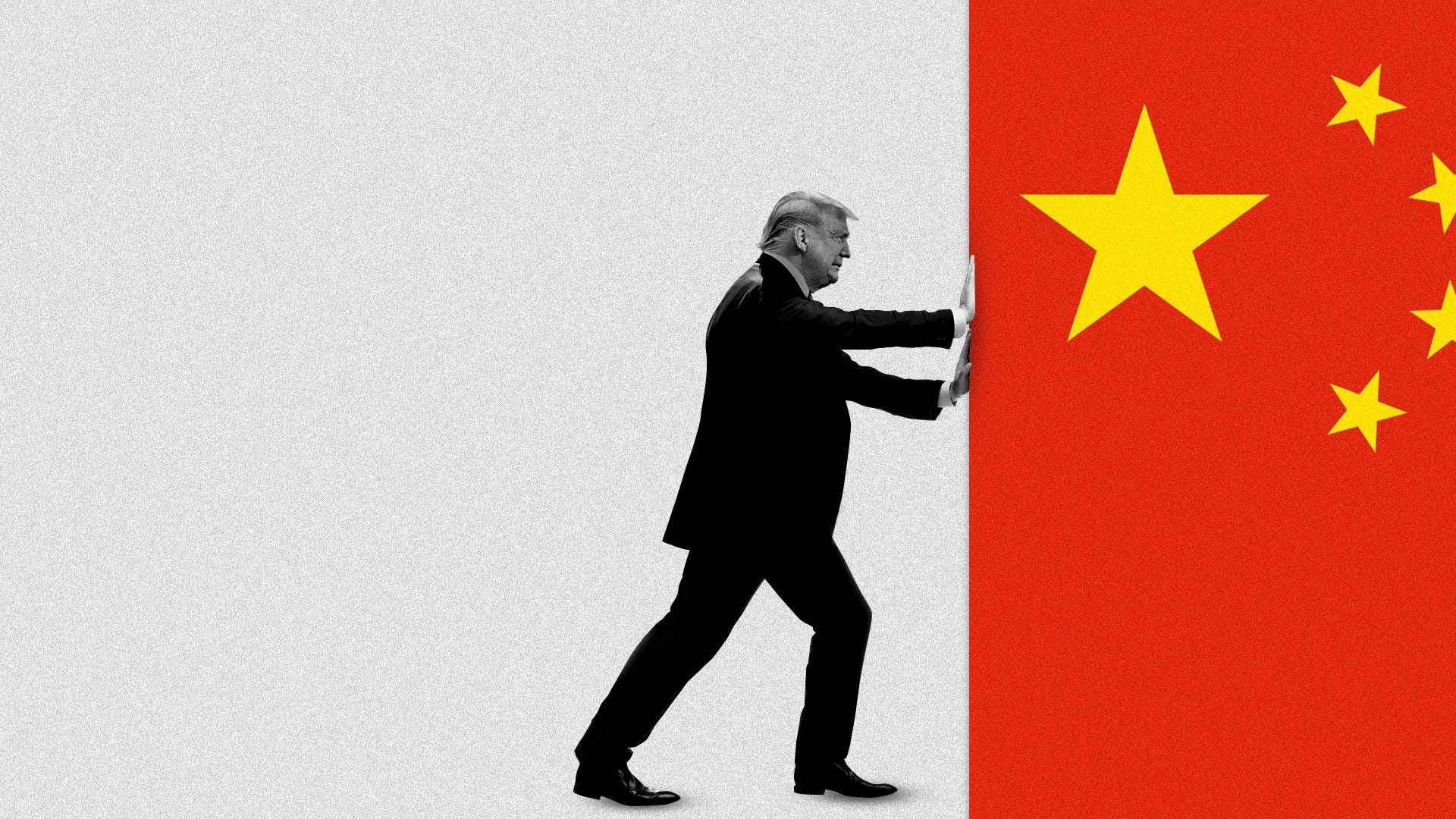
The trade war between the United States and China is no longer merely a dispute over tariffs or trade deficits; it has evolved into an open struggle for the levers of power anchored in technology, supply chains, and strategic resources ranging from oil to rare earth metals, which have become tools in a silent conflict between the two nations.
Within this context, Venezuela at first glance may appear peripheral to the core of the major technological rivalry. Yet a closer examination of the trajectory of the U.S.–China trade and technology war reveals that the South American country deeply mired in political and economic crises emerges as a highly sensitive chessboard square in a confrontation that far exceeds its borders.
Here, U.S. efforts to curb China’s advance intersect with Beijing’s ambitions to secure strategic resources essential to sustaining its industrial and technological ascent.
The escalating U.S. actions against President Nicolás Maduro’s regime including a military operation that culminated in his abduction and that of his wife under legal and security pretexts raise deeper questions about whether the stated goals genuinely center on democracy and human rights, or if Venezuela has become a missing link in Washington’s broader campaign to halt Chinese expansion, particularly in strategic metals that fuel the global technological revolution.
From Trade War to Strategic Resource War
Since 2018, the dispute between Washington and Beijing appeared to revolve around imbalanced tariffs under the pretext of protecting U.S. industries and narrowing the trade deficit. But unfolding events quickly revealed that the core of this conflict which outwardly seemed economic in nature carries much deeper dimensions tied to a structural struggle that transcends numbers and speaks to the heart of global technological leadership.
Through long-term industrial strategies such as its ambitious “Made in China 2025” initiative launched in 2015 to transform China from the world’s factory for cheap products into a high-tech, innovation-driven manufacturing powerhouse Beijing seeks not only to narrow the gap with the West but to surpass it in advanced technology sectors ranging from semiconductors to robotics, artificial intelligence, and clean energy. Washington sees this as a direct threat to its status as the dominant power in the international system.
With tariffs limited in how much impact they can deliver, Washington shifted to a more complex phase focused on targeting global supply chains and controlling the flow of raw materials underpinning modern technological industries. Hence, the conflict moved from trade to a resource war.
Strategic metals especially rare earth elements used in manufacturing electronic chips that power everything from electric vehicles to data centers have emerged as a decisive battleground. China not only controls a large share of global extraction (about 70 percent) but also monopolizes much of the processing and refining that represent the most complex and profitable link in the value chain.
The United States currently produces none of these metals domestically, giving Beijing unprecedented geopolitical leverage and, at least in theory, the capacity to use these resources as pressure points against its rivals.
In response, Washington has pursued policies aimed at decoupling from China or at least reducing dependency with measures tightening restrictions on advanced exports to China, incentivizing onshore relocation of critical industries, and seeking alternative sources of raw materials outside Chinese influence.
Achieving these goals requires redrawing the global resource map, explaining Washington’s growing interest in regions once considered marginal but now strategic in the global contest including Venezuela.
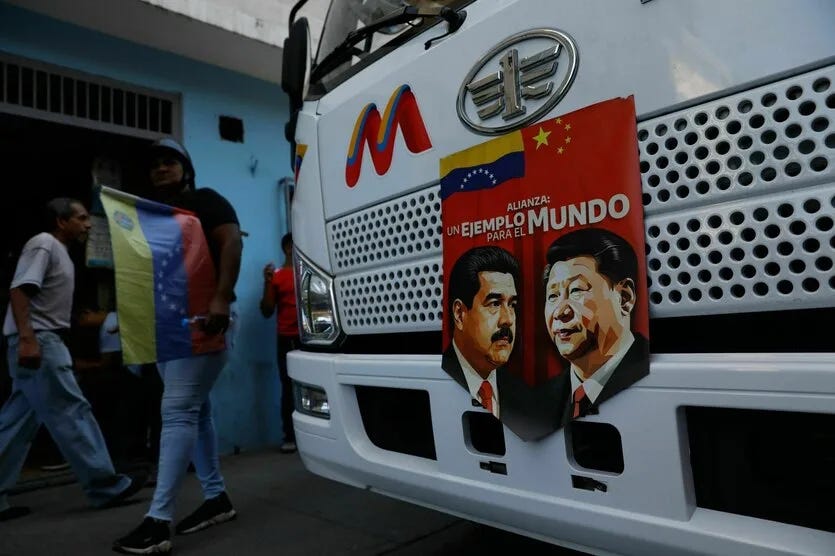
For China, Venezuela is not merely an oil partner but part of a broader strategy to secure energy and raw material needs outside U.S.-dominated corridors. For more than a decade, Beijing has invested billions in Venezuelan infrastructure in exchange for oil and minerals, securing a rare foothold in Latin America that Washington regards as a strategic breach in its “backyard.”
In this framework, U.S. pressure on the Maduro government including crippling sanctions, military threats, and legal pursuits can be read not only as tools to instigate political change but as part of a larger strategy to redirect Venezuelan resources away from Beijing, which has condemned violations of Venezuelan sovereignty and supported Maduro for years.
Observers argue that weakening the political leadership in Caracas does not simply mean regime change, but may open the door to restructuring the country’s economic relations and partially removing China from long-term energy and mining investment equations. However, China is unlikely to accept withdrawal without a fight.
In this context, the recent U.S. military operation in Venezuela raises questions about the politicization of international law. While combating drugs and organized crime are cited, the legal narrative appears to be used as a tool to achieve geopolitical objectives that go beyond holding an individual accountable, instead targeting the economic alliances and networks the Venezuelan regime built over the past two decades especially its close ties with China.
Thus, the trade war between the United States and China becomes a façade for a deeper confrontation, and Venezuela turns into an unspoken arena in Latin America where internal strife merges with great power calculations, and natural resources become geopolitical prizes shaping the fate of a politically and economically fragile state.
Venezuela as a Link in the Rare Earths Battle
In American discourse, Venezuela has long been portrayed as a “failed state led by an authoritarian regime.” But this narrative—although accurate in some respects—ignores the broader geopolitical dimension that makes Venezuela more than just an embattled country; it is a strategic knot in an international struggle over resources and influence.
Venezuela occupies a geographically sensitive position within U.S. strategy, lying in a region historically viewed by Washington as its direct sphere of influence. Its importance stems not only from location but from vast natural wealth that extends far beyond its enormous oil reserves.
Former U.S. President Donald Trump openly stated his intention to pursue control over those reserves and reopen Venezuela to American oil companies, as was common decades earlier.
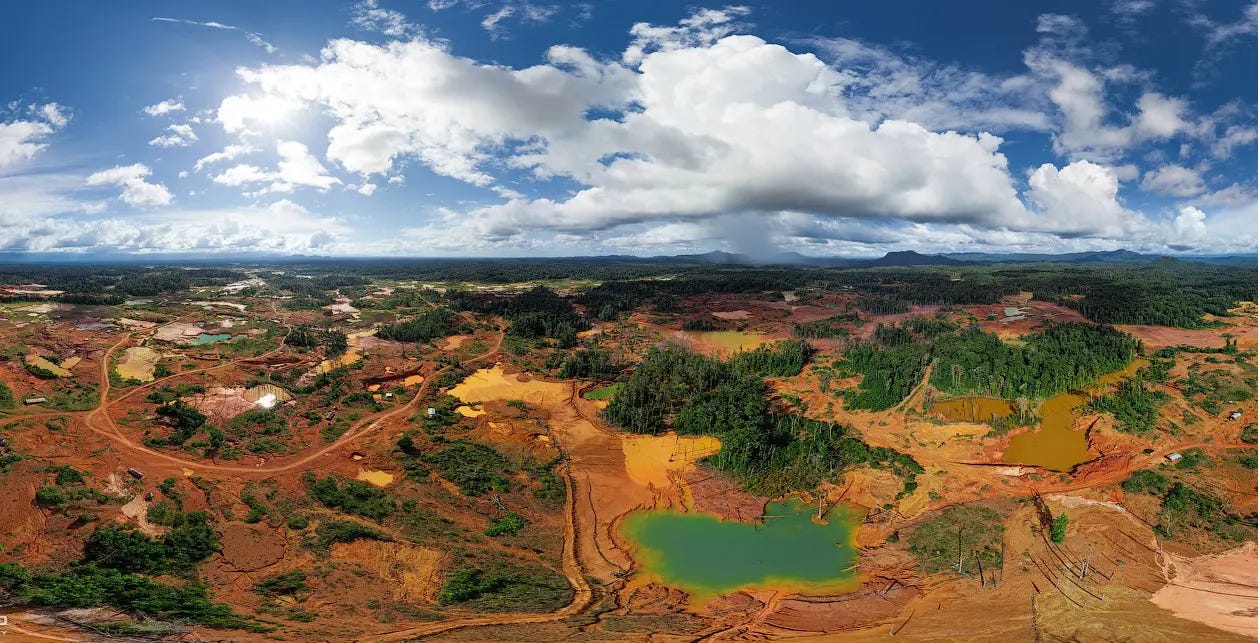
Beyond possessing the largest proven oil reserves in the world about 303 billion barrels, roughly one-fifth of global reserves and surpassing Saudi Arabia Venezuela also holds vast deposits of gold, diamonds, bauxite, iron, and strategic minerals such as coltan, which is vital to military and advanced electronic industries. Most of these deposits remain largely untapped despite their rising strategic importance in the new global economy.
Some of these very elements were at the heart of the recent escalation between Washington and Beijing, pushing the U.S. last October to consider imposing tariffs of up to 100 percent on Chinese imports a clear indicator that the trade conflict had entered a stage touching the core of the technological revolution.
The vast majority of these deposits lie within the Orinoco Mining Arc, a sprawling mining region in southern Venezuela covering nearly 111,000 square kilometers and forming part of the broader Guiana Shield geological formation. Established by presidential decree in 2016 amid broad U.S. objections that Venezuelan authorities were overseeing illegal mining activity causing severe environmental damage and fueling corruption and organized crime, this zone has featured prominently in geopolitical resource calculations.
For years, Venezuelan government sources have claimed that this region contains at least 300,000 metric tons of rare earth elements a figure that, if confirmed through comprehensive exploration, would represent a strategic treasure in geopolitical terms capable of placing Venezuela among the world’s key holders of these vital resources.
The potential market value of these mineral reserves is enormous. Once systematic exploration and extraction begin, estimates suggest their worth could exceed $200 billion, at a time of unprecedented global demand for materials critical to modern industries from smartphones and advanced electric vehicle batteries to renewable energy systems, artificial intelligence platforms, and advanced military systems like guided missiles and sensors.
With the acceleration of the artificial intelligence revolution, these elements have surged in value, transforming from dormant geological resources into strategic assets with decisive geopolitical weight. Venezuela thus becomes a strategic target in any attempt to reshape global supply chains especially as the United States seeks to reduce its and its allies’ reliance on China, expand influence in international energy markets, control supplies, and adopt an approach linking energy sovereignty with technological superiority and secure global commerce.
Venezuela’s geographic proximity further amplifies the importance of these resources. Gazing onto the Caribbean Sea, adjacent to vital shipping lanes, and situated relatively close to U.S. shores, any foreign economic or technological foothold in its energy or mining sectors becomes, from Washington’s perspective, a matter of national security rather than routine commercial competition.
Over recent years, Venezuela has become a sensitive crossroads of politics, economics, and security after Caracas opened its energy and mining sectors to Chinese and Russian investments in an attempt to offset drastic declines in oil revenues raising growing concern in Washington that the country could become a platform for extracting strategic resources that Beijing might seek to dominate amidst intensifying global competition for vital metals underpinning the new technological economy.
In this context, Trump on multiple occasions signaled that his administration understood the paramount importance of rare earths whether those in China, currently dominating global supply chains, or those in Ukraine, possibly Greenland, and other regions subject to rising international contestation.
This recognition drove his administration toward two of its most chaotic foreign policies: attempting to barter rare earths for an end to the war in Ukraine, and asserting control over the autonomous Danish territory of Greenland.
Trump’s recurring statements reflect a strategic approach that views control over these metals as no less important than control over oil in the 20th century and perhaps even more influential in shaping global power balances.
Especially given that Venezuela’s current oil production is relatively limited compared with the global market, reinforcing the impression that driving forces extend beyond oil as a direct objective and encompass far broader strategic considerations, of which oil is but one component.
From this standpoint, analysts believe Venezuelan rare earths could soon become a major focus of U.S. strategy particularly amid the U.S.–China trade and technology war and that Venezuela, with its untapped resources, could become a new arena for redefining influence maps, where economic ambitions intersect with geopolitical calculations and the subsurface becomes a key in the contest over the future of technology and global domination.
Limits of U.S. Strategy Against China’s Rise
Despite official records of rare earth exports from Venezuela’s ports, journalistic investigations in November 2025 indicate that a large portion of these minerals is illegally smuggled into Colombia, then “laundered” before reaching Chinese companies engaged in global processing.
These unregulated networks have made Venezuela’s rare earth market a gray zone potentially exploited by companies aligned with the ruling elite and smuggling networks, further complicating the political and economic landscape.
Washington understands that sustained Chinese technological dominance will not be possible without reducing China’s control over rare earth supply chains, making the search for alternatives or cutting off China’s access to new sources and reducing dependence on external suppliers a top priority.
Although Venezuela is not yet a major player in the rare earth market, its untapped potential has attracted growing interest especially after the United States launched the “Pax Silica” international alliance at the end of 2025, aimed at securing supply chains for artificial intelligence, semiconductors, and critical metals.
This alliance brings together influential countries in technology, capital, and resources within a selective framework based on geopolitical trust and role integration. China’s absence from this alliance reveals contours of a reshaped international technological influence map governed by resources as much as by ideas, where traditional wars recede in favor of more complex struggles intertwining politics, economics, technology, and raw materials.
From this perspective, the U.S. bet on pressuring Venezuela as with other resource-rich regions rests on a basic hypothesis: that weakening key links in China’s supply chain will materially affect Beijing’s ability to secure raw materials needed to develop advanced technologies, potentially slowing its progress in sectors considered foundational in the global influence race in coming decades.
In other words, Washington is not only seeking to access resources to reduce its dependence on China but to prevent others from accessing them. But experts note that achieving this goal in the near term is not easy; building alternative capabilities takes many years and may require massive investments in infrastructure and technology.
Domestic production and processing of these metals alone could take a decade or more before significantly reducing Chinese dominance.
There are structural challenges as well. First, China early on recognized the risks of dependence on limited sources and demonstrated adaptability to U.S. pressures by diversifying its global networks in Africa, Asia, and Latin America; investing heavily in recycling and developing technological alternatives; and strengthening its domestic refining and manufacturing capabilities.
Beijing may leverage its alliances and strategic resources to respond in ways that serve its long-term interests or through initiatives such as international metal alliances proposed by China.
Second, politicizing resources and weaponizing supply chains carry potential blowback risks. Rather than restraining one side, such policies may deepen international divisions and accelerate the economic “decoupling” process, with negative consequences for global stability.
The third challenge concerns Venezuela itself. A country suffering institutional and economic fragility cannot be easily transformed into a stable link in a strategic supply chain without addressing the roots of its internal crisis. Any attempt to reposition Venezuela geopolitically without internal stability may yield counterproductive results instead of achieving intended objectives.
Finally, other actors could exploit this precedent. The Trump administration argues with some legitimacy that the operation was legal because Maduro was subject to U.S. judicial proceedings. But Beijing is likely watching closely, aware that Trump’s tactics from imposing blockades on another state to sidelining its leadership could one day be tools used in contexts such as Taiwan.
This model could become a precedent used in more dangerous ways in today’s increasingly complex international environment.
Ultimately, Venezuela with its crises and wealth reveals features of what can be called the “wars of the future,” where battles are not necessarily fought with armies and tanks alone, but through sanctions, control of resources and supply chains, and competition over technology.
Venezuela is not just a country under political pressure but a dress rehearsal for a broader struggle over who holds the keys to technology and resources in a rapidly changing world.
The fundamental question remains open: Will the Trump administration succeed in leveraging geopolitics and resources to curb China’s rise, restore U.S. influence in Latin America, and redraw the future of global innovation and industrial leadership—or will this strategy lead to a more fractured world with multiple centers of power and diminished control?
