

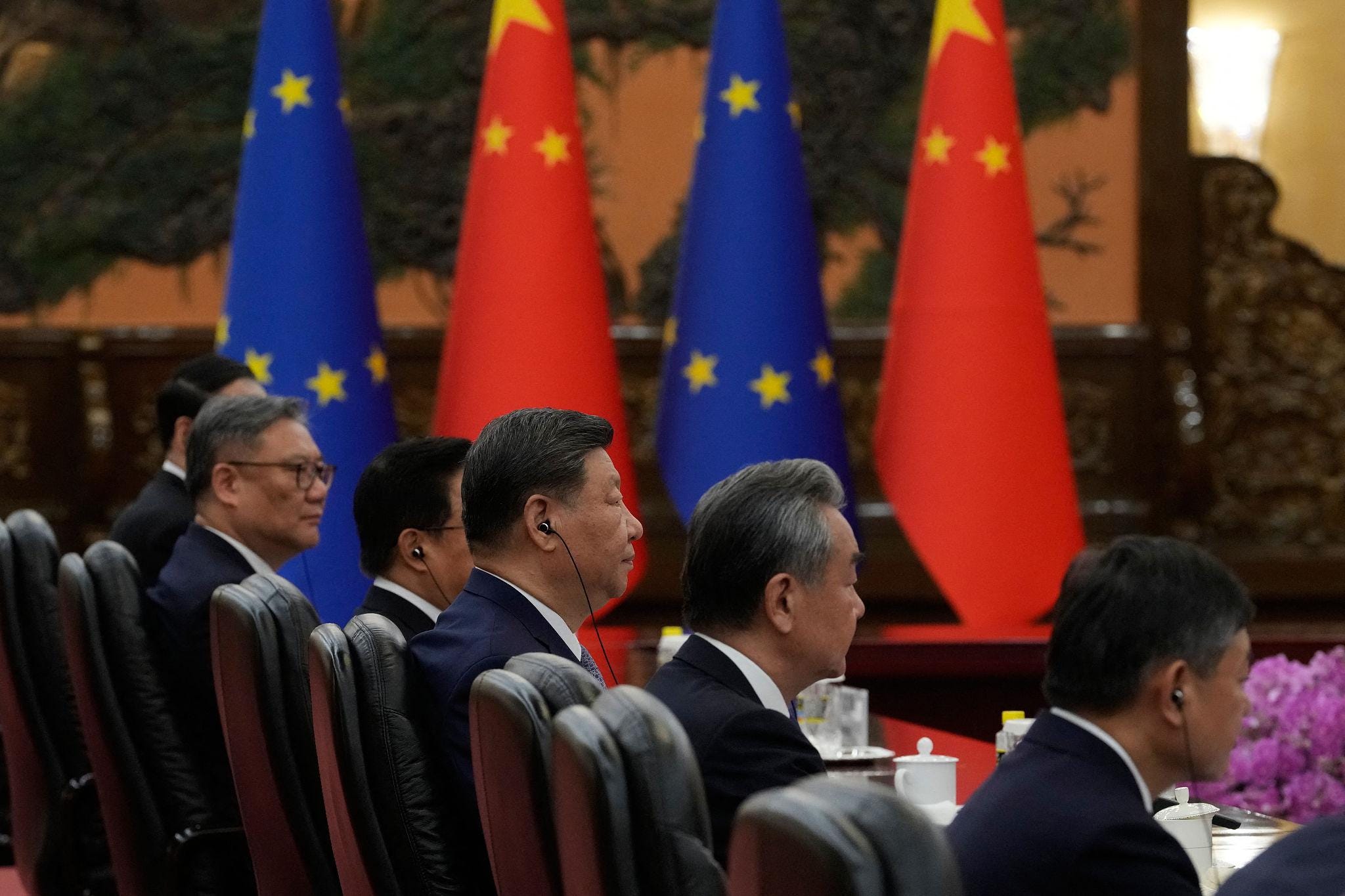
In a revealing political moment that defied diplomatic norms, Canadian Prime Minister Mark Carney declared at the recent Davos Forum the demise of the old world order built on rules and stable alliances. The international scene, he asserted, is now governed by raw power, with the strong imposing their will and the weak left to face the fallout with no real alternatives.
This reality, he warned, demands a reconfiguration of alliances to shield mid-tier powers from reckless, destabilizing bipolarity.
Carney’s warning feels like a precise diagnosis of today’s geopolitical landscape. The global alliance map is undergoing swift and unprecedented shifts. Longtime allies of the United States since World War II are now reassessing their ties with China, spurred by rising concerns over the volatility of U.S. foreign policy under President Donald Trump.
Since Trump’s re-election in January 2025, the global order has entered a phase of political fluidity, reshaping the foundations of the Western alliance. This shift became especially clear at the start of 2026, as Beijing emerged as an attractive economic partner not just for Europe, but across the Global South signaling a profound reorientation of global alignments.
A Rush Toward Beijing
The start of 2026 has seen a noticeable European pivot toward China, primarily economic in nature but underscored by strong diplomatic signaling. This recalibration reflects Europe’s response to deep shifts in the international system.
This shift possibly a form of leverage against Washington was embodied in a string of high-level European visits to Beijing in January. These visits signal a growing acknowledgment of China’s role in the evolving global equation.
Most notable was British Prime Minister Keir Starmer’s January 28–31 visit his country’s first such visit in eight years. It centered on expanding the “comprehensive strategic partnership” and strengthening bilateral economic cooperation. “The more the world changes around us, the more valuable this kind of stability becomes,” Starmer said during a meeting with Chinese Premier Li Qiang.
Li, in turn, welcomed what he described as Britain’s renewed openness to China, saying, “I appreciate your public remarks affirming that China is an opportunity, and engagement is essential.”
Prior to Starmer’s trip, Finnish Prime Minister Petteri Orpo led a delegation to Beijing aimed at boosting exports and improving market access. Ten days earlier, Irish Prime Minister Micheál Martin paid a similar visit the first by an Irish leader in 14 years seeking to reinvigorate Dublin-Beijing ties.
French President Emmanuel Macron had visited China in late 2025, in line with France’s “third path” approach aimed at steering clear of the US-China binary. A second visit is reportedly in the works.
At the EU level, European Commissioner Jessica Roswall held high-level talks with Chinese officials on climate and water issues, part of an ongoing series of reciprocal technical and political visits aimed at deepening EU-China ties.
Beyond Europe, South Korean President Lee Jae-myung visited Beijing on January 4 the first such visit since 2017 accompanied by a business delegation of over 200 executives from giants like Samsung and Hyundai, underscoring the visit’s economic weight.
German Chancellor Friedrich Merz is also expected to visit China in February or March 2026, as Berlin seeks to balance its commercial ties amid intensifying global trade pressures.
Why the Shift?
This pivot to Beijing is neither spontaneous nor incidental. It stems from mounting pressures that are forcing many nations to redraw their strategic maps. As Carney put it, missing a seat at the table means becoming what’s served on it.
The most prominent driver is a desire to hedge against the unpredictability of U.S. trade policy—especially Trump’s threats to slap tariffs of 25% or more on European exports.
Many traditional U.S. allies have come to view tariffs as a tool of political coercion. Seeking greater economic stability, they are turning to China as a key alternative.
Beyond trade, the drive for strategic autonomy looms large. Europe is increasingly unwilling to tether its future to Washington’s political whims. At Davos, Macron made this clear, warning that Europe must not submit to the “law of the strongest.” He even floated the idea of deploying trade countermeasures against the U.S. a stark measure that reflects the scale of current risks.
European Commission President Ursula von der Leyen echoed this sentiment, describing the moment as “seismic” and calling for swift European action. She framed the present as a rare opportunity to build a “new, independent Europe” capable of defending its interests beyond great-power rivalries.
China’s Strategic Patience
China is approaching this global inflection point with measured pragmatism, capitalizing on European unease over Trump’s protectionism. It is extending economic overtures—particularly in clean energy and AI tailored to Europe’s evolving priorities.
Beijing has kept the focus squarely on economics, avoiding contentious political and security issues. This strategy aims to build a functional, interest-based partnership rather than one defined by ideological confrontation.
Chinese policymakers are betting that the post-WWII order won’t collapse overnight but will evolve gradually. In their view, we’re witnessing not the fall of the West, but the emergence of a polycentric world where new security and economic guarantees are forged through negotiation and balance not U.S. hegemony.
In doing so, China offers Europe what it seeks: diversified revenues and investment flows, reducing its dependence on Washington while expanding Beijing’s economic footprint across the European core.
Europe, for its part, is adopting an openly pragmatic posture. The EU recently signed a landmark free-trade deal with India that slashes tariffs by over 95%. It also finalized a similar agreement with Latin American Mercosur nations, cutting duties by around 92% signaling a major push to globally redistribute its economic bets.
Washington Sounds the Alarm
Europe’s growing ties with Beijing have raised alarm bells in Washington. In response, Trump has issued stark public warnings to London and Ottawa following their recent overtures to China.
He called Starmer’s China trip a “serious overstep” and described Canada’s potential deal with Beijing as “the worst and most dangerous.” He lambasted Canada’s economic management, warning Ottawa against seeking salvation through Chinese markets.
Trump has even threatened steep new tariffs on Canada if it moves toward a free trade pact with China. Prime Minister Carney was quick to deny any such plans, in a clear attempt to calm the White House’s ire.
Washington’s anxiety stems not only from fears of weakened transatlantic ties but also from a deeper concern: Europe’s embrace of China, its primary geopolitical rival. Beijing’s growing presence in the Western bloc strengthens its strategic hand and reshapes the balance of global power.
Europe’s Tightrope
Caught between a protectionist U.S. and an assertive China, Europe faces a precarious strategic test. America remains central to European security, yet China offers economic engagement on more flexible terms.
The numbers lay bare the dilemma. In 2024, the EU’s foreign trade volume reached $5.4 trillion, with exports at $2.8 trillion and imports at $2.6 trillion, generating a surplus of $174 billion. But over 35% of that trade involved just two players: the U.S. ($976B) and China ($896B).
That means any escalation with either country threatens a third of Europe’s external trade.
Europe is thus trying to walk a tightrope favoring diversification over rupture, balance over alignment. But this fine-tuned strategy is fraught with peril, especially under a volatile U.S. administration. One misstep could carry lasting strategic costs.
Final Thoughts
Washington now faces a world it no longer fully recognizes. The tools that once secured its dominance may no longer suffice. Overreliance on tariffs and wavering on security commitments risks alienating Europe its historic strategic anchor.
Meanwhile, China is playing the long game capitalizing on Western discord to deepen economic links with Europe and stake its claim in the heart of the Western alliance.
More broadly, the cumulative signals point to a world order in flux. The post-WWII system is giving way to a new era of multipolarity and interwoven blocs an era governed more by pragmatism than ideology, where divergent political models sit at the same table, and national interests chart the new global compass.
