

The battle for control over the media and entertainment giant Warner Bros. Discovery (WBD) has reached unprecedented heights, following a surprise $108 billion all-cash acquisition offer from Paramount Skydance.
This move eclipses Netflix’s recent $72 billion bid, setting the stage for an extraordinary showdown between broadcasting and content titans vying for dominance over an industry now considered the most powerful tool of global soft power.
But it’s not just the historic size of the deal that has pushed it to the forefront of political and economic discourse. What’s drawing heightened scrutiny is the financial leverage coming from the Gulf, with sovereign wealth funds from Saudi Arabia, Qatar, and Abu Dhabi collectively injecting up to $24 billion to back this colossal investment venture.
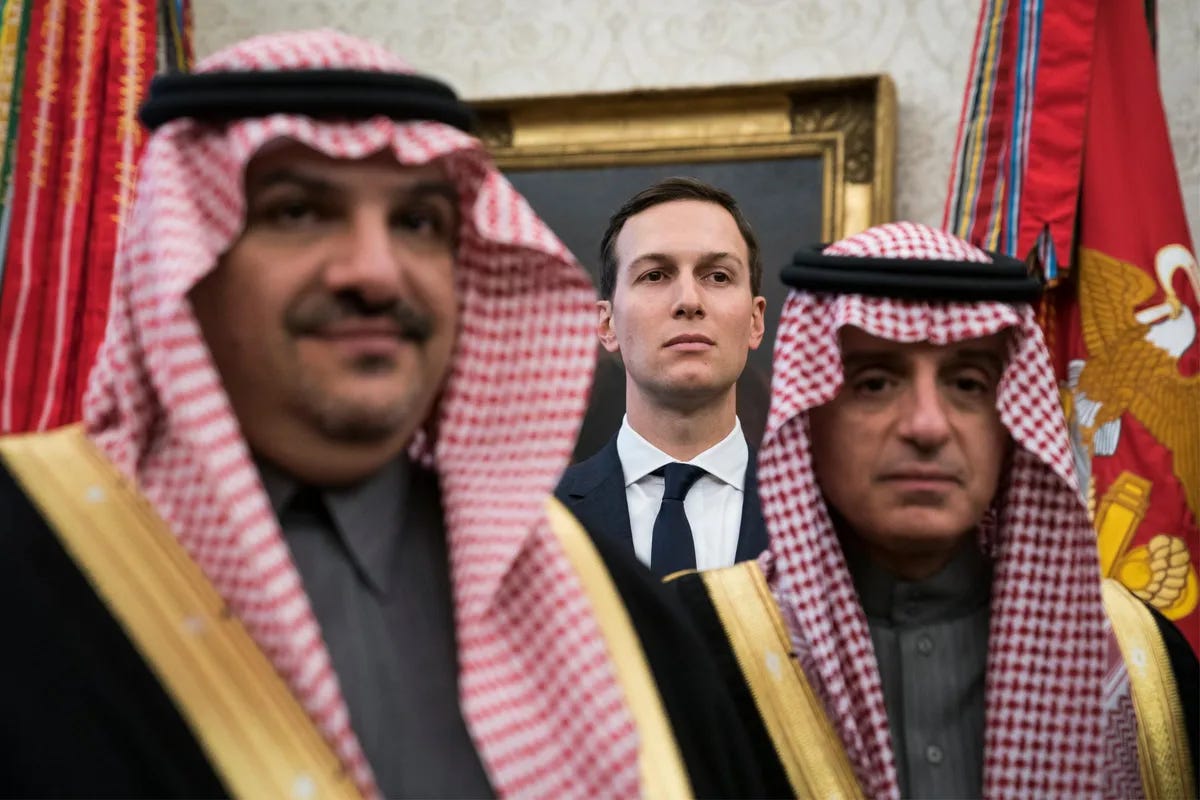
Adding fuel to the fire is the involvement of Jared Kushner, son-in-law of former US President Donald Trump, widely viewed as the “architect of normalization” and a key conduit between Gulf capitals and Tel Aviv. Kushner is leveraging his close ties with regional leaders to cement his role in this high-stakes media gamble.
The Gulf’s deepening involvement in globally-reaching media deals particularly those intertwined with figures closely aligned with Israel raises strategic red flags. In an era when content-owning companies are becoming architects of public consciousness, this move is seen by many as a high-stakes gamble.
It has prompted a wave of questions: Will this help amplify Arab influence in the global media order? Or does it risk bolstering Israeli narratives at the expense of the Palestinian cause, especially amid an intensifying battle over global storytelling?
The Offer Unpacked
On December 4, Paramount Skydance shocked the markets by submitting a full buyout bid for all publicly traded shares of Warner Bros. Discovery at $30 per share. The proposed deal targets the full acquisition of the media empire from film studios and modern streaming platforms to traditional television networks that include powerhouses such as CNN, TBS, and TNT.
With an assertive tone, Paramount CEO David Ellison declared that his company’s offer “surpasses Netflix’s in every way.” Netflix, he noted, offered a lower price of $27.75 per share, comprising a less attractive mix of stock and cash, and excluded television assets bringing the deal’s total value to a more fragile and complex $82.7 billion.
Backing Paramount’s bold maneuver is a powerful financial coalition: Gulf sovereign wealth funds and Jared Kushner’s investment firm, Affinity Partners. This makes it one of the most significant media mergers of the modern era a calculated move aimed at redrawing the power map in the global content wars.
What’s particularly striking is that Gulf funding comes without voting rights or board representation within the media empire. This has raised questions about the underlying objectives Gulf states are pursuing through this colossal gamble.
Economically, the move aligns with Gulf countries’ long-term strategies to diversify income streams beyond oil and gain a foothold in high-growth sectors like entertainment and digital broadcasting. Even without direct control, owning a stake in the “new Hollywood” grants access to a booming global industry with cultural and financial dividends.
Politically, investing in media, sports, and entertainment has become a powerful soft power tool shaping narratives about the region and polishing the global image of Gulf states. It also serves as a form of investment diplomacy, bolstering ties with Washington and Western capitals.
The equation is delicate: influence that doesn’t trigger U.S. national security alarms but is potent enough to redefine the Gulf’s role in shaping global public opinion.
Ties to Israel
The Ellison family’s influence is deeply entwined with Israel. David Ellison, Paramount Skydance’s CEO, is the son of Oracle co-founder and billionaire Larry Ellison — both descend from a Jewish family. Larry, who navigated an unstable academic path before finding fortune in Silicon Valley, has evolved into a tech magnate whose reach extends beyond technology into media and politics.
Larry Ellison has channeled his influence through investments and strategic alliances. He’s been a prominent Tesla shareholder, backed Elon Musk’s acquisition of X (formerly Twitter), and maintained a close relationship with Donald Trump, who rewarded Oracle with sensitive roles in tech-related government decisions, including data oversight on TikTok users.
Ellison often frames his support for Israel as a celebration of its “innovative spirit,” but his commitment extends far beyond rhetoric. In 2017, he donated a record-breaking $16.6 million to the Friends of the Israel Defense Forces in Los Angeles — the largest single donation in the organization’s history.
His connection to the occupation runs deeper, reportedly funding controversial settlement projects in the Palestinian territories and cultivating strong personal ties with Prime Minister Benjamin Netanyahu going so far as to offer him a position at Oracle and hosting him for holidays on his private Hawaiian island.
These activities have placed both Larry and David Ellison at the center of fierce criticism from Palestinians and Israeli activists alike. A $1 billion lawsuit was filed against them and others, accusing them of supporting the displacement of Palestinians and complicity in war crimes.
Kushner and the Zionist Narrative
Concerns over the Ellison media empire advancing an Israeli narrative are compounded not just by their ideological ties but by the involvement of Affinity Partners, Jared Kushner’s firm. Kushner is known for his close relationships with Israeli officials and deep engagement in regional projects.
Since Trump’s first term (2017–2020), Kushner has maintained strong ties with Gulf rulers relationships that have endured beyond his time in the White House and extend across political, economic, and social domains.
Many see Kushner as a central bridge between Gulf leaders and the U.S. government, at times operating directly and at others through Israel as an intermediary. This positioning made him a key architect of the Abraham Accords and a principal figure in expanding Arab-Israeli normalization.
While there’s no concrete, public evidence of the media empire directly supporting Tel Aviv in an official capacity, the involvement of investors with ties to Israeli tech and finance alongside Kushner’s presence has fueled suspicion. These connections suggest a complex web that may ultimately serve Zionist agendas.
Observers argue that Ellison isn’t merely building a business empire, but a sphere of influence controlling information flows especially if the TikTok deal is finalized alongside other aggressive media acquisitions.
He could soon be at the forefront of a battle for the minds of millions of young Americans, shaping public awareness and opinion through the platforms that dominate digital discourse.
Amid this clash of narratives Arab and Israeli the questions remain open as the world watches to see who will win the multibillion-dollar war over the “new Hollywood.” The fight is no longer just commercial; it’s a battle over who gets to write the story of the world.
