

Read the Interview in Arabic
After more than half a century of repression exercised by the Assad regime against Syrian society in all its components, Syria today is attempting to free itself from the harsh legacy of authoritarianism one weighed down by fear, division, and entrenched feelings of resentment that have seeped into the political and social fabric of the country.
In this context, the scenes witnessed across Syrian cities in recent days have carried contrasting meanings. On one hand, public celebrations of Nowruz, the lighting of the ceremonial flame atop Mount Qasioun, and cultural events hosted by official institutions in Damascus have emerged as indicators of a shifting public mood and a tangible implementation of Decree No. 13, issued in mid-January.
On the other hand, the incident involving the lowering of the Syrian flag in the city of Ain al-Arab/Kobani along with the actions that accompanied it and sparked widespread outrage has revealed underlying tensions and a fragility that still characterizes the relationship between some local actors and the idea of a unified state. Between these two contrasting scenes, debate is widening over the nature and limits of the transformations underway, and where they may ultimately lead.
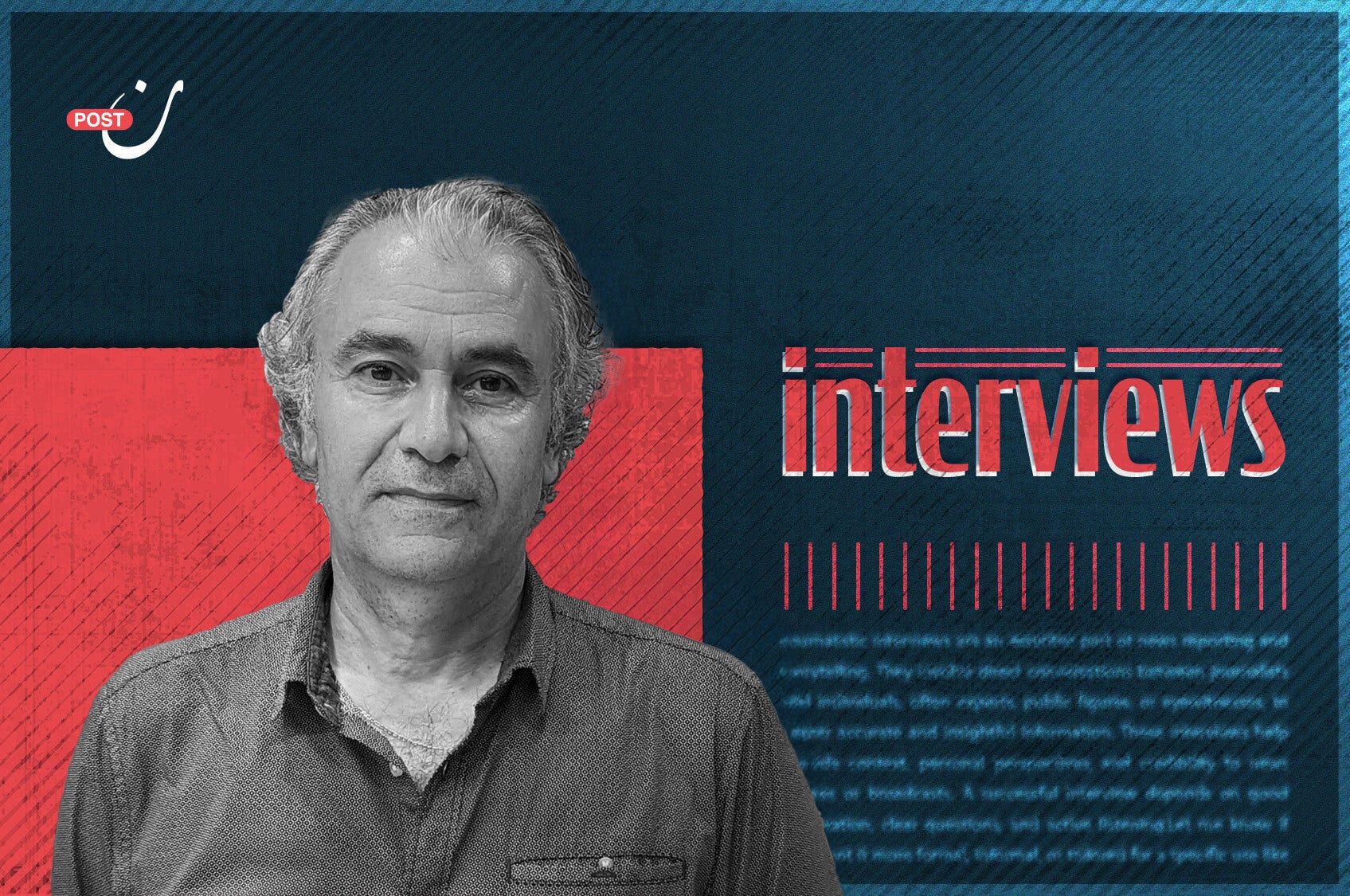
In this exclusive interview with Noon Post, Syrian Kurdish novelist and journalist Jan Dost reflects on a range of issues occupying Syrians at this sensitive juncture from the contours of the country’s next phase to shifts related to freedoms and diversity, as well as the significance of this year’s Nowruz celebrations.
We also explore the meaning of the intellectual’s return to the public sphere after years of exile and fear, and examine the implications of his participation in the Damascus International Book Fair, which sparked mixed reactions. Ultimately, we approach his vision for the role of literature in rebuilding trust among Syrians in a country still attempting to redefine itself between a painful past and an open-ended future.
Jan Dost is a Syrian Kurdish novelist and journalist, born in the city of Ain al-Arab/Kobani in 1965. He is considered one of the most prominent contemporary Kurdish and Syrian literary voices, with a prolific body of work that includes A Green Bus Leaving Aleppo, The Petersburg Manuscript, Safe Passage, Blood on the Minaret, and The French Prisoner, which was longlisted for the International Prize for Arabic Fiction (Booker).
Q: How do you envision the contours of Syria’s next phase in light of the current political, security, and economic changes?
It is possible to anticipate Syria’s future based on current indicators, albeit not with complete precision. The dictatorial regime that weighed on Syrians since the Baathist coup of March 8, 1963, has now come to an end. It has left behind a complex web of issues, crises, and unresolved questions some of its own making, others intrinsic to Syria’s diverse social fabric.
How will the new era address these challenges? Can the Syria we dream of be built overnight? Will we witness an economic and social leap forward, or will the country remain in a prolonged gray phase of post-collapse? Personally, I am very optimistic, despite signs that may suggest otherwise.
We are entering a transitional phase, the defining feature of which I would call the “shock of freedom.” Syrians particularly my generation and the one that followed have lived under an oppressive dictatorship and emergency laws for so long that we came to believe this was simply how life is. The shock of freedom, to me, means that people may misunderstand freedom as chaos or lawlessness. As a result, every new law regulating society will likely be met with significant opposition.
I hope the government understands the public’s deep yearning for freedom and prioritizes individual liberties before political ones. Imposing certain dress codes, banning others, interfering in people’s beliefs, or regulating issues like alcohol consumption will delay the desired prosperity and may generate social tensions that the new leadership must carefully manage.
I hope that personal freedoms regarding food, clothing, and belief are protected everywhere within the framework of binding laws.
Q: How do you interpret the scenes of Nowruz celebrations across Syria this year, particularly the lighting of the flame on Mount Qasioun and events held at the Damascus Opera House? Can these be seen as indicators that Decree No. 13 is being implemented in practice?
What we witnessed is a remarkable development and a practical translation of Presidential Decree No. 13 of 2026. From a Nowruz celebration in Damascus in 1986 where the young man Suleiman Adi was killed and festivities were suppressed to the Nowruz flame illuminating Mount Qasioun today, forty years of repression and marginalization are beginning to recede.
This sends a clear message: Kurds are full citizens of this state. These changes represent some of the features of the new Syria you asked about earlier.
Through this decision, the new authorities have reinforced the concept of citizenship in its positive sense. Citizens are not a monolithic bloc; Syria’s defining characteristic is its ethnic, sectarian, and religious diversity, which must be reflected in both rights and responsibilities.
Personally, I was beaten by police in my hometown when we attempted to celebrate Nowruz more than forty years ago. I lived through oppression, fear, arrests of celebrants, and the smashing of musical instruments over the heads of performers during the former regime. That is why this year’s Nowruz carries a special significance—an official recognition that signals positive change, which we hope will extend to all Syrians.
Q: How do you view the incident of lowering the Syrian flag in Kobani, and the widespread backlash it provoked? What does this reveal about the relationship between some local forces and the idea of a unified Syrian state?
What happened is regrettable and condemnable. The Syrian flag that we raised in protests across Europe must be respected everywhere in Syria. It is not merely a flag it is a symbol of a revolution for which much blood was shed. Thousands of Syrian youth were imprisoned, tortured, disappeared, or killed for raising it.
I believe the incident reflects tensions stemming from recent military operations and the accompanying mutual nationalist rhetoric, in which the media has unfortunately played a role.
There is a feeding of the “monster of hatred,” amplified by social media platforms that highlight isolated incidents and frame them in ethnic terms. There are also forces that thrive on division and crises and have no interest in social peace.
Building a unified Syria where all citizens enjoy their constitutionally guaranteed rights will undermine these actors who seek to manipulate their supporters through fear of the “other.”
Many Kurds condemned these irresponsible actions, just as we saw troubling behavior from the other side. Such dynamics risk dragging the country into avoidable ethnic conflict. Wisdom and reason—especially from those in power—are essential, along with accountability for offenders regardless of their affiliation.
Q: Your participation in the Damascus International Book Fair after years of absence sparked mixed reactions. How do you interpret this division, and what message did you hope to convey?
My participation came after 25 years of absence and self-imposed exile. For all those years, I dreamed of returning to a new Syria free from repression and sectarian authoritarianism. When that became reality, I felt it was time to return.
Damascus was my first stop. I cannot describe my feelings when I set foot in the airport that once filled me with fear. I was fortunate that my return coincided with such an important cultural event.
I took part in two book signings one in the Kurdish pavilion and another at the Lebanese Publishing House stand. This participation reflects a cultural opening toward Kurdish literature. Books that we once hid underground for fear of arrest are now celebrated at Damascus’s most important cultural event.
My participation did spark controversy. Some extreme nationalist voices even burned my books and canceled related events. The timing amid military operations in Sheikh Maqsoud, Deir Hafer, and other regions was used by critics to question the legitimacy of my visit.
I chose not to engage with the incitement. I understand the anger, but I wanted to send a message: culture can repair what politics destroys. As intellectuals, we must come together to build a free and just nation. And to my fellow Kurds, I say: we are entering a new phase unlike the repression we endured.
Q: How have the transformations in Syria over the past decade shaped your literary voice and your concept of homeland?
Since the outbreak of the Syrian revolution in March 2011, Kurds inside Syria and in the diaspora have been actively engaged in the call for change. I was living in Germany at the time, in voluntary exile since 2000, and joined opposition activities alongside my family.
I observed events through a novelist’s lens. From Afrin to Derek (al-Malikiyah), I followed the repression of Kurdish youth and their participation in protests aligned with cities like Daraa, Homs, Idlib, and Ghouta.
This period deepened a sense of shared destiny and belonging. My novels Blood on the Minaret, Kobani: The Tragedy and the Quarter, A Green Bus Leaving Aleppo, and Safe Passage reflect these experiences.
Syria itself became the central character in these works. While some early revolutionary literature was emotionally driven and lacked artistic depth, it nevertheless documented a seismic historical moment.
Q: What role can literature and intellectuals play in rebuilding trust among Syria’s communities?
Literature does not possess a magic wand. It cannot transform a society shaped by decades of authoritarianism overnight. Its impact depends on the existence of a reading, culturally engaged public.
High illiteracy rates and the spread of destructive ideas limit literature’s influence. Without a strong reading culture, its role remains constrained.
Social media and media platforms must also be addressed. Unfortunately, they often amplify hatred and misinformation, threatening social cohesion.
Ultimately, the role of intellectuals and literature is tied to societal awareness. In the current environment saturated with negative imagery and narratives rebuilding trust remains a profound challenge. We are living in a new technological era, and new tools must be developed to promote stability and overcome the legacy of hatred left by war.
