
Read the interview in Arabic
The Assad regime devastated the Syrian state and society, turning public institutions into tools for corruption and repression over decades. The Ministry of Social Affairs and Labor was no exception. The Syrian state was entirely absent from addressing social threats such as begging or poverty, and Syrians were left without any meaningful social protection system.
The Ministry of Social Affairs was also directly responsible for one of the most sensitive unresolved files that remains open even after the fall of the regime: the children of detainees who went missing.
Since last July, the Ministry of Interior has arrested former Minister Kinda al-Shammat from Wael al-Halqi’s government (2014–2015) and former Minister Rima al-Qadri from Wael al-Halqi’s later cabinet (2015–2020), as part of an official investigation into allegations that the children of detainees were concealed inside orphan care institutions during the Assad era, along with several officials who ran state care homes.
Today, after liberation, the Ministry of Social Affairs and Labor carries an immense humanitarian, legal, and social burden. Syrians are living through severe economic hardship, with poverty reaching 90 percent according to UN reports, and unemployment exceeding 60 percent.
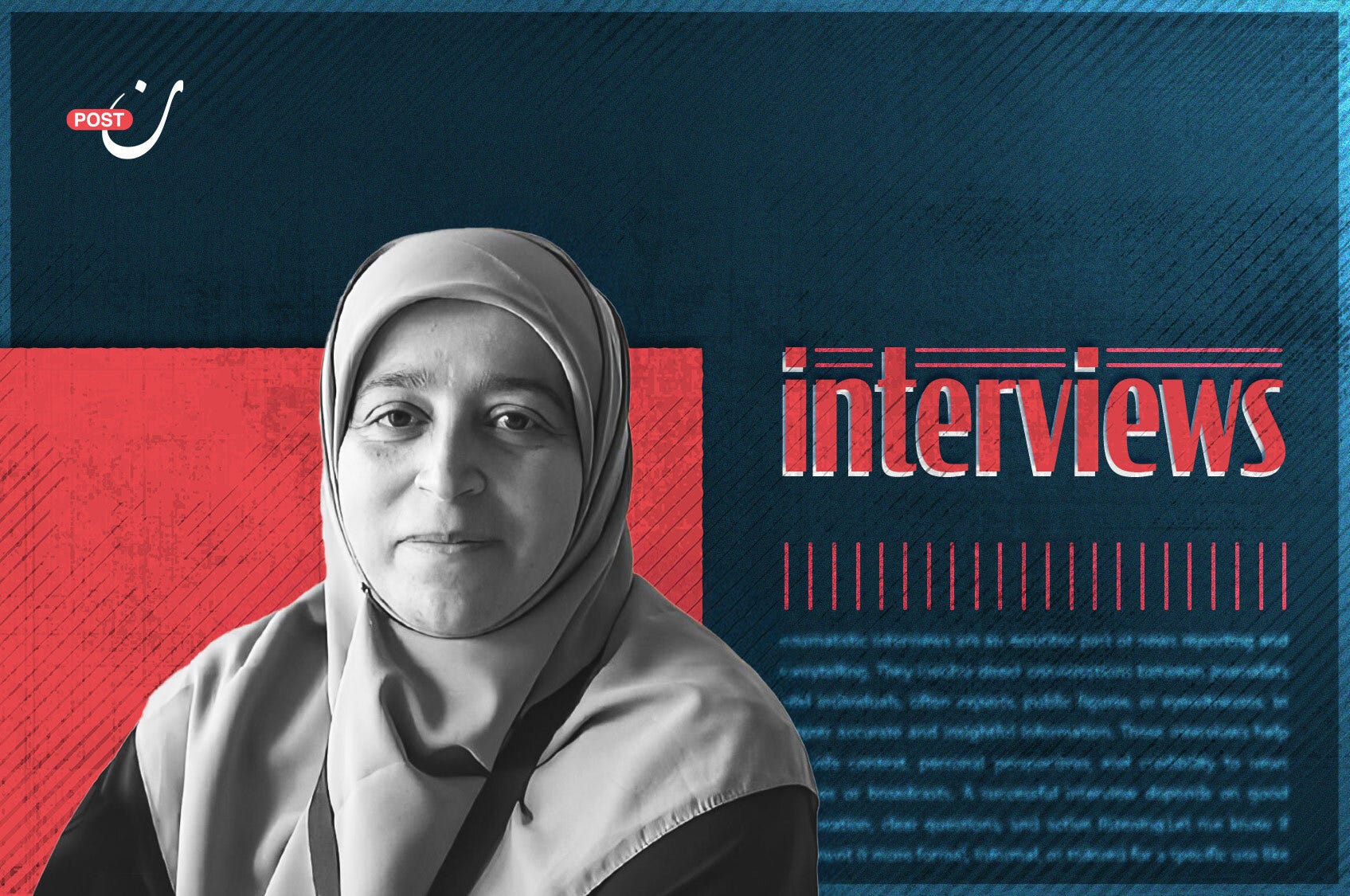
In this interview, we speak with Dr. Raghda Zidan, Assistant Minister of Social Affairs and Labor and head of the committee investigating the fate of the sons and daughters of detainees. We pause at some of the most sensitive files in an attempt to answer Syrians’ pressing questions about the ministry and the paths it is pursuing.
At the outset, I wanted to begin with the al-Hol camp file. Despite its security and political dimensions, it remains, at its core, a deeply humanitarian and social issue involving thousands of Syrian men and women who were never brought before any court, in addition to thousands of children.
Dr. Zidan explained that Fadi al-Qassem is currently responsible for managing the camp in its entirety, along with his assigned team. Al-Qassem previously served as Minister of Development and Humanitarian Affairs in the Syrian Salvation Government, and later as Minister of Administrative Development in the Syrian Interim Government headed by Mohammad al-Bashir following the fall of the former regime.
She added that the camp’s administration does not currently fall under the ministry’s authority, and that cooperation with the ministry will take place in later stages.
I would like to begin with scenes that rekindled hope in the idea of a new Syria such as the rehabilitation of anti-begging centers. I, like many others, did not expect to see any tangible progress on this issue for years after liberation, given its deep connection to the country’s devastated economic and social conditions, which will take years to recover.
Yet it appears that you have already begun addressing this tragedy. Do you have statistics and a clear plan? And how would you assess the response of families and children?
Begging was one of the primary files the Ministry of Social Affairs worked on from the outset, given the sheer number of people involved and the transformation of begging into a profession rather than merely a consequence of need. It was first necessary to rehabilitate the centers themselves, which resembled prisons and were unfit for humane living. They provided no rehabilitation for children and no guidance for their families.
We rehabilitated several centers so they could genuinely accommodate children, provide education and rehabilitation, and reintegrate them into society. This took time due to limited resources and the large number of people affected.
So far, we have rehabilitated more than 253 boys and girls in Damascus, and the work is ongoing. Rehabilitation efforts are also continuing in all governorates, in cooperation with local administrations and provincial social affairs directorates.
There are no accurate statistics on the number of people who beg in Syria. Previous estimates suggested more than 250,000 across all governorates, including about 10 percent children. These figures are not precise, but they do reflect the widespread nature of the phenomenon.
The number of centers is insufficient, and existing ones require further rehabilitation. We have prepared three centers in Damascus to ensure dignified rehabilitation, protect children’s rights, reintegrate them, and return them to school. We are also working to equip appropriate centers in all governorates. While centers exist, many are not adequately prepared.
Our focus is particularly on child begging. Under Syrian law, begging by adults is a crime punishable by law and falls under the jurisdiction of the Ministry of Interior.
The files under the ministry’s responsibility may be among the most challenging after liberation, given the depth of the social crises left by war, displacement, and fragmentation alongside the lack of resources and qualified personnel.
International partnerships often appear to be one of the main avenues for funding. What are your priorities and project plans for 2026?
Today, the Ministry of Social Affairs and Labor serves marginalized groups, persons with disabilities, the elderly, children, women who are heads of households, and youth seeking work or training more than 90 percent of the Syrian population. Resources are limited, so we developed a medium-term strategic plan (three years) encompassing eight core programs:
Social protection
Social and economic inclusion
Decent work
Local economic development
Community rural development
Development of NGO work
Corporate social responsibility
Administrative and governance development
Each program includes several projects.
In 2026, we will focus on social protection poverty reduction, assistance programs, combating begging, and caring for the elderly and persons with disabilities. We will also prioritize employment strategies, including unemployment reduction, training programs, women’s and youth empowerment, and decent work. Digital transformation and updating the ministry’s regulatory framework are also key priorities.
We cooperate with international organizations across multiple programs, especially in social protection. These include the ILO, UNICEF, ESCWA, UNDP, and others. We implement child-focused programs with UNICEF, labor-related programs with the ILO, and training programs with UNDP, GIZ, and additional international partners.
You head the committee investigating the fate of detainees’ children one of the most sensitive issues in Syrian society. Could you outline the committee’s roadmap and working mechanisms?
The committee was formed to uncover the fate of the sons and daughters of detainees and forcibly disappeared persons who were placed under security measures in centers affiliated with the Ministry of Social Affairs and Labor.
Its mandate is to determine their fate, ensure they were reunited with their families, and provide files that support accountability without itself acting as an investigative or judicial body.
That responsibility lies with the Ministries of Justice and Interior, the Transitional Justice Commission, and the National Commission for the Missing.
The committee includes representatives from the ministries of Social Affairs, Justice, Interior, and Awqaf, as well as representatives of victims’ families and civil society organizations working on missing persons. We collected all available files from ministry-run care homes and formed volunteer teams to archive and review them.
We also launched two confidential hotlines for families and anyone wishing to provide information, established a dedicated communication unit to update families, and offer legal, psychological, and social support.
So far, we have identified 314 children. We have confirmed that more than 160 of them have been reunited with their families through direct visits. Work continues to determine the fate of the remaining children and to verify the identities of those who resided in care centers during the war and have since left.
The files are extensive, entirely paper-based, addresses have changed, and the data requires careful verification. This process takes time and effort. We hope to reach every child and ensure accountability as swiftly as possible.
Were you personally present when the 160 children were reunited with their families?
It is important to clarify that the children were not in ministry centers when we assumed office. Some left years before liberation and were recorded as having been returned to their families; others left immediately after liberation. Our role was to verify the records and confirm that those listed as reunited are indeed with their families today. We have confirmed this.
We are now searching for the remaining children. Some are reportedly with their families but outside Syria, while others remain unaccounted for. We are pursuing every possible lead.
Are the 314 children those listed in care center records as detainees’ children, or those whose families filed search requests?
These names were found in care center records. There are additional lists of children whose families filed search requests but whose names we have not yet found in ministry records. The search is ongoing and expanding.
Regarding the 160 children already identified, were their parents released, declared deceased, or still missing? And were the children registered under their real names?
Their parents were released either before or after liberation. Some children were registered under their real names; others had their names changed.
At the “Lahn al-Hayat” residential complex, children of unknown parentage are received and assigned names. When children of known parentage whose parents were detained were placed there, they were registered as having unknown parentage and given new names in line with the complex’s regulations.
This practice was not universal across all centers. Importantly, even when names were changed, original intake files retained the child’s real identity.
The case of Rania al-Abbasi’s children is among the most prominent missing-children cases and has sparked public anger toward the committee.
How many children of detainees remain missing today, and why do you think there is a gap between the committee and families?
During the revolution, many children disappeared. Some reports cite 3,700 missing children. Not all of them were placed in ministry care centers. Only children whose parents were detained by state security branches were placed in these centers. Others disappeared at militia checkpoints, became separated from their families, or vanished under different circumstances.
Every child placed in a ministry center has a file explicitly stating that they are the child of a detainee and that their file must be handled confidentially. Many families searching today discover that their cases fall outside the ministry’s jurisdiction.
We fully understand the pain families endure. We, too, are children of the revolution and have our own missing loved ones and martyrs. We are working tirelessly to uncover any information that may help determine the fate of the missing and cooperate closely with the National Commission for the Missing and all relevant bodies.
So far, have you found any document proving that Rania al-Abbasi’s children entered ministry institutions?
No, we have not found any such documentation.
To clarify, your committee is responsible only for children placed in ministry institutions, while responsibility for others lies with the National Commission for the Missing?
Yes, that is correct.
Do you have insight into investigations involving former officials suspected of involvement? And what about reports claiming children were transferred to Russia or Iran or recruited into combat?
Our role is verification; investigations are the responsibility of the Ministries of Interior and Justice. We are in constant contact with them. The file is extremely complex, and many reports circulate. So far, we have found no documents confirming or denying claims of deportation or recruitment.
How can Syrians—especially youth—support the ministry’s efforts to rebuild society?
We need everyone’s efforts. This is a moment of state-building. Those who can contribute must not hesitate. Watching from abroad and commenting on social media alone is not enough. We need people on the ground, engaging directly and understanding how they can help. Many have volunteered and worked sincerely. Others found the task overwhelming and withdrew, but at least they understood the scale of the challenge.
Our country will not be rebuilt by wishes, but by work and sacrifice. Reconstruction is harder than liberation, and we must all rise to the responsibility.
How do you see the role of Syrian media in covering the ministry’s social files and the detainees’ children committee?
Much of what circulates on social media today is rumor rather than fact. There is little verification, and efforts are often met with attack and ridicule. This is expected. However, genuine journalism has yet to fully assume its role in the reconstruction phase. Media must present the full picture, not chase trends or amplify disinformation. Journalism is a responsibility that demands awareness of the power of words and images.
Finally, how has the detainees’ children file affected you personally, as a mother?
It is profoundly difficult. As a mother and as someone who lived under the former regime’s injustice and experienced the loss of relatives and friends in prisons and bombings, this file is deeply painful. Listening to grieving parents and feeling unable to ease their suffering is emotionally crushing. Yet it strengthens our resolve to continue working and intensify efforts to uncover the truth.
The obstacles are immense. The former regime was highly sophisticated in its crimes. We must work patiently to reach the truth and hold those responsible accountable.