

Those who ignore the lessons of history are doomed to repeat its bitter losses. Among the gravest mistakes any regime or state can commit is aligning itself with despotic rulers against oppressed populations. History has consistently shown that people, no matter how long they endure tyranny, will eventually win their freedom.
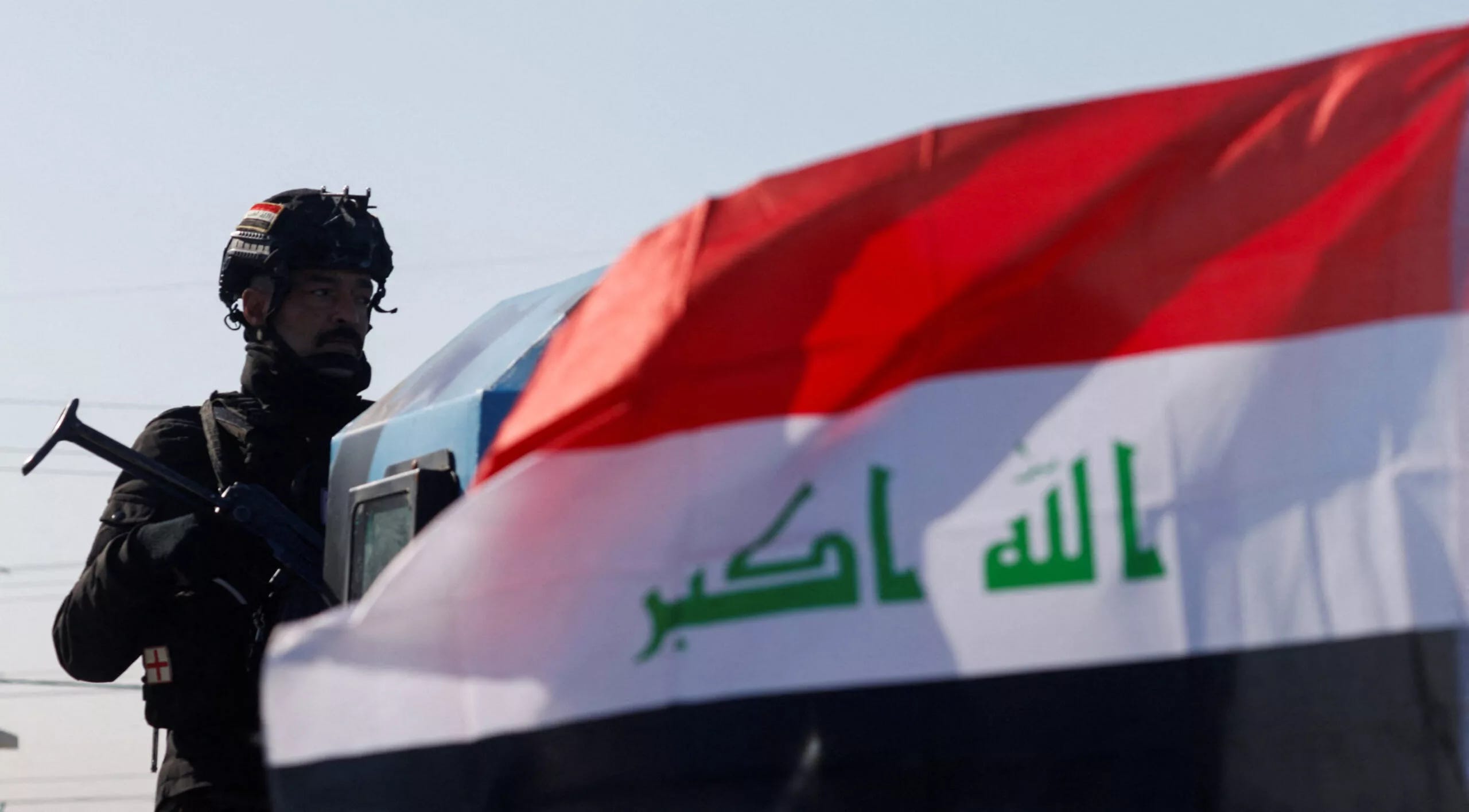
This historic blunder was committed by the Iraqi regime when it chose to side with the Syrian regime in its war against its own people, disregarding the clear lessons of history: that regimes are temporary, while nations and their people endure. Wisdom dictates standing with the will of the people not with oppressive regimes.
Iraq’s leadership made a fatal error by aiding Bashar al-Assad’s regime and helping to prolong its rule, all while ignoring the atrocities committed against hundreds of thousands of Syrians, the displacement of millions, and the destruction of entire cities, now reduced to rubble.
On December 8, 2024 the day Syria was liberated militias backed by Iraq fled en masse. Militias such as Asa’ib Ahl al-Haq and Harakat al-Nujaba abandoned their positions near Sayyida Zainab’s shrine in Damascus’s suburbs and retreated toward the Iraqi border, leaving weapons and equipment behind.
They were soon followed by Kataib Hezbollah, the Tufuf Brigade, and Sayyid al-Shuhada from Al-Bukamal and Mayadeen. This chaotic retreat, which coincided with Bashar al-Assad’s flight from Damascus, is still described by many security circles as a “baffling” withdrawal.
It marked the end of a political and security trajectory that began 13 years earlier when Baghdad’s leaders decided to support Assad politically an alliance that would later evolve into direct financial and military backing.
Now, as we witness Syria’s liberation and the collapse of Iraq’s misguided intervention, the question arises: What did Iraq actually gain from that policy? And now that the Syrian regime has fallen, what is Iraq’s position as it watches the broader Iranian-led project in Syria crumble?
Why Did Iraq Side with the Assad Regime?
When the Syrian revolution erupted in 2011, Nouri al-Maliki was Iraq’s Prime Minister. A sectarian figure and staunch loyalist of Iran, Maliki led the Islamic Dawa Party. Despite Assad’s regime being aligned with Iran, relations between Maliki and Assad were strained.
Maliki had long accused the Syrian regime of supporting extremist groups like al-Qaeda to destabilize Iraq through bombings that claimed the lives of hundreds of Iraqis.
Maliki’s accusations were not unfounded Assad’s regime did, in fact, support terrorist elements as a strategy to distract American forces in Iraq and dissuade them from turning on Damascus next. At one point, the rift between Baghdad and Damascus grew so deep that Maliki filed a formal complaint to the UN accusing Assad of supporting terrorism.
Iranian mediation at the time failed to reconcile the two regimes. But when the Arab Spring reached Syria, Maliki completely reversed his stance. He perceived the peaceful uprising of the Syrian people as a direct threat to his rule, believing such movements would inevitably reach Baghdad. More crucially, Assad’s fall would jeopardize Iran’s grand project of building a regional axis stretching from Tehran to Beirut via Iraq and Syria.
Maliki abandoned his previous criticisms and threw Iraq’s full support behind Assad, providing financial, military, and logistical aid to help the regime survive. Baghdad justified its involvement by claiming it sought to protect sacred Shia shrines in Syria—a rationale also used by Lebanon’s Hezbollah to legitimize its brutal repression of the Syrian uprising.
Iran launched a sweeping propaganda campaign aimed at galvanizing Shia populations in Iraq and Lebanon. The slogan “Zainab will not be taken captive twice” became a rallying cry for militias to fight in Syria under the pretext of protecting Sayyida Zainab’s shrine.
Similarly, the chant “Revenge for Hussein” was weaponized as a justification to conquer Damascus historically the seat of the Umayyads framing the Syrian uprising as an attempt to symbolically dishonor Zainab.
Through this religiously charged narrative, Iran laid the groundwork for expanding its hegemony under the guise of safeguarding Shia sanctities. It constructed and restored allegedly sacred shrines and fabricated sites to attract Shia devotion, all while using them as platforms to deepen its regional entrenchment. The campaign fueled a surge in Shia extremism, as death squads and sectarian militias turned against the Syrian people.
What Did Iraq Lose by Supporting Assad?
Iraq’s support for Assad was a historic blunder with far-reaching consequences. According to information obtained by Al-Hurra, between 2012 and 2014, Maliki and his inner circle coordinated efforts to launder money for Iran’s Revolutionary Guard and Hezbollah to finance Assad’s regime.
Maliki’s team also provided financial and military backing to Iraqi militias fighting in Syria—funded from Iraq’s state budget. He even established a foreign operations office in collaboration with Branch 279 of Syrian intelligence, responsible for activities outside Syria. According to US intelligence sources, around $460 million was funneled to Syria in 2012 alone.
Meanwhile, over 18,000 Iraqi, Afghan, and Pakistani Shia fighters were recruited by the IRGC with the help of militia leaders such as Akram al-Kaabi (al-Nujaba), Abu Mahdi al-Muhandis (Kataib Hezbollah), Shibl al-Zaydi (Imam Ali Brigades), and Sheikh Abdul Halim al-Zuhairi from the Dawa Party. Iraq bore the cost of recruitment, transport, and salaries for these fighters.
The war in Syria drained Iraq’s treasury. The regime in Damascus relied on massive financial transfers and military logistics from Baghdad, including an uninterrupted supply of fuel to both Syria and Hezbollah strongholds in Lebanon delivered via a vast fleet of oil tankers.
Politically, Iraq paid a steep price in the form of widespread Arab isolation, especially from key countries supporting the Syrian revolution. Iraq came to be seen as an Iranian satellite in foreign policy, and even the US began treating the Iraq file as a sub-component of its Iran portfolio.
On top of this, hundreds of young Iraqis died fighting in Syria under the command of the late IRGC general Qassem Soleimani. Ultimately, these same militias were seen fleeing Syria, leaving behind weapons and vehicles to be seized by revolutionary forces.
What Did Iraq Actually Gain?
Iraq gained nothing but the enmity of the Syrian people, whose blood was spilled by Iraqi and allied militias. It is now a pariah in the eyes of the new Syrian government deemed untrustworthy and isolated in the Arab world. Worse still, Iraqi leaders now fear that the success of Syria’s revolution could inspire similar uprisings in Iraq.
They also worry about terrorist organizations, once based in Syria, relocating to Iraq fertile ground for extremism given Baghdad’s continued sectarian policies against its Sunni population. Such policies are a breeding ground for radical ideologies.
These fears were reflected in recent statements by Iraqi military officials regarding the potential redeployment of US forces from the Syria-Iraq border into central Syria, near Damascus. Baghdad Today reported rising anxiety over the repositioning of American forces, with speculation that US bases in areas controlled by the SDF may be dismantled in favor of establishing a new hub in Damascus a sign of Washington’s shifting focus.
Security analysts argue that the US military presence in northeastern Syria acted as a critical buffer against ISIS’s resurgence along the Iraq border and provided valuable intelligence to Baghdad. A reduction in this presence, they warn, would create a volatile security vacuum ripe for extremist exploitation.
Will Pro-Assad Regimes Learn the Lesson?
When one observes Syrians celebrating the first anniversary of their revolution’s triumph, the contrast is stark: a free people rejoicing in genuine victory versus a nation coerced through bribes or threats to mark hollow anniversaries of military coups or foreign occupations, as in Iraq.
The scenes broadcast from Damascus and across Syrian cities massive, spontaneous crowds celebrating the revolution strike fear into the heart of regimes like Iraq’s. These people were not mobilized by state propaganda; they poured into the streets willingly, expressing joy in a victory they fought for and paid for with their lives and the lives of their loved ones.
By contrast, Iraqis continue to yearn for the day they can break free from the grip of an oppressive regime. And the Iraqi government knows this. It realizes that a population disconnected from its leadership’s vision will eventually rise to overthrow it.
This is a reality understood even by the United States the very power that handed Iraq’s political class the reins. When Washington wants to pressure the Iraqi regime, it threatens to withdraw its protection. That threat alone is enough to send Iraq’s entire political elite into panic, willing to do whatever it takes to preserve that shield.
But will Iraq’s rulers learn from Syria’s lesson? Will they recognize that tyranny is ultimately unsustainable, and that the will of the people always prevails? It appears unlikely.
Instead of reconciling with Syria’s new government a legitimate representation of its people—the Iraqi regime continues to undermine it, clinging to remnants of the old Assad regime in hopes of a miraculous comeback. This is yet another costly mistake, and one Iraq will inevitably pay for. Its fate may not be any better than Assad’s.
Any government that takes power in Syria post-Assad will not forget Iraq’s official position during the revolution. Tensions political, economic, and social are inevitable between these neighboring states, compounding Iraq’s regional and international isolation.
The same holds true for other regimes that clung to Assad until the bitter end, refusing to acknowledge Syria’s new government. If not for pressure from influential Arab states and US approval of Syria’s transformation, many of these regimes would still be openly hostile to the revolution.
Time waits for no one. Unless Iraq’s leaders change their approach toward the new Syrian leadership, they will be the first casualties of the coming wave of change in the Middle East. When that happens, they will be relegated to history along with their Iranian allies.
The Iranian axis is heading toward a suicidal confrontation, and Iraq’s refusal to break from Tehran will only drag it toward the same fate. When their end comes, it will not be mourned except for the fact that, tragically, the Iraqi people will also bear the consequences of their leaders’ choices.