

The fifteenth anniversary of Egypt’s January 25 Revolution arrives at an ambiguous historical moment. It is a time marked more by exhaustion than nostalgia, weighed down not only by the question “What happened?” but also “What remains?”
Fifteen years on, we are not facing a single dominant narrative, nor a decisive defeat or a delayed victory, but rather a prolonged process of fragmentation, reconstitution, and cumulative collapse across politics, society, organizing, and even the collective imagination.
In this context, we must return to the difficult questions not as revolutionary nostalgia, nor as political self-flagellation, but to understand what became of Egypt’s spaces of political and social action: parties, unions, labor movements, Islamists, alternative media, and new generations.
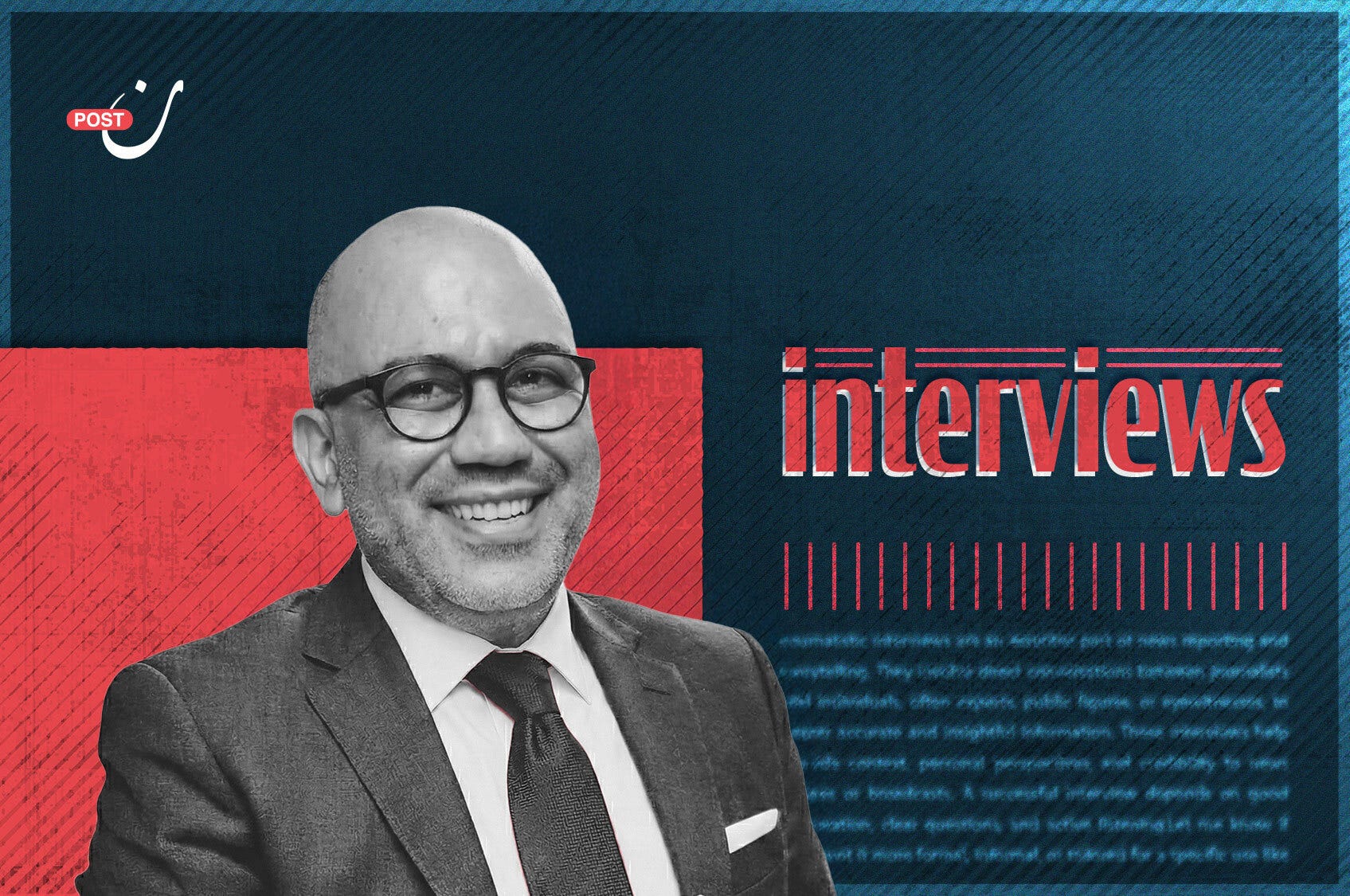
To explore this, we spoke with Hossam el-Hamalawy, an Egyptian journalist, activist, and academic who has lived through the revolution and beyond, consistently writing, critiquing, and organizing from a position of deep engagement.
Q: Starting with Egypt’s political scene today, how would you assess what remains of political forces whether emerging civil parties like the Hope Coalition, older formations like Karama or the Socialists, or the Islamist currents?
Do any still have influence? Can we still talk about organized political action, or are we left with empty frameworks?
Today, almost all political forces from the far right to the far left are either diminished or have completely collapsed. One of the central aims of the counterrevolution that followed the coup led by Abdel Fattah el-Sisi was to dismantle the political landscape entirely.
It began with Islamists whether the Muslim Brotherhood, jihadists, or Salafists but soon extended to civil forces: April 6, existing leftist parties (registered or informal like the Revolutionary Socialists). Most of these were repressed and dismantled. By the end of Sisi’s first term in 2018, most had been crushed.
Yet between 2020 and 2022, the regime faced a multifaceted crisis: COVID-19, the Ukraine war, a global economic downturn, and a reduction in Gulf support. These challenges unsettled the regime and created limited opportunities for marginal political activity.
Another factor is the steep decline in Sisi’s popularity. Initially, from the coup until the first currency float in 2016, he enjoyed immense support, largely driven by fear of chaos and a longing for stability, especially among the middle class. He made grand promises and asked people for patience. Many believed him at first.
Movements like the Hope Coalition, Ahmed Tantawy’s initiative, and renewed Nasserist efforts began surfacing in this context.
Q: But are these efforts effective? Can they create any real change?
Unfortunately, all these movements, including the Revolutionary Socialists to which I belong, have been severely weakened. Their bases have been eroded. While there are still limited attempts such as within professional syndicates or Tantawy’s campaign they are quickly repressed.
Still, nothing lasts forever. The victory of Khaled el-Balshy in the Journalists Syndicate and recent activity in the Engineers Syndicate, alongside mass strikes like those of the lawyers, show that some social pulse persists. These efforts often fail or are crushed quickly, but their mere existence shows movement compared to the total stasis of 2018.
Q: Let’s talk about the labor movement. Where does it stand today in relation to the regime? Have protest tools evolved? Can today’s actions be built upon for the future?
To understand the present, you need context.
Since Nasser’s era, Egyptian labor unions have been state-controlled. In 1957, the state established the Egyptian Trade Union Federation (ETUF), a hierarchical structure subject to full state oversight.
It was never a genuine workers’ representative. Rather, it was a tool for control and mobilization like bussing workers to vote-rigging stations during Mubarak’s elections in exchange for minor favors.
Still, some independent voices managed to infiltrate lower-level shop-floor committees. Between 2006 and 2011, spontaneous wildcat strikes led by factory workers not leftists or NGOs became more common. This gave rise to Egypt’s first independent union in 2008, followed by many others after the 2011 revolution.
The Egyptian Federation of Independent Trade Unions was launched then, with some leftist support. But internal dysfunction, leadership elitism, and poor coordination quickly appeared. A key example was the failed general strike of February 2012.
After the 2013 coup, unions both state-controlled and independent were crushed. Leaders were arrested, dismissed, or forced to retire. New laws rendered union activity nearly impossible, including a ban on opening union bank accounts.
Yet in the last few years, a modest revival has begun. New tools, like WhatsApp groups, allow for some organization. Young leaders are emerging though often without the experience or coordination networks of the past.
These protests are mostly defensive against layoffs, wage issues not aimed at building a broader labor strategy. Still, they offer a glimmer of potential for future revival.
Q: Over time, we’ve seen political energy shift into rights-based work, often driven by former leftist activists. Today, much of the opposition’s activity is media-based, especially online. Have podcasts, YouTube shows, and social platforms become substitutes for organizing? Can we reclaim real politics from this drift?
Egypt’s human rights movement began growing in the late 1980s and early 1990s, after the collapse of the third wave of Egyptian communism and the fall of the Soviet Union.
Many former leftists saw human rights work as an alternative to party politics. Some organizations remained small and donor-focused, but others like El-Nadeem, the Hisham Mubarak Law Center, and the Egyptian Initiative were central to protest movements and provided tangible support on the ground.
Lawyers like Khaled Ali played a key role in connecting courtroom battles to street activism fighting privatization, defending labor rights, and challenging the state.
Islamists had their own trajectory. The Muslim Brotherhood, with its network of charities, schools, and social institutions, functioned as a quasi-civil society actor. Some Islamist lawyers also joined the rights movement.
Post-2013, digital platforms became the only outlet. Social media, especially podcasts and livestreams, replaced public squares. This is not unique to Egypt; it’s a global shift accelerated by repression and technology.
Among Islamists, divisions persist: some focus on religious outreach, others still seek political power. Many now see media work as part of political strategy.
Can media replace politics? Not really. But when the streets are closed, digital work is often the only option. Once public space reopens, we can assess which digital projects have real potential to evolve into political platforms.
Q: Egyptian society is often described as fragmented and lacking intermediary structures. Who bears primary responsibility for this? The state? Political leaders? Intellectuals?
All of them to varying degrees but the state bears the lion’s share.
You can critique political and intellectual leaders all you want, but the state holds the power: the prisons, the army, the police, the security apparatus, the judiciary. It controls every lever of governance and repression.
Still, the second tier of responsibility includes political figures and public intellectuals. The Egyptian left, for example, had leaders like Rifaat el-Said who steered parties into poor strategic choices.
Islamist leaders, too whether radical or reformist sometimes colluded with the regime or were involved in unjustified violence, such as sectarian attacks in the 1990s. That history helped the regime justify its brutality.
So yes, many opposition leaders made mistakes. But the ultimate responsibility lies with the state.
Q: What about claims that structural limits within society cultural, educational, economic block political progress?
I think that’s an excuse often used by those unwilling to take responsibility.
Some liberals or leftists argue that “the people don’t know their own interests,” or that “they’ll always vote for the wrong people.” That’s elitist nonsense.
People understand their material needs. They navigate poverty and oppression daily. The challenge is translating individual interests into collective action and political programs.
Yes, structural obstacles exist but they don’t remove accountability from the state or the failures of opposition movements.
Q: Can we describe Sisi’s regime as a form of “revolutionary dictatorship” one that overthrew all existing actors and built a new system?
Not really. That label doesn’t fit.
A revolutionary dictatorship like the Jacobins in France arises when a radical movement temporarily centralizes power to defend a transformative agenda. Even if repressive, it’s tied to a revolutionary project.
Sisi’s regime is purely counterrevolutionary. Its entire goal was to erase 2011, to ensure nothing like it ever happens again. It didn’t inherit the old system it built something harsher.
Sisi’s gamble was to rally society against protest itself—to convince people that chaos had to be crushed. That’s a hallmark of counterrevolutions. Think of Pinochet in Chile, or the Freikorps in Germany after World War I. These weren’t restorations; they were new, violent regimes born from revolutionary fear.
Sisi’s state is securitized to its core. It governs through intelligence agencies, not institutions. It’s authoritarianism without even the pretense of political life.
Q: So why didn’t the regime just bring back Mubarak’s model? Why replace it with something even more brutal and less competent?
Because from their perspective, Mubarak’s system failed. It allowed a revolution to happen.
They didn’t want a party to manage, a parliament to negotiate with, or a media to navigate. They wanted a structure where the security agencies run everything openly.
Look at photos from presidential meetings: it’s all generals and security heads. The deep state isn’t behind the curtain anymore; it’s center stage.
Q: What about Gen Z? Are they a real political force, or is their influence exaggerated by the nature of digital platforms?
People forget that in 2011, it was the young who led. What we call Gen Z today were the Gen Z of then.
Throughout history, it’s always the youth who lead revolutions. They face down police, charge into streets, and withstand the violence. Change never starts with the elderly.
What’s different now is digital fluency. Today’s youth are “digital natives” they don’t need training on how to tweet, film, or organize online. They grew up with it.
That creates speed and flexibility but also brings problems: lack of structure, fleeting engagement, and difficulty translating presence into power.
Technology is a tool. But change still requires organizing, relationships, sacrifice.
Q: Over the years, the memory of the revolution has faded. Sometimes it only appears in regime speeches. What remains, really, of January 25 in Egyptian consciousness?
I wouldn’t say it has disappeared. In a country of 100 million, there’s no single answer.
In my experience, moments like January 25, January 28, Mohamed Mahmoud, and Rabaa still spark deep emotions especially as the regime loses support. Some romanticize Mubarak, others long for 2011.
There’s also a generation that didn’t live the revolution directly. For them, it appears on YouTube and TikTok almost like science fiction. But that fascination keeps it alive.
What remains depends on class, background, geography. But January broke taboos. It changed how people talk about rights, gender, and power. Those shifts are symbolic but real.
In October 2023, people returned briefly to the streets. They chanted the old slogans: “Bread, freedom, social justice.” That wasn’t coincidence. It was memory, waiting for a moment.
Absolutely. The coup crushed January’s organizational legacy. But the questions it raised are still here. They haven’t been answered. They wait.
Q: Regionally, especially after the war in Gaza, do you think the Arab world has entered a new phase one that favors authoritarian “stability” over risky change? Is democratic transition still viable?
If this regime were truly stable, it wouldn’t need new prisons every year. It wouldn’t fear minor protests. It wouldn’t arrest people over Facebook posts.
Sisi behaves like a man terrified of 2011 returning.
Look at September 2019 or October 2023. Even small protests cause panic. That tells you everything.
Q: But isn’t there a risk that repression becomes normalized that both society and the regime see it as the default?
That’s the danger. When authoritarianism becomes everyday, people adapt. But adaptation isn’t the same as consent.
And with regional dynamics changing especially after October 7 we’re entering a new phase. That deserves its own conversation.
Q: Finally, on the anniversary of January 25, what would you say about revolution itself as a concept?
Revolutions are rare. They aren’t daily politics. They’re extraordinary moments when people act together and say: enough.
No society is inherently revolutionary or passive forever. Today, people feel alone—like speaking up makes you the crazy one. The system wants you to feel that way.
As Marx said: the dominant ideas are always those of the ruling class. We don’t own the schools, the newspapers, the media. Even the internet is controlled by billionaires.
Still, small spaces for connection and solidarity exist. Most people choose survival but in rare moments, fear flips. The impossible becomes real.
One theory says revolutions erupt not at rock bottom but when rising hopes hit a wall. That gap between aspiration and reality creates tension. It explodes.
Egypt’s revolution wasn’t sudden. It was years of small battles strikes, blogs, protests, connections from Cairo to Asyut. It built slowly, then burst.
That’s how change happens: not through miracles, but through accumulation. And eventually, the dam breaks.
