

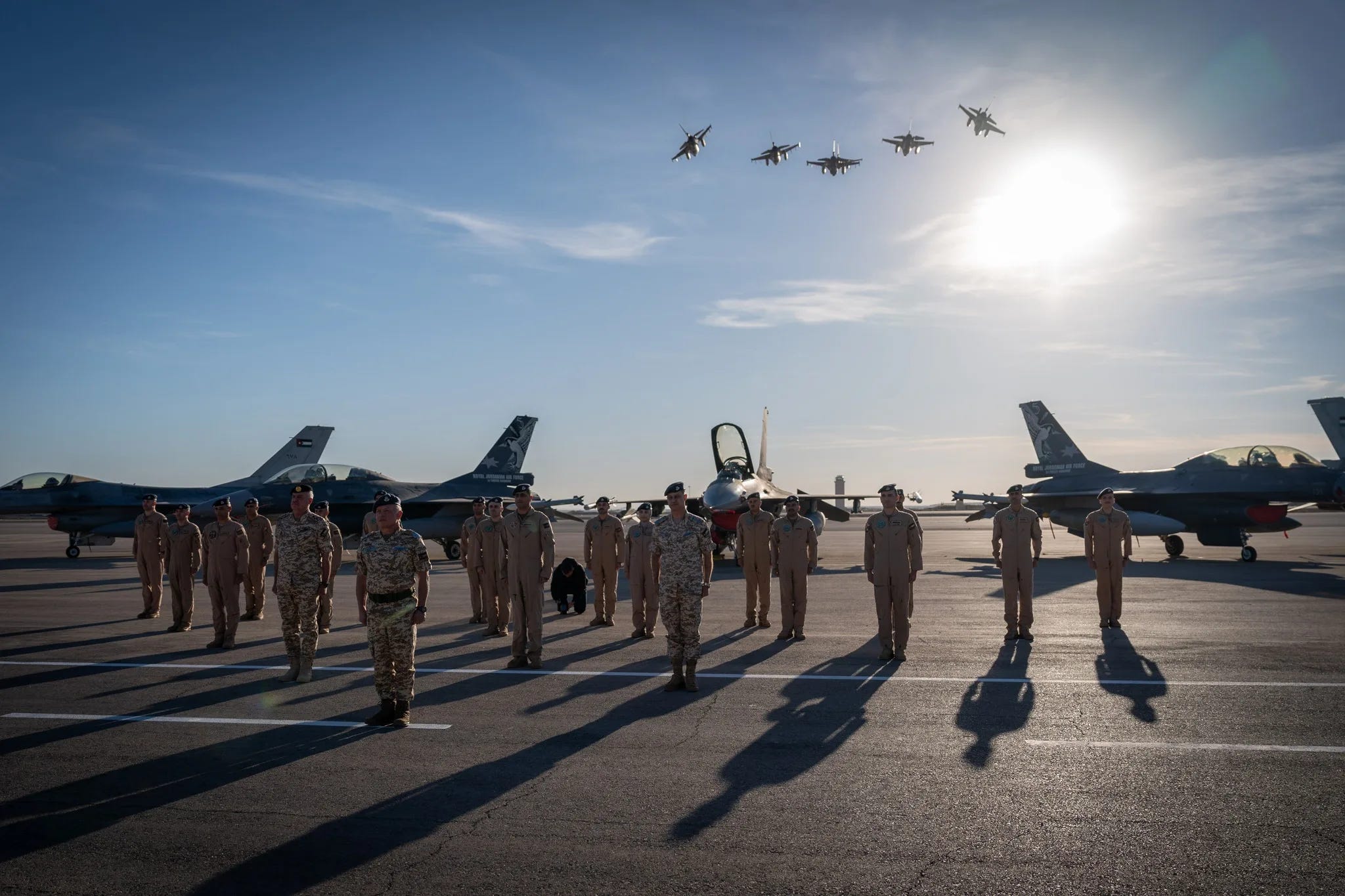
The Middle East stands on the brink of an unprecedented military escalation, as the pace of U.S. military deployments across the region accelerates to levels reminiscent of preparations for past regional wars. At the heart of these shifting sands, Jordan has emerged as a geostrategic pivot of exceptional importance.
While Jordanian diplomacy insists on strict neutrality and avoiding entanglement in a direct conflict, the movement of military aircraft and the view from satellite intelligence paint a markedly different operational picture.
This stark divergence has placed Amman under Iranian scrutiny and raised fundamental questions about the implications of any Jordanian role in a potential U.S. and Israeli strike on Tehran particularly amid overlapping strategic alliances and complex security imperatives.
U.S. Reinforcements in Jordan
1. The Scale of Military Deployment
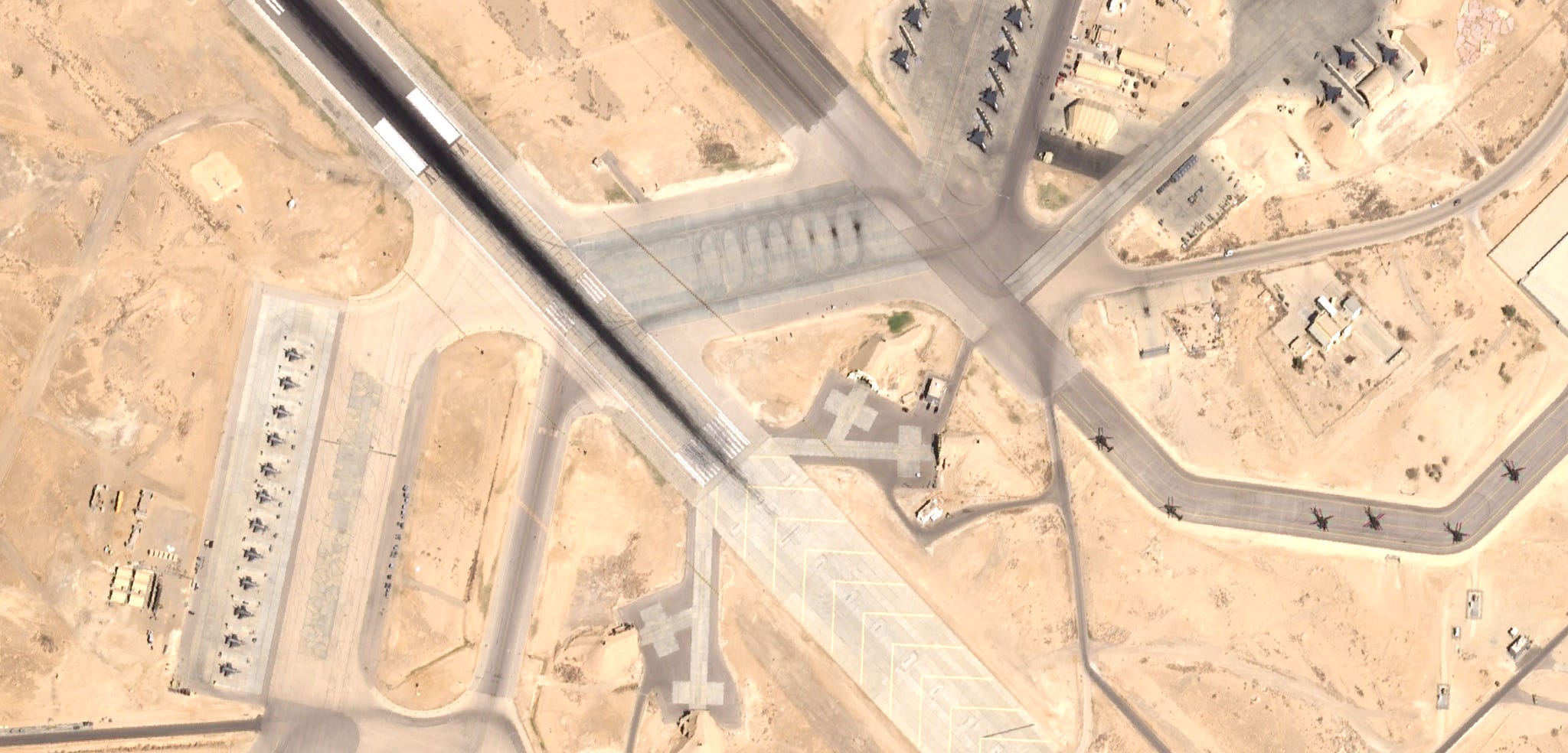
Muwaffaq Salti Air Base has transformed into a major hub for American aircraft. The New York Times described the base as the “primary hub” of U.S. plans concerning Iran, noting tracking data showing at least 60 combat aircraft stationed there, including around 30 F-35A stealth fighters, 24 F-15E strike fighters, and A-10 aircraft.
The buildup also includes six EA-18G Growler electronic warfare aircraft, MQ-9 Reaper drones, and air defense systems such as THAAD and Patriot. Within just days, 68 transport aircraft reportedly landed at the base.
These figures make it the largest U.S. air concentration in the region since the Iraq War, enabling precision strikes through stealth aircraft and the suppression of Iranian air defenses via electronic warfare.
2. Military and Strategic Rationale
The base’s location in Jordan’s eastern desert allows rapid access to Israel, Iraq, and Saudi Arabia, and lies roughly 850 kilometers from Iran’s western border.
An analysis by the Iranian outlet Fararu suggests the base is less vulnerable than Gulf installations, making it an ideal launch point for stealth aircraft to penetrate and dismantle Iranian air defenses. The 2021 U.S.-Jordan Defense Cooperation Agreement grants American forces operational freedom across 12 Jordanian bases for 15 years, widely seen as a legal framework for expanding the U.S. footprint.
According to U.S. military estimates, deploying Patriot and THAAD systems helps shield the base from potential Iranian missile strikes, while EA-18G aircraft could jam Iranian radar systems.
A Divergent Stance and Precedents That Fuel Speculation
Despite the buildup, Amman has publicly rejected the use of its territory to launch attacks on Iran. The New York Times quoted a Jordanian official as saying the U.S. presence falls within the existing defense agreement and that the kingdom hopes Washington and Tehran can reach a deal to avert war.
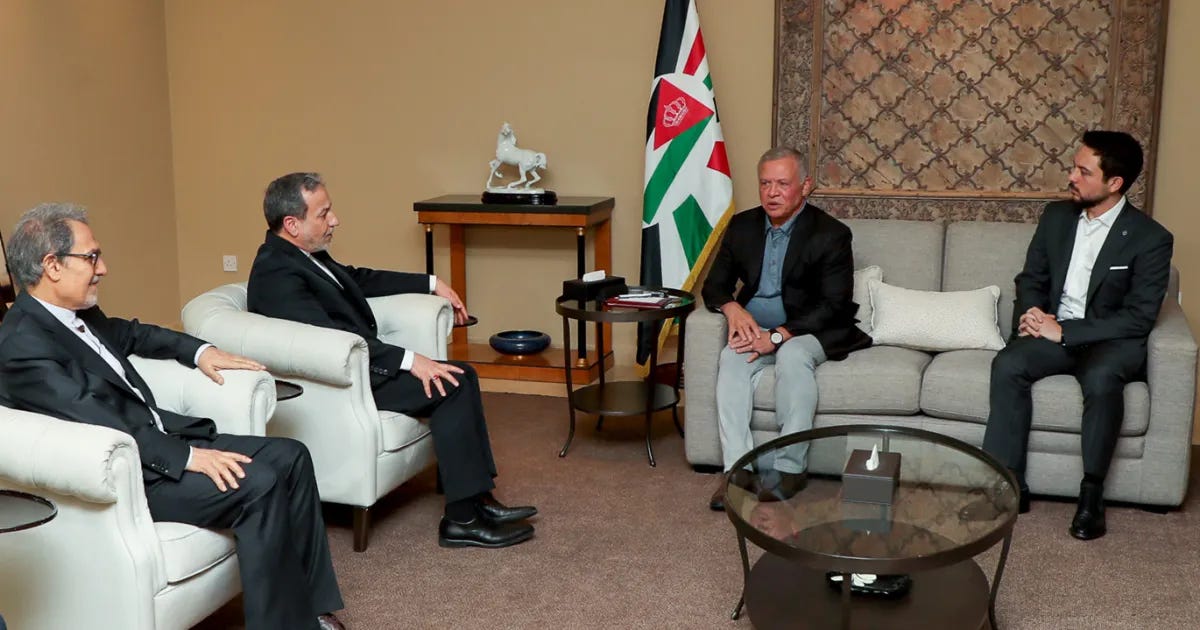
On February 2, 2026, Jordanian Foreign Minister Ayman Safadi told his Iranian counterpart Abbas Araghchi that Jordan would not become a “battlefield” for any conflict, nor allow violations of its airspace, pledging to use all available capabilities to counter any incursion.
King Abdullah II reaffirmed this position during a February 5, 2026 meeting with political figures, emphasizing Jordan’s support for dialogue and diplomacy to ease tensions and its commitment to prioritizing citizens’ interests an apparent effort to reassure Iran and Arab public opinion that Amman is not party to Washington’s offensive plans.
Yet past precedents complicate these assurances. On June 13, 2025, Iran launched missiles and drones at Israeli targets in response to an Israeli strike on Iranian nuclear facilities. Jordanian skies became an arena of engagement. The Jordan Armed Forces said they activated air defenses to intercept missiles and drones that entered the kingdom’s airspace, preventing them from falling on populated areas and protecting civilians.
The Jewish Institute for National Security of America (JINSA) reported that Jordanian defenses intercepted Iranian missiles and drones during the conflict, while Jordan allowed foreign aircraft to operate in its airspace.
Debris from defensive interceptions injured civilians and caused material damage in Irbid and Amman, intensifying criticism. The Times of Israel cited speculation that Jordan was intercepting some projectiles in defense of Israel, and noted public discontent on social media. Some Jordanians viewed the interceptions as protection for citizens; others saw them as entangling the kingdom in a war not its own.
A report by the Foundation for Defense of Democracies (FDD) observed that while Jordan consistently declares it will not serve as a launchpad for attacks on Iran, it nonetheless cooperates with the United States and Israel in intercepting Iranian missiles.
Jordan and Iran: A History of Caution and Limited Rapprochement
Amman and Tehran have no legacy of historic enmity; diplomatic relations have remained formally normal since Iran’s 1979 revolution. In February 2026, Iran’s chargé d’affaires in Amman, Davoud Kalantari, described bilateral ties as “normal and stable,” citing economic and scientific memoranda of understanding and increased student exchanges.
The Iranian official warned that U.S. mobilization would affect the entire region, but stressed Iran’s respect for Jordan’s security. Still, despite conciliatory rhetoric, many Iranians remain skeptical of Jordan’s alignment with Washington and Tel Aviv. In February 2026, Iranian MP Mojtaba Zarei urged Jordanians to “seize Muwaffaq Salti Air Base and capture American soldiers,” claiming it had been used to protect Israel during the war.
Iranian outlets such as Fararu and Hamshahri have published detailed reports on Muwaffaq Salti Air Base, underscoring Washington’s reliance on it for any potential strike on Iran and questioning Amman’s ability to prevent its use. Fararu catalogued the types of American aircraft deployed, estimating them at triple the usual number and portraying the base as a command center for a possible offensive.
Hamshahri reported that the base sits 850 kilometers from Iran’s border and that Washington has expanded its facilities since 2019 to include aircraft shelters and ammunition depots effectively rendering it “American soil,” despite official Jordanian denials. Such coverage fuels domestic Iranian narratives casting Jordan as a partner in any prospective aggression.
Meanwhile, Yedioth Ahronoth described Jordan as “in the eye of the storm, but unwilling to be part of it,” noting that U.S. soldiers are installing defensive systems at their Jordanian base. The paper quoted a Jordanian source saying public opinion in the kingdom leans against war, fearing economic and security repercussions, and that Jordan insists on neutrality.
Israeli media also highlight Amman’s reliance on American support and its fear of Iranian retaliation factors that drive it to publicly affirm neutrality while continuing security cooperation.
Ultimately, the trajectory of Jordan-Iran relations hinges on Amman’s ability to strike a delicate balance between safeguarding internal security and avoiding provocation of Tehran. Jordan faces domestic pressure from opposition to normalization with Israel and mounting economic hardship, even as it depends on U.S. and Gulf assistance.
While Jordanian officials advocate dialogue with Tehran, the continued use of Jordanian territory as a platform for military operations will make Amman’s position increasingly difficult both at home and among its neighbors.